Alcohol and a Park Wristband
A park wristband can mean you have paid admission, checked in, or signed a waiver. It does not automatically tell you whether alcohol is allowed, where it may be consumed, or whether you can ride afterward. In Alabama, the safest approach is to separate the park’s alcohol policy from the rules that apply to operating an ATV or UTV.
What a Park Wristband Does and Does Not Mean
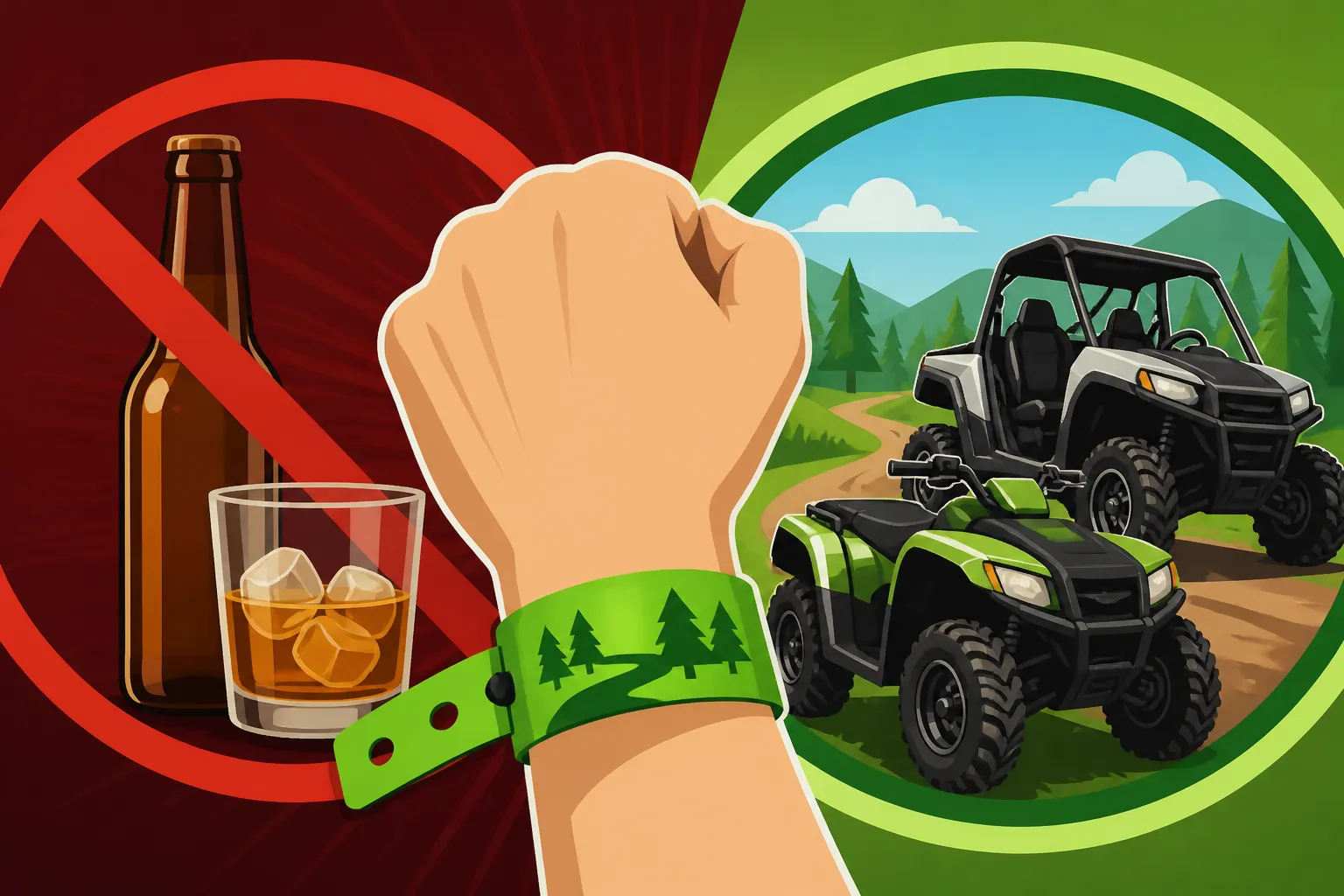
At an off-road park, a wristband is usually a way to show that a visitor has completed the park’s admission process. Depending on the facility, it may identify a rider, passenger, minor, or day visitor. It may also help staff recognize who has checked in or paid for access. The band itself is not a general permit to drink or ride.
A wristband does not necessarily mean:
- Alcohol is allowed anywhere on the property.
- You may carry alcohol on the trails.
- You may operate a machine after drinking.
- You are exempt from state law or park rules.
- The park will let you keep riding if staff believe you are impaired.
The park’s written policy, signs, admission terms, and staff instructions matter more than what a wristband looks like. Some facilities may allow alcohol in certain camping or spectator areas while prohibiting it on trails or around riding activity. Other parks may restrict alcohol more broadly. Policies can differ even between parks that offer similar riding.
Before unloading, ask staff specifically where alcohol is permitted, if anywhere, and whether the rule applies to riders, passengers, and people at campsites. A broad question such as “Is alcohol allowed?” can leave out the crucial detail: allowed where, and for whom? For more on the ways private facilities set their own requirements, see Alabama Private Park Alcohol Rules and Alabama Private Park Waivers and Rules.
A waiver or wristband also does not replace permission to ride a particular trail or area. It generally reflects the facility’s admission process, not a promise that every activity is allowed or that the park accepts responsibility for every risk. Read the conditions you agree to, including any rules about alcohol, passengers, helmets, machine size, and restricted areas.
| Situation | What the wristband may show | What you should verify |
|---|---|---|
| You checked in to ride | You completed an admission step | Which trails and areas are open to your machine |
| You are camping at the park | You may have access to a campsite or facility | Whether alcohol is allowed at the site and under what conditions |
| You are a passenger or spectator | You may be admitted as a visitor | Whether visitor rules differ from rider rules |
| You have been drinking | It does not establish that riding is permitted | Whether you are fit to operate; the safe choice is not to ride |
| Staff asks you to stop riding | The band does not override staff directions | Follow park instructions and clarify the policy before returning |
Alcohol Rules and Riding Are Separate Questions
There are two different issues to consider: what the park permits, and whether it is safe and lawful to operate an ATV or UTV after drinking. Permission to consume alcohol in a designated place does not settle the second question. Likewise, a park’s admission of a rider does not mean the rider can continue operating after drinking.
Alcohol can slow reactions, affect balance and judgment, and make it harder to respond to changing trail conditions. Those risks matter on a machine that can tip, slide, collide with another rider, or encounter a sudden obstacle. A rider may feel capable while still being less able to judge speed, distance, and risk. Passengers can also be exposed to the consequences of an impaired driver’s decisions.
Alabama law may apply to conduct on private property, and riders should not assume that a private park is outside the reach of laws concerning impaired operation. How a law applies can depend on the facts and the machine involved. For a general discussion of the legal issue, see Alabama DUI Law and Off-Road Machines. If a legal question affects a particular incident, get advice from a qualified professional rather than relying on a wristband, an informal comment, or another rider’s interpretation.
For practical riding decisions, use a simple rule: if you have consumed alcohol, do not operate the ATV or UTV. Arrange a sober driver before anyone starts drinking, and keep that person out of the riding rotation. If the designated driver also wants to ride, decide in advance who is staying sober and when the driving responsibility will change. Do not make that decision after drinking has started.
This rule is deliberately stricter than trying to estimate whether someone is “fine.” A rider’s self-assessment is not a dependable way to measure impairment, and riding conditions can change quickly. A familiar, easy trail can still involve a sharp turn, an unexpected rider, mud, a steep grade, or a mechanical problem.
The same care applies to passengers. A passenger should not pressure an operator who has been drinking to take a short trip back to camp, retrieve equipment, or move a machine. Those short trips still involve operating the vehicle. If a machine needs to be moved, ask a sober, authorized operator or park staff for help.
For more detail on park expectations, [Alabama Park Rules for Helmets] is a useful companion topic. The specific gear and conduct rules can vary by facility, so check the park’s current requirements rather than assuming that one park’s policy carries over to another.
How to Check the Park Policy Before You Go
The most useful time to clarify alcohol rules is before your group arrives. Park policies may be posted online, included in reservation terms, displayed at the entrance, or explained during check-in. If the wording is unclear, contact the park and ask direct questions. A quick confirmation can prevent a disagreement after you have paid, set up camp, or started riding.
Ask questions such as:
- Is alcohol allowed anywhere on the property?
- If it is allowed, is it limited to campsites or another designated area?
- Is alcohol prohibited on trails, in staging areas, or around machines?
- Does the policy apply to passengers and spectators as well as riders?
- Can staff stop a rider or revoke access for suspected impairment?
- Are there additional rules during events, group rides, or quiet hours?
Do not rely only on social media comments, an old post, or a friend’s memory. Rules can change, and a policy that applies at one facility may not apply at another. If you are booking a campsite as well as riding, confirm that the camping terms and riding terms do not differ.
When you arrive, read signs and listen to the check-in instructions. If staff give a direction that appears stricter than what you understood online, pause and ask for clarification before bringing alcohol into an area or riding. Do not argue that the wristband proves permission; it may only prove that you checked in. Park staff may enforce admission conditions and may ask visitors to leave or stop an activity if they believe a rule has been broken.
Keep the group plan straightforward. Tell everyone which areas, if any, allow alcohol and name the people who will remain sober and available to drive. Keep alcohol away from riding areas if the park prohibits it there. Do not leave open containers or supplies where they could be mistaken for permission to drink on a trail. If the park’s policy is unclear, the lower-risk choice is not to bring alcohol into the riding area.
A wristband also should not be treated as proof of insurance, a safety inspection, or proof that your machine meets the park’s requirements. Confirm any machine, passenger, waiver, and equipment rules separately. If a crash happens, alcohol can make an already difficult situation more complicated; see Alabama Insurance After an Off-Road Collision in Alabama for related considerations.
A Safer Plan for Riding and Camping
A good outing does not require mixing drinking and riding. Plan the day so that all riding is finished before anyone drinks, or keep a sober operator available for the entire period when machines may be used. Put keys somewhere the designated sober person controls, and make it clear that no one should take a machine for a quick ride after drinking.
If someone has been drinking, do not let them operate “just around camp,” test a machine, or drive to another part of the property. If they insist, involve a sober friend or park staff rather than escalating the situation alone. A wristband does not make a risky trip safe, and a short distance does not remove the possibility of a fall or collision.
If staff stop a rider, follow their instructions and ask calmly what needs to happen next. The park may require the rider to stop for the day, surrender access, or leave an area under its policies. Do not try to solve the issue by handing the wristband to someone else or having another person claim to be the operator. If there is a medical emergency or immediate danger, seek appropriate help.
For families and groups, set expectations before anyone arrives:
- Confirm the written alcohol policy with the park.
- Decide who will operate machines and who will stay sober.
- Keep alcohol in permitted areas and away from trails.
- Make a plan for getting people back to camp without riding.
- Treat staff directions and posted restrictions as part of the visit’s conditions.
That plan is more reliable than trying to interpret a wristband after drinking has begun. Admission, alcohol permission, and permission to operate are separate matters. Check each one, and do not ride after consuming alcohol.
Disclaimer
This article is for general informational purposes only and does not constitute professional advice. Laws, prices and regulations vary by location and change over time. Consult a qualified professional for guidance on your specific situation.