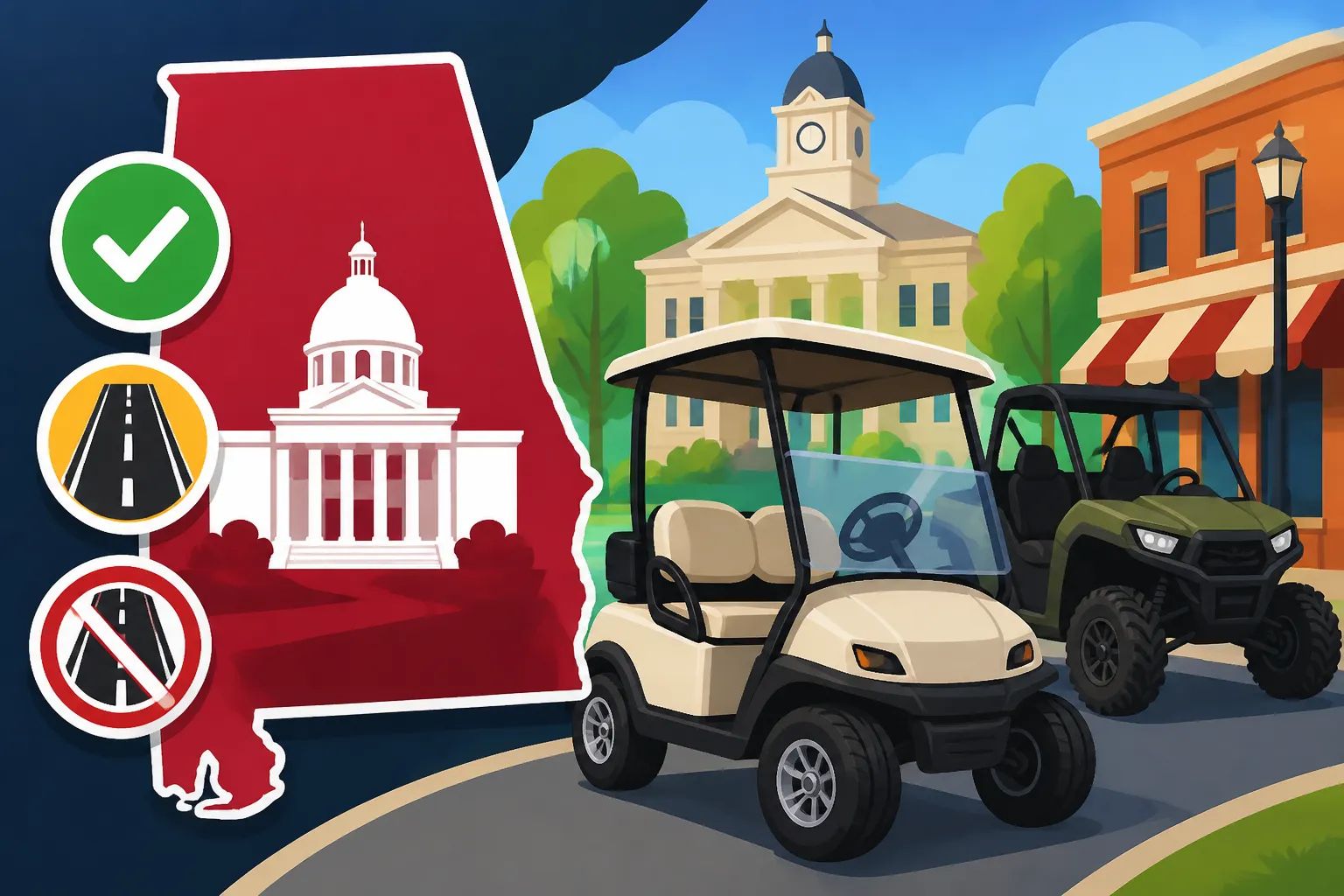
Alabama Golf Cart Rules in a Small Town
Riding your golf cart around your charming Alabama small town can feel like a slice of pure freedom – a quick trip to the corner store, a leisurely cruise to a friend's house, or just enjoying the breeze. But that feeling of freedom can quickly turn to anxiety when you start wondering if you're actually allowed to be on that public street. Many folks assume that because it's a small town, anything goes, or that a golf cart is just like any other vehicle. This guide is here to untangle the often-confusing web of state laws and local rules that govern golf cart use on Alabama's small-town streets, helping you understand where you can and cannot ride legally and safely.
The Nuance of "Small Town" Golf Cart Rules in Alabama
It’s easy to think that if you live in a smaller community in Alabama, the rules for your golf cart are either non-existent or super relaxed. You see your neighbors zipping around, so it must be fine, right? Well, not always. The truth is, how and where you can legally operate a golf cart in an Alabama small town is often a patchwork of regulations, blending state statutes with very specific local ordinances. This can make things incredibly confusing for owners who just want to enjoy their machines without breaking the law or risking a citation.
Why State Law Isn't Always the Whole Story
Alabama state law provides a foundational framework for vehicles, but it doesn't dive into the nitty-gritty of every single type of conveyance, especially not golf carts. For many vehicle classifications, the state sets clear guidelines regarding registration, titling, and where they can operate. However, when it comes to golf carts, the state statutes tend to be broad, or even exclude them from certain definitions entirely. For instance, you’ll find that [Alabama Excludes Golf Carts From the Chapter] that defines other off-road vehicles. This exclusion can be a double-edged sword: it means golf carts aren't typically lumped in with ATVs and UTVs for things like registration requirements, but it also means they don't automatically gain the privileges (or restrictions) associated with those other vehicles on public roads.
This lack of explicit statewide "golf cart law" often leaves a void, which individual cities and towns are then empowered to fill. It's not like your car, where the rules for driving on a state highway are generally the same whether you're in Mobile or Florence. With golf carts, the state largely defers to local control, recognizing that a bustling downtown area might have different needs and safety concerns than a quiet lakeside community. So, while the state might have rules about driving an automobile on a public street, it often doesn't specifically grant or deny that right to a golf cart. This is why just knowing the general state traffic laws isn't enough; you really need to dig into what your specific town has decided.
How Local Ordinances Fill the Gaps
Because state law often doesn't directly address golf cart operation on public streets, Alabama's cities and towns step in to create their own rules. These are called local ordinances, and they can vary dramatically from one municipality to the next. What's perfectly legal in Fairhope might be strictly prohibited in Oneonta, and vice-versa. Many small towns recognize the practical utility and recreational enjoyment golf carts provide to their residents, especially in communities where distances are short and traffic is minimal. Rather than outright banning them, these towns often create specific ordinances to regulate their use, aiming to balance convenience with public safety.
These local ordinances are where you'll find the specifics that truly matter for your golf cart. They might dictate which roads are permissible for golf cart travel (often limiting them to roads with lower speed limits or specific designated routes), require certain safety equipment like lights, mirrors, or turn signals, or even mandate a local registration or permit. Some towns might require you to have proof of insurance, or restrict operation to daylight hours. It’s also common for towns to set age limits for drivers, often aligning with a standard driver's license age. If you're wondering, [Can You Drive a Golf Cart on a Public Street?], the answer almost certainly lies in your town's unique rulebook, not a statewide blanket permission. This hyper-local approach means that if you're traveling even a short distance to a neighboring town, you might encounter an entirely different set of rules, making it crucial to do your homework for each location.
Understanding Alabama's State-Level Framework for Golf Carts
Even though we've established that local rules are king for golf carts, it's still important to understand how Alabama state law generally views these machines. This framework helps clarify why local ordinances exist and where golf carts fit (or don't fit) into the broader legal landscape of vehicles. It also sheds light on the specific circumstances under which a golf cart might be reclassified into something that is regulated more directly by the state, like a Low-Speed Vehicle.
The Distinction Between Golf Carts and ATVs/UTVs in Alabama Law
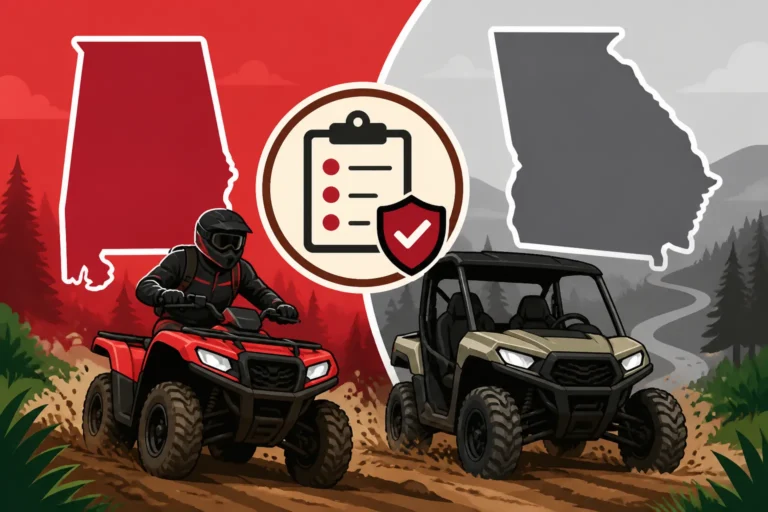
One of the most common points of confusion for many Alabamians is whether a golf cart is treated the same as an ATV or UTV. The short answer from a state law perspective is generally "no." Alabama has specific definitions for All-Terrain Vehicles (ATVs) and Recreational Off-Highway Vehicles (ROVs, which include UTVs and side-by-sides), particularly when it comes to the new titling requirements and voluntary registration. These definitions often hinge on factors like width, weight, non-highway tires, and seating arrangements. For example, you can learn more about these distinctions in articles like [Alabama Golf Cart Rules Compared to ATVs] or [Why a Golf Cart Is Not an ATV in Alabama].
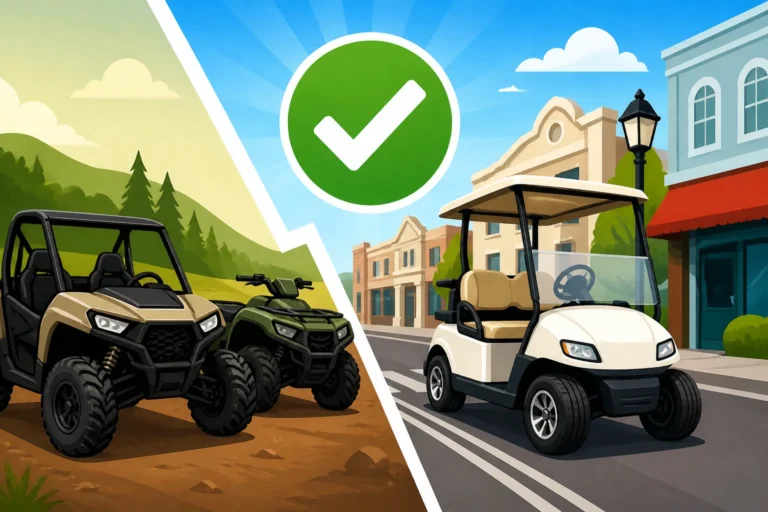
Golf carts, on the other hand, are typically designed for use on golf courses and in planned communities, with lower top speeds and different construction standards. They generally don't fit the state's legal definitions for ATVs or ROVs. This means they are not subject to the same titling laws that apply to newer ATVs and ROVs, nor are they typically eligible for the voluntary registration program through ALEA that off-road vehicles can opt into. This distinction is crucial because it means golf carts do not inherently gain any "road use" privileges that might be granted (or restricted) to registered ATVs under specific local conditions. They exist in a separate category, largely unregulated by the state for road use, which reinforces why local governments must step in to create their own rules.
When a Golf Cart Could Be Considered a Low-Speed Vehicle
Here's where it gets a little more complex. While a standard golf cart isn't typically street legal under state law, it can be modified or manufactured to qualify as a "Low-Speed Vehicle" (LSV). An LSV is a specific class of vehicle that is allowed on certain public roads in Alabama, provided it meets stringent federal safety standards and state registration requirements. This is a critical distinction, because a vehicle classified as an LSV is no longer just a "golf cart" in the eyes of the law; it's a street-legal vehicle with specific equipment mandates.
To qualify as an LSV in Alabama, a vehicle must:
- Be designed to travel at speeds greater than 20 mph but not greater than 25 mph.
- Have four wheels.
- Weigh less than 3,000 pounds.
- Meet federal safety standards for LSVs, including features like headlamps, tail lamps, stop lamps, turn signal lamps, reflex reflectors, an exterior mirror on the driver’s side and either an exterior mirror on the passenger’s side or an interior mirror, a parking brake, a VIN, and seat belts.
If your golf cart has been specifically manufactured or rigorously converted to meet all of these federal standards, it can then be registered and titled as an LSV through the proper channels, making it street legal on roads with a posted speed limit of 35 mph or less (unless prohibited by local ordinance). This is a very different process than simply adding a turn signal kit to a regular golf cart. Without meeting every single one of those federal requirements and completing the state registration, your golf cart remains just that – a golf cart – subject to local ordinances, and not automatically street legal as an LSV. You can dive deeper into these rules with resources like [Alabama Low-Speed Vehicle Rules] and [Alabama LSV Requirements Explained].
Here's a quick comparison of how these machines stack up regarding street use in Alabama:
| Feature/Category | Standard Golf Cart | Low-Speed Vehicle (LSV) | ATV / UTV (Off-Road) |
|---|---|---|---|
| Typical Use | Golf courses, private communities, short-distance transport | Public roads (35 mph limit), planned communities | Off-road trails, farm work, hunting |
| Street Legal (State) | No, generally not without local ordinance | Yes, if federally compliant and registered | No, generally (with very limited exceptions/local rules) |
| Top Speed | Typically under 20 mph | 20-25 mph | Varies widely, often much higher |
| Titling (State) | No | Yes, required for registration | Yes, for model year 2026 and newer |
| Registration (State) | No | Yes, required | Voluntary through ALEA (for off-road use) |
| Safety Equipment | Basic; can be minimal | Federal standards (headlights, mirrors, seat belts, etc.) | Varies; can be basic; some kits exist for public use, but often not legal for street use |
| Primary Regulatory Authority | Local Municipalities | State DMV (for registration/title) & Local Ordinances | State (for titling/registration) & Landowners/Parks |
Navigating Local Ordinances for Golf Cart Use
So, you're convinced that your small town is the place where golf carts shine. But how do you actually figure out the specific rules that apply to your golf cart in your town? This isn't always as straightforward as you'd hope, but with a bit of legwork, you can get the definitive answers you need to ride with confidence.
How to Research Your Specific Town's Rules
The best place to start your research is directly with your local government. Forget what your neighbor's cousin heard, or what applies in the town ten miles down the road. You need official word.
- Check the Town Website: Many municipalities, even small ones, have official websites where they post their codes of ordinances. Look for sections related to "vehicles," "traffic," "motorized conveyances," or sometimes specifically "golf carts" or "low-speed vehicles." Use the search function on their site if available.
- Contact the City Clerk or Town Hall: If the website is unhelpful, or you prefer a direct conversation, call or visit your city clerk's office or town hall. These individuals are typically the custodians of local ordinances and can either provide you with copies of the relevant rules or direct you to where you can find them. Be specific about what you're asking: "I want to know the rules for operating a golf cart on public streets in [Your Town's Name]."
- Inquire at the Local Police Department: While the City Clerk handles the official documentation, the local police or sheriff's department are the ones who enforce these rules. They can often provide practical guidance on what they look for and what common violations occur. They might even have a handout or pamphlet detailing the local golf cart regulations.
- Look for Signs: Sometimes, towns will post signs at their entry points or along specific roads indicating restrictions or permissions for golf carts. While not a comprehensive source, it can offer clues.
- Check Online Legal Databases (if comfortable): Larger Alabama cities often have their full municipal codes published on legal databases like Municode or Code Publishing Company. While this might be overkill for a small town, it's an option if you're tech-savvy and your town uses such a service. Remember, the key is to find the official ordinance for your specific town. Don't settle for general advice. [Alabama Cities With Cart Ordinances] can sometimes point you to resources, but direct contact is always best.
Common Restrictions and Requirements You Might Encounter
Once you get your hands on those local ordinances, you'll likely find a consistent theme of public safety balanced with local convenience. Here are some of the most common restrictions and requirements you might encounter:
- Designated Roads and Speed Limits: Many towns will restrict golf cart use to roads with speed limits of 25 mph or 35 mph. They may also designate specific streets where golf carts are allowed or prohibited. You might not be able to take your golf cart on a main highway running through town, even if it has a lower speed limit in that section.
- Time of Day Restrictions: It's common for ordinances to limit golf cart operation to daylight hours. If night driving is permitted, it will almost certainly require specific lighting.
- Safety Equipment: Most towns require a minimum set of safety equipment. This often includes:
- Headlights and Taillights: Essential for visibility, especially if night riding is allowed.
- Brake Lights: So drivers behind you know when you're stopping.
- Turn Signals: Crucial for indicating your intentions.
- Mirrors: A rearview mirror is almost always required; sometimes side mirrors are too.
- Reflectors: Additional visibility for other vehicles.
- Horn: To alert others.
- Seat Belts: For all occupants, especially if the cart is capable of higher speeds.
- Many of these items can be added to your cart through aftermarket kits from brands like SuperATV, which offers a wide range of accessories to enhance safety and compliance.
- Driver Requirements:
- Driver's License: Most ordinances will require the operator to hold a valid driver's license. This means teens with a learner's permit might not be eligible unless specifically stated.
- Age Limits: Even if a driver's license isn't explicitly required, there will almost certainly be an age minimum for operators, often 16.
- Insurance: Some towns may mandate liability insurance for golf carts operating on public streets.
- Local Registration/Permit: Your town might require you to obtain a local permit or sticker to operate your golf cart on its streets, often for a nominal fee. This helps the town track golf carts and ensures owners are aware of the rules. [When a Town Registers Golf Carts for Street Use] is a common practice in many Alabama communities.
- Passenger Limits: Golf carts are typically designed for a specific number of passengers. Ordinances often prohibit exceeding this capacity.
- No Impaired Operation: Just like any other vehicle, operating a golf cart under the influence of alcohol or drugs is strictly prohibited and carries serious penalties.
Ignoring these local ordinances can lead to fines, impoundment of your golf cart, or even more serious legal consequences if an accident occurs. It's always better to be informed and compliant.
Practical Tips for Alabama Golf Cart Owners in Small Towns
Even armed with knowledge of your local ordinances, owning and operating a golf cart in an Alabama small town comes with its own set of practical considerations. Beyond just staying legal, it's about staying safe and being a considerate member of your community.
Essential Safety Considerations Beyond the Law
While local ordinances will lay out the minimum safety equipment, you should always go beyond the bare necessities, especially on any public thoroughfare. Alabama roads, even in small towns, can be unpredictable.
- Enhance Visibility: Golf carts are often small and low to the ground, making them hard to see, especially at dawn, dusk, or in inclement weather. Consider adding additional reflective tape to the front, sides, and rear of your cart. Brighter, LED lighting for head and taillights can significantly improve your presence on the road. A tall, brightly colored flag (like those often used on ATVs for dune riding) can also help other drivers spot you more easily, especially if you're behind larger vehicles or navigating dips in the road.
- Maintain Your Cart: Just like any other vehicle, regular maintenance is key. Check your tires for proper inflation and wear, ensure your brakes are in good working order, and test all your lights and signals regularly. A well-maintained cart is a safer cart. Even basic parts like tires, lights, and mirrors can be easily sourced and upgraded, for example, from companies like SuperATV, to ensure your golf cart is as safe and reliable as possible for town use.
- Drive Defensively: Assume other drivers don't see you. Make eye contact when possible, use your turn signals well in advance, and be aware of your surroundings. Remember, you're operating a vehicle that is slower and less protective than a standard car. Avoid distractions like cell phones.
- Secure Passengers: Ensure all passengers are seated properly and, if available, wearing seat belts. Never allow passengers to ride on the back of the cart where they could easily fall off.
- Understand Road Conditions: Alabama's small town roads can have potholes, unexpected dips, or debris. Golf carts, with their smaller wheels and often simpler suspension, can be more susceptible to losing control or getting damaged on rough surfaces. Drive at appropriate speeds for the conditions.
- Weather Awareness: Golf carts offer little protection in severe weather. Be mindful of rain, strong winds, or extremely hot temperatures. A sudden downpour can reduce visibility and make roads slick, increasing the risk of an accident.
What to Do If Your Town Has No Specific Ordinance
What if you've done all your homework, called the city clerk, and even spoken to the police, and everyone tells you, "We don't have any specific rules about golf carts on the street"? This might sound like a free pass, but it's actually one of the riskiest situations.
If there's no specific local ordinance permitting golf cart use on public streets, then generally, state traffic laws apply, which means golf carts, in their typical form, are not allowed. Without a specific local exemption or permission, your golf cart is simply not a licensed motor vehicle, and operating it on a public street could be considered illegal. It could fall under general "unauthorized vehicle" statutes, or you could be cited for operating an unregistered or uninsured vehicle, even if it’s not an "automobile."
In this scenario:
- Err on the Side of Caution: Do not assume silence means permission. Assume it means prohibition.
- Contact Local Officials for Clarification: Get it in writing if possible. Ask if there's any precedent or informal guidance. Sometimes, small towns operate under the understanding that if it's not explicitly permitted, it's not allowed.
- Advocate for an Ordinance: If you and your neighbors want to use golf carts on town streets, consider approaching your town council. Explain the community's interest, offer to help research best practices from other Alabama towns, and advocate for a clear, safe ordinance that allows golf carts under reasonable conditions. This proactive approach can turn a risky situation into a clear, legal pathway for everyone to enjoy their golf carts responsibly.
Understanding the unique blend of state definitions and crucial local ordinances is the key to enjoying your golf cart responsibly and legally in Alabama's charming small towns. Do your homework, prioritize safety, and engage with your community to ensure everyone can share the roads safely.
Disclaimer
This article is for general informational purposes only and does not constitute professional advice. Laws, prices and regulations vary by location and change over time. Consult a qualified professional for guidance on your specific situation.