Alabama Dealers Filing Registration for You
The sheer excitement of bringing home a brand-new ATV or side-by-side in Alabama can quickly turn into a minor headache when you're faced with a stack of paperwork. Navigating sales tax, local ordinances, and especially the nuances of getting your machine properly registered can feel overwhelming. This comprehensive guide will walk you through how Alabama dealers often step in to handle the registration process for you, saving you time and stress, and ensuring your new off-road vehicle is ready for the trails and fields without a hitch.
The Initial Confusion: What Paperwork is Needed for an Alabama ATV?
Buying a new ATV or UTV is a thrilling experience, whether you're eyeing a powerful utility quad for farm work or a zippy sport side-by-side for weekend adventures. You've picked out the perfect machine, imagined all the places you'll ride, and then… you're led to the finance office. Suddenly, the open-air freedom gives way to a desk piled high with forms, signatures, and seemingly endless questions. It’s a common moment where the joy of ownership momentarily collides with the reality of administrative tasks.
The Mountain of Forms at Purchase
That initial excitement of taking delivery of your new machine can often be overshadowed by the sheer volume of paperwork involved. Beyond the sales contract itself, you're looking at documents for financing, warranty agreements, and, crucially, the forms required by the state of Alabama for your off-road vehicle. This includes things like sales tax declarations, sometimes a purchaser's certificate, and, of course, the application for registration. For many, especially first-time buyers, it can feel like trying to solve a puzzle with half the pieces missing, or worse, having too many pieces that don't seem to fit. Each line, each box, each signature seems critical, and the fear of making a mistake that could delay your riding plans is very real.
Dealers, recognizing this common frustration, have become adept at guiding buyers through this maze. They understand the specific requirements set by the state and know exactly which forms need to be filled out, what information is essential, and what fees are due. This expertise is a significant part of the value they offer beyond just selling you the machine itself.
Distinguishing Titling from Registration in Alabama
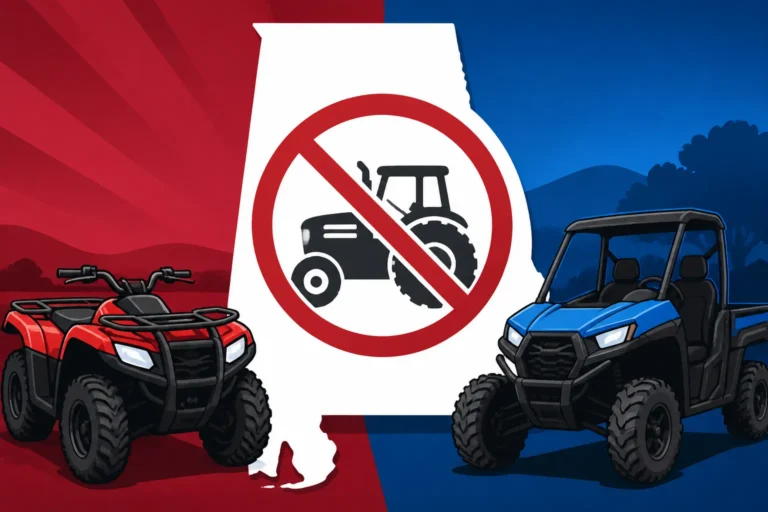
Before diving deeper into how dealers help with registration, it’s absolutely crucial to understand a key distinction in Alabama: the difference between titling and registration. These are often confused, but they serve distinct purposes and, importantly, are handled by different state agencies. As of a recent law change, Alabama has begun requiring titles for certain off-road vehicles. Specifically, machines with a model year of 2026 or newer will need an official state title, which is processed through county offices, often using the [Alabama's ALVIN System and Off-Road Titles]. This process formally establishes legal ownership, much like a car title.
However, this guide focuses on registration, which is a separate process. Registration is about getting your machine recorded with the Alabama Law Enforcement Agency (ALEA) for operating purposes. It's about getting that sticker or decal to put on your quad or side-by-side, indicating it's registered for either private or public use. Dealers in Alabama have long played a role in facilitating this registration process, and while titling is a new chapter that starts with 2026 model year machines, registration remains a vital step for nearly all new off-road vehicle owners. For an even clearer picture, remember that [Alabama Splits Titling and Registration Between Agencies], meaning you'll interact with different entities for each.
How Alabama Dealers Streamline Your Registration Process
One of the biggest conveniences an Alabama dealer offers when you purchase a new ATV or UTV is their ability to handle the registration paperwork on your behalf. This isn't just a nicety; for many buyers, it's a huge relief that transforms a potentially confusing administrative chore into a simple step in the purchase process. They act as a knowledgeable intermediary, ensuring everything is filled out correctly and submitted in a timely manner.
The Dealer as Your Registration Liaison
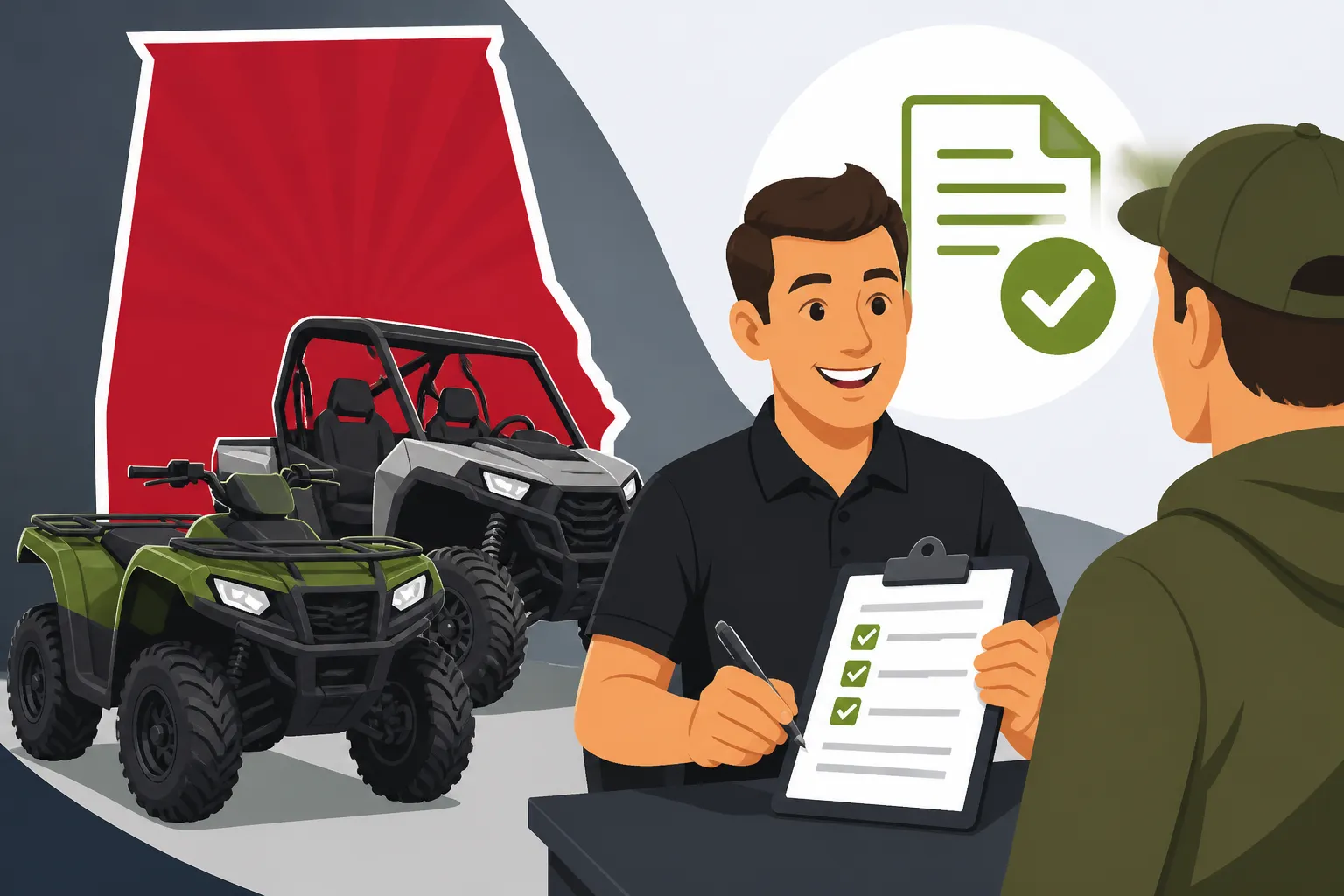
Imagine walking out of the dealership with your brand-new machine and knowing that all the confusing state paperwork for registration is already handled. That's the promise of a dealer acting as your registration liaison. When you buy an off-road vehicle, the dealer will typically offer to complete and submit the necessary registration forms to the Alabama Law Enforcement Agency (ALEA). This service is a major convenience, saving you the time, effort, and potential frustration of deciphering government forms yourself. You'll simply provide them with the required personal information and identification, sign where needed, and they take care of the rest. This often includes your name, address, contact information, and details about the machine itself, like its Vehicle Identification Number (VIN) or serial number.
The benefits here are clear: you avoid the trip to the local county office or ALEA's regional outpost, you don't have to worry about missing a crucial piece of information, and you gain peace of mind knowing that someone who does this every day is on your side. For many, this streamlined approach alone is worth any associated administrative fee the dealer might charge for their service, as it means less hassle and more time enjoying your new ride.
What the Dealer Actually Does for You
Once you've agreed to let the dealer handle your registration, their team gets to work. They'll pull the correct forms for [Alabama Registration Paperwork Explained], which include the application for off-road vehicle registration. They'll accurately transcribe all the details of your purchase and your personal information onto these documents. This includes the make, model, year, and crucially, the serial number of your new ATV or UTV, ensuring that all information is consistent and correct. They also collect the appropriate registration fees and any associated issuance charges, bundling them together for submission.
After all forms are completed and fees are paid, the dealer then forwards the entire packet to ALEA for processing. This process means they are familiar with the specific channels and requirements for submitting these applications, which minimizes the chance of errors that could lead to delays. While you'll still have a waiting period before your physical registration decal and certificate arrive in the mail, the dealer's role ensures that the initial submission is as smooth as possible. For someone looking to understand what information is required on various legal documents, or if you're engaging in a private sale later on, resources like LawDepot can be incredibly useful for generating customized bills of sale and other essential forms, providing a clear template for all the critical details.
Understanding the Alabama Off-Road Registration System (ALEA)
To fully appreciate the dealer's role, it helps to understand the larger context of off-road vehicle registration in Alabama. This isn't just about putting a sticker on your machine; it's part of a state-wide effort to manage and track these vehicles for safety, public land access, and resource management. The system is designed to be straightforward, but it has important distinctions that every owner should know.
The Alabama Law Enforcement Agency's Role
In Alabama, the registration of all-terrain vehicles (ATVs) and utility task vehicles (UTVs) falls under the purview of the Alabama Law Enforcement Agency, more commonly known as ALEA. This agency is responsible for administering the state's off-road vehicle laws, including the registration program. The primary purpose of this registration is multi-faceted. It helps the state identify vehicle owners, which is crucial in cases of theft or accidents. It also provides a mechanism for collecting fees that often go towards supporting the very trails and public riding areas that off-road enthusiasts enjoy.
When your dealer submits your registration application, it's sent directly to ALEA. They process the application, record your machine's details in their database, and then issue the official registration certificate and decal. This centralized system ensures consistency and compliance across the state, giving riders confidence that their registration is recognized and valid wherever they choose to ride legally in Alabama.
Public Use vs. Private Use: What Your Dealer Will Ask
One of the most important questions your dealer will ask during the registration process is how you intend to use your ATV or UTV. Alabama's registration system offers two distinct tiers: [Alabama Public Use Versus Private Use]. This distinction is critical because it dictates the fee you pay and, more importantly, where you are legally allowed to operate your machine.
- Public Use Registration: This tier is for riders who plan to operate their ATV or UTV on designated public lands, such as state-managed OHV parks or specifically approved trails. This registration typically carries a higher fee because it contributes to the maintenance and oversight of these public riding areas. If you envision yourself exploring the vast trails at places like Stony Lonesome OHV Park, you'll definitely need the public use registration. Your dealer will ensure you select this option if you indicate any intention of riding off your own property or private land. For more details, see [Alabama Public Use ATV Registration Explained].
- Private Use Registration: This tier is designed for owners who intend to use their ATV or UTV exclusively on private property, such as their own land, leased hunting grounds, or private timber company roads with permission. The fee for private use registration is considerably lower because it doesn't contribute to public trail infrastructure. If your machine is strictly for work around your farm, for hunting on private acreage, or for recreation solely on your own land, this is the appropriate choice. Your dealer will confirm this with you to make sure you're not paying for public access you don't need. You can learn more by reading [Alabama Private Use ATV Registration Explained].
Understanding this distinction at the time of purchase, with your dealer's guidance, saves you from potential legal issues or the need to re-register later if your riding habits change.
Fees, Processing, and What to Expect After the Dealer Files
So, you've selected your machine, signed the papers, and let the dealer handle the registration. What happens next? It’s natural to wonder about the financial outlay and how long until you can officially hit the trails with your new decal. Knowing what to expect regarding fees and processing times can help manage your expectations and prevent any surprises down the road.
Breaking Down the Costs: Registration and Issuance Fees
When your dealer takes care of your registration, they're collecting a couple of distinct fees on behalf of the state. First, there's the actual [Alabama Registration Cost] for the off-road vehicle itself. This is the primary fee that grants you the right to operate your machine in accordance with Alabama law, for either private or public use, depending on your selection. The amount will vary based on which of those two tiers you choose, with public use being a higher cost than private use.
In addition to the registration fee, there's also an [Alabama's $2.50 Issuance Fee]. This small charge is collected by ALEA for the administrative cost of processing your application, printing your certificate, and mailing out your decal. While it might seem like a minor detail, it's a standard part of the process and something your dealer will factor into the total amount you pay upfront. Dealers are very transparent about these costs, itemizing them clearly on your purchase agreement so you know exactly what you're paying for and what goes to the state for registration. They act as a convenient collection point, ensuring all required funds reach the appropriate state agency.
The Waiting Game: How Long Until Your Decal Arrives
Once your dealer submits your completed registration paperwork and all the necessary fees to ALEA, a period of anticipation begins. While the dealer's efficiency significantly speeds up the initial submission, the actual processing time by the state agency can still take a little while. This isn't due to any error on the dealer's part, but rather the volume of applications ALEA handles. You can generally expect to wait a few weeks for your official registration certificate and decal to arrive in the mail. This timeframe can vary depending on seasonal demand, so patience is key. For more detailed information, it's worth checking [Alabama Registration Processing Time].
During this waiting period, you might feel a bit antsy to ride. If you plan to operate your machine immediately on private land, it's wise to have your bill of sale handy as proof of ownership. For buyers looking for robust, printable legal documents that clearly outline the sale details, resources like LawDepot can be invaluable for creating a comprehensive bill of sale that serves as strong interim proof of ownership. This can be especially helpful if you encounter any questions about your machine's status before the official registration documents arrive.
What Your Registration Gets You: Decals and Documentation
When your registration process is complete, you'll receive a couple of very important items in the mail. First, and most visibly, you'll get a registration decal. This is a small sticker that you are required to affix to a visible part of your ATV or UTV, typically on the left-hand side of the machine, according to state guidelines. This decal is your official proof that your off-road vehicle is registered with ALEA for the current period.
Along with the decal, you'll also receive a registration certificate. This is a paper document that contains all the details of your registration, including your name, address, the machine's information (make, model, serial number), and the validity dates of the registration. It's crucial to carry this certificate with you whenever you operate your ATV or UTV, especially when riding on public lands or anytime you might encounter law enforcement. The registration is valid for three years from the date of issuance, a generous period that means you won't have to think about it again for a while. For more on this, check out [Alabama Registrations Run Three Years]. When those three years are up, you'll need to renew it, but for now, you're all set to ride legally within the bounds of your chosen registration tier.
Potential Pitfalls and Why Dealer Assistance Matters
Even though the Alabama off-road vehicle registration process is designed to be user-friendly, it’s not without its potential stumbling blocks. Attempting to navigate the forms and requirements yourself can sometimes lead to frustrating delays or outright rejection. This is precisely where the value of a dealer's experience truly shines, offering peace of mind and saving you from unnecessary headaches.
Common Mistakes When Filing Registration Yourself
If you choose to bypass the dealer's offer to handle registration and attempt to file it yourself, you might quickly realize why their service is so appealing. The forms, though seemingly simple, can hide subtle complexities that trip up even the most diligent individual. One of the most common mistakes is incomplete paperwork. Forgetting to fill in a crucial field, leaving a signature line blank, or omitting a piece of identifying information can lead to your application being sent back, delaying your registration by weeks. Another frequent error involves incorrect fees. The registration fee varies between public and private use, and sometimes people pay the wrong amount, either overpaying or underpaying, which again requires a resubmission.
Then there's the critical information about your machine itself. Miswriting the serial number – a unique identifier for your ATV or UTV – is a significant problem, as this is how the state tracks your specific vehicle. For insights into this, see [Alabama Serial Numbers on the Application]. Finally, incorrectly classifying your intended use (public vs. private) can lead to issues, as you might pay for the wrong tier or find yourself riding illegally if your actual use doesn't match your registration. All these errors mean wasted time, frustration, and a delay in getting your machine officially recognized.
The Value of Dealer Expertise and Avoiding Headaches
This is where the dealer's expertise becomes invaluable. They handle these forms daily, sometimes multiple times a day, and are intimately familiar with every detail and requirement. Their staff are trained to ensure that every field is correctly completed, every signature obtained, and every fee accurately calculated and collected. They know the current fee schedules, understand the nuances of public versus private use classification, and are meticulous about transcribing critical information like serial numbers.
By letting the dealer file your registration, you're effectively outsourcing a potentially frustrating bureaucratic task to a professional. This minimizes the risk of errors, avoids the dreaded "application returned for correction" letter, and ensures a much smoother and faster path to getting your official registration decal in hand. The peace of mind that comes from knowing it's handled correctly from the outset allows you to focus solely on planning your first ride. Furthermore, if you ever decide to sell your machine privately down the line, ensuring you have clear, comprehensive records of your initial purchase and registration is vital. For private sellers, tools like LawDepot can be incredibly useful for drafting legally sound bills of sale, helping you provide the next buyer with robust paperwork and avoiding any ambiguity during the transfer process.
Beyond the Initial Purchase: Future Registration Needs
While your dealer handles the initial hurdle of getting your new ATV or UTV registered in Alabama, the journey with your machine continues. As an owner, you'll encounter future scenarios that require you to interact with the registration system again. Understanding these processes beforehand will empower you to manage your off-road vehicle's legal status effectively throughout its lifespan.
Renewing Your Alabama ATV Registration
Your Alabama ATV or UTV registration is not a one-time event; it's valid for a period of three years. As that three-year mark approaches, ALEA will typically send you a renewal notice to the address they have on file. This notice will include instructions on how to renew your registration. The process is generally straightforward and can often be completed by mail or, in some cases, online or through an authorized agent. You'll need to provide updated information if anything has changed, pay the renewal fee (again, choosing between public and private use), and soon enough, a new decal and certificate will arrive for the next three-year period. It's an important step to ensure continuous compliance and avoid any lapses that could prevent you from riding legally. Keeping an eye on your registration expiration date is crucial, but ALEA's notification system helps remind you. More details can be found by consulting [Alabama Registration Renewal After Three Years].
Transferring Registration After a Private Sale
Life happens, and sometimes you might decide to sell your ATV or UTV, or perhaps you buy a used machine from a private seller. In these scenarios, transferring the registration correctly is paramount. If you're the seller, you'll want to ensure the registration is transferred out of your name to avoid any future liability. If you're the buyer, you need to get the registration into your name to prove legal operation. This process typically involves the new owner completing a new registration application, providing proof of ownership (like a bill of sale), and paying any applicable transfer fees and registration costs. For guidance on creating a proper document for this, remember that [Alabama Bill of Sale Requirements] are specific, and a robust bill of sale is your best friend.
A key piece of this puzzle for private sales is having a clear, comprehensive bill of sale. This document serves as undeniable proof that the ownership of the machine has changed hands, detailing the buyer, seller, sale price, and most importantly, the machine's identifying information like the serial number. For individuals engaging in private sales, either as a seller or a buyer, preparing a professional and legally sound bill of sale can be simplified by using services like LawDepot. They provide customizable templates that ensure all the necessary legal clauses and details are included, giving both parties peace of mind and making the registration transfer process much smoother for the next owner. This commitment to proper documentation ensures a seamless transition of ownership and continued legal riding for the machine's new custodian. Find out more about this process in [Alabama Registration Transfer After a Sale].
Table: Dealer-Filed vs. Self-Filed Alabama ATV/UTV Registration
To summarize the key differences and benefits of having your dealer handle the registration versus doing it yourself, here's a quick comparison:
| Feature | Dealer-Filed Registration | Self-Filed Registration |
|---|---|---|
| Convenience | High; often part of the purchase process at the dealership. | Low; requires personal time for research, form completion, and submission. |
| Accuracy | High; dealers are experienced and trained in the process. | Varies; prone to errors if unfamiliar with forms and requirements. |
| Time Saved | Significant; no need to visit ALEA or mail forms. | Minimal; time spent on research, filling forms, and submission. |
| Fees | State registration/issuance fees, plus possible dealer administrative fee. | State registration/issuance fees only. |
| Knowledge | Dealer provides expertise on public vs. private use, correct forms. | Requires personal research into state laws and forms. |
| Delay Risk | Low; streamlined submission reduces chance of errors and returns. | Moderate to high; errors can lead to applications being returned and re-filed. |
| Proof of Sale | Dealer handles most documents; often provides you with copies. | Requires you to create and maintain all records, potentially using services like LawDepot for robust documents. |
Disclaimer
This article is for general informational purposes only and does not constitute professional advice. Laws, prices and regulations vary by location and change over time. Consult a qualified professional for guidance on your specific situation.