First Aid on a Long Stony Lonesome Loop
A small injury can become a serious problem when your group is deep into a long ride at Stony Lonesome, especially if the trail is muddy, cell service is weak, or nobody knows the route back to the entrance. This guide helps you plan a practical first-aid kit, prepare your group, and respond calmly while arranging help.
Plan for an Emergency Before the Ride
Know where you are and how to get help
Before unloading in Bremen, make a simple emergency plan with everyone riding. Confirm the park’s current rules, operating details, and emergency procedures directly with park staff. Ask how they want riders to report an injury and whether there are designated meeting points or trail markers responders use. Park information can change, so don’t rely on an old screenshot or a friend’s memory.
Make sure every rider knows the park entrance or another agreed meeting point. If someone has to leave the group to get help, the rest of the riders should know whether to stay put, move to a safer nearby location, or follow the park’s instructions. A vague plan like “we’ll meet back at the truck” is less useful when the group is spread across unfamiliar trails.
Save the park’s address and phone number in your phone before riding, and know how to explain your location without relying on a street address. Trail names, intersections, numbered markers, gates, bridges, and other visible landmarks can help narrow down where you are. If you call 911, describe what happened, the injured person’s condition, the closest recognizable marker, and the safest way to reach the group. Follow the dispatcher’s directions.
A trail map can help you orient yourself, but it is not a substitute for the park’s current information or emergency instructions. An app such as onX Offroad may help you plan a route and check your position, particularly if you prepare maps for offline use where available. Keep your phone charged, carry a backup power source, and remember that a map app cannot call for help or guarantee that a route is open.
For related planning, review Alabama Trail Conditions Before You Tow and Alabama Trail Closures After a Storm. A route that looked easy on a dry morning may feel very different after rain, especially when a rider is hurt and the group is trying to move slowly.
Set a group check-in routine
Choose a lead rider and a sweep rider before the group sets out. The lead should know the planned route and riding pace; the sweep should make sure no one is left behind. Agree that riders will stop at clear regroup points rather than continuing ahead whenever someone falls out of sight.
A check-in can be as simple as counting riders after a difficult section, at a major turn, and whenever the group stops. If someone takes a hard hit or says they feel unwell, stop and check on them instead of assuming they will catch up. A rider may initially insist they are fine because they feel embarrassed or don’t want to delay the group. Take complaints of dizziness, confusion, severe pain, or trouble breathing seriously.
If the group splits, agree on a specific meeting point and a time to regroup. Avoid sending a single person off alone to find the trailhead if they are unfamiliar with the route. When possible, keep at least two people with an injured rider while another person seeks help, so nobody is left unsupported.
Build a First-Aid Kit for a Long Trail Ride
Pack for common problems, not every imaginable emergency
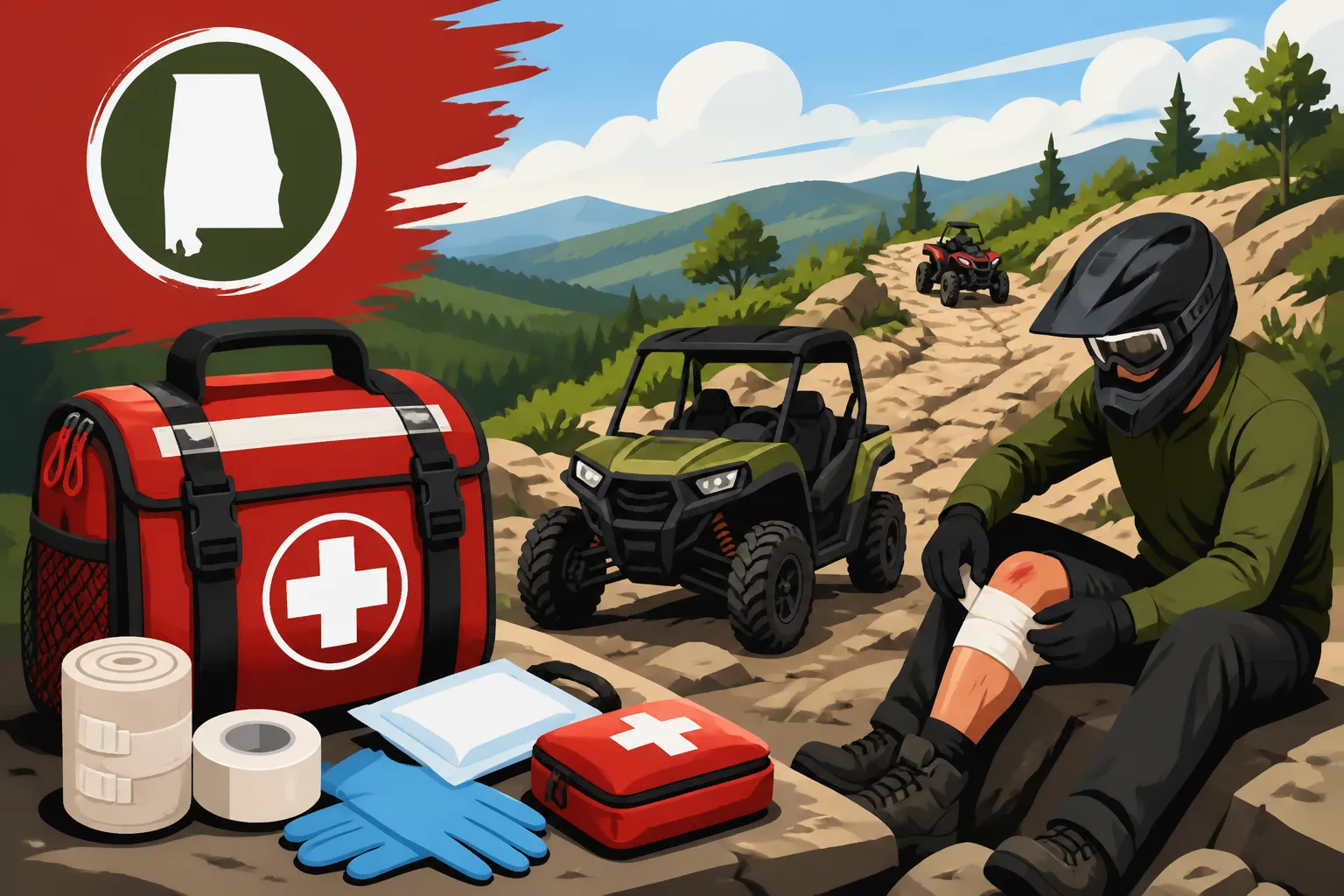
A useful first-aid kit is one that is accessible, protected from water, and familiar to the people carrying it. A compact kit can cover common minor problems such as cuts, scrapes, blisters, and small burns. For a longer ride, consider packing sterile gauze, adhesive bandages in several sizes, medical tape, antiseptic wipes, disposable gloves, a triangular bandage, tweezers, and a small pair of scissors. Bring any personal medications you may need, and store them according to their labels.
Add supplies based on your group and conditions. For example, a ride on a hot, humid day may call for extra drinking water and an oral rehydration product used according to its package directions. A trip with children, riders with known allergies, or people with medical conditions may require additional planning. Don’t assume another rider has medication or equipment they need; ask privately before the ride and agree on what should be carried.
A basic kit does not make an untrained rider a medical professional. If you add equipment such as a tourniquet, learn how it is intended to be used and consider taking a recognized first-aid course. In an emergency, use equipment only within your training and follow instructions from emergency dispatchers. Check the kit before each trip so you don’t discover that the gloves are torn or the supplies have been soaked.
Carry supplies where you can reach them
A first-aid kit buried under camping gear or strapped inside a vehicle parked far from the trail is not much help during a ride. Keep a small, clearly marked kit on a person or on a machine that stays with the group. If your main kit is in the tow vehicle, carry a smaller trail kit as well.
Use a waterproof pouch or hard case, and keep the contents from rattling loose. Tell the group where the kit is and who knows how to open it. If your group uses several machines, decide which one carries the main kit and make sure that machine does not disappear ahead on the trail.
A practical packing checklist can help you avoid bringing a kit that is either too bare or too bulky:
| Need | Useful items to consider | Planning note |
|---|---|---|
| Minor cuts and scrapes | Bandages, gauze, tape, antiseptic wipes | Keep supplies clean and dry |
| Gloves and basic tools | Disposable gloves, tweezers, small scissors | Use gloves when helping with blood |
| Support and covering | Triangular bandage, extra gauze | Pack items you know how to use |
| Heat and hydration | Drinking water, shade, suitable rehydration supplies | Plan for the weather and ride length |
| Personal needs | Prescribed medication and allergy information | Keep medication accessible and correctly stored |
| Communication | Charged phone, backup power, written contact details | Don’t depend on cell service alone |
For a more complete packing plan, see Packing for a Humid Day Out and First Aid on a Long Stony Lonesome Loop. Check supplies after every ride, replace anything used, and discard items that are damaged or no longer suitable.
Respond Calmly When Someone Gets Hurt
Make the scene safe before treating the injury
When a rider goes down, pause before rushing in. Look for immediate hazards such as moving machines, unstable ground, traffic, fire, or another rider approaching around a blind turn. Ask someone to warn approaching riders and, if appropriate, have the group move machines out of the way without creating a second hazard.
Once the area is safer, check whether the person responds and whether they appear to be breathing normally. If they are unresponsive, having difficulty breathing, bleeding heavily, or showing signs of a life-threatening injury, call 911 promptly. If you have no service, send a designated person to seek help using the group’s agreed plan. Give the person’s location as clearly as possible and follow the dispatcher’s instructions.
For serious bleeding, apply firm, direct pressure with clean gauze or cloth if you can do so safely. If the bleeding is severe and you are trained to use a tourniquet, follow your training and the device instructions. Do not remove an object that is stuck in a wound; apply pressure around it and wait for professional help. Don’t give food or drink to someone who is seriously injured or may need urgent medical care.
A hard fall can injure the head, neck, or back even when the rider is talking. Avoid moving someone with a suspected spinal injury unless there is an immediate danger where they are. Keep them as still and comfortable as possible, monitor their condition, and follow emergency dispatcher guidance. Do not remove a helmet unless it is necessary to protect the person’s breathing or you are specifically directed by a trained responder.
Watch for heat illness and delayed symptoms
Alabama heat and humidity can wear riders down before they realize how depleted they are. Headache, unusual fatigue, dizziness, nausea, muscle cramps, and weakness are reasons to stop riding and get the person to a cooler place. Loosen unnecessary gear, offer small amounts of water if the person is alert and able to drink, and arrange help if symptoms are severe, worsening, or not improving.
Confusion, fainting, seizures, or loss of consciousness are emergency warning signs. Call 911 and follow the dispatcher’s directions. Don’t try to make a severely confused or unconscious person drink. Keep monitoring them while help is on the way, and share when the symptoms began and what happened before they appeared.
After a collision or rollover, symptoms may also become clearer with time. A rider who seems steady immediately afterward may later develop worsening pain, confusion, vomiting, numbness, or difficulty moving. Don’t pressure someone to “walk it off” just to keep the ride moving. Stop, reassess, and seek professional help when symptoms suggest a serious injury.
Keep the Ride Manageable After an Injury
Don’t let the group turn a rescue into another accident
An injury can make everyone anxious, but crowding around the rider or sending multiple people off in different directions can create confusion. Assign clear roles: one person stays with the injured rider, one contacts emergency services or park staff, and another watches for approaching machines or helps guide responders. Keep the rest of the group in a safe location.
If the injured rider needs to be moved, first get guidance from emergency dispatch or trained responders whenever possible. Moving someone with a serious injury can make matters worse. If an immediate hazard makes movement unavoidable, use the safest option available and avoid unnecessary twisting or pulling. Don’t attempt to carry someone on another ATV or UTV unless emergency personnel direct you to do so and it can be done safely.
The group should also avoid riding off in a hurry to find help without telling anyone where they are going. Leave a clear message with the person staying behind, including who is leaving, which route they plan to take, and where they intend to contact help. If there is a park procedure for emergencies, follow it rather than improvising.
Review what happened before the next outing
Once everyone is safe, take a few minutes to note what worked and what did not. Was the location easy to describe? Could the group reach the first-aid kit? Did everyone understand who was calling for help? These questions are not about blaming the injured rider. They help you make the next trip less stressful.
Restock used supplies, recharge phones and power banks, and update any route notes. If the incident involved a trail condition, fallen tree, or confusing junction, report it to park staff through the appropriate channel. Before your next visit, check Alabama Trail Etiquette Locals Expect and Calling Ahead for a Reservation for other details that can make a riding day easier to plan.
Finally, make the return ride fit the circumstances. If someone is shaken, sore, overheated, or unsure about continuing, don’t treat finishing the loop as the priority. A shorter ride or an early trip back is a sensible outcome. Good preparation is not a promise that nothing will happen; it gives your group a calmer way to respond when the day doesn’t go according to plan.
Disclaimer
This article is for general informational purposes only and does not constitute professional advice. Laws, prices and regulations vary by location and change over time. Consult a qualified professional for guidance on your specific situation.