Calling a Park When the Website Is Dead
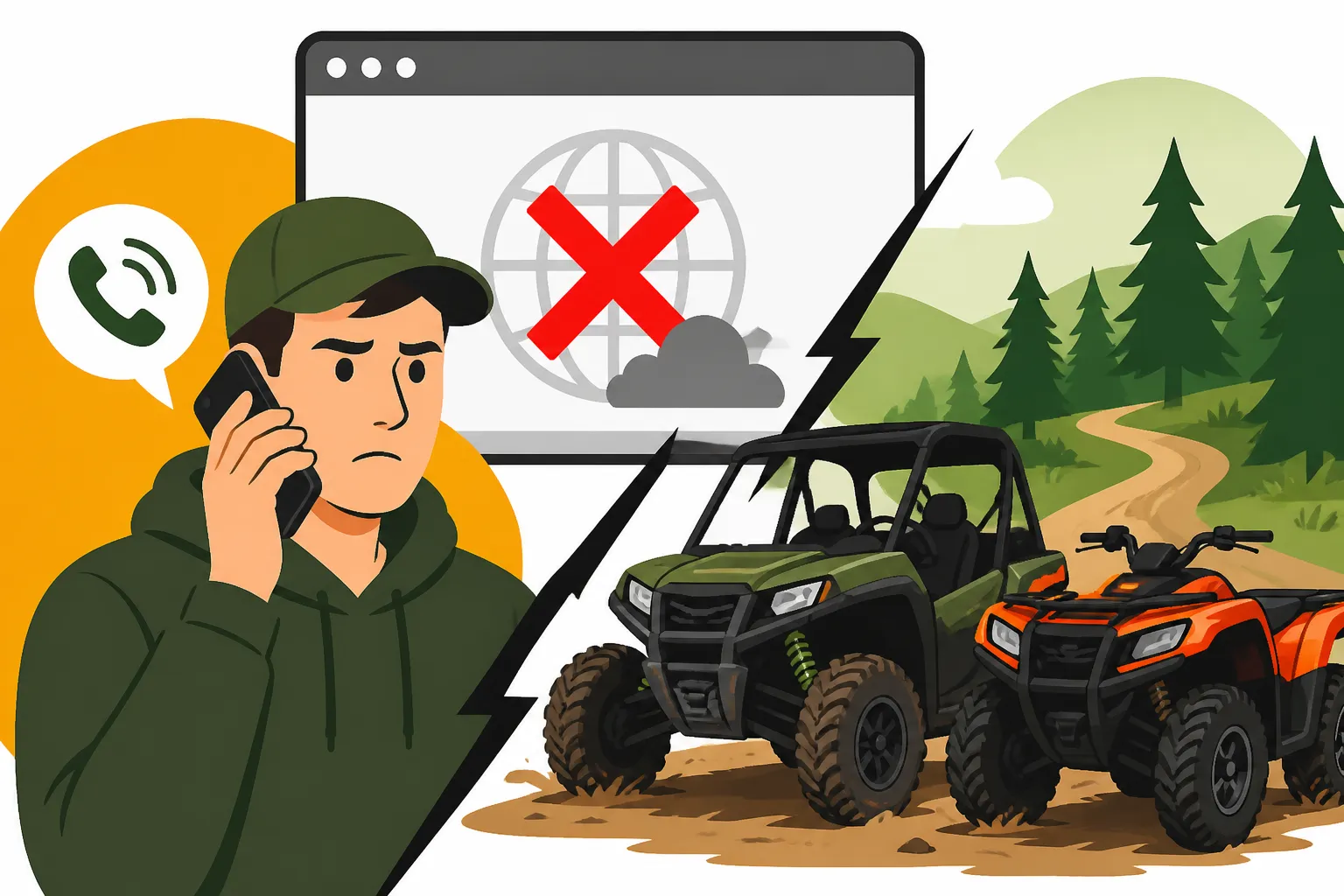
A park website that will not load can derail an Alabama riding weekend before you even hitch up the trailer. You may need to confirm that the park is operating, whether your machine is allowed, and what to expect at the gate. A direct call can fill those gaps—if you ask focused questions and verify the details that matter before you leave home.
Start with the information you need to confirm
Check whether the park is open to riders
A broken website does not necessarily mean a park is closed, but it also is not evidence that the park is operating normally. Before making a long drive, try to confirm directly with the park whether it is currently accepting riders, which days it is open, and whether any temporary closures affect the trails or facilities you plan to use.
This matters in Alabama because a day that looks straightforward on a map can involve a substantial tow from home. Someone leaving Birmingham for a planned ride near Cullman, for example, may want to know whether the gate will be open, whether the park is hosting an event, and whether a section of trail is closed after heavy rain. A quick call can help you avoid arriving at a locked gate or finding out that the riding area is limited.
Ask about the date you plan to visit rather than relying on a general answer about normal operations. A park may have different arrangements for weekdays, weekends, holidays, events, or weather-related closures. If you are asking well ahead of time, confirm again before departure, especially if the forecast calls for heavy rain or storms.
For a starting point on comparing Alabama destinations, see Alabama ATV Trails: Where to Ride. If you are considering a particular facility, park-specific information such as Stony Lonesome OHV Park in Alabama or Minooka Park Riding in Alabama can help you identify what to ask, but direct confirmation is still sensible when the official site is unavailable.
Confirm that your machine and riding group are eligible
Do not stop at “Are you open?” Ask whether the park allows your type of machine and whether any restrictions apply to its size or setup. A park may have different rules for ATVs, side-by-sides, dirt bikes, or other off-highway vehicles. Width, passenger capacity, sound, tires, and other equipment can matter depending on the park’s rules and the trails available.
Be ready to describe the machine clearly. Instead of asking only whether “a UTV” is allowed, give the model type, approximate width, and number of seats. If you are bringing a larger side-by-side, ask whether it can use all trails or only certain routes. For a quad, mention any unusual features that could affect access, such as oversized tires or a loud exhaust. You are not trying to negotiate an exception; you are trying to find out whether the machine fits the park’s requirements before making the trip.
Ask about the entire group, too. If children are riding, find out what age limits, supervision rules, helmet requirements, and passenger rules apply. A park’s requirements may be stricter than what you assume based on general state rules, and the rules at one private riding area may differ from those at another. The park’s own answer is the most useful guide for its gate and trails. You can also read Alabama Private Park Helmet Rules and [Alabama Rules for Young Riders] to help make a list of questions.
Get the practical details, not just a yes
A “yes, we’re open” answer leaves a lot unresolved. Ask where riders should check in, what time the entrance or office opens, whether you need a reservation, and how payment works. If you are staying overnight, confirm whether camping is available for the dates you want and whether you need to book separately from riding admission.
Ask what you need to bring. Some parks may require a waiver, proof of age for a minor, or other paperwork. Ask whether a parent or guardian must be present to sign for a child. If the park has rules about helmets, spark arrestors, sound, passengers, pets, or alcohol, get the requirements before you arrive so no one in your group is surprised at the gate.
It also helps to ask whether the person answering is reading current information or recalling the usual routine. You might phrase it this way: “Could you confirm the rules for this Saturday, including whether our four-seat side-by-side can ride and whether we need a reservation?” That makes it easier to spot a general answer that does not address your actual visit.
Make the call efficient and useful
Prepare a short question list before dialing
When a website is down, it is tempting to call and ask, “What do I need to know?” That can lead to a rushed conversation in which you forget the detail that matters most. Before calling, write down your planned date, the number of people, the machine types, and whether you need riding access only or camping as well.
Use a checklist like this:
| What to confirm | Helpful question |
|---|---|
| Operating status | Are you open to riders on the date we plan to visit? |
| Weather or trail limits | Are any trails or facilities closed right now? |
| Machine access | Are our ATV or side-by-side types allowed, and are there width limits? |
| Group rules | What age, passenger, helmet, and supervision rules apply? |
| Reservations | Do we need to reserve riding access, camping, or both? |
| Arrival | Where do we check in, and when does the gate or office open? |
| Payment | What payment methods are accepted at the park? |
| Required items | Do riders need a waiver, permits, proof of age, or specific equipment? |
| Changes | Where should we check for an update before driving out? |
You do not need to read every question word for word. The list is there to keep the important points from slipping away while you are juggling a work call, a noisy background, or a group chat full of “Are we still going?” messages.
If you are bringing several machines or a mixed group, give the person answering a clear picture. For example: “We have two quads and one four-seat side-by-side, with two adults and two teenagers. We’re hoping to ride Saturday and camp overnight. What should we confirm before we come?” Specifics help the park give a useful answer rather than a broad one that may not fit your group.
Ask who is answering and how current the information is
Parks may rely on different people to answer calls: a manager, a gate attendant, a campground host, or someone helping with general enquiries. If the answer affects whether your trip can happen, politely ask whether that person can confirm the detail for your visit date or direct you to someone who can.
You can also ask when the park last updated its schedule or trail information. If the answer is based on the normal routine rather than a check of current conditions, treat it as provisional. A park may have a familiar weekly schedule but still change access because of rain, maintenance, staffing, a special event, or another temporary issue.
If you receive an important answer verbally, repeat it back before ending the call: “Just to make sure I understood, we can bring the side-by-side, but it is limited to the wider trails, and we need to check in at the main office?” This simple step can catch misunderstandings while the person is still on the phone.
Keep a record and confirm again before departure
Write down the date and time of the call, the name or role of the person you spoke with if offered, and the main details you were given. This is especially useful when you are coordinating several families or towing from a distance. You can share the notes in the group chat rather than asking everyone to rely on a half-remembered conversation.
For a plan made well in advance, make a second call closer to your departure. Ask whether anything has changed and whether the same access rules still apply. This is not about challenging the first answer; it is a practical check against weather, closures, event schedules, or updates that happened after the original call.
If nobody answers, try again at a different time, leave a concise voicemail, and look for a second official contact channel. A social media page or a park’s recorded phone message may offer updates, but distinguish between official park information and comments from riders. If a detail cannot be confirmed—especially whether the park is open or whether your machine is allowed—consider choosing another destination rather than assuming the best.
Use other tools carefully when the official site is unavailable
Treat maps and listings as clues, not confirmation
A map can help you understand where a park is, how you might approach it, or what other riding areas are nearby. It cannot reliably tell you whether a gate is open, whether trail access is restricted, or whether a park has changed its rules. Search listings, old reviews, and directory pages can also remain visible after information becomes outdated.
Apps such as onX Offroad can be useful when you are planning routes and looking for public or mapped off-road access. But a trail line on a map is not the same thing as permission to ride at a private park or on land that has access restrictions. Use onX Offroad as a planning aid, then confirm entry, current operating status, and machine rules with the park or the land manager.
This distinction is important around Alabama’s mix of private parks, public land, timber property, and other riding areas. A route appearing on a map does not automatically mean it is open to all vehicles or available on the day you arrive. For a broader look at finding destinations, Alabama ATV Trail Map Downloads can help you think about map resources, while Alabama Public Land Rules Compared to Private explains why access rules can depend on who manages the land.
Have a backup plan that is genuinely rideable
If you cannot confirm the park, identify a backup before loading up. Do not choose one just because it looks close on a map. Check whether the alternative is open to your machine type, whether riders need a permit or reservation, and whether the area allows the activity you have in mind.
For example, a private park, a county riding area, and a Wildlife Management Area are not interchangeable. Public-land access can depend on specific rules, permits, seasons, and designated routes. A trail that seems available in an app may have restrictions that are not obvious from the map view. If your backup is on a WMA, learn what applies to that specific area and date; [Alabama WMA Riding Rules for Quads] is a useful place to start.
Keep the backup realistic for your group. If you have young riders, a large side-by-side, or someone who needs accessible facilities, confirm those needs just as carefully as you did for the original destination. A backup plan should save the day, not create a second round of uncertainty after you have already driven across the county.
Decide what you will do if you cannot reach anyone
Set a simple cutoff before the trip: if the park cannot confirm that it is open and suitable for your group by a particular point in your planning, you will switch to a verified option or reschedule. That can feel disappointing, especially after everyone has arranged time off, but it is usually less frustrating than towing a trailer to find out the park is closed or your machine is not permitted.
If you are already on the road, avoid treating a closed or unstaffed entrance as an invitation to enter. Do not ride onto adjacent land, use an unmarked route, or assume that a gate left open means access is allowed. Contact the park or land manager and wait for clear permission. For another visit-planning checklist, see [Questions Worth Asking a Park Office].
A few minutes of preparation can make a dead website much less of a problem. Confirm the date, machine access, group rules, reservations, arrival process, and a way to check for last-minute changes. Then keep your notes handy, verify again before departure, and use maps as planning tools—not as substitutes for permission or current park information.
Disclaimer
This article is for general informational purposes only and does not constitute professional advice. Laws, prices and regulations vary by location and change over time. Consult a qualified professional for guidance on your specific situation.