Alabama Riding Compared to Georgia
A ride that looks simple on a map can turn into a frustrating day when the trail is closed, your UTV is too wide, or the land has rules you didn’t expect. Alabama and Georgia both offer satisfying off-road riding, but access, permits, terrain, and park policies differ. This guide helps you compare them before you load the trailer and head out.
Alabama and Georgia offer different kinds of riding
Alabama is a strong choice for private parks and red-clay trails
In Alabama, private off-road parks are often the most straightforward option for a planned day of riding. Places such as Stony Lonesome OHV Park near Bremen and Minooka Park near Jemison give riders a defined destination, with trail systems and park-specific rules. Before setting out, confirm that the park is operating, which machines it allows, and whether the trails suit your group’s experience.
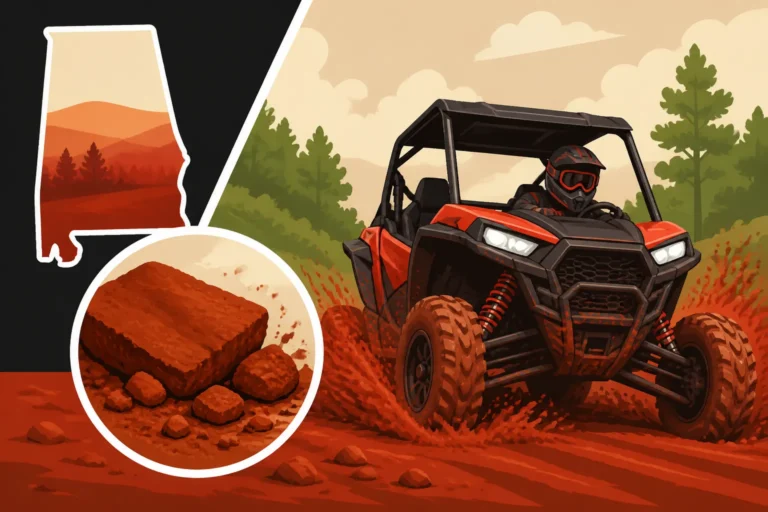
Alabama’s red clay can make a trail feel very different after rain. A route that is manageable in dry conditions may become slick, deeply rutted, or harder on tires and driveline components when wet. That can be part of the fun for experienced riders, but it may be a poor fit for a family group or a first outing. Checking local conditions and closure notices before towing is especially worthwhile.
The state also has public lands, but public ownership does not automatically mean off-road access. A national forest road, wildlife management area, timber road, or power-line cut may have restrictions on vehicle type, season, route, or permit. For more planning context, see [Alabama ATV Trails: Where to Ride] and [Alabama Public Land Rules Compared to Private].
Georgia offers national forest routes and private riding destinations
Georgia’s riding options include private parks as well as designated off-highway vehicle areas on federal land. In the north, riders may look into areas around Blairsville and Suches, including designated OHV routes in the Chattahoochee-Oconee National Forest. These settings can offer a very different experience from a managed private park: access may depend on route designation, seasonal conditions, closures, and the type of vehicle permitted.
Georgia also has private riding destinations, including Highland Park Resort near Cedartown. As with any park, check directly before traveling. Operating schedules, trail access, machine-width limits, admission policies, and camping arrangements can change, and a trail system that works for one ATV may not allow a larger side-by-side.
The practical difference is not that one state is universally better. Alabama may be easier when you want a private park destination and a familiar red-clay ride. Georgia may appeal if you’re looking for designated forest OHV routes or a different mountain-country setting. In either state, confirm that the specific trail—not just the surrounding land—is open to your machine.
A quick comparison before you choose
| Planning factor | Alabama | Georgia |
|---|---|---|
| Common ride-planning approach | Private parks are a practical starting point; public-land access requires checking specific rules | Private parks and designated federal OHV areas may both be options |
| Conditions to prepare for | Red clay can become slick and deeply rutted after rain | Mountain terrain and forest routes may bring changing conditions and closures |
| Best first check | Park rules, trail conditions, and machine eligibility | OHV route designation, closures, and vehicle eligibility |
| Registration and permissions | Alabama has a voluntary ATV and ROV registration system; registration is not the same as permission to ride a particular property | Check the applicable state, land manager, and park requirements for your machine and destination |
| Useful planning habit | Call the park or land manager and check local trail conditions | Check the managing agency’s route information and the destination’s current rules |
Access rules matter more than the state line
Do not assume public land is open to every machine
A common source of disappointment is seeing a forest or wildlife area on a map and assuming an ATV or UTV can ride anywhere on it. Public land usually has specific rules about where motorized vehicles may travel. A road may be open to passenger vehicles but not to ATVs; an OHV route may allow motorcycles but not wider side-by-sides; and an area may close for weather, maintenance, hunting seasons, or resource protection.
In Alabama, look closely at the rules for the particular property and route. Wildlife management areas can have area-specific requirements, and riding may be restricted to designated roads or particular dates. Start with [Alabama WMA Riding Rules] and [Alabama National Forest Riding Permits] if your plan involves those lands.
Georgia requires the same careful distinction between “public land” and “open riding.” On federal land, follow the designated route system and posted restrictions. If you’re heading toward a forest OHV area, check the managing agency’s information before leaving home; a trail shown in an older guide or app may be closed or may not allow your machine.
Registration, permits, and permission are separate questions
It helps to break the paperwork question into three parts: whether your machine needs or benefits from state registration, whether the property requires a permit, and whether you have permission to ride there. Those are not interchangeable. A registration record does not grant access to private property, and a park pass does not necessarily satisfy a public-land permit requirement.
Alabama’s system includes voluntary registration options, with public-use and private-use distinctions. The right category depends on how you use the machine and the applicable rules. For an overview, read [Alabama Registration Is Voluntary] and [Alabama Public Use Versus Private Use Tiers]. Visiting riders should also check [What Visiting Riders Need to Ride Legally in Alabama] and [Alabama Rules for a Visiting Georgia Rider].
For Georgia riding, check requirements with the park or land manager for the location you plan to visit. Don’t rely on an Alabama registration record, an out-of-state decal, or a permit for another property as proof that you can ride a specific Georgia route. If you are crossing state lines for a weekend, confirm the requirements for both the machine and the destination.
Road legality is not the same as trail access
It’s easy to mix up rules for roads with rules for trails. A machine that can be used on a designated off-road route is not automatically legal on a public street, and a registration or accessory kit does not necessarily make a standard ATV or UTV street legal.
Before connecting two trail areas by road, check the road-use rules in the relevant county or municipality. Local restrictions can matter even when a road looks quiet or rural. In Alabama, [Alabama ATV Road Rules Explained] provides a useful starting point for understanding the distinction. In either state, use a legal trailer route between riding areas unless you have confirmed that the specific road permits your machine.
Choose a destination that fits your machine and group
Match trail width and difficulty to your ATV or UTV
A trail that works well for a narrow ATV may be unsuitable for a wide side-by-side. Some routes have physical width limits, tight turns, gates, or obstacles that make a larger vehicle impractical even when the trail is technically open. Ask about machine dimensions and restrictions before you travel, especially if your UTV has added accessories that increase its width.
The same goes for difficulty. A group with children or new riders may be happier on a park with clearly differentiated routes and room to take breaks. Experienced riders looking for steep climbs, mud, or rocky sections may prefer a more challenging trail system—but should still consider weather, recovery gear, and the least-experienced person in the group.
For Alabama park planning, compare your machine with the destination’s rules and look at [Alabama Trails That Allow Side-by-Sides]. If you’re deciding between a managed park and a route on public land, [Alabama Private Off-Road Parks] can help frame the differences in access and facilities.
Use a map as a planning aid, not as permission
Digital trail maps can be useful for seeing route layouts, estimating distances, and spotting nearby access points. A tool such as onX Offroad can help you organize a ride and get a sense of the terrain before you arrive. Still, a mapped line does not prove that a route is open, legal for your machine, or available to the public.
Use mapping tools alongside the official information from the park or land manager. If a route appears on an app but the agency’s current map does not show it as open to motorized use, treat that as a reason to ask—not as a green light. This is especially important near private parcels, timber land, and forest boundaries where a road may continue across different ownerships.
A good routine is to save the official route information, download or carry a map for areas with weak cell service, and note the park office or land manager’s contact details. onX Offroad can help with route orientation, while the managing agency can answer the crucial access question. For a broader overview of Alabama destinations, see [Alabama Trail Conditions Before You Tow].
Check conditions before you put the machine on the trailer
Rain, storms, maintenance, and seasonal restrictions can change a riding plan quickly. In Alabama, heavy rain may turn clay trails into a slippery mess or lead a park to close routes to prevent damage. In Georgia, forest routes may be affected by weather, maintenance, or closures posted by the land manager.
Call or check the destination’s official updates shortly before leaving. Ask whether the trails are open to your vehicle type, whether conditions have changed, and whether any route or facility is closed. If a park’s website is unclear, contact the park rather than assuming that an old social post or map entry is current. [Alabama Trail Closures After Rain] offers more on why conditions deserve a last-minute check.
For a first trip, also ask about the practical details that can make the day smoother: trailer parking, fuel nearby, wash stations, camping, noise limits, passenger rules, helmets, and whether reservations are needed. These may seem like small questions, but they can determine whether your group spends the morning riding or sorting out logistics at the gate.
Plan a cross-state ride without last-minute surprises
Use this checklist before departure
A little preparation can prevent the most common problems. Before you leave, work through these steps:
- Choose the exact property or park. Avoid planning around a broad label such as “national forest” or “public land.”
- Confirm your machine is allowed. Ask about ATV versus UTV access, width limits, passenger rules, and trail difficulty.
- Check permits and paperwork. Confirm any property-specific permit, registration, or proof-of-ownership expectations.
- Verify current operating conditions. Look for closures, weather impacts, seasonal restrictions, and changes to park hours.
- Plan for the route to the trailhead. Make sure your trailer can access the entrance and that your driving route does not depend on riding an off-road machine on a public road.
- Pack for the terrain. Bring suitable protective gear, water, recovery equipment, and a way to navigate if cell service drops.
- Save the official information. Keep the park’s rules and the land manager’s route details available offline or on paper.
If you’re comparing two destinations, make the calls before choosing based only on trail photos. The better trip is usually the place that matches your machine, your group’s skill level, and the weather—not simply the one with the most dramatic-looking terrain.
Make the choice based on the ride you want
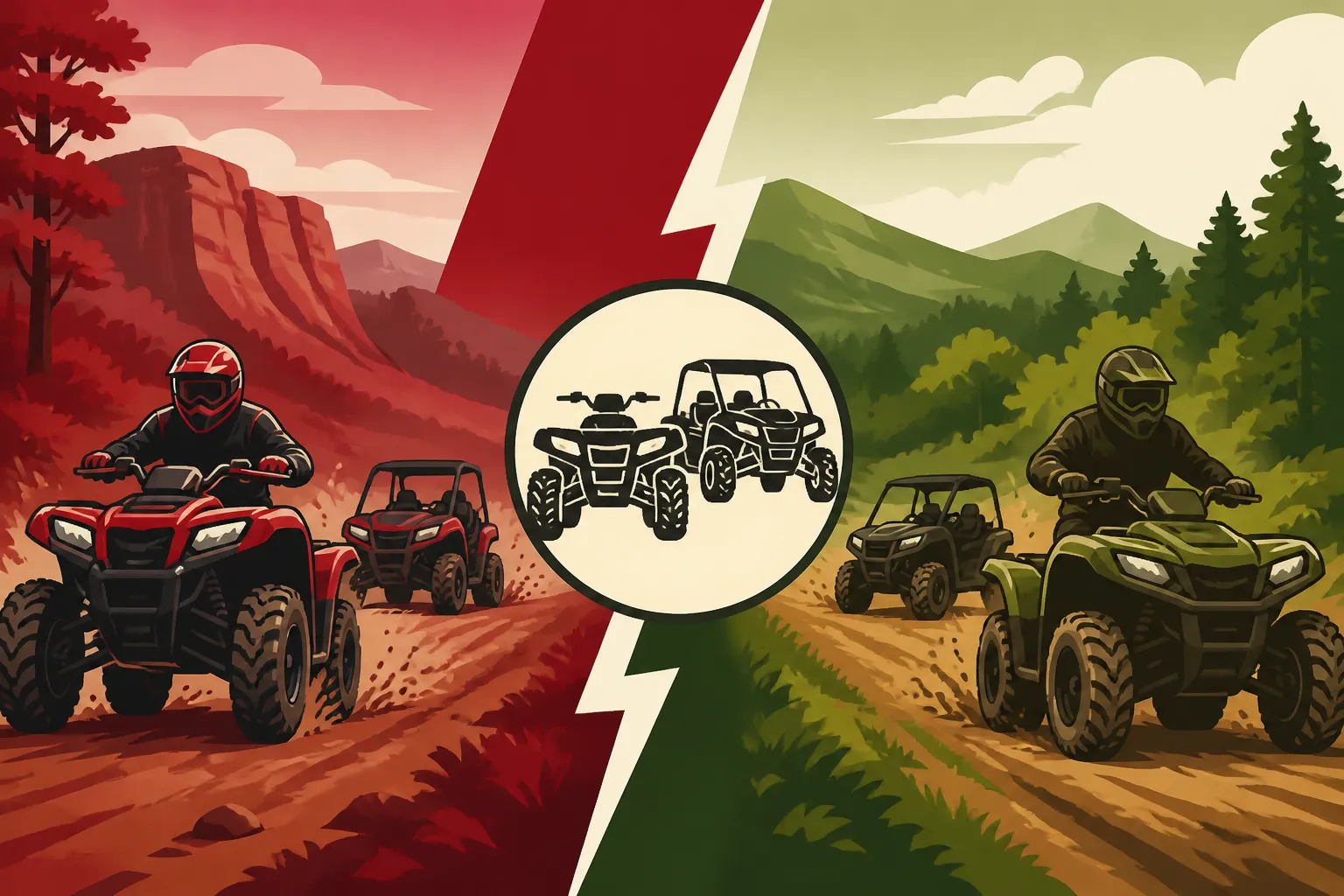
Choose Alabama when a private-park day, red-clay riding, or a destination near Birmingham or central Alabama suits your plans. Choose Georgia when a designated forest OHV route or a north Georgia setting is the draw. In either state, the experience depends on the particular property and its current rules.
If you’re bringing a mixed group, prioritize clear trail options, reliable access information, and facilities that fit your day. If you want a remote ride, take extra care with route verification, communications, and recovery planning. And if you’re new to the area, call the park or land manager directly; a short conversation can clarify details that a map cannot.
The most reliable approach is simple: identify the land manager, confirm the route is open to your exact machine, understand the permits or permissions required, and check conditions again before towing. With those pieces handled, you can spend less time second-guessing the plan and more time enjoying the ride.
Disclaimer
This article is for general informational purposes only and does not constitute professional advice. Laws, prices and regulations vary by location and change over time. Consult a qualified professional for guidance on your specific situation.