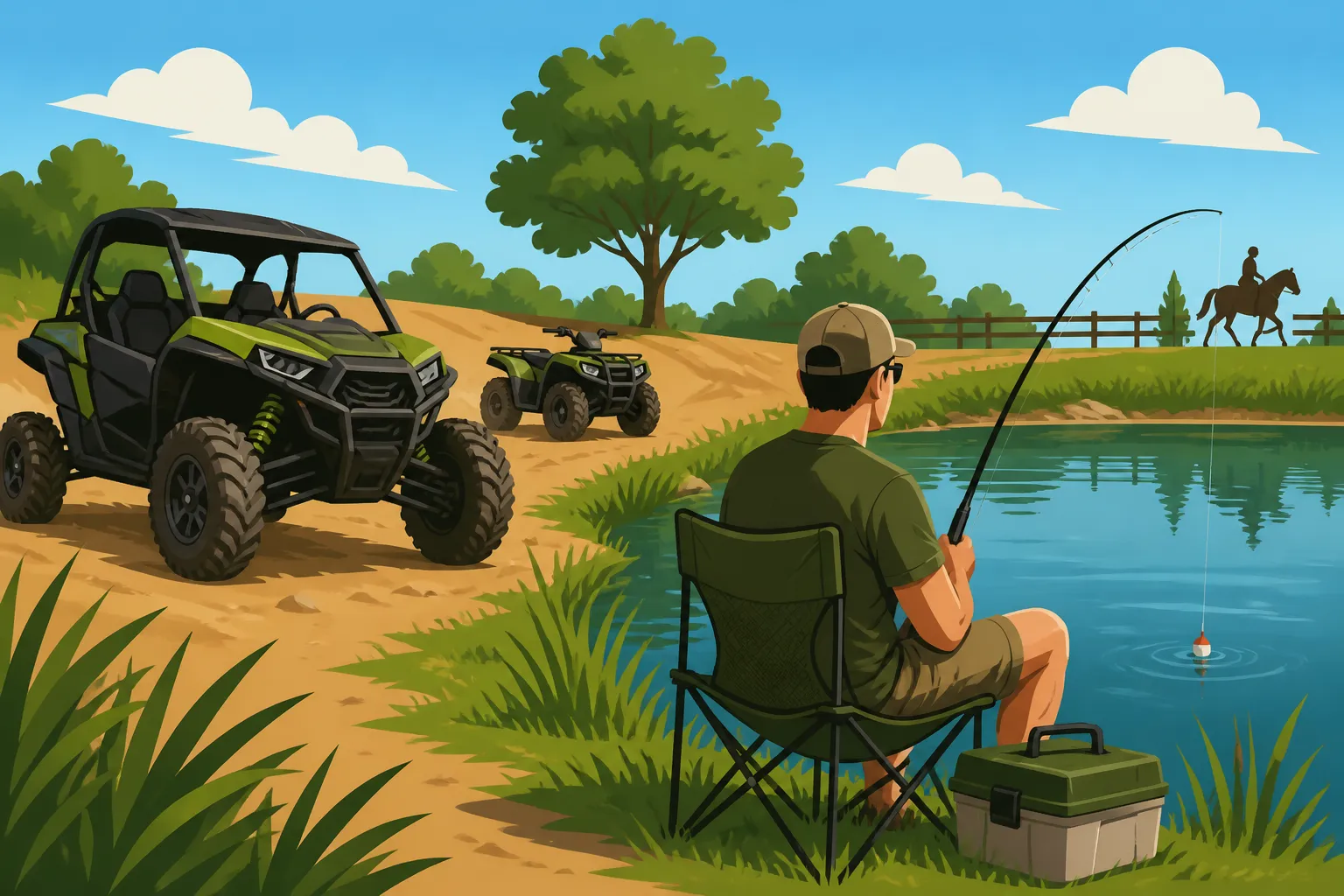
Fishing the 7-Acre Pond at a Riding Park
A riding day can get complicated when one person wants to run trails and another would rather fish, especially if you are unsure whether the pond is open to riders’ families or what gear you can bring. This guide explains how to plan around a 7-acre pond at an Alabama riding park, check access and fishing rules, and fit a relaxed fishing break into a safe, well-organized off-road visit.
Plan the Pond Stop Before You Tow
Confirm what “pond access” includes
A pond on a riding park’s property does not automatically mean every visitor can fish there. Access may depend on the park’s operating schedule, admission rules, where the pond sits, or whether fishing is limited to registered riders and overnight guests. A website, trail map, or social post may mention a pond without explaining those details, so check directly with the park before making it the centerpiece of your trip.
Ask practical questions rather than only asking whether fishing is allowed. Is the pond open during the same hours as the riding area? Can someone fish without riding? Are non-riding family members covered by the same admission arrangement? Is there a designated place to cast from, and can visitors bring their own tackle? Those answers help you avoid arriving with rods and bait only to discover that the pond is closed, restricted, or accessible only from an area you cannot enter.
If you are comparing destinations, start with [Alabama ATV Trails: Where to Ride] and [Alabama Parks With Fishing Ponds]. Treat those pages as starting points, then verify details with the individual park. Conditions, access rules, and available amenities can differ from one property to another, even when both places advertise trails and outdoor recreation.
Match the fishing plan to the riding schedule
It is tempting to plan a full day of riding and assume you can fish whenever the group feels tired. In practice, trail time can stretch: someone may need to adjust a machine, a muddy section may slow the group, or a younger rider may need a longer break. Build the pond visit into the plan instead of treating it as an unstructured bonus.
One workable approach is to ride first, then fish during a longer midday break. That gives riders a clear place to stop, cool off, and eat before returning to the trails. Another option is to fish while some members of the party ride, but only if the park permits the group to separate and everyone has a safe way to get back together. Don’t assume the pond is a short walk from the parking area or campground; ask about the route and whether it crosses active trails.
Think about the people who are coming. A non-rider may enjoy a quiet hour by the water, but may not want to sit beside a dusty trail without shade or a place to rest. A child who is excited to fish may lose interest after a short time, while experienced anglers may want to stay longer. A flexible plan prevents the day from becoming a tug-of-war between the fishing group and the riders.
Check Fishing Rules and Pond Conditions
Find out whether a fishing license applies
A pond’s location inside a private riding park does not, by itself, answer whether a fishing license is needed. Requirements can depend on the angler, the type of water, and applicable state rules. Before the trip, check Alabama’s current freshwater fishing requirements for each person who plans to fish. Pay special attention to age, residency, and any exceptions rather than assuming the same rule applies to everyone in the group.
Also ask the park whether it has pond-specific rules. The property may set limits on where visitors can fish, whether catch-and-release is expected, what tackle is permitted, or whether anglers must check in first. State fishing rules and park rules are separate considerations: satisfying one does not necessarily mean you have met the other.
Make a quick list before you leave home: who is fishing, whether each person needs a license, what rules apply to the pond, and how to show proof if asked. If you already carry fishing gear for trips elsewhere in Alabama, don’t rely on memory alone. Regulations and property rules may not be identical from one location to another, and a brief check can save an awkward conversation at the gate.
Ask what the pond is like before choosing gear
“Seven acres” gives you a sense of scale, but it does not tell you the pond’s depth, shoreline access, water clarity, fish species, or fishing pressure. Don’t assume that a modest pond is easy to fish from every bank, or that it holds a particular species. Ask the park what it can share about access and conditions, and plan to adapt once you see the water.
For a casual outing, a simple setup is usually easier to manage than a full collection of rods and tackle. A compact rod, a small tackle box, and a few familiar options keep the gear manageable when you are also hauling helmets, water, snacks, and riding equipment. If you’re bringing children or inexperienced anglers, simple gear can make it easier to focus on casting safely and enjoying the time together instead of sorting through a complicated setup.
A pond beside an off-road recreation area may also feel different from a quiet neighborhood fishing spot. You could hear engines, encounter people walking between facilities, or find that the bank is busy during peak riding periods. Ask whether there is a quieter stretch or a less crowded time to visit. If access is limited, arrive with realistic expectations: the pond stop may be a pleasant break rather than a long, uninterrupted fishing session.
Organize Riding and Fishing Gear
Keep fishing equipment separate from riding essentials
When a trailer is already carrying a quad or side-by-side, it is easy for loose fishing gear to disappear under riding clothes, tools, and recovery equipment. Pack the fishing items in one clearly marked container and keep it separate from anything that could get wet, muddy, or damaged by fuel and grease. A small tackle bag and rod case are often easier to handle than a large collection of open boxes.
Bring only what makes sense for the planned stop. Useful basics might include rods, tackle, pliers, a small towel, drinking water, sun protection, and a container for any permitted catch. If the park does not allow fish to be kept, leave the cooler at home or use it for food rather than assuming it is needed for the pond. Check whether the park has trash receptacles nearby and take your litter with you if it does not.
| Item | Why it helps | What to check first |
|---|---|---|
| Rod case or secure rod holder | Keeps rods protected while hauling | Whether rods can be carried to the pond safely |
| Small tackle container | Limits clutter and makes a short stop easier | Any restrictions on bait or hooks |
| Water and sun protection | Helps the group stay comfortable outdoors | Whether shade and drinking water are available |
| Towel and spare clothes | Useful after a spill, splash, or muddy ride | Whether changing facilities are available |
| Lidded container for waste | Keeps used line and bait from becoming litter | Park rules for disposal and cleanup |
| Fishing license or proof | Helps you meet applicable requirements | Which anglers need one and how proof is shown |
Protect rods, bait, and people during the ride
Fishing rods should never be carried in a way that can interfere with steering, visibility, or safe movement on a machine. A rod sticking out from a passenger area can catch branches, brush, or another vehicle. Keep rods in a proper carrier or transport them separately, and follow the machine manufacturer’s guidance on carrying cargo. If you are unsure whether the route to the pond is safe for carrying gear, walk it or ask park staff about the approved access.
Bait and tackle need a little thought, too. Store small hooks and sharp tools in closed containers, especially if children are helping unload. Keep bait away from food and drinking water, and don’t leave it in a hot vehicle for longer than necessary. If the pond has specific bait restrictions, follow them even if you have used the same bait elsewhere.
Before leaving the parking area, make sure everyone knows where the fishing gear will be stored and who is responsible for it. This sounds minor, but it prevents the familiar end-of-day scramble: one person is looking for a rod, another is loading muddy boots, and the vehicle is blocking the trailer lane. A simple packing routine makes the transition between riding and fishing calmer.
Move Safely Between Trails and the Pond
Treat the pond as part of the riding day, not a trail shortcut
A pond may be close to the trails on a map and still be separated by roads, gates, or areas where riding is not allowed. Follow marked routes and park instructions rather than cutting across the property. A short-looking shortcut can take you through a closed section, disturb another visitor, or put a machine near the water’s edge where the ground is soft.
Before setting out, ask whether machines may be parked near the pond or whether visitors must use a designated parking area. If the pond is walk-in access, lock up equipment as appropriate and take valuables with you. Don’t leave a running machine unattended, and don’t block a trail or service road while the group unloads fishing gear. A little courtesy helps preserve access for riders, anglers, and staff.
Navigation tools can help you understand the general layout, but they are not a substitute for the park’s own directions and closures. onX Offroad can be useful for planning routes and getting oriented, especially when cell reception is unreliable, but compare what you see in the app with posted signs and the official park map. If the map and signs disagree, follow park staff guidance and avoid entering an uncertain route.
Make the transition comfortable for children and non-riders
A family outing can involve very different needs. A child may be ready to fish after a quick snack, while a tired rider may need time to cool down and remove protective gear. Plan a proper pause rather than expecting everyone to move directly from a hot, noisy ride to a calm activity without a reset.
Choose a meeting point that is easy to explain and safe to reach. If the group splits between riding and fishing, set a return time and a backup plan in case someone’s phone has no signal. Tell children which areas they can use and where they must stay with an adult. The pond edge can be slippery or uneven, and nearby traffic or trail activity may create distractions. Keep young anglers within close supervision.
Carry water and a simple snack for the break, and give the group time to wash hands before eating. If there is no nearby wash station, bring wipes or a small container of clean water. You can check amenity information through [Alabama Riding Areas With Wash Stations], but confirm that any listed facility is available at the location and operating when you visit. A comfortable break makes it much easier for the group to enjoy both parts of the day.
Be a Considerate Guest at the Park
Follow posted rules and protect the shoreline
The pond is part of a shared recreation property, so its shoreline deserves the same respect as the trails. Use designated access points, keep bait containers and fishing line contained, and pack out used line, hooks, wrappers, and other waste. Discarded fishing line can injure wildlife, while loose hooks can create a hazard for children, pets, and people walking the bank.
Avoid trampling vegetation or moving rocks and branches to create a better casting spot. If the bank is muddy, don’t keep stepping farther into soft ground just to reach a preferred angle. That can damage the shoreline and leave slick areas for the next visitor. If the park provides a specific fishing area, use it even if another spot looks more convenient.
Park policies can cover much more than riding. Review [Alabama Private Park Waivers and Rules] before you go, and check [Alabama Park Fees and What They Cover] so you understand which activities and facilities are included. A waiver or admission payment does not necessarily grant permission to fish, camp, or access every area of the property. When in doubt, ask staff rather than interpreting a posted sign on your own.
Leave room for other anglers, riders, and families
A 7-acre pond can feel spacious when it is quiet and surprisingly crowded when several families arrive at once. Give other anglers room to cast, avoid walking directly behind someone who is fishing, and keep children from running through another person’s setup. If you need to pass, ask politely instead of squeezing between a rod and the water.
The same courtesy applies to riders. Keep vehicles and trailers out of designated pedestrian areas, and don’t let fishing gear spill across a path. If the pond is near an active riding area, stay alert when walking and follow any crossing instructions. Hearing protection can make it harder to notice an approaching machine, so choose a safe place to pause and look before crossing.
If you are camping as part of the trip, check [Alabama Park Camping Fees] and the park’s quiet-hour, fire, and cleanup policies. A late-night fishing plan may not suit a campground where other visitors are sleeping nearby. The best visit is one where the whole group can enjoy the pond and trails without making either activity harder for someone else.
Build a Flexible Day Around the Pond
Use a simple schedule, then leave room for changes
A useful plan has a few anchor points, not a rigid minute-by-minute itinerary. Decide when you expect to arrive, when the group will check in, roughly how long the first ride will last, and when you’ll take a fishing break. Leave a buffer for unloading, equipment checks, trail delays, and the occasional “we need to stop for a minute” moment.
For example, a family might arrive in the morning, get oriented, and take a shorter first ride before lunch. After the group cools down, some people could fish while others rest or continue riding if the park permits that arrangement. Later, everyone can meet back at the trailer or campsite. The details will depend on the park’s rules and the group’s energy, but having a shared plan helps avoid repeated calls and missed connections.
Trail conditions matter. Alabama’s red clay can become slick after rain, and a route that looks manageable on a dry day may demand more time and attention when wet. Check [Alabama Trail Conditions Before You Tow] and ask the park about closures. onX Offroad may help you review route options before the trip, but it should complement—not replace—official closure notices, local directions, and a plan for turning back if conditions change.
Have a backup if the pond is unavailable
Even a well-planned visit can change. The pond may be temporarily closed, the water level may be low, weather may make the shoreline unpleasant, or the park may have a schedule change. Decide in advance what the group will do if fishing is not possible. A backup could be a longer rest break, a shorter ride, lunch at camp, or another activity permitted at the property.
Avoid treating a closed pond as a reason to find an unofficial access point. A gate or sign may mark a safety issue, private area, maintenance work, or a restriction that applies even when the water looks inviting. Ask staff for an alternative or accept the change. Respecting closures helps protect access and keeps the outing from turning into a preventable dispute.
A final pre-trip check can be quick: confirm the park is open, ask whether fishing is allowed that day, review the pond’s rules, check the weather, and make sure every rider understands the meeting plan. If you want to use onX Offroad for route planning, save the map or route information before leaving an area with reliable reception, then use signs and park guidance as your authority on the property. That small bit of preparation leaves more time for the parts of the day everyone came for.
Disclaimer
This article is for general informational purposes only and does not constitute professional advice. Laws, prices and regulations vary by location and change over time. Consult a qualified professional for guidance on your specific situation.