Alabama Riding Season Considerations
Alabama’s riding season is not simply a matter of picking a sunny weekend. A wet trail can turn red clay into a slippery mess, summer heat can wear riders down quickly, and hunting activity may affect access in fall. This guide explains what to expect through the year and how to plan around weather, trail conditions, daylight, and land-access rules.
How Alabama’s Seasons Affect ATV and UTV Riding
Spring brings comfortable temperatures and unpredictable ground
Spring can be a welcome break from winter riding: temperatures often feel more manageable, and longer days make it easier to fit in a full outing. The catch is rain. A trail that looked firm at breakfast may become slick by afternoon, particularly on Alabama’s clay soils. Ruts and standing water can also hide soft spots, rocks, and other obstacles.
Before towing to a park or public riding area, check its current conditions and access rules. Some trails may close or become unsuitable after heavy rain, even when the entrance is open. A closure can protect the trail from damage as well as keep riders away from hazardous footing. For a deeper planning checklist, see [Alabama Trail Conditions Before You Tow] and [Alabama Trail Closures After Rain].
If the ground is wet, choose a route that fits your machine and experience rather than treating every puddle as a challenge. Avoid making a new line around a muddy section: that can widen the trail and damage vegetation. If you do get caught in slick conditions, ease off the throttle, leave extra room between machines, and turn around before a manageable patch becomes a recovery job.
Summer heat changes the shape of a riding day
Alabama summer riding is less about finding the longest possible route and more about managing heat, hydration, and exposure. A humid afternoon can feel exhausting even when the trail is shaded. Helmets and protective gear remain important, but they can also make it harder to notice how hot you are getting. Take breaks before you feel depleted, and carry enough water for the people in your group—not just for the machine.
Starting earlier can help reduce time spent riding in the hottest part of the day. Plan a shorter loop, identify places to stop, and let someone know where you expect to ride. Watch for warning signs such as headache, dizziness, nausea, unusual fatigue, or confusion. If a rider seems unwell, stop in a safe place, cool them down, and seek help if symptoms are severe or do not improve.
Summer storms can also develop quickly. Check the forecast before leaving, but do not assume a morning forecast guarantees a clear afternoon. If thunder, lightning, or heavy rain approaches, get off exposed ridgelines and stop riding in a safe location. For season-specific preparation, see [Alabama Riding in Summer Heat].
Planning Around Weather and Trail Conditions
Rain and red clay call for a flexible plan
Rain affects more than traction. It can obscure trail edges, reduce visibility, make creek crossings difficult to judge, and leave a machine harder to recover if it slides into a rut. In places with steep or narrow sections, a small loss of control can have bigger consequences than it would on a wide, dry trail. Give yourself permission to change the plan rather than trying to complete a route because you already drove to the trailhead.
Check the riding area’s official updates before setting out, especially after a storm. Conditions can vary within the same park or forest: a firm gravel road may be passable while a clay trail nearby is closed or deeply rutted. If public land is part of the plan, confirm that the specific route is open to your type of machine and that any required access steps are complete.
Use a map as a planning aid, not as proof that a route is open. Apps such as onX Offroad can help riders review mapped routes and orient themselves, but posted signs, closures, and land-manager rules take priority. Download maps or save important details before leaving home if you expect limited service. For practical background on Alabama’s trail surfaces and wet-weather choices, see [Alabama Red Clay and What It Does] and [Choosing Tires for Alabama Red Clay].
Build a ride plan with a weather-based fallback
A dependable plan includes more than a destination. Choose a primary route and a shorter alternative, set a turnaround time, and decide what conditions would make the group stop. For example, a family might agree that heavy rain, lightning, or a machine struggling repeatedly on a climb means switching to an easier route or calling it a day. That agreement is easier to follow when it is made before anyone is tired or frustrated.
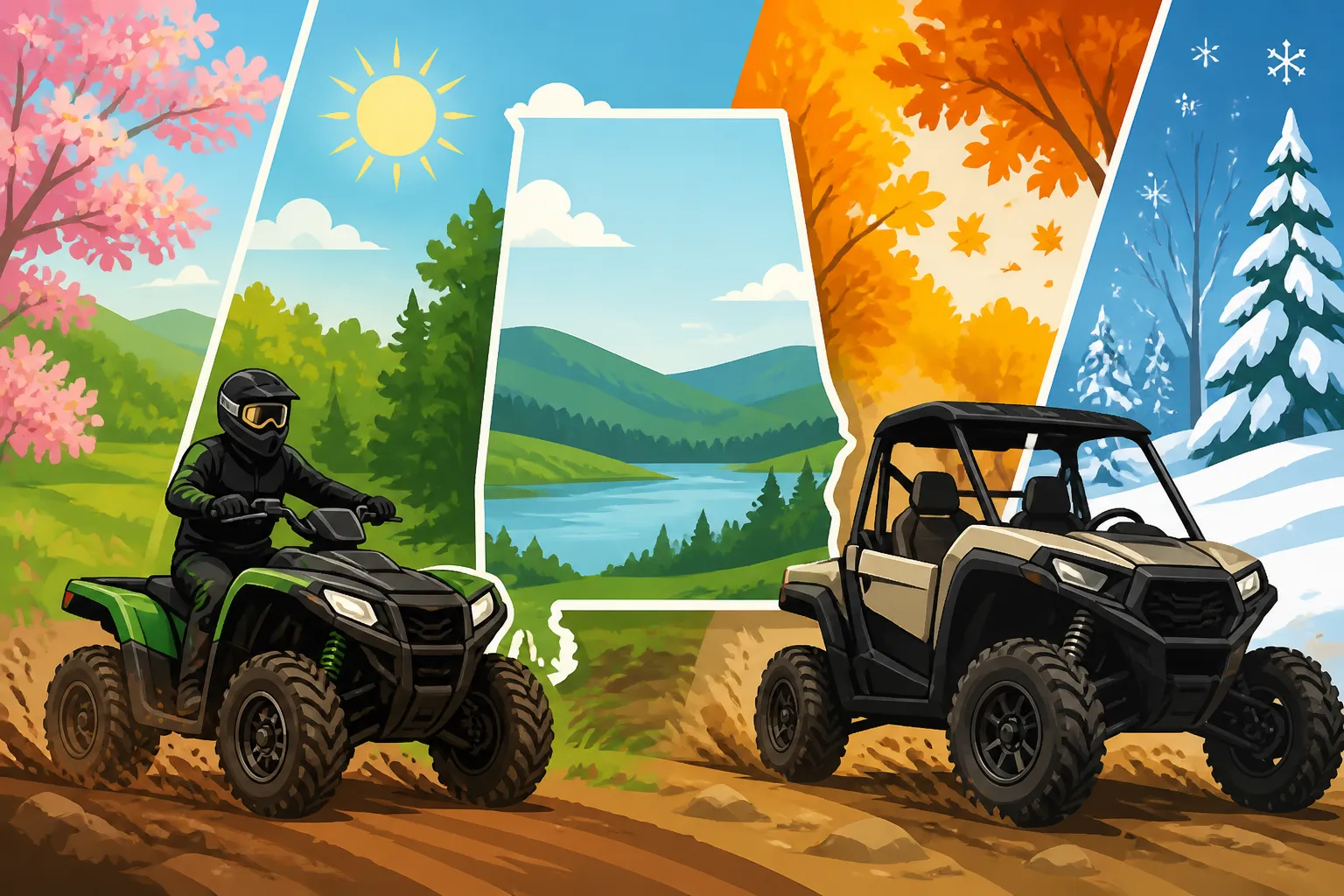
Use the table below as a starting point, then check the specific riding area’s rules and conditions before traveling.
| Season | Common planning concern | Useful adjustment |
|---|---|---|
| Spring | Frequent rain and slick clay | Check closures and have a shorter route ready |
| Summer | Heat, humidity, and storms | Start earlier, plan cooling breaks, and carry water |
| Fall | Hunting activity and changing access | Confirm tract rules, dates, and open routes |
| Winter | Short daylight and wet or cold conditions | Leave early, dress in layers, and set a firm turnaround time |
Keep your group together and make sure everyone knows the route and regrouping points. A rider who gets separated may not have reliable phone service, particularly in wooded or hilly areas. A paper map or an offline map in onX Offroad can be useful, but it does not replace telling someone outside the group where you are going and when you expect to return.
Choosing the Best Time of Year for Your Ride
Fall often offers pleasant riding, with access checks to do
Fall can bring cooler temperatures and comfortable conditions for longer outings. The tradeoff is that hunting seasons and land-management schedules can affect where and when you may ride. Public land is not one uniform riding area: rules can vary by tract, route, date, and land manager. A familiar route may have different access conditions on a particular day.
Before riding a wildlife management area or other public land, check the rules for that specific area. Confirm whether machines are allowed on the route you intend to use, whether a permit or check-in step applies, and whether seasonal restrictions are in effect. Do not assume that a hunting license, a previous visit, or a route shown on a map automatically grants riding access. [Alabama WMA Riding Rules for Quads] and [Alabama Hunting Season and Trail Access] offer related guidance.
Fall also means changing daylight. A ride that feels leisurely in the afternoon can become a rushed return if the group misjudges distance or stops for repairs. Start with enough daylight to handle a slow section, a flat tire, or a wrong turn. Carry working lights where appropriate, but do not treat them as a reason to plan an avoidable night return.
Winter can be rewarding when daylight and footing cooperate
Winter brings cooler air and, at times, quieter trails. It can also mean shorter days, colder rain, muddy stretches, and longer waits for a machine or rider to warm up after a stop. Before heading out, think about how the route will feel if the temperature drops or the ground remains wet. Gloves, warm layers, dry clothing in a protected bag, and a simple emergency plan can make a major difference.
Do not judge a trail only by the conditions at home. A route in the Bankhead area or near the Talladega hills may be wetter, colder, or more exposed than the driveway where you loaded the machines. Check the riding area’s own updates and be ready to turn back if conditions are poor. For seasonal ideas and preparation, see [Alabama Riding in Winter].
Short daylight makes trip timing especially important. Estimate the return time conservatively, allowing for slower travel, breaks, and unexpected delays. If your group includes children or newer riders, choose a route with a clear stopping point rather than trying to squeeze in one more loop as dusk approaches.
Preparing for a Safer and More Comfortable Ride
Match clothing and supplies to the day
Dress for the conditions you may encounter, not only the temperature when you leave. A cool morning can become warm by midday; a sunny forecast can turn into a wet ride; and a shaded trail may feel very different from an exposed road. Use protective gear suited to the machine and terrain, and avoid clothing that can snag on controls or moving parts. Pack a spare layer and dry socks if the trip includes a long drive home after riding.
Bring water, snacks, a basic first-aid kit, and the tools needed for common problems on your machine. The right kit depends on the route and group: a short ride near a developed park is different from a remote outing with limited service. Before leaving, check fuel, tires, lights, brakes, and any equipment you rely on for recovery. For a full-day outing, see [Packing for a Humid Day Out] for more planning ideas.
Seasonal nuisance hazards deserve attention, too. In warmer months, check yourself and your gear for ticks after riding, and avoid brushing through vegetation unnecessarily. In dry periods, follow posted fire restrictions and use care around hot machine components. A small amount of preparation can prevent an uncomfortable end to an otherwise enjoyable day.
Give the group clear roles and limits
A good ride plan accounts for the least experienced rider, not just the fastest machine. Keep the pace comfortable, choose routes that suit everyone’s skill level, and agree on signals or regrouping points before moving. If one person has to stop, the group should know whether everyone waits together or a designated rider checks in—without leaving someone alone on a trail.
Passengers and younger riders need particular attention. Confirm that the machine is designed for the number of people aboard, and follow the riding area’s rules for age, passengers, helmets, and supervision. A child who is comfortable on a short, familiar trail may become overwhelmed by heat, mud, noise, or a long day. Plan breaks and make it easy to stop early without anyone feeling pressured to continue.
Before the trip, share the destination, route, and expected return time with someone who is not riding. Keep a charged phone protected from weather, but plan for the possibility of poor reception. An offline route in onX Offroad or another navigation tool may help with orientation, while a paper map provides a simple backup. Neither replaces following signs, respecting closures, and staying within permitted riding areas.
Making Seasonal Plans for Specific Riding Areas
Check the park or land manager before loading
Alabama has different kinds of riding opportunities, including private off-road parks, county facilities, and public land routes. Their schedules, admission procedures, permitted machines, and closures are not interchangeable. A park that suits your group in dry weather may have different trail conditions after rain; a public tract may have seasonal access rules that do not apply to a private facility.
Before you tow, check the destination’s official information and contact the operator or land manager if an important detail is unclear. Ask whether the area is open, whether the route is suitable for your machine, what rules apply to passengers and protective gear, and whether reservations or permits are needed. For a destination-specific overview, see [Alabama ATV Trails: Where to Ride]. If you are considering a named facility such as Stony Lonesome or Minooka Park, confirm its current operating details directly before making the drive.
Build travel time and parking into the plan. Arriving late can leave less daylight for riding, while a full parking area may mean your group needs another option. Identify a backup destination only after confirming that it is open and appropriate for your machines. If no suitable alternative is available, turning the trip into a maintenance or scouting day is better than riding somewhere without permission.
Use maps carefully and respect local conditions
Digital maps can help you understand route layout, find nearby roads, and keep a group oriented. onX Offroad may be useful for reviewing mapped routes before a trip, especially when riders want to discuss a route together. Still, map details can lag behind a closure, a gate, a seasonal restriction, or a change in land access. Treat field signs and official land-manager guidance as the deciding information.
On public land, distinguish between a road shown on a map and a route that is open to your machine. A route may be restricted by season, vehicle type, permit conditions, or a temporary closure. Do not cross a locked gate or ride around a barrier. If a map suggests a route that conflicts with a sign or posted rule, follow the sign and contact the land manager for clarification.
A little extra preparation helps the whole group ride with less stress. Choose a season that fits your comfort level, check the weather and access rules, set a realistic turnaround time, and keep a fallback plan. The best Alabama ride is not necessarily the longest one; it is the one your group can complete safely while leaving the trail and access area in good condition.
Disclaimer
This article is for general informational purposes only and does not constitute professional advice. Laws, prices and regulations vary by location and change over time. Consult a qualified professional for guidance on your specific situation.