A Parent’s Responsibility for a Young Alabama Rider
It’s a natural worry for any parent: you want your kids to enjoy the thrill of riding an ATV or UTV, but you’re also keenly aware of the risks involved. In Alabama, navigating the rules and responsibilities for young riders can feel a bit like sifting through red clay after a heavy rain – confusing and sometimes unclear. This guide will help you understand your role, the expectations, and the best practices for keeping your young rider safe and responsible on Alabama's diverse terrain.
Understanding Alabama's Legal Landscape for Youth Riders
Many parents assume there's a strict age limit or a mandatory safety course for kids riding ATVs in Alabama, but you might be surprised to learn that the state's statutes are largely silent on these specifics, especially concerning private land. This doesn't mean it's a free-for-all, but rather that a significant amount of responsibility falls squarely on your shoulders as a parent. It's a bit like teaching your child to ride a bicycle: the law doesn't tell you when to do it, but you're still responsible for their safety.
Alabama's Lack of Specific Age Laws
Here in Alabama, unlike some other states, there isn't a state-mandated minimum age for children to operate an ATV or UTV. The laws that do exist tend to focus on public roads or designated public riding areas, and even then, they're often more about general safety equipment or trespass than rider age. This means that if your child is riding on private property, say, your family farm or a friend's hunting lease, the decision of whether they are old enough or skilled enough to ride rests entirely with you. This can be both empowering and a little daunting, as it requires you to make informed judgments based on your child's maturity, physical capabilities, and the specific machine they're riding. It means you are the primary gatekeeper for their safety.
The common misconception is that if there's no law, there's no problem. However, the absence of a specific age law highlights the immense importance of parental discretion. You know your child best: their attention span, their ability to follow directions, and their physical strength to control a powerful machine. A fourteen-year-old might be perfectly capable, while a ten-year-old might struggle with the weight and controls, even if they're eager. It’s not just about age, but about readiness. For more insight into what the state doesn't require, you might find it helpful to read about [Alabama Has No Mandatory ATV Safety Course].
The Role of Supervision and Training
Given the legislative gaps, active supervision and thorough training become paramount. Simply handing over the keys and pointing to a field isn't enough. Young riders, especially beginners, need constant guidance. This means being present, actively watching, and providing immediate feedback. Imagine you're teaching them to drive a car; you wouldn't send them out alone on the highway after a single lesson. The same principle applies here. This kind of hands-on mentorship builds their skills and confidence while instilling good habits.
Training isn't just about showing them how to accelerate and brake. It encompasses understanding the machine's capabilities, recognizing terrain hazards, and learning safe riding practices like maintaining a safe speed, avoiding sudden turns, and understanding the importance of riding within their limits. Consider scenarios like riding across uneven ground, navigating a creek bed, or even just turning around safely. These are skills that need to be taught and practiced repeatedly under watchful eyes. It’s also crucial to teach them what to do if they encounter another rider, a pedestrian, or even livestock on private property. Good training involves teaching respect for the land and others, not just machine operation.
Promoting Safety Through Education and Awareness
While Alabama may not mandate specific age limits or safety courses, there are still ample opportunities and resources available to ensure your young rider is as safe as possible. These voluntary measures are often far more effective than mere legal requirements, as they foster a culture of safety and responsibility from a young age. Think of it as providing them with the best tools and knowledge, even if no one is forcing you to.
Voluntary Safety Courses and Certifications
Even without a state mandate, enrolling your child in an ATV safety course is one of the smartest moves you can make as a parent. These courses, often offered by certified instructors, cover crucial topics like proper riding techniques, pre-ride inspections, risk assessment, and environmental awareness. They provide structured, hands-on learning in a controlled environment, something that's difficult to replicate in a casual backyard setting. A certified course can also reinforce the lessons you’ve been teaching, lending an air of authority that sometimes resonates more with kids than parental advice alone.
Many of these courses are developed by organizations dedicated to off-road safety, and they provide a standardized curriculum that ensures your child is learning best practices. Upon completion, riders often receive a certification, which can be a point of pride for them and reassurance for you. While not legally required, some private riding parks might even look favorably upon or recommend such certifications. It's an investment in their safety and skill development. For options available, you might search for [Alabama Safety Course Options] or even [Alabama Online Safety Courses] for foundational knowledge.
Navigating Private Park Rules and Waivers
If your young rider is venturing beyond your own private property to a designated off-road park, you'll encounter a different set of rules. Private parks in Alabama often have their own age minimums, helmet requirements, and supervision policies that supersede state law. These rules are put in place for the safety of all patrons and to mitigate the park's own liability. Before visiting any park, it's essential to check their specific regulations, especially regarding minors. A park might, for instance, require a child to be at least 12 years old to operate an ATV, or they might stipulate that a parent must ride within sight of a younger rider at all times.
Beyond age restrictions, you'll almost certainly be asked to sign a waiver for your child. These waivers are legally binding documents acknowledging the inherent risks of off-road riding and releasing the park from liability for certain types of injuries. Read these carefully, and understand what you are agreeing to. These parks are usually well-maintained and supervised, offering a safer environment than unmarked trails, but they also come with strict adherence to their safety protocols. Familiarize yourself with examples like [Alabama Private Park Age Minimums] and [Alabama Private Park Waiver Forms] to know what to expect.
| Age Group (General Guidance, Not Law) | Recommended Machine Type (Engine Size) | Supervision Level | Safety Gear Checklist |
|---|---|---|---|
| Under 6 Years Old | None (Passenger only, if allowed) | Direct, constant | Full gear, helmet |
| 6-11 Years Old | Youth ATVs (70cc-90cc) | Direct, close | Full gear, helmet, boots |
| 12-15 Years Old | Youth ATVs (90cc-125cc), smaller adult | Active, observant | Full gear, helmet, boots, gloves |
| 16+ Years Old | Adult ATVs/UTVs | Less direct, still observing | Full gear, helmet, boots, gloves |
Note: These are general guidelines for responsible riding and do not represent Alabama state law or park-specific regulations. Always consult manufacturer recommendations and park rules.
Equipping for Success: Machines, Gear, and Maintenance
The right equipment, meticulously maintained, is just as crucial as proper training and supervision when it comes to keeping young riders safe. Choosing an ATV or UTV that's appropriate for your child's size and skill level, coupled with ensuring they have and wear the correct safety gear, can significantly reduce the risk of injury. It's about setting them up for success, not just letting them ride.
Choosing the Right Machine for a Young Rider
One of the biggest mistakes parents make is putting a child on a machine that's too powerful or too large for them to handle. An adult-sized ATV, even if ridden slowly, can be incredibly difficult for a small child to control, especially in an emergency. The weight, throttle response, and brake leverage are all designed for an adult's strength and reach. Instead, look for youth-specific models. These machines are engineered with smaller engines, lighter frames, and controls that are scaled down for smaller hands and feet. Companies like SuperATV offer a range of accessories that can help tailor even youth machines for optimal fit and safety, from smaller steering wheels to specialized seating.
When considering a youth ATV, always check the manufacturer's recommended age and weight guidelines. These aren't arbitrary suggestions; they're based on extensive testing and safety considerations. For example, a 90cc ATV might be perfect for a 12-year-old, but far too much for an 8-year-old. Over time, as your child grows and gains experience, you can gradually move them up to larger machines. This progression not only keeps them safer but also builds their skills and confidence incrementally. It's all about [Matching Machine Size to a Child in Alabama].
Essential Safety Gear and Maintenance
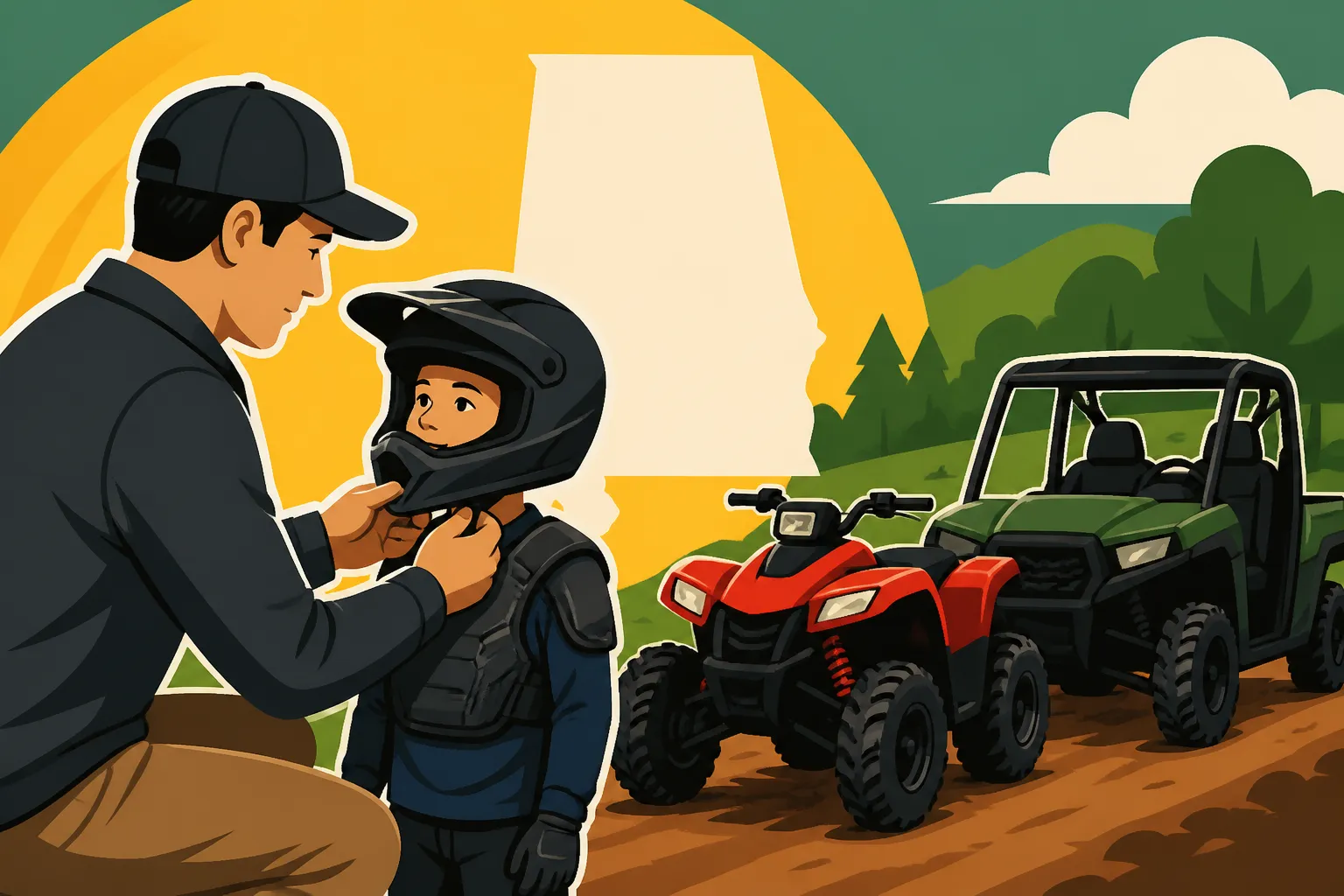
Just as crucial as the right machine is the right safety gear. This isn't optional; it's non-negotiable. At a minimum, every young rider needs:
- A DOT-approved helmet: This is the single most important piece of safety equipment. While [Alabama Helmet Rules on Private Land] might be less stringent, a good helmet can mean the difference between a minor bump and a serious head injury. Always choose one that fits snugly and is appropriate for off-road use.
- Eye protection: Goggles or a full-face helmet shield protect against dust, debris, and low-hanging branches.
- Over-the-ankle boots: These protect feet and ankles from impacts, scrapes, and the machine's moving parts.
- Gloves: Protect hands from blisters, abrasions, and offer a better grip.
- Long pants and a long-sleeved shirt: Durable materials can help prevent scrapes and bruises. Chest protectors and knee/elbow pads are also highly recommended, especially for more aggressive riding.
Beyond personal gear, regular machine maintenance is key. Before every ride, especially with a young rider, perform a quick check: tire pressure, brakes, throttle operation, chain tension (if applicable), and ensure all loose nuts and bolts are tightened. A well-maintained machine is a predictable machine, reducing the chance of unexpected mechanical failures that could lead to an accident. This routine also teaches your child responsibility and the importance of caring for their equipment.
Addressing Liability and Legal Implications
Even with the best preparation, accidents can happen. As a parent, understanding your potential liability and the importance of proper documentation and insurance is critical, especially given Alabama's emphasis on parental responsibility for young riders.
Understanding Parental Liability in Off-Road Incidents
In Alabama, as in many states, parents can be held responsible for the actions of their minor children. This parental liability extends to situations where a child's negligence or reckless behavior while operating an ATV or UTV leads to injury or property damage to another person. For example, if your child, even accidentally, rides onto a neighbor's property and causes damage, or if another rider is injured due to your child's inexperience or lack of supervision, you, as the parent, could face legal repercussions. This is particularly true if it can be argued that you provided an unsuitable machine, failed to provide adequate training, or neglected proper supervision.
The legal system often looks at what a "reasonable parent" would do in a given situation. If you knowingly allow an unqualified child to operate a powerful machine without supervision, your actions could be deemed negligent. This emphasizes why the voluntary steps discussed earlier – training, proper machine selection, and constant supervision – are not just good practice, but also crucial protective measures against potential legal issues. It’s not just about protecting your child physically, but also protecting your family legally.
The Importance of Insurance and Documentation
Having adequate insurance is your financial safety net. A standard homeowner's policy might offer limited liability coverage for incidents on your own property, but this often doesn't extend to off-road vehicles or incidents that occur off your premises. It's highly recommended to carry a dedicated ATV or UTV insurance policy. This policy can provide liability coverage in case your child causes injury or damage to others, and it can also offer comprehensive and collision coverage for the machine itself, protecting your investment. When discussing coverage, be sure to specify that minors will be operating the vehicle and confirm that your policy covers them.
Beyond insurance, maintaining clear documentation of ownership is vital, even if Alabama doesn't title all ATVs. A clear bill of sale and any registration documents (like the voluntary [Alabama Public Use ATV Registration Explained] or [Alabama Private Use ATV Registration Explained] through ALEA) are important proof of ownership. If you ever need to report a theft, make an insurance claim, or transfer ownership, having these records makes the process significantly smoother. Furthermore, keep records of any safety courses your child has completed and any specific instructions you've given them regarding safe operation. This robust documentation can serve as evidence of your efforts to ensure responsible riding, should any legal questions arise.
Disclaimer
This article is for general informational purposes only and does not constitute professional advice. Laws, prices and regulations vary by location and change over time. Consult a qualified professional for guidance on your specific situation.