Matching Machine Size to a Child in Alabama
It’s a familiar sight across Alabama: a proud parent eager to introduce their child to the thrill of off-road riding, perhaps on a well-worn path in the backyard or a family hunting lease. But before you even think about firing up that engine, there's a crucial, often overlooked, step that can make all the difference between a safe, joyful experience and a potentially dangerous one: matching the ATV or UTV precisely to your child's size and skill level. Handing a child a machine too large or powerful isn't just risky; it fundamentally undermines their ability to learn, control, and truly enjoy the sport. This guide will walk you through the essential considerations for ensuring your young rider is on a machine that fits them perfectly, focusing on safety and skill development in the Alabama terrain.
Why the Right Machine Size Isn't Just a Suggestion, It's Essential for Safety
When we talk about matching a child to an ATV, we’re not just talking about comfort; we're talking about fundamental control. Imagine trying to drive a full-sized pickup truck as a five-year-old. You couldn’t reach the pedals, see over the dashboard, or turn the wheel effectively. The concept is no different for an ATV. A machine that is too big or too powerful for a child immediately compromises their ability to operate it safely, react quickly to changing conditions, or recover from unexpected maneuvers.
The physical demands of riding an ATV are significant. Riders need to be able to comfortably reach the handlebars, apply the brakes firmly, shift their weight for balance and turns, and reach footpegs without stretching. If any of these actions require excessive effort or awkward positioning, the child's control over the vehicle is diminished. This becomes particularly critical when navigating the varied terrain common across Alabama, from tight wooded trails to open fields, where quick reactions to obstacles or changes in traction are often necessary.
Furthermore, an oversized machine can lead to quick fatigue. A child constantly straining to maintain control will tire much faster than one riding a machine suited to their size. Fatigue isn't just discomfort; it directly impairs judgment and reaction time, increasing the likelihood of an accident. Investing in the right-sized machine from the start is an investment in your child's safety and their long-term enjoyment of off-road riding. It creates a positive learning environment where they can build skills and confidence without the added burden of wrestling with an inappropriate machine.
Practical Guidelines for Matching Your Child to an ATV
Choosing the right ATV for your child involves more than just picking a cool color. It’s a deliberate decision based on age, physical size, and experience level. While there are general recommendations, every child is different, so hands-on assessment is key. When considering [Alabama Rules for a Child Passenger] or [Alabama Rules for a Teen Rider], remember that the physical fit is paramount regardless of regulations.
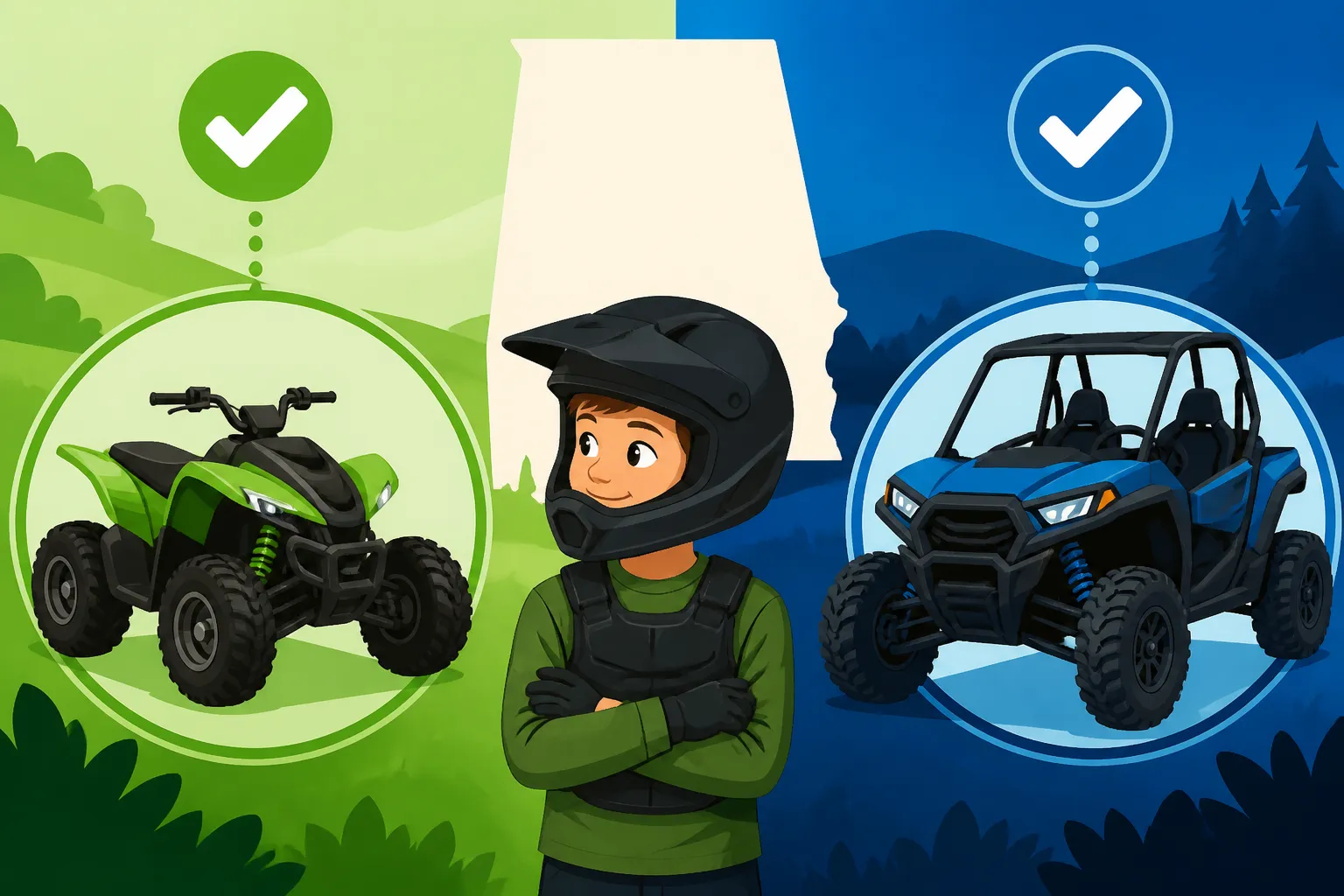
One of the most important aspects is the engine size. Manufacturers typically categorize youth ATVs by age range, which often correlates with engine displacement. Younger children, generally between 6 and 11 years old, should start with machines in the 50-90cc range. These ATVs are designed with lower top speeds, often include speed limiters that parents can adjust, and have a lighter overall weight, making them much easier to manage. As children mature, typically around 12-15 years old, they might be ready for intermediate machines, usually in the 90-250cc range, which offer a bit more power and capability while still being scaled down from full-sized adult models. It’s crucial to understand that exceeding these guidelines significantly increases risk.
Beyond engine size, a series of physical fit checks are non-negotiable. When your child is seated on the ATV, they should be able to:
- Reach the handlebars comfortably: Their arms should have a slight bend at the elbows, not be fully extended or crunched.
- Operate the throttle and brake levers: Their fingers should be able to grasp and engage these controls firmly without straining.
- Reach the footpegs: Their feet should rest flat and securely on the pegs, not dangle or require them to stretch uncomfortably.
- Shift their weight: They should be able to shift their body weight easily from side to side and front to back, which is crucial for turning and handling various terrains.
- Stand on the footpegs: For advanced maneuvering and comfort over bumps, a child should be able to stand up slightly on the footpegs, using their legs as suspension. If they can’t do this comfortably, the machine is too large.
Here’s a general guideline for matching your child to an ATV, keeping in mind that these are starting points and individual assessment is critical:
| Age Range (Approximate) | Recommended Engine Size (CC) | Key Physical Fit Checks |
|---|---|---|
| 6-11 years | 50-90cc (Youth Models) | Can reach handlebars, brakes, and footpegs comfortably. Can operate controls without stretching. |
| 12-15 years | 90-250cc (Intermediate/Youth) | Can stand on footpegs, lean for turns, operate all controls smoothly. Can shift body weight. |
| 16+ years | 250cc+ (Adult Models) | Full control, able to shift body weight for maneuvering effectively. Comfortable reach and operation of all features. |
Remember, it’s always better to start with a smaller machine and allow your child to gain experience and confidence. They can always graduate to a larger one later. While some aftermarket parts are available for adult machines from companies like SuperATV that might modify seating or control positions for adult riders, these types of extensive modifications are generally not recommended for adapting an oversized machine for a child. The focus should always be on a machine that fits correctly from the factory, as modifications can sometimes alter handling characteristics in unpredictable ways for a novice rider.
The Very Real Dangers of an Oversized Machine for Young Riders
The temptation to buy a child an ATV they can "grow into" is understandable, but it's a dangerous misconception. The reality is that an oversized machine poses significant and often underestimated risks to young riders. When a child is on an ATV that's too big, their ability to react, control, and recover from an unexpected situation is severely hampered, turning what should be an exciting activity into a hazardous one.
One of the primary dangers is the loss of control. A child who cannot comfortably reach the handlebars, apply the brakes, or properly shift their weight will struggle to steer effectively, especially on uneven ground or during turns. The weight of a larger machine can be overwhelming, making it difficult to prevent rollovers or to right the ATV if it starts to tip. This isn't just about strength; it's about the physics of leverage and balance. A child simply doesn't have the body mass or reach to counteract the forces of an adult-sized machine.
Increased risk of injury is a direct consequence. In the event of an accident, a child on an oversized ATV is more likely to be seriously injured. They may not be able to quickly dismount, get clear of the machine, or absorb impact safely. For instance, if an ATV rolls over, a child who can't brace themselves or get away quickly is at greater risk of being pinned or struck by the vehicle. This risk extends beyond just high-speed crashes; even low-speed tip-overs can lead to broken bones or worse when the machine is too heavy for the rider.
Beyond the immediate physical dangers, an oversized ATV can hinder skill development and confidence. Instead of focusing on learning proper riding techniques, the child is constantly fighting the machine. This can lead to frustration, fear, and a reluctance to continue riding. A child who learns on a properly sized ATV can develop solid fundamentals, understand the machine's capabilities, and grow their confidence gradually, making them a safer and more competent rider in the long run. Even with quality safety gear, the inherent mismatch of rider to machine creates a level of risk that no helmet or chest protector can fully mitigate.
Alabama's Stance and Your Role as a Parent for Young Riders
While Alabama doesn't mandate a specific age for riding ATVs on private land, the state's approach, much like the off-road community at large, strongly emphasizes safety and parental responsibility. There are considerations for [Alabama ATV Age Rules] and [Alabama Rules for Young Riders] that generally focus on public lands or organized parks, but the underlying principles apply everywhere a child might ride. As a parent, you are the first and most important line of defense in ensuring your child's safety and proper development as a rider.
Alabama does not currently require an ATV safety course for riders, nor does it have specific licensing requirements for operating off-road vehicles on private property. However, this lack of mandatory regulation doesn't diminish your obligation. Many resources are available, such as [Alabama Safety Course Options] and [Alabama Online Safety Courses], that can provide invaluable training for both you and your child. These courses teach critical skills like proper turning, braking, ascending and descending hills, and emergency maneuvers, all of which are much easier to learn on a machine that fits the rider.
When it comes to riding at organized venues like [Stony Lonesome OHV Park in Alabama] or [Minooka Park Riding in Alabama], you'll find that many private parks have their own rules regarding age, supervision, and machine size, often setting minimum age requirements for specific trails or machine types. For example, some parks might have specific [Alabama Private Park Age Minimums] or enforce [Alabama Private Park Helmet Rules]. These rules are in place for everyone's safety, and park staff often conduct checks to ensure riders, especially minors, are on appropriate machines. It’s important to respect these rules and check with any park before you plan to visit with a young rider.
Ultimately, [A Parent's Responsibility for a Young Alabama Rider] involves more than just buying the right machine. It means providing appropriate safety gear—a properly fitted helmet (even if [Choosing a Helmet When Alabama Does Not Require One] on private land, it's a non-negotiable safety item), eye protection, gloves, long pants, and sturdy boots. It means constant supervision, especially for younger riders, and setting clear boundaries about where and how they can ride. While the state doesn't have a mandatory [Alabama Has No Mandatory ATV Safety Course], voluntarily enrolling your child in one of the available courses can make a world of difference in their skill and safety. Regular maintenance of the ATV is also key, ensuring brakes, tires, and other components are in excellent working order. By taking these steps, you’re not just following best practices; you’re fostering a responsible and safety-conscious attitude in your child, preparing them for a lifetime of safe enjoyment on the trails, whether they’re tackling a [Alabama Riding a Power Line Cut] or just cruising the pasture.
Disclaimer
This article is for general informational purposes only and does not constitute professional advice. Laws, prices and regulations vary by location and change over time. Consult a qualified professional for guidance on your specific situation.