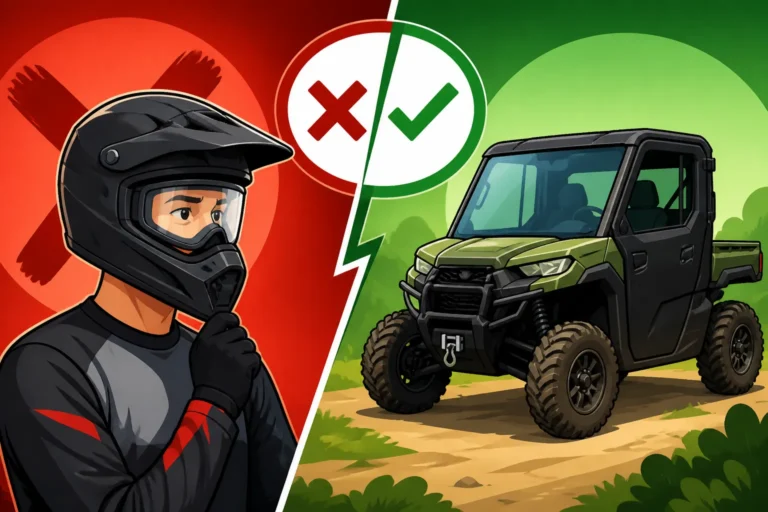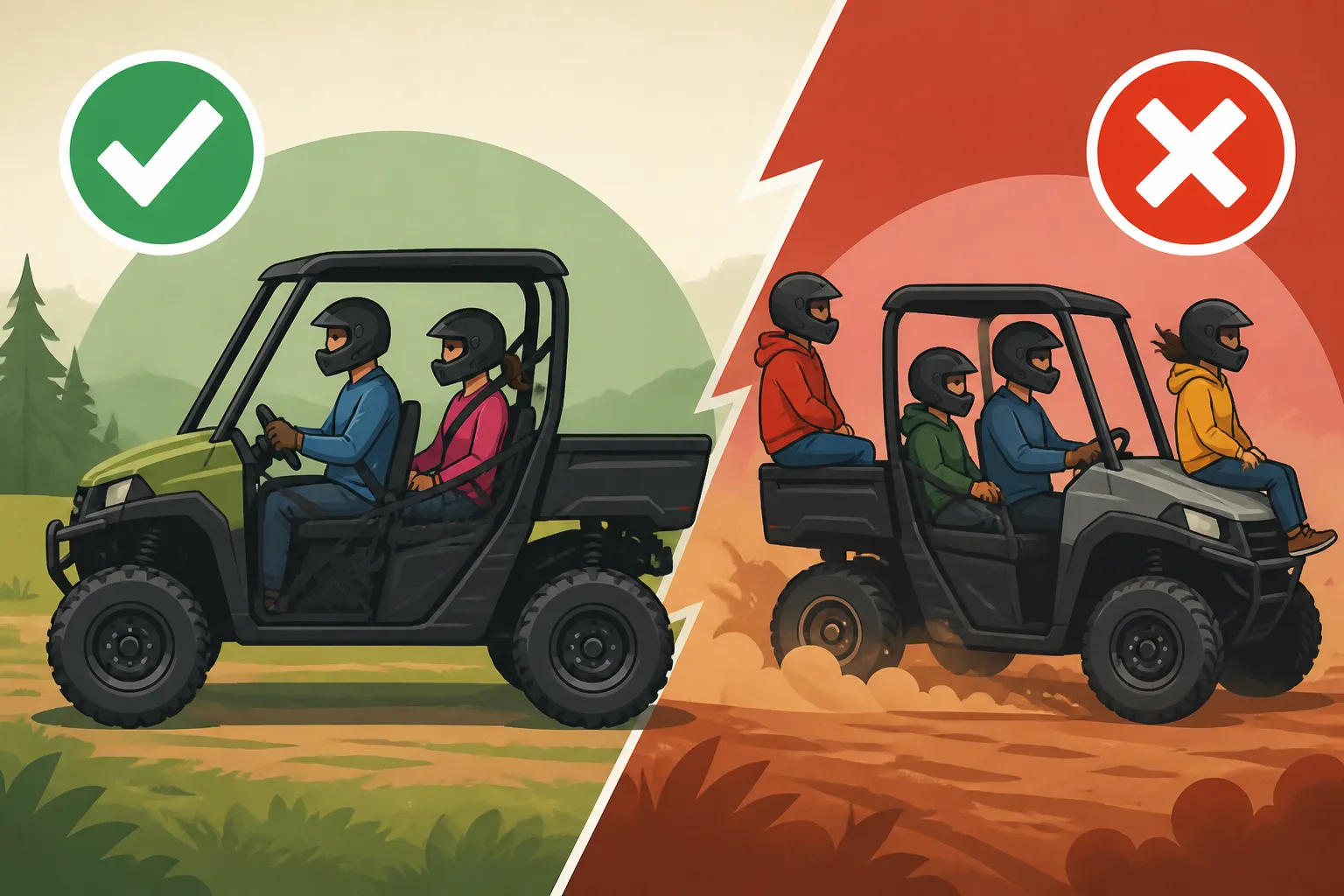
Carrying Only the Passengers the Factory Intended
It’s a tale as old as time, or at least as old as the first time someone wanted to bring an extra friend on a trail ride. You've got your ATV or UTV, the weather is perfect, and everyone wants to come along for the adventure. But then you look at your machine, and you start wondering: "Can I really fit three people on this two-seater side-by-side?" or "Is it okay if my buddy just stands on the footpegs of my quad for a quick trip down the trail?" These questions often arise from a desire to share the fun, but they also highlight a critical area of safety and legal compliance in Alabama. This guide aims to clear up the confusion surrounding passenger limits for ATVs and UTVs in the Yellowhammer State, helping you understand not just what the law says, but why adhering to factory-intended passenger limits is paramount for everyone's well-being.
The Core Rule: Factory-Intended Passengers
When it comes to riding ATVs and UTVs in Alabama, one of the most fundamental rules, often overlooked but deeply rooted in safety, is that you should only carry the number of passengers the manufacturer intended for your specific machine. This isn't just a suggestion; it's a principle woven into the fabric of safe off-road operation and, by extension, often implied in state regulations concerning proper machine use. Ignoring this can lead to dangerous situations and potential legal trouble.
Why This Rule Exists: Safety First
Manufacturers spend countless hours and dollars designing and testing their machines. Every component, from the suspension and braking system to the frame and seating, is engineered to safely handle a specific load and number of occupants under various riding conditions. When you exceed the factory-intended passenger limit, you're not just adding weight; you're fundamentally altering the machine's center of gravity, its handling characteristics, and its ability to stop effectively. This becomes especially apparent on uneven terrain, during turns, or when navigating obstacles. A machine overloaded with extra passengers can become unstable, prone to rollovers, and much harder to control, turning a fun outing into a potentially serious accident. The entire balance of the vehicle is thrown off, making even routine maneuvers risky.
Think about it: the engineers considered everything from shock absorption to tire grip with a certain weight distribution in mind. Adding an extra person means the suspension might bottom out, the brakes might fade, and the steering could feel sluggish or unpredictable. This isn't just about comfort; it's about the very physics of how the machine operates safely.
Understanding Your Machine's Design
To know how many passengers your machine can safely carry, you need to understand its design. Generally, ATVs are either single-rider machines or designed for a driver and one passenger (often called a "two-up" or "tandem" model). Side-by-sides, or UTVs, typically come with two, three, four, or even six seats, all clearly delineated by manufacturer-installed seatbelts and seating positions. The key here is "manufacturer-installed." If your quad doesn't have a designated, integrated passenger seat with handholds and footrests, it's a single-rider machine. If your side-by-side has two seats and two seatbelts, it's designed for two people, regardless of how many friends think they can squeeze in.
Look for placards on your machine, or consult your owner's manual. These resources are packed with vital information about load limits, passenger capacity, and proper operation. They are not just suggestions; they are directives based on extensive testing and safety standards. Modifications, such as adding aftermarket seats that aren't specifically approved by the manufacturer for passenger use or designed by reputable aftermarket companies like SuperATV with specific safety considerations, don't change the original factory intent for passenger capacity. While SuperATV offers fantastic accessories to enhance your machine, adding unapproved seating can be a recipe for disaster.
The Danger of Overloading a Single-Seat ATV
Perhaps one of the most common and dangerous practices is trying to carry a passenger on a single-seat ATV. These machines are designed for a single operator. Their ergonomics, weight distribution, and handling dynamics are all optimized for one person. When a second person rides along, typically perched behind the operator, the machine's balance is severely compromised. The extra weight high up and to the rear makes the ATV much more prone to wheelies, especially on climbs, and significantly increases the risk of a rollover in turns or on descents.
Furthermore, the passenger often lacks proper handholds and footrests, increasing their risk of falling off, especially on bumpy terrain. The operator's ability to shift their weight—a crucial skill for controlling an ATV—is also hampered by the presence of a passenger. This significantly increases the risk of serious injury for both the rider and the passenger. It's not just uncomfortable; it's inherently unsafe. This is why Alabama, like many states, implicitly or explicitly advises against [Riding Two Up on a Single-Seat Quad in Alabama]. It's a simple rule that saves lives and prevents severe injuries.
How Alabama Law Defines "Capacity" for Off-Road Vehicles
While Alabama's off-road vehicle statute might not spell out "no more than X passengers" for every single machine type, it often refers to proper operation and designated seating. The spirit of the law, combined with common sense safety practices, strongly supports adhering to manufacturer passenger limits. Understanding these nuances helps keep you on the right side of safety and legality.
Reading Your Owner's Manual and Decals
Your owner's manual is your first and best resource for understanding your machine's capabilities and limitations. It's not just a dusty book you toss in a drawer; it contains critical safety warnings, operational guidelines, and, crucially, details about passenger capacity. Many machines also have decals affixed to them, often near the fuel tank or on the fenders, which clearly state the maximum load capacity and the number of intended riders. These decals are there for a reason – to provide immediate, visible information to the operator. Ignoring these explicit warnings is a direct violation of safe operating procedures and can be interpreted as reckless operation, with potential legal consequences if an incident occurs.
Always take a moment before you head out to quickly review these warnings, especially if you're riding a machine you're not entirely familiar with, or if you have new riders joining you. This simple act can prevent a lot of headaches down the trail.
Single Rider vs. Tandem Machines
The distinction between a single-rider ATV and a tandem (two-up) ATV is crucial. A single-rider ATV, as the name suggests, is designed for one person only. It typically has a single, long seat that allows the operator to shift their weight effectively. A tandem ATV, on the other to hand, will have a clearly delineated second seat, often raised or extended, with separate footrests and handholds for the passenger. These machines are engineered with a longer wheelbase and often a more robust suspension system to accommodate the additional weight and maintain stability.
Trying to squeeze a passenger onto a single-rider ATV, even if it's just a child, poses significant risks. The machine isn't balanced for it, and the passenger lacks proper safety restraints and body positioning. This is especially important when considering [Alabama Rules for a Child Passenger]. Children, due to their smaller size and developing motor skills, are particularly vulnerable on an improperly loaded machine. It’s a parent’s responsibility to ensure their young rider is safe, which includes adhering to passenger limits.
Side-by-Sides: More Seats, More Rules
Side-by-sides (UTVs) are designed to carry multiple passengers, making them popular for group outings or utility work. However, even with UTVs, the "factory-intended" rule applies with equal force. If your UTV has two seats and two seatbelts, it's a two-person machine. If it has four seats and four seatbelts, it's designed for four. You cannot legally or safely add extra passengers by having them stand in the bed, sit on someone's lap, or squeeze into non-existent middle seats. Each designated seating position comes with a corresponding seatbelt, which is a critical safety device.
Consider the frame and roll cage structure of your UTV. These are designed to protect occupants in a rollover based on the factory-intended seating positions. Adding passengers outside these areas exposes them to extreme danger in the event of an accident. While you might consider modifying your UTV with accessories, always prioritize safety. For example, installing a sturdy roof or windshield from SuperATV enhances safety and comfort for intended passengers, but it doesn't magically increase your machine's capacity. Always adhere to the established seating positions and use the available seatbelts.
Consequences of Violating Passenger Limits in Alabama
Riding with more passengers than your ATV or UTV is designed for isn't just a theoretical safety risk; it carries very real consequences, both legal and financial, especially in Alabama. Understanding these repercussions can help you make safer choices before you hit the trail.
Potential Fines and Citations
While specific statutes directly penalizing "overloading passengers on an ATV/UTV" might not be universally codified with a precise fine amount in Alabama, law enforcement officers have discretion to issue citations for reckless operation, unsafe vehicle operation, or even violations related to [Alabama ATV & ROV Legal Definitions] and proper usage. If an officer observes a clearly overloaded machine, especially one that appears unstable or where passengers are riding unsafely (e.g., standing on a quad), they can absolutely pull you over and issue a citation.
These tickets can range from minor infractions with a monetary fine to more serious charges if the operation is deemed grossly negligent or if an accident occurs. Beyond the immediate financial penalty, such a citation can impact your driving record, and if it's part of a larger pattern of unsafe riding, it could lead to more significant legal issues down the line. It's simply not worth the risk of a ticket or, worse, a serious accident.
Insurance Implications After an Accident
This is where violating passenger limits can hit you hardest. Imagine an accident occurs while you're riding with an overloaded machine. Your insurance company could, and likely would, deny coverage for damages or injuries. Insurance policies are based on the premise that you are operating your vehicle in a safe and legal manner, adhering to manufacturer guidelines and state laws.
If you intentionally overload your machine, you've created a hazardous situation that goes against the terms of your policy. This means you could be personally liable for medical bills, property damage, and legal fees, which can quickly climb into the tens or even hundreds of thousands of dollars. Having [Does Alabama Require Insurance on an ATV?] is a smart move, but relying on it when you've violated fundamental safety rules is a gamble. Always ensure your policy is valid by operating your machine as intended, including sticking to passenger limits.
Risks to Your Riding Privileges and Safety
Beyond fines and insurance woes, operating an overloaded machine endangers not only yourself and your passengers but also potentially other riders on the trail. Law enforcement, land managers, and park officials in Alabama are increasingly focused on safe riding practices. Repeated violations or involvement in serious incidents due to reckless operation, like carrying too many passengers, could lead to your riding privileges being suspended at public parks or even result in bans from certain riding areas.
More importantly, the greatest risk is to the physical safety of everyone involved. An accident caused by an overloaded machine can lead to severe injuries, including broken bones, head trauma, and even fatalities. No amount of fun or convenience is worth risking a permanent injury or the loss of life. [Alabama Rules for Passengers on a Quad] are in place for a reason – to keep everyone safe.
Responsible Riding: Beyond Just the Law
Being a responsible ATV and UTV rider in Alabama extends beyond merely avoiding a ticket. It involves a commitment to safety, proper planning, and making smart choices that enhance the enjoyment of everyone on the trail, while minimizing risks. Adhering to passenger limits is a cornerstone of this responsibility.
Choosing the Right Machine for Your Group
If you frequently ride with a group or your family, and you know you'll need to carry multiple people, the solution isn't to overload a smaller machine; it's to choose the right machine for the job. Instead of trying to squeeze three people onto a two-seat side-by-side, consider investing in a four-seat or six-seat model. Many manufacturers offer a wide range of UTVs designed for varying passenger capacities. Similarly, if you want to bring a passenger on a quad, opt for a designated two-up ATV rather than modifying a single-rider model.
This not only ensures everyone has a safe, designated seat with proper restraints but also distributes the weight correctly, maintaining the machine's intended handling and performance characteristics. Thinking ahead about your typical riding group will guide you toward the safest and most enjoyable machine choice. Even if you're looking at aftermarket accessories from a brand like SuperATV to customize your ride, ensure they complement, rather than compromise, the vehicle's inherent safety design for its intended number of passengers.
Essential Safety Gear for All Riders
Even when you're carrying the factory-intended number of passengers, ensuring everyone has appropriate safety gear is non-negotiable. This includes helmets, eye protection, gloves, long pants, and sturdy over-the-ankle boots. Helmets are especially crucial; while [Does Alabama's Motorcycle Helmet Law Cover ATV Riders?] and specific requirements might vary or be absent for ATVs in some contexts, wearing a DOT-compliant helmet is always the smartest choice for head protection against impacts and debris.
Eye protection shields against dust, branches, and mud, preserving vision. Gloves protect hands from abrasions and improve grip. Long clothing and sturdy footwear offer crucial protection against scrapes, burns, and impacts. Don't compromise on safety gear for any passenger, regardless of their age or the length of the ride. Your machine's capacity includes seats, but safety includes the gear on the people in those seats.
Planning Your Ride with Passenger Limits in Mind
Good planning can prevent overloading before it even becomes an issue. Before you head out, have a clear count of who will be riding and match that to the passenger capacity of your available machines. If you have more people than seats, make arrangements for additional machines or adjust your group size. This might mean taking turns, splitting into smaller groups, or simply acknowledging that not everyone can ride at once.
If you're heading to an organized riding area or park, be aware of their specific rules, as many parks have strict policies against overloading, in addition to state guidelines. Consider what you're bringing on your ride too; gear, coolers, and tools all contribute to the machine's total load. Even if you have enough seats for everyone, ensure you're not exceeding the overall weight capacity of the vehicle, which is typically found in your owner's manual. Planning ensures a fun, safe, and compliant experience for all.
| Machine Type | Typical Passenger Capacity (Factory) | General Recommendations | Safety Considerations |
|---|---|---|---|
| Single-Seat ATV | 1 (Operator Only) | Never carry a passenger. | Highly unstable with passenger; high risk of rollover, loss of control, falls. |
| Tandem (2-Up) ATV | 2 (Operator + 1 Passenger) | Ensure passenger is seated properly with handholds and footrests. | Passenger weight distribution optimized; still requires careful operation on difficult terrain. |
| 2-Seat Side-by-Side | 2 (Operator + 1 Passenger) | Use seatbelts for both occupants; ensure passenger remains seated inside the roll cage. | Designed for two occupants; overloading compromises stability and crash protection. |
| 3-Seat Side-by-Side | 3 (Operator + 2 Passengers) | All occupants must use seatbelts and sit in designated seats. | Often has a bench seat; ensure everyone fits safely and isn't cramped. |
| 4-Seat Side-by-Side | 4 (Operator + 3 Passengers) | All occupants must use seatbelts and sit in designated seats, front and rear. | Larger, longer wheelbase for stability; still susceptible to overloading beyond 4. |
| 6-Seat Side-by-Side | 6 (Operator + 5 Passengers) | All occupants must use seatbelts and sit in designated seats, front and rear benches. | Maximum capacity UTV; critical to ensure all 6 are seated and belted for safety. |
Disclaimer
This article is for general informational purposes only and does not constitute professional advice. Laws, prices and regulations vary by location and change over time. Consult a qualified professional for guidance on your specific situation.