When a Town Registers Golf Carts for Street Use
It's incredibly frustrating when you see your neighbors cruising around their town in a golf cart, enjoying the sunshine and convenience, but you're left scratching your head, wondering if it's even legal where you live. The truth is, Alabama's state laws are pretty clear about what belongs on public roads, but individual cities and towns have the power to create their own exceptions for golf carts, which can make things confusing. This guide will walk you through how and why some Alabama towns register golf carts for street use, what you need to know to stay compliant, and how to find out the rules in your own community.
Navigating Alabama's State Law for Golf Carts on Public Roads
When it comes to motor vehicles on public roads, Alabama state law has a pretty firm stance: if it's not designed and equipped for highway use and doesn't meet federal motor vehicle safety standards, it generally doesn't belong on the asphalt. Golf carts, by their very design, are made for the golf course, private communities, or large campuses, not for sharing lanes with cars and trucks. This is a critical distinction many owners miss, often assuming that because a golf cart looks like a slow-moving vehicle, it's automatically acceptable on city streets. It's just not that simple.
State law categorizes vehicles like traditional golf carts as "off-road vehicles" or, more accurately, simply not street-legal vehicles. They don't have the necessary safety features, such as specific headlights, brake lights, turn signals, seatbelts, or crumple zones, that a car or even a low-speed vehicle (LSV) requires. In most instances, if you were to drive a standard golf cart on a state highway or a county road outside of a specific municipal ordinance, you would be operating an unregistered and illegal vehicle, potentially facing citations for improper equipment, no registration, and even driving an uninsured vehicle. This is why understanding [Alabama Golf Cart Rules Compared to ATVs] is so important, as neither is generally considered street legal by the state itself without very specific conditions.
The crucial takeaway here is that you cannot just assume your golf cart is good to go on any public road in Alabama. The state itself doesn't offer a blanket permission slip for golf carts. Instead, it delegates specific authority to local municipalities, allowing them to create their own ordinances that might permit golf cart use under certain, strictly defined conditions within their city limits. Without such a local ordinance, the default position under state law is that your golf cart stays off the public streets. This is a common point of confusion and one that can lead to unexpected trouble if you're not careful.
How Local Ordinances Allow Golf Carts on City Streets
While Alabama state law doesn't generally permit golf carts on public roads, it does grant local governing bodies—like city councils or town commissions—the authority to pass ordinances that can create exceptions. This is where the magic happens for golf cart enthusiasts in many communities across the state. A city, by passing a local ordinance, can essentially carve out designated areas or specific rules within its own jurisdiction that allow golf carts to operate on public streets. These ordinances are born from a need to balance public safety with the convenience and lifestyle choices of residents, particularly in smaller towns, retirement communities, or areas with a significant resort presence.
These local ordinances aren't just a free-for-all; they are carefully crafted documents that define the terms under which golf carts can be used. They specify which roads are permissible, what safety equipment the golf cart must have, any speed restrictions, and often even hours of operation. For instance, a town might decide that golf carts are allowed on roads with a speed limit of 25 mph or less, but explicitly forbid them on busier main thoroughfares. This is fundamentally different from a low-speed vehicle (LSV), which is a federally classified vehicle that meets specific safety standards and can be registered for road use, as discussed in [Alabama Low-Speed Vehicle Rules]. A golf cart allowed by local ordinance is still, at its core, a golf cart, but one operating under special local permission.
The process usually involves local leaders hearing from residents, debating the pros and cons, and then formally voting on an ordinance. Once passed, the city will typically publish these rules and begin educating its citizens. It's not uncommon for towns to also implement a local registration system for these street-legal golf carts, which might involve a small fee and an inspection to ensure compliance with the ordinance's safety requirements. This local registration is distinct from state vehicle registration, as [Alabama Golf Carts Are Not Titled] or registered at the state level like cars. The goal is to provide a framework that allows residents to enjoy the utility of their golf carts while minimizing risks to drivers, pedestrians, and other vehicles on shared roadways.
The Power of Local Decision-Making
It's important to recognize that this power is not universal across all types of roads. A city can typically only regulate its own municipal streets. They cannot unilaterally declare golf carts legal on state highways (like U.S. or State Routes) or county roads that pass through their jurisdiction, unless specific agreements or state law provisions allow it. For instance, a small town might allow golf carts on every street within its town limits, but the moment you cross out onto a county-maintained road, or a state highway that runs through the town, those local permissions evaporate. You’d instantly be in violation of state law.
This means that researching the specific rules for your town is absolutely crucial. You can't just assume what's legal in Fairhope is legal in Cullman, or vice-versa. Each municipality has its own unique set of circumstances, traffic patterns, and community priorities that influence how its ordinances are written and enforced. Don't rely on what your neighbor thinks is allowed; always go to the source.
Requirements and Restrictions for Street-Legal Golf Carts in Alabama Towns
When an Alabama town decides to allow golf carts on its streets, it's not an unconditional pass. These local ordinances come with a clear set of requirements and restrictions designed to ensure public safety. Think of it like this: the town is extending a privilege, and in return, they expect you to make your golf cart as safe as possible for shared road use. These requirements often mirror some of the basic safety features found on low-speed vehicles, even though golf carts are not legally LSVs.
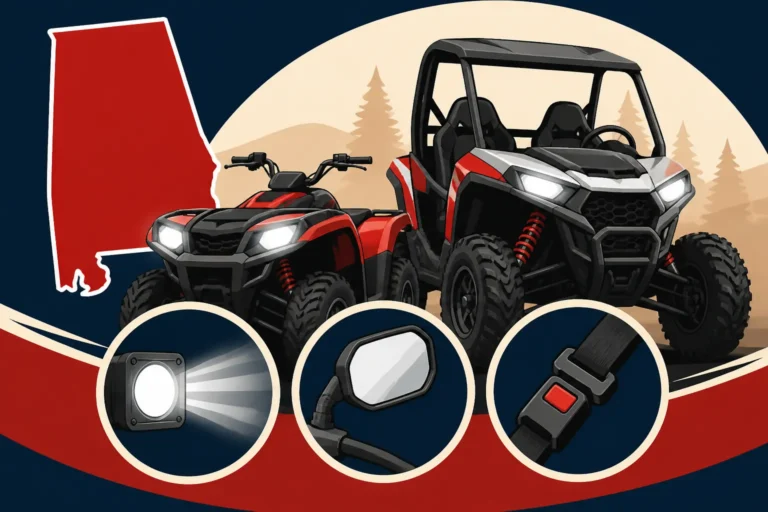
One of the most common requirements revolves around equipment. Most towns will stipulate that a golf cart must be equipped with essential safety features before it can be driven on public streets. This can include:
- Headlights and Taillights: Fully functional, visible at night.
- Turn Signals: For clearly indicating turns to other drivers.
- Brake Lights: To signal when you're slowing down or stopping.
- Rearview Mirrors: At least one, often specifying a driver's side mirror and/or a center rearview mirror.
- Reflectors: For enhanced visibility, especially at dawn, dusk, or night.
- A Horn: To alert pedestrians or other drivers.
- Seat Belts: Sometimes required for all seating positions, depending on the town.
- Windshield: Often required, made of safety glass or similar material.
- Fenders: To prevent debris from being thrown up.
Some owners turn to aftermarket solutions to meet these requirements. Companies like SuperATV offer a range of accessories, from turn signal kits to mirrors and windshields, that can help bring a standard golf cart up to the local ordinance's specifications. However, simply installing these parts doesn't automatically make your golf cart street legal; it must still comply with your specific town's rules and undergo any required inspection. These components address the equipment aspect of [Lights, Mirrors and Belts Required] that many ordinances will specify.
Beyond equipment, towns often impose operational restrictions:
- Speed Limits: Golf carts are typically limited to streets with posted speed limits of 25 mph or less. Exceeding this limit would make it unsafe and likely illegal.
- Roadways Permitted: The ordinance will usually list specific roads or types of roads where golf carts are allowed (e.g., all roads except state highways, or only roads within a certain district).
- Hours of Operation: Some towns may restrict golf cart use to daylight hours only, or prohibit it during peak traffic times.
- Operator Age and Licensing: Often, the driver must be a licensed motor vehicle operator, typically 16 years or older.
- Insurance: Many towns will require proof of liability insurance, similar to what you would carry for a car, to cover potential accidents.
Some towns might even require a local registration sticker or permit that must be displayed on the golf cart, acting as proof that it has met the town's requirements. This process might involve a simple application, a fee, and an inspection by local law enforcement or a designated city official. It’s their way of tracking compliant vehicles and ensuring ongoing safety.
It's vital for golf cart owners to understand that these local rules can be quite detailed and specific. Ignoring even a small detail could lead to a citation or, worse, an accident. Always verify the current, exact ordinance for your specific town.
Finding Your Town's Specific Golf Cart Ordinance
So, you're in an Alabama town, and you've heard whispers that golf carts might be allowed on some streets. How do you find out for sure, and what exactly are the rules? This is where diligent research comes into play, because as we've discussed, these rules vary widely from one municipality to another. There's no statewide database of local golf cart ordinances; you have to go directly to the source for your specific community.
Here's your action plan:
- Start with the City Clerk's Office or Municipal Website: The city clerk's office is the official custodian of all local ordinances and resolutions. This is your first and best point of contact. Many cities now publish their code of ordinances online. A quick search for "[Your Town Name] city code" or "[Your Town Name] ordinances golf cart" might yield direct results. Look for sections related to traffic, vehicles, or special use permits. This is where [Alabama City Ordinance Lookups] come in handy.
- Contact Local Law Enforcement: Your local police department or sheriff's office (if within their jurisdiction) will be familiar with the enforcement of golf cart rules. They can often tell you definitively whether golf carts are allowed and point you to the relevant ordinance or city department that handles the details. However, always try to get a written copy of the ordinance rather than relying solely on a verbal interpretation.
- Check for Designated Districts: Some towns might only allow golf carts within specific, pre-defined districts, such as a historic downtown area, a large planned community, or a recreational zone. The ordinance will clearly delineate these boundaries.
- Look for Signs and Posted Information: In towns where golf carts are common, you might see signs at city limits or within certain neighborhoods indicating golf cart zones or rules. While helpful, these signs shouldn't replace consulting the official ordinance.
Here's a comparison of how different jurisdictions handle these matters:
| Feature | Alabama State Law (General) | Local Town Ordinance (Example) | Low-Speed Vehicle (LSV) Standard |
|---|---|---|---|
| Road Use | Generally Prohibited | Permitted on specific, low-speed roads | Permitted on roads up to 35 mph |
| Registration | None (not titled) | Often requires local permit/registration | State-level registration required |
| Titling | No | No | Yes, state title required |
| Equipment | Basic (golf course use) | Headlights, brake lights, turn signals, mirrors | Full DOT-approved safety features, VIN |
| Speed Limit | N/A (not for roads) | Typically 25 mph or less | Capable of 20-25 mph, not more than 25 mph on roads |
| Driver License | Not applicable | Often requires valid driver's license | Valid driver's license required |
| Insurance | Not required (for golf course use) | Often required | Required |
| Legal Basis | Not designed for public road use | Specific local exception to state law | Federal motor vehicle safety standard compliance |
Remember, even if your town has an ordinance, there will likely be specific equipment requirements. For instance, a standard golf cart needs a clear path to becoming compliant. You might need to add [Lights, Mirrors and Belts Required] and ensure they are all working properly. You can purchase these components from automotive parts stores or specialty shops, and, as mentioned, companies like SuperATV can be a resource for these types of upgrades.
Finally, once you have the ordinance in hand, read it carefully. Pay attention to the specific definitions, the permitted roadways, the required safety equipment, any age restrictions for drivers, and any local registration or permit processes. If something is unclear, don't hesitate to call the city clerk's office or local police department for clarification. It's far better to ask questions beforehand than to face [Alabama Penalties for Illegal Road Riding] because you weren't fully informed.
Practical Considerations for Golf Cart Owners in Alabama Towns
So, you've done your homework, found your town's ordinance, and your golf cart is now equipped to meet all the requirements for street use. That's fantastic! But beyond the letter of the law, there are some practical considerations and best practices that every golf cart owner should embrace to ensure a safe and enjoyable experience on public streets.
First and foremost, safety should always be your top priority. Even in towns where golf carts are permitted, you are sharing the road with larger, faster vehicles. Drive defensively, always assume other drivers may not see you, and be predictable in your movements. Use your turn signals well in advance, maintain a safe following distance, and obey all traffic laws, just as you would in a car. Don't forget that visibility is key. While your local ordinance might require basic lighting, consider adding extra reflectors or even an orange safety flag, especially if you're driving at dawn or dusk, or in areas with limited visibility. The more visible you are, the safer everyone will be.
Secondly, keep your golf cart properly maintained. Regular checks of your brakes, tires, lights, and steering are critical. A golf cart that isn't regularly serviced can become a hazard, especially on paved roads where sudden stops or turns might be necessary. Ensure your tires are properly inflated and have good tread, that your brakes are responsive, and all your lights are shining brightly. If you've added aftermarket parts like those from SuperATV, make sure they are installed correctly and maintained according to the manufacturer's recommendations.
Thirdly, be a good neighbor. Just because you can drive your golf cart on the street doesn't mean you should misuse the privilege. Be mindful of noise, especially late at night or early in the morning. Avoid driving aggressively or weaving in and out of traffic. Respect private property and always secure your golf cart when parked to prevent theft or unauthorized use. The continued ability for golf carts to operate on town streets often hinges on residents demonstrating responsible and respectful behavior. Complaints from citizens can quickly lead to city councils revisiting or even revoking such ordinances.
Finally, always carry proof of compliance. If your town requires a local permit or registration sticker, make sure it's prominently displayed. If they require insurance, carry a copy of your insurance card. You might also consider keeping a copy of the specific city ordinance in your golf cart, especially if you're new to the area or if the rules are complex. Should you ever be stopped by local law enforcement, having your paperwork in order will make the interaction much smoother.
It's clear that while the state of Alabama generally restricts golf carts from public roads, the power of local ordinances offers a valuable pathway for communities to integrate these convenient vehicles into their daily life. But with that privilege comes a significant responsibility for golf cart owners to understand, comply with, and uphold the rules set forth by their local town.
Disclaimer
This article is for general informational purposes only and does not constitute professional advice. Laws, prices and regulations vary by location and change over time. Consult a qualified professional for guidance on your specific situation.