Why 25 mph Is the Legal Line
Navigating the rules for riding ATVs and UTVs in Alabama can feel like trying to solve a riddle wrapped in a legal enigma, especially when you start dreaming about taking your machine beyond the dirt trails and onto a paved road. Many of us wish we could just zip down a county road to connect to another trail or grab a quick bite without trailering, but the law draws a very specific line – and a crucial part of that line is the 25 mph speed limit for certain kinds of vehicles. This guide will help you understand that often-confusing threshold and what it means for your off-road machine in Alabama.
The Frustration of Off-Road Machines on Public Roads
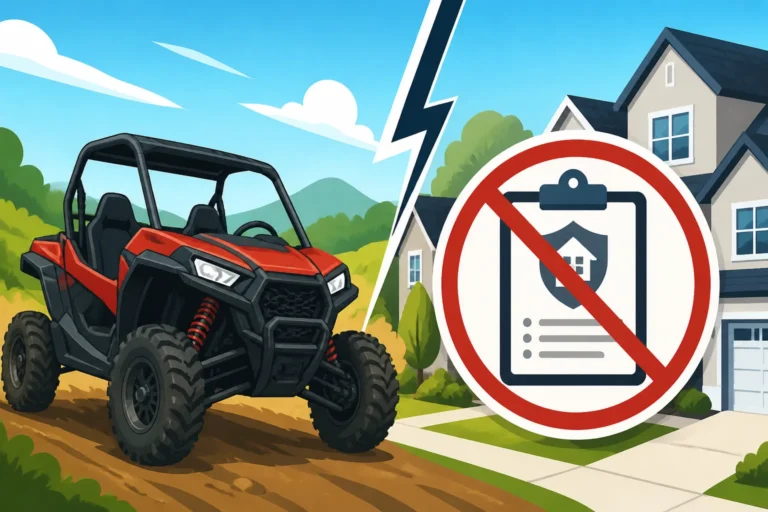
Let's be honest, it's incredibly tempting to hop on your ATV or side-by-side and take the most direct route to wherever you need to go, even if that means a short stint on a paved road. You've got your machine, it runs great, and it feels perfectly capable. But the state of Alabama, like most places, has a very different view of what constitutes a "road-worthy" vehicle, and unfortunately, most of our beloved off-road machines don't quite make the cut. This isn't about whether your quad can go 50 mph; it's about whether it's legally allowed to go any speed on a public highway.
Why Standard ATVs and UTVs Aren't Built for Streets
The fundamental issue boils down to federal safety standards. When an ATV or UTV rolls off the factory floor, it's designed and manufactured for off-road use. This means it doesn't have to meet the stringent Federal Motor Vehicle Safety Standards (FMVSS) that apply to cars, trucks, and even motorcycles. These standards cover everything from crash-worthiness and emissions to lighting, braking, and tire types. Your typical sport quad or utility side-by-side simply isn't engineered with these requirements in mind. They often lack things like specific types of headlights, turn signals, mirrors, or even Department of Transportation (DOT) approved tires, all of which are essential for street legality. It’s why [Alabama's Federal Standard Barrier to Road Use] is such a significant hurdle. Trying to make an off-road machine fit these standards after the fact is rarely feasible or legal.
Think about it: the suspension is different, designed for absorbing bumps and jumps, not smooth highway turns. The tires are knobby, great for grip in mud and dirt, but terrible for stability and wear on asphalt. The entire chassis is built for rugged durability, not necessarily crash impact protection in a collision with a road vehicle. These aren't just minor details; they are core engineering principles that separate an off-road beast from a street-legal cruiser.
The Temptation to Ride Just a Little Bit
We've all been there. You're out riding on your favorite property, and there's a fantastic trail system just across the county road, or maybe you're out hunting and need to grab something from a nearby store. The thought crosses your mind: "It's just a mile or two, what's the harm?" This "just a little bit" mentality is where many riders get into trouble. While the distance might seem negligible, the legal ramifications are not. That short ride on a public road, no matter how brief, can put you and your machine at risk of citations, fines, and even impoundment.
It's a common misconception that if you're riding slowly, staying to the side, or only going a short distance, you're somehow exempt from the rules. Unfortunately, the law doesn't make exceptions for convenience or short trips. The moment your tires hit that public pavement, you're subject to the same regulations as any other vehicle, and if your ATV or UTV doesn't meet those standards, you're breaking the law. It’s a bitter pill to swallow when you just want to extend your adventure, but knowing the rules can save you a lot of headache and expense down the road.
Understanding the Low-Speed Vehicle LSV Classification in Alabama
Here's where the 25 mph speed limit truly becomes the star of the show in Alabama. While your standard ATV or UTV might be out of luck for street use, there's a specific category of vehicle called a Low-Speed Vehicle, or LSV, that is allowed on certain public roads, and its top speed is legally capped at 25 mph. This distinction is critical because it's not just about how fast your vehicle can go, but how it's legally classified based on its design and intended use.
What Makes a Vehicle an LSV in Alabama?
An LSV isn't just any vehicle that happens to drive slowly. In Alabama, a Low-Speed Vehicle is formally defined as a four-wheeled vehicle whose top speed is greater than 20 mph but not greater than 25 mph. But the speed isn't the only factor. To be considered a true LSV, the vehicle must be manufactured to comply with the safety standards established in Federal Motor Vehicle Safety Standard No. 500 (49 CFR 571.500). This means it must have specific equipment, including:
- Headlights
- Tail lights
- Stop lights (brake lights)
- Turn signal lamps
- Reflex reflectors (front, rear, and side)
- An exterior mirror on the driver's side and either an exterior mirror on the passenger's side or an interior rearview mirror
- A parking brake
- A windshield
- Seat belts
- A vehicle identification number (VIN)
These are not optional add-ons; they are mandatory features for a vehicle to be legally classified and operated as an LSV. Without these, even if your vehicle somehow tops out at 25 mph, it wouldn't meet the definition. For a deeper dive into the specific requirements, check out [Alabama LSV Requirements Explained]. This strict list ensures that even at lower speeds, these vehicles offer a baseline level of safety and visibility for road interaction.
The Crucial 25 mph Speed Limit
The 25 mph threshold is the defining characteristic for an LSV in Alabama. If a vehicle can't reach 20 mph, it falls into a different category entirely (like some golf carts, though [Alabama Golf Cart Rules Compared to ATVs] are a whole separate discussion). If it can exceed 25 mph, it generally no longer qualifies as an LSV and would need to meet full federal highway safety standards, which most ATVs and UTVs simply cannot do. This speed cap is not arbitrary; it's designed to limit LSV use to roads where traffic speeds are relatively low, minimizing the speed differential with other vehicles and thus reducing accident risk.
This means that even if you have a street-legal golf cart or a purpose-built LSV, you are legally prohibited from operating it on a road where the posted speed limit is higher than 35 mph. The 25 mph operational limit for the LSV itself, combined with the 35 mph road speed limit, creates a specific corridor of permissible use. It's a balance designed to allow limited road access for these slower vehicles while maintaining overall traffic safety. Understanding this dual speed constraint is fundamental to staying on the right side of the law.
Equipping an LSV for Alabama Roads
If you have a vehicle that is manufactured as an LSV, or you're considering purchasing one, it's crucial to ensure it comes equipped with all the necessary features right from the start. These aren't just optional accessories you can bolt on later; they are integrated components that contribute to the vehicle's legal status. While aftermarket companies, including those like SuperATV, offer a vast array of parts for ATVs and UTVs—from lift kits and suspension upgrades to specific lighting components—it's vital to understand that simply buying and installing these parts on a standard off-road machine does not magically transform it into a compliant Low-Speed Vehicle.
For a vehicle to truly be an LSV, it needs to have been designed and manufactured to meet [Alabama's 49 CFR 571.500 Standard]. This usually means purchasing a vehicle specifically labeled and certified as an LSV from the factory. While some general components like upgraded LED headlights or turn signal kits might resemble those on an LSV, their installation on a non-LSV certified machine doesn't confer street-legal status. It's a matter of the vehicle's fundamental compliance and certification, not just its appearance or the presence of certain parts. If you are starting with a vehicle already designated as an LSV, then SuperATV or similar retailers might be a great resource for replacement parts or enhancements that still adhere to the LSV regulations.
The Difference Between a Modified ATV/UTV and a True LSV
This is perhaps the biggest source of confusion and frustration for riders. Many assume that by adding a "street legal kit" to their existing ATV or UTV – usually consisting of a horn, mirrors, and turn signals – they can suddenly take to the public roads. Unfortunately, this couldn't be further from the truth in Alabama, or most other states for that matter. The distinction between adding accessories and having a legally compliant Low-Speed Vehicle is incredibly significant, and misunderstanding it can lead to severe penalties.
Why a Street Legal Kit Will Not Make It Legal
Imagine buying a race car and bolting on some headlights and a muffler, then expecting to drive it to the grocery store. It sounds absurd, right? The same principle applies to ATVs and UTVs. These machines are not manufactured to meet the rigorous safety standards required for highway use. Adding a simple kit, even a comprehensive one that includes all the visible components like a horn, mirrors, and turn signals, does not alter the fundamental design, engineering, or federal certification of the vehicle.
The frame, braking system, suspension, tires, and even the emissions controls of a typical ATV or UTV are not designed to meet the FMVSS standards that apply to road-going vehicles, including LSVs. Without this fundamental compliance, no amount of aftermarket parts can change its legal status. This is why [Why a Street Legal Kit Will Not Make It Legal] is such an important concept for riders to grasp. It's not about what you add to your machine; it's about how the machine was built from the ground up and what certifications it carries. Many riders spend a good chunk of money on these kits, only to find themselves pulled over and cited for illegal road use, which is a truly disheartening experience.
The "Manufactured for Low-Speed Use" Distinction
The key phrase here is "manufactured for low-speed use." A true LSV is built from the factory to meet the specific requirements of FMVSS 500. This means it has undergone specific testing and certification processes to ensure it meets the necessary safety criteria, even at its limited speed. These vehicles have a VIN that typically identifies them as an LSV, and they come with a Manufacturer's Statement of Origin (MSO) or title that reflects this classification.
This is a fundamental difference from an ATV or UTV, which is manufactured as an "off-highway vehicle" and does not undergo the same testing or carry the same certifications. When you're looking at [What a Low-Speed Vehicle Standard Requires], you're talking about a vehicle category that is distinct from recreational off-road machines. While they might look similar to a UTV at first glance, true LSVs are often purpose-built vehicles like neighborhood electric vehicles (NEVs) or specialized utility carts, designed from the beginning for specific, limited road environments. This ensures that [Which Machines Actually Meet the Federal Safety Standard] are the ones actually allowed on public streets, safeguarding both the occupants and other motorists.
Practical Implications and Avoiding Penalties
Understanding the 25 mph legal line and the distinction between an ATV/UTV and an LSV isn't just academic; it has very real, practical implications for where and how you can ride in Alabama. Ignoring these regulations can lead to a host of problems, from expensive tickets to more serious legal troubles. It’s always better to know the rules upfront than to learn them the hard way.
Where You Can and Cannot Ride an LSV
If you actually own a legitimate Low-Speed Vehicle (LSV) that meets all the Alabama requirements, you gain some limited access to public roads. Generally, LSVs are allowed to be operated on public roads where the posted speed limit is 35 mph or less. This usually includes many residential streets, secondary roads, and some county roads. However, there are still restrictions. LSVs are typically not allowed on main highways, interstates, or any road with a speed limit exceeding 35 mph. They may be permitted to cross a highway or faster road at an intersection, but not to travel along it. For specific guidance on typical allowable roads, consider resources like [Alabama Rules for Riding a County Road].
It’s a different story entirely for standard ATVs and UTVs. With very few exceptions (like specific agricultural uses or crossing roads under strict conditions), these machines are generally prohibited from public roads, period. The lack of federal safety certification means they are seen as inherently unsafe for shared road use with conventional vehicles. Always verify local ordinances, as some cities or counties might have additional restrictions or, conversely, may designate specific roads where golf carts or LSVs are permitted under strict conditions.
Consequences of Ignoring the 25 mph Rule
The penalties for operating a non-compliant ATV or UTV on public roads, or for improperly operating an LSV, can be significant. If you're caught riding a standard ATV or UTV on a public road in Alabama, you could face fines, a citation for operating an unregistered or non-street-legal vehicle, and even have your machine impounded. These citations can vary in cost depending on the county and the specific charge, but they are rarely cheap. Moreover, if you're involved in an accident while illegally operating your machine on a public road, your insurance company may deny coverage, leaving you personally liable for damages and medical expenses. This can lead to financial devastation.
For those with a legitimate LSV, exceeding the 25 mph operational limit or riding on a road with a speed limit over 35 mph can also result in fines and citations. These rules are in place to prevent dangerous situations where a slower-moving vehicle might impede traffic or pose a hazard. Understanding [Alabama Penalties for Illegal Road Riding] is crucial for all riders to avoid these costly and stressful situations. The risks far outweigh the convenience of a short road trip.
Local Ordinances and Their Role
Even if you have a genuine LSV, the rules aren't always universally consistent across Alabama. Individual cities and counties retain the authority to enact their own local ordinances regarding the use of LSVs (and sometimes even golf carts) on public streets within their jurisdiction. This means that what's permissible in one town might be strictly prohibited just a few miles down the road in another. Some communities might designate specific streets or zones where LSVs are allowed, while others might ban them entirely.
It's critical, therefore, to always check with the local municipal or county government offices before planning to operate your LSV on their roads. A quick call to the local police department or city clerk's office can save you a lot of trouble. Ignoring these local rules, even if you meet state LSV requirements, can still lead to citations. Resources like [Alabama City Ordinance Lookups] can provide a starting point, but direct contact is always best for the most current and specific information for your planned riding area. This patchwork of rules makes it essential to do your homework every time you venture into a new area.
| Feature / Category | Standard ATV/UTV (Off-Road Only) | Low-Speed Vehicle (LSV) |
|---|---|---|
| Primary Use | Recreation, utility work (off-road) | Limited public road use (residential, specified zones) |
| Maximum Speed | No legal road speed limit (can exceed 25 mph off-road) | Legally capped at 25 mph (by design/manufacturer) |
| Road Speed Limit | Not permitted on roads (with few exceptions) | Permitted on roads with posted speed limits of 35 mph or less |
| Federal Standards | Not required to meet FMVSS 500 | Must meet FMVSS 500 for safety equipment |
| Key Equipment | Basic lights, typically no turn signals/mirrors/windshield/seat belts | Headlights, tail lights, stop lights, turn signals, mirrors, windshield, seat belts, parking brake, reflex reflectors |
| Legal Status | Off-Highway Vehicle (OHV) | Street-Legal (for specific road types) |
| Titling/Reg. | [Alabama's Voluntary ATV Registration Through ALEA] (voluntary off-road registration) or [Alabama ATV Titling Starts With Model Year 2026] (mandatory for newer models) | Required to be titled and registered like other road-legal vehicles for public road use |
| Conversion | Cannot be legally converted to an LSV (due to core manufacturing) | N/A (purchased as an LSV) |
| Insurance | Off-road liability/comprehensive, may exclude road use | Auto liability/comprehensive (for road use) |
Disclaimer
This article is for general informational purposes only and does not constitute professional advice. Laws, prices and regulations vary by location and change over time. Consult a qualified professional for guidance on your specific situation.