Alabama Rules for Crossing a Highway
We've all been there: you're out enjoying the beautiful Alabama outdoors on your ATV or UTV, and suddenly, you need to get from one side of a major road or highway to the other. Maybe your favorite hunting land is split by a state route, or you're trying to reach a different section of trails. The thought pops into your head: "Can I just dart across?" It's a common question, and honestly, it's one that causes a lot of confusion and understandable frustration for off-road enthusiasts. This guide is here to untangle the rules specifically around crossing a highway in Alabama, helping you understand what's permissible and, more importantly, what could land you in serious trouble.
The Core Challenge: Alabama's Stance on Off-Road Vehicles on Public Roads
The biggest hurdle for anyone wanting to take an ATV or UTV onto a paved public road in Alabama, even for a quick crossing, comes down to how these machines are legally classified. They are built for dirt, mud, and trails, not for sharing lanes with cars and trucks. This fundamental difference is what governs almost every rule you'll encounter.
Why the Road is Generally Off-Limits
In Alabama, the state legislature has made it quite clear: ATVs and UTVs are not considered "street legal" vehicles in the same way your car or truck is. This isn't just a random rule; it's rooted deeply in federal safety standards. Most off-road machines simply don't meet the stringent Federal Motor Vehicle Safety Standards (FMVSS) that all highway-legal vehicles must adhere to. Think about it: your quad lacks airbags, crumple zones, and often even basic turn signals, features that are standard on vehicles designed for asphalt. Because they don't meet these federal benchmarks, they are generally prohibited from operating on public roads. It's a foundational principle that creates a significant barrier, and you can learn more about [Alabama's Federal Standard Barrier to Road Use] and [Why a Standard Quad Can Never Pass the Standard]. This isn't a minor detail; it's the very core of why navigating roads on your off-road machine is such a challenge.
The "Crossing" Exception and Its Strict Limits
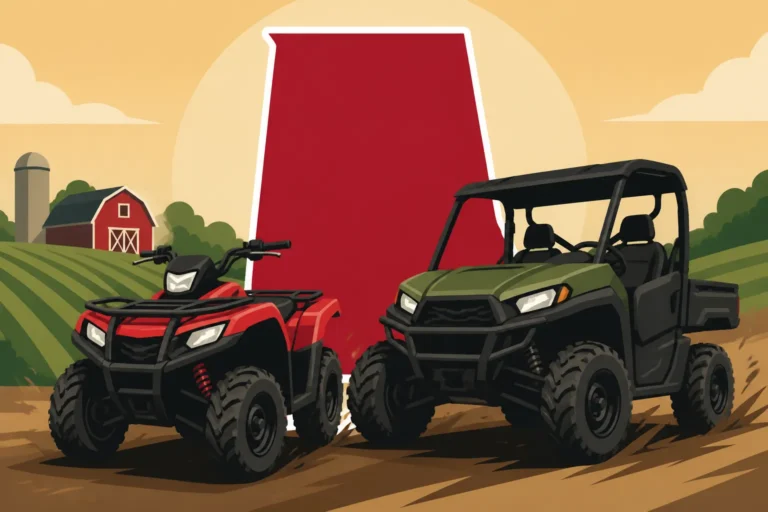
Now, for the big question: what about just crossing? Alabama law does include a very narrow exception that might allow for certain road crossings. However, this isn't a blanket permission slip to drive down the highway for a quarter-mile to find a crossing point, nor does it extend to casually riding along the shoulder. The exception is typically intended for direct crossings, often in rural or agricultural settings, where getting from one piece of private property to another is necessary and the only alternative is a significant detour.
The key here is "quickest and most direct route." This means you should be making a perpendicular crossing, going straight across the travel lanes to the other side, not riding parallel to traffic for any distance. You must also yield to all oncoming traffic, treating it like a pedestrian crossing a busy street—except you're on a less visible, less protected machine. Attempting to cross a multi-lane highway, especially one with high-speed traffic, presents extreme dangers and is generally not what this narrow exception was designed to facilitate, even if the letter of the law doesn't explicitly forbid it. The spirit of the law implies minimal exposure to public roads, and a major highway crossing dramatically increases that exposure and risk.
Practical Considerations for Attempting a Highway Crossing
Even with the slim possibility of a "legal" crossing, the practical realities and immense dangers involved demand serious consideration. It's not just about what the law says; it's about what's safe and what an officer on patrol might observe.
Safety First: Visibility and Timing
Let's be brutally honest: crossing a highway on an ATV or UTV is incredibly dangerous. These machines are not designed to be easily seen by drivers of cars and trucks, especially at speed. Your machine is lower to the ground, less reflective, and often less audible than other vehicles. Even if you're rocking the brightest gear and have upgraded your lights (which you should definitely consider, and you can read more about [Alabama Lighting on a Machine at Night]), you're at a significant disadvantage.
The timing of your crossing is paramount. You absolutely must wait for a completely clear window in traffic, and on many Alabama highways, especially during peak hours, such a window might simply not exist. Rushing or misjudging the speed of oncoming vehicles can have catastrophic consequences. Imagine a semi-truck traveling at 70 mph; by the time you see it, it's often too late if you're in its path. Even on a seemingly quiet county road, unexpected traffic can appear quickly. Your best defense is an abundance of caution and a willingness to simply not cross if conditions aren't perfect.
The Grey Areas and Potential Penalties
While the statute provides a narrow path for certain crossings, it’s often interpreted and enforced differently by various law enforcement agencies. What one deputy in a very rural county might overlook as a necessary farm movement, another officer on a busy state highway might view as a clear violation. The "quickest and most direct route" can be subjective. Is riding a few yards down the shoulder to get a better sightline still "direct"? It's a fine line.
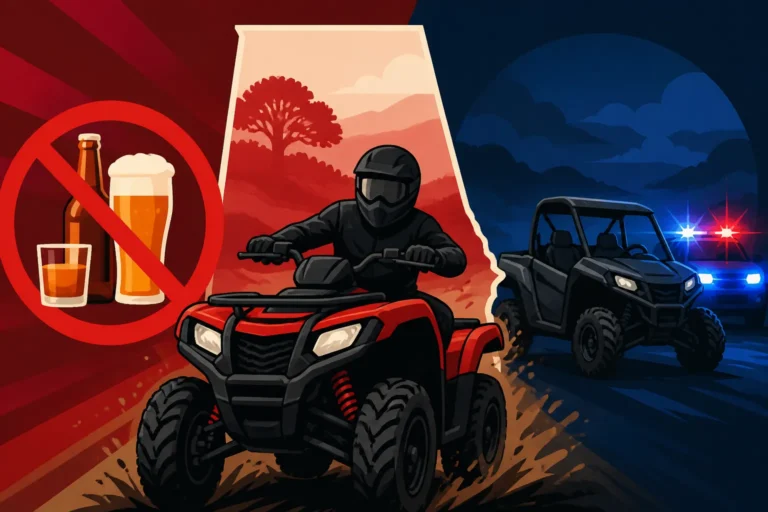
The consequences of getting it wrong can be severe. You could face citations, significant fines, and potentially even have your machine impounded. It's a costly lesson to learn, and the state's intent is to keep off-road machines off public roads for safety. These penalties are designed to deter illegal road use, and you can find more information about [Alabama Penalties for Illegal Road Riding]. Furthermore, while state law sets the general framework, remember that local municipalities and counties can pass their own ordinances. A city might have stricter rules, even on a road that passes through its jurisdiction. Always check for [Alabama Local Ordinances on ATV Riding] in the specific area you plan to ride. It's a lot to navigate, and the risk often outweighs the convenience.
Comparing Highway Crossing Scenarios
Here's a quick look at how different scenarios might play out when considering a highway crossing:
| Scenario | Likelihood of Legal Issue | Safety Risk | Recommended Action |
|---|---|---|---|
| Crossing a quiet, rural county road | Moderate | Moderate | Exercise extreme caution; consider trailering. |
| Crossing a busy state highway (e.g., US-280) | High | Very High | Do not attempt. Trailer your machine. |
| Riding along a highway shoulder to cross | Very High | Very High | Do not attempt. This is not a direct crossing. |
| Crossing a paved forest road with minimal traffic | Low to Moderate | Moderate | Verify specific rules for that forest road; use caution. |
| Crossing for agricultural purposes between fields | Potentially Lower | Moderate to High | Confirm local allowances; prioritize visibility/safety. |
Alternatives to Highway Crossings for ATV/UTV Owners
Given the significant risks and legal complexities associated with highway crossings, it's almost always better to explore alternative solutions that keep you and your machine safe and compliant.
Trailer Your Machine: The Safest Option
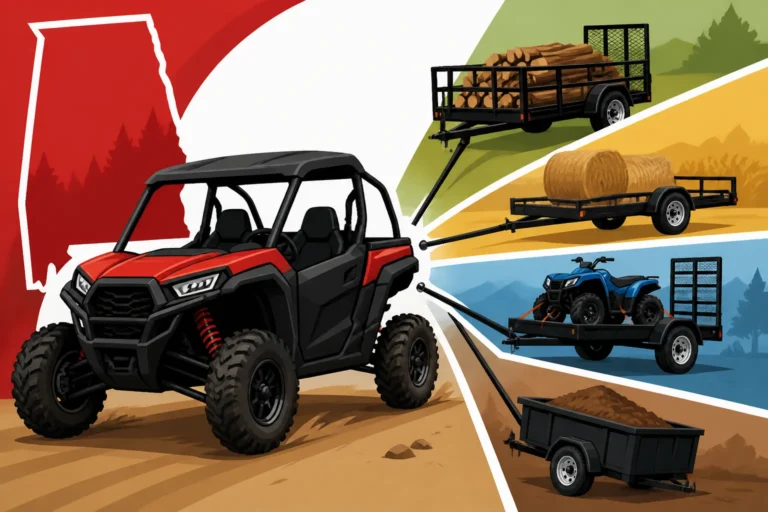
Let's be blunt: if you need to get your ATV or UTV from one side of a major road to the other, or to a different riding area, the safest and most legally compliant method is to trailer it. It might feel like an inconvenience to load up your quad or side-by-side, drive a short distance, and unload, but it eliminates all the legal grey areas and, more importantly, keeps you out of harm's way.
Think of the peace of mind. You won't be constantly looking over your shoulder for law enforcement, nor will you have the terrifying experience of facing oncoming traffic in a vehicle not designed for it. A small utility trailer is a fantastic investment for any serious off-road enthusiast. It opens up opportunities to ride at various parks and trails across the state without ever having to worry about road legality.
Exploring Designated Trails and Private Land
Alabama is blessed with some incredible off-road opportunities, from sprawling private lands to dedicated OHV parks. These are the places where your ATV or UTV truly belongs, and where you can ride freely without the constant concern of road rules. Instead of trying to find loopholes to cross highways, focus on accessing these areas.
There are many fantastic places to explore, and you can find extensive information about [Alabama ATV Trails: Where to Ride]. If you're fortunate enough to have access to large tracts of private land that might be divided by smaller roads, always ensure you have explicit [Alabama Landowner Permission Letters] to cross. This isn't just a courtesy; it's a legal safeguard against trespass. Many areas also designate [Alabama Public Use Designated Areas] where off-road riding is specifically permitted, removing the ambiguity of road crossings.
Low-Speed Vehicles (LSVs) – Not Your Typical ATV/UTV
Sometimes, people confuse the concept of a "street legal kit" for an ATV/UTV with a genuine Low-Speed Vehicle (LSV). It's a critical distinction to understand. An LSV is a specific class of vehicle that is manufactured to meet certain federal safety standards (though less stringent than a full automobile) and can be registered for street use, typically on roads with speed limits up to 35 mph. These are often vehicles like neighborhood electric vehicles or purpose-built mini-trucks. You can delve into [Alabama Low-Speed Vehicle Rules] for more details.
The crucial takeaway is that simply adding turn signals, a horn, or a windshield from an aftermarket supplier like SuperATV to your recreational ATV or UTV does not magically transform it into a street-legal LSV. The fundamental design, construction, and certification of the vehicle from the manufacturer are what determine its legal status for road use. Many companies, like SuperATV, offer fantastic aftermarket parts that improve your off-road experience, but those parts alone don't transform a recreational ATV into a street-legal vehicle for highway use in Alabama. It's a common misconception, but a critical one, and understanding [Why a Street Legal Kit Will Not Make It Legal] and [What a Low-Speed Vehicle Standard Requires] is essential. If you're looking for a machine that is truly street-legal for certain roads, you'll need to purchase one that was designed and certified as such from the factory.
Ultimately, while the desire to quickly cross a highway on your ATV or UTV is understandable, the risks and legal complexities in Alabama far outweigh the convenience. Prioritizing safety and adherence to the law means exploring the many excellent alternatives available.
Disclaimer
This article is for general informational purposes only and does not constitute professional advice. Laws, prices and regulations vary by location and change over time. Consult a qualified professional for guidance on your specific situation.