Does an Enclosed Cab Get You Out of a Helmet?
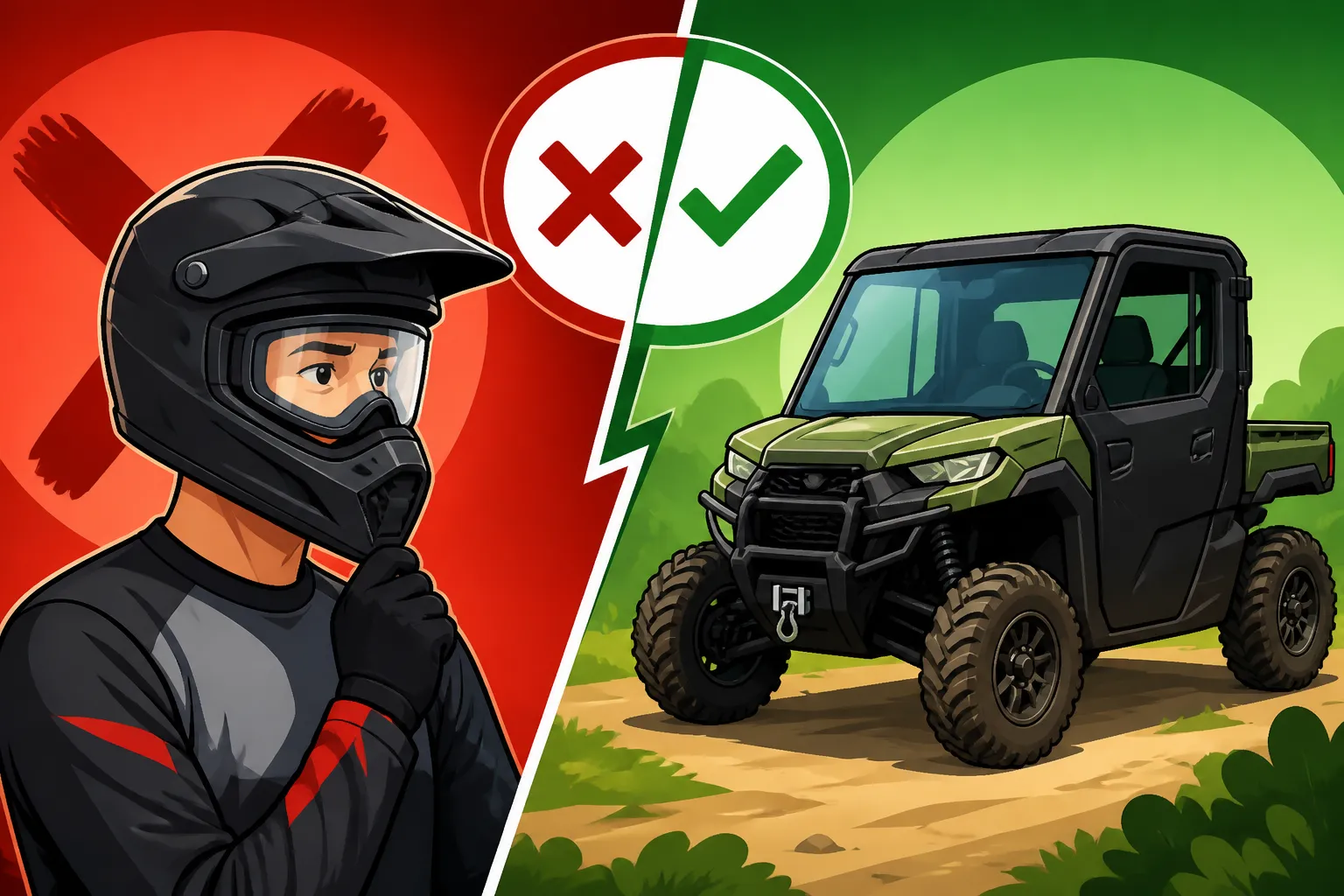
It's a question many side-by-side owners grapple with, especially when that chilly Alabama wind whips through the open cab: "If I've got a full enclosure, a windshield, and doors, do I still need to wear a helmet?" It's a completely understandable thought process, connecting the perceived safety of an enclosed space with the helmet exemptions often seen for traditional cars or even some motorcycles. The truth in Alabama, however, is a bit more nuanced and, frankly, often frustratingly complex, particularly because the law doesn't always align with common sense or what you might wish were true for your comfortable UTV. This guide will cut through that confusion, explaining Alabama's helmet laws as they apply to ATVs and UTVs, why an enclosed cab on your off-road machine typically doesn't offer a legal loophole for public road use, and what you really need to know to stay safe and compliant.
The Root of the Confusion: Alabama's Motorcycle Helmet Law
Let's start by looking at where this "enclosed cab" idea comes from in Alabama law, because it does exist – just not usually for your typical off-road machine. Alabama has a well-established law regarding helmets for motorcyclists. This is the law that dictates how and when riders of two-wheeled vehicles need to wear head protection. It's the standard that often comes to mind when you think about vehicles that require helmets on public roads.
Understanding the General Helmet Requirement
For anyone hopping on a motorcycle on Alabama's public roads, the expectation is clear: you need a helmet. This is designed for rider safety, to reduce the risk of head injuries in the event of an accident. It's a sensible rule when you consider the vulnerability of a motorcyclist exposed to traffic and road hazards. The law specifies certain safety standards for these helmets, ensuring they offer legitimate protection, not just a decorative piece of headwear. It's about protecting lives, plain and simple, and it applies broadly across our state's highways and byways.
This foundational helmet law, however, is specifically written for motorcycles. That's a crucial distinction, because while your side-by-side might have an engine, wheels, and a steering mechanism, it's generally not legally classified as a "motorcycle" for purposes of road use under Alabama statute. This is where a lot of the misinterpretation begins; people naturally try to apply the rules for one type of vehicle to another, only to find the definitions don't quite match up.
The Enclosed Cab Exemption for Motorcycles
Now, here's where the "enclosed cab" concept enters the picture. Alabama's motorcycle helmet law does include an exemption: "This section shall not apply to persons riding within an enclosed cab." So, if you're on a motorcycle that somehow has a fully enclosed cab (think of some very specialized, often three-wheeled, street-legal vehicles that are explicitly titled and registered as motorcycles but have a car-like cabin), you technically wouldn't be required to wear a helmet.
This exemption is designed for vehicles that, despite being classified as motorcycles, offer a level of occupant protection similar to a car. The cab provides a physical barrier, theoretically reducing the direct impact risk to the head in a crash. However, the critical takeaway here is that this exemption applies to a very specific type of street-legal motorcycle. It doesn't magically extend to all vehicles with cabs, especially not to your typical off-road ATV or UTV that was never intended for street use in the first place. You can see how easy it is to misinterpret this when looking at a modern UTV that looks a lot like a small car.
Why Your ATV or UTV Isn't a "Motorcycle" for Road Use
This is perhaps the most important point to understand when discussing helmets and cabs on Alabama roads. The legal definitions for ATVs, UTVs (often called ROVs or Recreational Off-Highway Vehicles in the statute), and motorcycles are distinct, and those distinctions have significant consequences for how they can be used on public thoroughfares.
The Core Definition Discrepancy
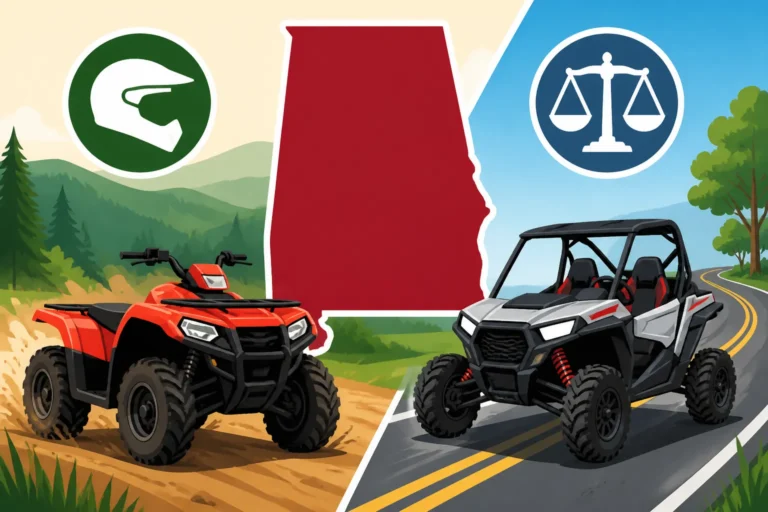
Alabama's legal framework defines "motorcycles" quite clearly, focusing on two or three wheels, and meeting federal motor vehicle safety standards (FMVSS) for highway use. These are machines designed from the ground up for public road travel, complete with headlights, taillights, turn signals, mirrors, and specific braking systems that meet stringent federal requirements. Most ATVs and UTVs, by their very design and manufacturing, simply do not fit this description. They are primarily designed for off-road use, not for sharing lanes with cars and trucks.
The official definitions for ATVs and ROVs, which are laid out in [Alabama's ATV and ROV Legal Definitions], typically highlight their off-road nature, features like low-pressure tires, and their general unsuitability for public highway speeds and traffic. Even if you've added an enclosure, a windshield, or other accessories from a company like SuperATV to make your ride more comfortable, these additions don't alter the fundamental legal classification of the vehicle itself. The core problem isn't the cab; it's the machine's initial designation and its inability to meet federal safety standards for highway use.
The Federal Standard Barrier to Road Use
The biggest hurdle for taking an ATV or UTV, even one with a full cab, onto Alabama's public roads is [Alabama's Federal Standard Barrier to Road Use]. For a vehicle to be legally driven on public roads and highways, it must be manufactured to meet the rigorous Federal Motor Vehicle Safety Standards (FMVSS) administered by the National Highway Traffic Safety Administration (NHTSA). These standards cover everything from crashworthiness to lighting, emissions, and occupant restraints.
Your standard off-road ATV or UTV, regardless of whether it's an open-air quad or a fully enclosed side-by-side, is simply not built to these FMVSS specifications. It lacks the necessary certification from the manufacturer to be considered "street legal." Adding aftermarket parts, no matter how robust or high-quality they are, cannot confer FMVSS compliance on a vehicle that wasn't designed for it from the factory. So, while an enclosed cab makes you feel safer and protected from the elements, it doesn't change the fact that the machine itself is not street-legal, and therefore, the motorcycle helmet exemption for enclosed cabs doesn't apply because the vehicle shouldn't be on the road in the first place. This is a common and often frustrating disconnect for owners who invest heavily in making their UTVs more "car-like."
The Reality of "Street Legal" Kits and Enclosed Cabs in Alabama
Many owners dream of making their UTVs street legal, and aftermarket companies, including well-known brands like SuperATV, offer a wide array of products designed to enhance machines. While these parts can drastically improve comfort, utility, and protection from the elements, they don't magically confer legal street-legal status or helmet exemptions under Alabama law for typical off-road machines.
Aftermarket Additions Versus Legal Certification
You can find all sorts of "street legal kits" online, which typically include things like turn signals, horns, mirrors, and windshields. Many UTV owners purchase these kits, or individual components like a full cab enclosure from SuperATV, with the best intentions, believing they are taking the necessary steps to make their machine road-worthy. And for many practical purposes, these additions do make the machine safer and more visible if it were to briefly operate in areas where allowed (like crossing a road, or on private roads).
However, the crucial distinction lies between adding accessories that mimic street-legal features and actually meeting federal motor vehicle safety standards. A manufacturer must certify a vehicle as meeting FMVSS. An individual adding parts in their garage, or even a professional shop installing a kit, cannot provide that certification. Without that original factory certification for highway use, the vehicle remains an off-road vehicle in the eyes of the law, regardless of how many street-like features it now possesses. Therefore, the "enclosed cab exemption" for motorcycles simply remains inapplicable. [Why a Street Legal Kit Will Not Make It Legal] is a topic many people find hard to grasp, but it's a fundamental part of the law.
Local Ordinances and Limited Road Use
It's true that some very specific situations or local ordinances might permit limited road use for ATVs or UTVs in Alabama. For example, some small towns or counties might have specific rules allowing golf carts or similar vehicles on certain low-speed public roads, and these rules might occasionally extend to UTVs under very specific conditions. Farm equipment also has specific allowances for road use, as discussed in [Alabama Farm Use and Road Riding]. However, even in these limited circumstances, it's highly unlikely that the presence of an enclosed cab would negate any helmet requirements that do apply.
Typically, if an ATV or UTV is allowed on a public road, it's under strict conditions that often involve speed limits, daylight-only operation, and still require helmets, particularly for younger riders, regardless of a cab. These local allowances are exceptions, not the rule, and they don't override the state's broader stance on FMVSS compliance for general highway use. Always check with your local municipality or county sheriff's office for any specific, permissible uses in your immediate area before assuming you're compliant.
When Helmets Are Required: Public vs. Private Land Riding
While the enclosed cab on your UTV might not get you out of a helmet requirement for general road use (because the machine isn't legally on the road in the first place), there are definitely situations where helmets are either legally required or strongly advised for ATV and UTV riders in Alabama, regardless of a cab. The distinction between riding on public land versus private property is often key here.
Public Land Designated Areas
When you're heading out to enjoy the trails at places like Stony Lonesome OHV Park or Minooka Park, or any other designated public riding area, specific rules often apply. While Alabama doesn't have a universal mandatory helmet law for all ATV riding across the board (unlike its motorcycle law), many public OHV parks and designated riding trails do have their own rules. These park-specific regulations often mandate helmet use for all riders, regardless of age or whether the machine has a cab. These rules are put in place for rider safety within their managed areas, and they are usually non-negotiable if you want to ride there.
These park rules might also specify other safety gear, like eye protection, gloves, and appropriate footwear. Ignoring these rules won't just risk a fine or ejection from the park; it significantly increases your risk of serious injury. So, even if you're comfortable and feel secure in your SuperATV enclosed cab, if the park rules say "helmet required," then a helmet is required. Always check the specific rules of any public riding area before you visit. [Alabama Public Use Designated Areas] often have their own comprehensive set of rules beyond state law.
Alabama Rules for Young Riders
Perhaps the most consistent and important area where helmets are required for ATV and UTV riders in Alabama is with youth. The state has specific regulations aimed at protecting younger riders, recognizing their increased vulnerability and lack of experience. Generally, children under a certain age are required to wear a helmet when operating or riding as a passenger on an ATV or UTV, regardless of where they are riding (public or private land).
These age-based rules are paramount. A parent's responsibility for a young rider goes beyond just supervision; it includes ensuring they have the proper safety gear, including a well-fitting, DOT-approved helmet. An enclosed cab on a UTV does not exempt a minor from these helmet requirements. Parents should familiarize themselves with [Alabama Rules for a Teen Rider] and [Alabama Rules for a Child Passenger] to ensure compliance and, more importantly, the safety of their children. This isn't just about avoiding a ticket; it's about preventing life-altering injuries.
Prioritizing Safety: Beyond the Letter of the Law
While understanding the legal requirements is crucial, true safety on an ATV or UTV in Alabama often goes beyond what's strictly mandated by law. An enclosed cab provides excellent protection from the elements, flying debris, and certainly makes for a more comfortable ride, but it doesn't make your machine invincible or eliminate the need for common-sense safety practices, including wearing a helmet.
The Benefits of Helmet Use, Cab or No Cab
Consider the physics of a rollover or collision in an off-road environment. Even at relatively low speeds, a side-by-side can be incredibly heavy, and impacts can be severe. An enclosed cab offers some structural protection, but it's not a full-fledged roll cage certified to automotive standards, and your head can still strike internal surfaces or be exposed to impacts. Furthermore, an enclosed cab does little to protect against head injuries from objects entering the cab, or from the rapid deceleration forces that can cause concussions and other traumatic brain injuries.
A properly fitted, DOT-approved helmet is designed specifically to absorb and distribute impact forces, protecting your brain from these kinds of trauma. When you're tackling challenging trails, navigating unexpected terrain changes, or simply enjoying a spirited ride, the risk of an upset is always present. Wearing a helmet, even within an enclosed cab, significantly reduces your risk of a serious head injury. Think of it as an added layer of protection that complements your cab, especially when dealing with the unpredictable nature of off-road terrain.
Additional Safety Gear Worth Considering
Beyond the helmet, a comprehensive approach to ATV and UTV safety involves other crucial gear, whether your machine has an enclosed cab or not. Eye protection, for instance, is vital. Even with a windshield, dust, mud, and insects can find their way in, obscuring your vision or causing injury. Goggles or safety glasses are always a good idea. Gloves protect your hands from abrasions and improve grip. Long sleeves and pants, along with sturdy over-the-ankle boots, provide protection against scrapes, impacts, and exhaust heat.
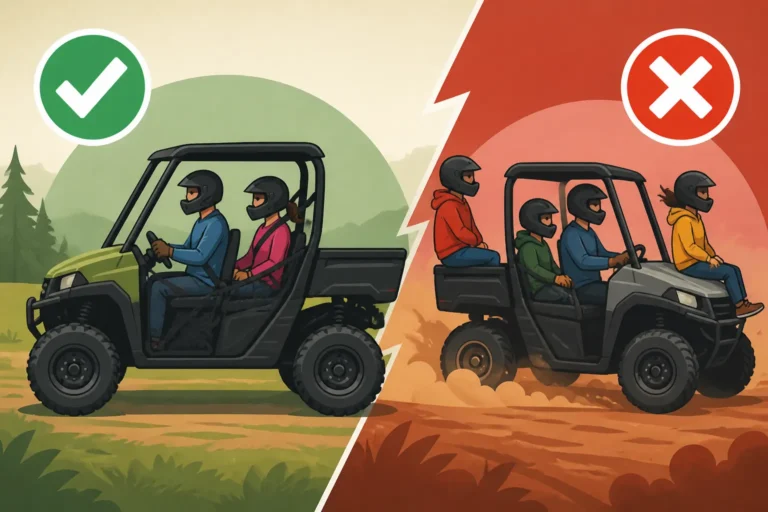
Moreover, if you're operating a UTV with an enclosed cab, ensure that all occupants are properly secured with seatbelts or harnesses. Just like in a car, these restraints are your first line of defense in keeping you inside the protected space of the cab during an incident. An enclosed cab from a company like SuperATV adds a fantastic level of comfort and protection from the elements, but it's part of a larger safety strategy, not a replacement for fundamental safety practices.
What Actually Qualifies as a Low-Speed Vehicle in Alabama
Since the question of cabs and helmets often comes up in the context of making a machine "street legal," it's worth briefly touching on what actually can be street legal in a way that sometimes affects helmet rules in Alabama: a Low-Speed Vehicle (LSV). This is where the lines get very blurry for many UTV owners, leading to confusion.
The True Definition of an LSV
An LSV is a distinct category of motor vehicle, separate from ATVs, UTVs, or even most golf carts. According to both federal and state regulations, an LSV is typically a four-wheeled vehicle with a top speed between 20 and 25 miles per hour. Critically, these vehicles are manufactured to meet certain federal safety standards for limited road use, which might include specific lighting, mirrors, seatbelts, and a Vehicle Identification Number (VIN) that indicates its compliance. They are typically titled and registered specifically as LSVs.
This is a stark contrast to an off-road UTV, which, even with modifications, is rarely manufactured to these specific LSV standards. LSVs are designed for use on public roads with speed limits typically 35 mph or less, providing a bridge between golf carts and full-sized automobiles for local travel. [What a Low-Speed Vehicle Standard Requires] is a very specific set of criteria that most UTVs cannot meet, even with an enclosed cab.
Helmet Rules for LSVs in Alabama
When it comes to helmet requirements for LSVs in Alabama, the situation is different than with off-road machines. Because LSVs are designed and certified for road use (albeit limited), they are generally treated more like cars than motorcycles in terms of occupant safety equipment. Therefore, if you are operating a true LSV that meets all federal and state requirements for such a vehicle, and it has an enclosed cab (or, for that matter, is an open LSV with proper seatbelts), helmets are typically not required.
This is the key distinction: the exemption for "enclosed cabs" applies to legally compliant road vehicles (like some specialized motorcycles or LSVs), not to off-road machines that have been accessorized. The confusion arises because a modern UTV, especially one with a full enclosure from SuperATV, can look very similar to an LSV. But appearance isn't what matters to the law; it's the underlying certification and legal classification of the vehicle that determines how helmet rules apply on public roads. So, if you're driving what you think is an LSV, double-check its actual certification and title to ensure you're compliant.
Table: Helmet Requirements by Vehicle Type in Alabama (General Guidance)
This table offers a general overview of how helmet requirements typically apply to different vehicle types on public roads in Alabama. Always remember that specific circumstances, local ordinances, age restrictions, and the exact legal classification of your vehicle can influence these rules.
| Vehicle Type | On Public Roads (General) | On Designated Public OHV Trails | On Private Land (No Specific State Law) | Enclosed Cab Exemption Applies? |
|---|---|---|---|---|
| Motorcycle (Street Legal) | Required (DOT-approved) | N/A | N/A | Yes, if true enclosed cab |
| ATV (Off-Road) | Not Allowed (FMVSS Non-Compliant) | Often Required (Park Rules) | Youth (under age limit) often required | No (Not a street-legal motorcycle) |
| UTV/Side-by-Side (Off-Road) | Not Allowed (FMVSS Non-Compliant) | Often Required (Park Rules) | Youth (under age limit) often required | No (Not a street-legal motorcycle) |
| Low-Speed Vehicle (LSV) | Not Required (Meets specific LSV standards) | N/A | N/A | Yes (As part of LSV classification) |
| Golf Cart | Not Required (Limited road use) | N/A | N/A | N/A |
Note: The "Not Allowed" for ATVs/UTVs on public roads refers to general highway use. Limited exceptions may exist for specific road crossings, farm use, or local ordinances. "N/A" means the typical operational context for the vehicle does not usually involve this scenario.
Navigating the Rules for a Safe Ride
The complexities of Alabama's laws regarding ATVs, UTVs, and road use can certainly be confusing, especially with advancements in machine design and aftermarket accessories like enclosed cabs. The key takeaway is this: for your typical off-road ATV or UTV, even with a fantastic, comfortable, and protective enclosed cab, the vehicle is generally not considered street legal for public roads in Alabama. Because it's not a street-legal vehicle (and certainly not a street-legal motorcycle with an enclosed cab), the helmet exemption often cited for motorcycles does not apply to your off-road machine when on public roads.
Where helmets are consistently required or strongly advised is for youth riders (regardless of vehicle type or land use) and for all riders at many designated public OHV parks and trails. In all other scenarios, while not legally mandated for adults on private land, wearing a helmet remains the single most effective way to protect yourself from serious head injury.
Ultimately, whether you're adding a full cab from SuperATV for comfort and weather protection or just riding an open quad, prioritizing safety means understanding the actual rules and then going beyond them. Always ride defensively, wear appropriate safety gear, and ensure everyone on your machine is protected. The peace of mind that comes from knowing you've done everything possible to mitigate risk is priceless, whether the law specifically demands it or not. Stay safe out there on those Alabama trails!
Disclaimer
This article is for general informational purposes only and does not constitute professional advice. Laws, prices and regulations vary by location and change over time. Consult a qualified professional for guidance on your specific situation.