Why the Helmet Statute Was Written for Motorcycles
It’s a common and frankly frustrating misconception that helmet laws for ATVs are the same as for motorcycles, especially when you're just trying to figure out what gear you actually need to stay legal and safe on Alabama's diverse terrain. This guide is here to untangle the historical threads and legal language behind Alabama's helmet statute, clarifying why it was specifically written with motorcycles in mind and what that means for you as an ATV or UTV owner in our beautiful state.
The Historical Roots of Alabama's Helmet Law
The idea that you must wear a helmet when riding any two-wheeled or open-air motorized vehicle often comes from a good place – a concern for safety. However, the specific legal requirements in Alabama didn't just appear out of thin air; they evolved from particular circumstances and risks associated with certain types of vehicles. When we talk about helmet laws, we're usually thinking about road-going vehicles, and for good reason. The sheer speed, proximity to other traffic, and minimal protection offered by a motorcycle on public highways presented a clear and present danger that lawmakers felt compelled to address.
This historical context is crucial because it helps explain why ATVs, which spend most of their lives off the pavement, weren't the primary focus when these safety measures were drafted. Lawmakers weren't imagining someone traversing a remote logging trail or a farmer checking fences on their property. They were thinking about the dangers of highway travel, where impacts occur at higher speeds and with greater forces against much larger vehicles.
When Helmets Became a Motorcycle Standard
The push for motorcycle helmet laws across the United States, including here in Alabama, largely took hold in the 1960s and 70s. This era saw a rise in motorcycle usage and, unfortunately, a corresponding increase in severe injuries and fatalities among riders involved in accidents. Medical professionals and traffic safety advocates sounded the alarm, highlighting how helmets dramatically reduced head injuries. It wasn't just about protecting the rider; it was also about reducing the burden on emergency services and healthcare systems.
Federal incentives played a significant role, with states risking the loss of highway funding if they didn't enact helmet laws. This created a strong impetus for state legislatures to pass statutes making helmet use mandatory for motorcyclists. The language drafted during this period was explicitly designed to address the unique vulnerabilities of motorcycle riders on public roads, focusing on features like two wheels, engine size, and the intent of highway travel. The legislative intent was crystal clear: to protect riders from the specific hazards of road crashes.
The Different Worlds of Motorcycles and Off-Road Vehicles
From a regulatory standpoint, motorcycles and ATVs have always inhabited vastly different legal realms. Motorcycles are designed, manufactured, and regulated primarily for highway use. They must meet stringent Federal Motor Vehicle Safety Standards (FMVSS) that dictate everything from lighting and brakes to tires and crash-worthiness. Part of this regulatory framework includes safety equipment like helmets, mandated precisely because of the inherent dangers of operating these vehicles in a shared road environment with cars, trucks, and other high-speed traffic.
ATVs, on the other hand, are inherently off-road vehicles. Their design specifications—from knobby tires to suspension travel and lack of many road-legal features—make them unsuitable and often illegal for public road use. While they are motorized, and can achieve significant speeds, the context of their use (usually on private land, designated trails, or limited public access areas) presents a different risk profile. The legislative framework for ATVs in Alabama, especially concerning safety gear, has traditionally focused more on operational rules (like age restrictions or passenger limits) rather than mandating personal protective equipment in the same way as motorcycles. This distinction is fundamental to understanding [Why the Helmet Statute Was Written for Motorcycles].
Dissecting Alabama's Legal Definitions
Understanding Alabama's laws requires a close look at how the state defines different types of vehicles. It might seem like splitting hairs, but in the eyes of the law, a few key words can make all the difference between whether a certain rule applies to you or not. The legislative language around vehicles is incredibly precise, and this precision is exactly why the helmet law, as written, doesn't automatically scoop up every motorized machine with a handlebar or a steering wheel.
Many owners find themselves scratching their heads, wondering why their quad, which certainly feels like a powerful motorized vehicle, isn't treated the same way as a motorcycle. The answer lies squarely in the specific categories the state has created, separating vehicles based on their design, intended use, and even their physical characteristics. It's a system that, while sometimes confusing, aims to apply appropriate regulations to the specific risks each type of vehicle presents.
What the Law Says About a Motorcycle
In Alabama, a "motorcycle" is typically defined as a motor vehicle having a saddle for the use of the rider and designed to travel on not more than three wheels in contact with the ground, but excluding a tractor. This definition is crucial because it immediately sets parameters. The key elements are: a saddle, designed for highway travel, and usually two wheels. This description clearly points to traditional street bikes, cruisers, sport bikes, and even some three-wheeled motorcycles designed for the road.
The context of this definition is almost always within the broader motor vehicle code that governs operation on public highways. Therefore, when the helmet statute refers to "motorcyclists," it is directly referencing individuals operating vehicles that fit this very specific, road-oriented description. This is why [Alabama's Motorcycle Helmet Statute] is so specific; it's a piece of legislation tailored for highway safety. If your machine doesn't fit this mold, then by default, the motorcycle-specific rules might not apply in the way you assume.
How an ATV is Defined in Alabama Statutes
When you look at [Alabama ATV and ROV Legal Definitions], you'll find a distinct set of criteria. An "all-terrain vehicle" or ATV in Alabama is generally defined as any motorized, off-highway vehicle 50 inches or less in width, having a dry weight of 1,500 pounds or less, designed to travel on three or more non-highway tires, and manufactured for recreational use by a single operator with no passengers. While Side-by-Sides (ROVs) have slightly different dimensions and passenger capacities, they too are clearly designated as off-highway vehicles.
Notice the critical phrase: "designed to travel on… non-highway tires." This isn't just a technicality; it's a fundamental distinction that separates an ATV from a motorcycle or any other vehicle primarily intended for road use. The state statute recognizes that these machines are built for different environments and different purposes. Because they aren't designed or legally permitted for general public highway use, the regulatory framework, including helmet mandates, reflects this off-road orientation. This separation in definitions is the bedrock of why the motorcycle helmet law doesn't directly transfer to your quad or side-by-side.
The Legal Gap for Off-Road Machines
Given these distinct definitions, there's often a "legal gap" when it comes to mandating helmets for ATVs and UTVs at the state level. Since the primary helmet law applies to "motorcycles" and ATVs don't fit that definition, a statewide, universally mandated helmet law for all ATV riders on all types of terrain simply doesn't exist in Alabama in the same way it does for motorcyclists on public roads. This isn't to say that helmets aren't crucial for ATV safety, but rather that the state hasn't codified their use as a universal requirement in the same legislative chapter.
This situation can be perplexing for riders who prioritize safety and assume a blanket rule exists. It also creates a landscape where rules can vary depending on where you ride. While the state might not mandate a helmet for every off-road excursion, individual OHV parks, private landowners, or even specific local ordinances might. This is a perfect example of why it's so important to not just know a law, but to know which law applies to your vehicle and your riding location.
Why Road-Legal is the Deciding Factor
At the heart of the helmet law's application in Alabama is whether a vehicle is truly "road-legal." This isn't just about having a headlight or a brake light; it's about meeting a comprehensive set of federal and state standards that qualify a vehicle for public highway use. The entire regulatory structure, including safety equipment requirements, pivots on this distinction. If a machine is deemed fit for the road, it falls under one set of rules. If it's not, it typically falls under another, or often, fewer, state-level mandates regarding personal protective equipment.
Many ATV and UTV owners express frustration that their machine, which might be capable of highway speeds, isn't granted the same road access as a motorcycle. However, the legal definition of "road-legal" extends far beyond mere speed capability. It involves specific design, manufacturing, and safety features that ATVs, by their very nature, do not possess. This fundamental difference is what ultimately dictates the application of helmet laws.
Federal Motor Vehicle Safety Standards and Helmets
The crucial barrier for ATVs when it comes to road use and associated safety regulations is the Federal Motor Vehicle Safety Standards (FMVSS). These are federal regulations that specify design, construction, performance, and durability requirements for motor vehicles and their components that are manufactured for sale in the United States. Simply put, for a vehicle to be truly "street legal" and registered for highway use, it must comply with FMVSS. This includes requirements for features like proper lighting, mirrors, turn signals, DOT-approved tires, and often, crash protection standards.
ATVs and UTVs are manufactured as off-highway vehicles and are not designed to meet FMVSS. They lack many of the safety features required for road use, which is why [Alabama's Federal Standard Barrier to Road Use] effectively prohibits them from being legally operated on most public roads. The helmet statute for motorcycles is intrinsically linked to these highway safety standards. Since ATVs don't meet these standards, they generally exist outside the purview of the highway-focused helmet mandate. The law makes a clear distinction between vehicles built for the road and those that are not.
The Illusion of "Street Legal Kits" for ATVs
It's tempting for ATV owners to look at "street legal kits" as a way to bridge the gap between off-road enjoyment and on-road convenience. These kits, which often include turn signals, horns, and sometimes mirrors, are widely available from aftermarket companies, including prominent brands like SuperATV. The idea is that by adding these components, your ATV or UTV magically becomes a road-legal machine. However, this is largely an illusion when it comes to full compliance with state and federal law.
While these kits add some components that are part of street-legal requirements, they do not fundamentally change the vehicle's original classification or its compliance with FMVSS. As the article [Why a Street Legal Kit Will Not Make It Legal] explains, an ATV or UTV, regardless of added accessories, was not manufactured to meet the comprehensive federal safety standards required for highway use. Installing a kit from SuperATV, for instance, might make your machine look more road-ready, but it doesn't transform its legal identity. Therefore, an ATV with a street legal kit still won't be subject to Alabama's motorcycle helmet law for highway operation because it's still not a legally defined "motorcycle" or other road-legal vehicle under state statute. The kits are useful for improved visibility and signaling in off-road contexts or on private property, but they don't grant blanket road access or impose motorcycle-specific helmet rules.
Implications for Alabama ATV Riders
So, what does all this mean for you, the Alabama ATV or UTV rider? The key takeaway is that while there isn't a universal state-mandated helmet law for ATVs in Alabama, that doesn't mean helmets are optional in all situations. Your specific riding environment—whether it's private land, a designated public OHV park, or perhaps a limited-access county road—will dictate the rules that apply to you. It's a nuanced landscape, and navigating it safely means understanding these distinctions.
The absence of a statewide mandate places a greater emphasis on individual responsibility, park rules, and common sense. It also means that relying solely on general assumptions about "the law" can lead to confusion or, worse, an unsafe situation. Riders need to be proactive in understanding the rules specific to their chosen riding spots, as these can easily override the lack of a broader state mandate.
Helmets on Private Land: Owner's Choice and Park Rules
When you're riding your ATV exclusively on private land in Alabama, the decision to wear a helmet largely rests with the landowner and, ultimately, with you. The state's motorcycle helmet statute does not extend to private property. This means if you're riding on your own land, your friend's property (with permission), or leased hunting land, there is no state law mandating helmet use. However, just because it's not legally required doesn't mean it's not a good idea. Common sense and personal safety should always be paramount.
For organized private OHV parks, the situation is different. These parks, such as Stony Lonesome OHV Park or Minooka Park, often have their own comprehensive rules and regulations, and most will mandate helmet use for all riders, regardless of age or type of off-road vehicle. These rules are part of their liability and safety protocols. Failing to wear a helmet at such a park, even though the state doesn't require it, can result in you being denied entry or ejected from the park. Always check the specific rules of any private riding park before you go.
Public Land and Designated OHV Areas
Riding on public land in Alabama, such as specific trails within national forests or state wildlife management areas (WMAs), introduces another layer of rules. While the state's motorcycle helmet law doesn't directly apply, federal agencies (like the Forest Service) and state agencies (like the Department of Conservation and Natural Resources) often have their own regulations regarding ATV use, which may include helmet requirements. For example, some designated [Alabama Public Use Designated Areas] or WMA tracts might have specific safety equipment requirements, including helmets, especially for younger riders.
It is absolutely vital to research the specific rules for any public land you plan to ride on. A quick call to the district ranger's office for a national forest or checking the Alabama DCNR website for WMA rules can save you from a citation or, more importantly, an injury. These rules are in place to manage the unique risks associated with riding on public property, which often involves shared trails, varied terrain, and different user groups.
The Role of Common Sense and Safety
Regardless of what the law does or doesn't explicitly mandate, common sense and personal safety should always be your guiding principles when riding an ATV or UTV in Alabama. These machines are powerful, can reach significant speeds, and are often operated in challenging environments where rollovers, collisions with obstacles, or ejections are real possibilities. Head injuries are among the most serious types of injuries an off-road rider can sustain, and a properly fitting, DOT-approved helmet offers invaluable protection.
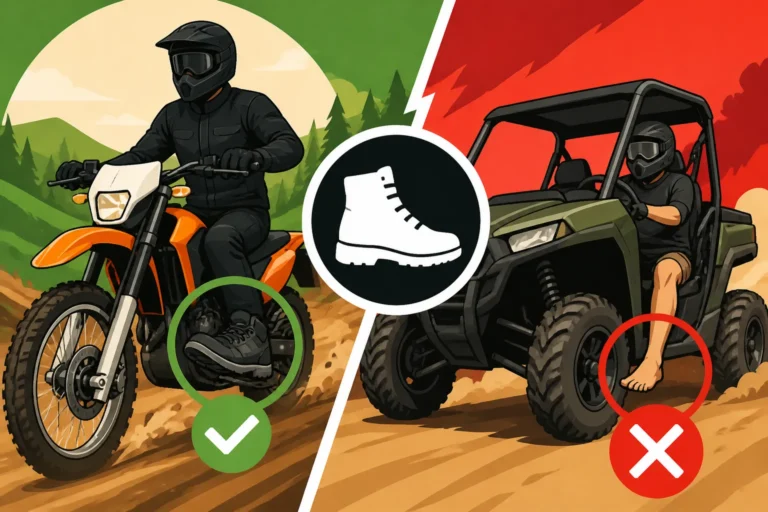
Many seasoned riders advocate for wearing a helmet every single time they throw a leg over a quad or buckle into a side-by-side, even for a short trip across their property. It's about mitigating risk. Beyond helmets, consider other protective gear like eye protection (even if your UTV has a windshield, dust and debris can find a way in), gloves, long sleeves, sturdy pants, and over-the-ankle boots. Investing in safety gear is an investment in your well-being and continued enjoyment of the sport. While Alabama may not have a mandatory [Alabama Has No Mandatory ATV Safety Course] requirement, taking one can significantly improve your riding skills and safety awareness, reinforcing the importance of wearing a helmet.
Navigating Conflicting Information and Local Rules
One of the biggest headaches for ATV and UTV owners in Alabama is the sheer volume of conflicting or unclear information out there, especially when local rules enter the picture. You might hear one thing from a fellow rider, read something else online, and then get a different answer from a county official. This fragmented regulatory landscape can make it incredibly frustrating to ensure you're riding legally and safely. It often feels like you need to be a lawyer just to enjoy a weekend ride!
The truth is, while state law provides a general framework, cities and counties in Alabama often have the authority to enact their own ordinances, particularly concerning vehicle use within their specific jurisdictions. This means a rule that applies in one county might not apply just across the line in another, or a city might have specific restrictions that differ from the surrounding rural areas.
How Local Ordinances Can Add Layers
While the state's helmet statute is specific to motorcycles, cities and counties in Alabama have the power to create their own local ordinances regarding the operation of ATVs and UTVs. These local rules can, and often do, include specific requirements for safety equipment, including helmets, especially if the machines are allowed on any public roads (which is rare, but can happen under very specific circumstances like a parade permit, or for specific agricultural use). For example, some towns might allow golf carts on certain streets and mandate helmets even if the state doesn't have a blanket rule.
This is why understanding [Alabama City Ordinance Lookups] is so important. A city council might decide, for public safety reasons, that if any off-road vehicles are permitted within city limits for specific purposes, helmet use is mandatory. This adds a layer of complexity for riders who travel between different jurisdictions. A general state law might not require a helmet for your ATV, but the specific city street you're on might. It's a localized puzzle that requires attention to detail.
What to Ask Your County Sheriff or City Officials
Given the potential for overlapping and sometimes conflicting rules, the best advice for any Alabama ATV or UTV rider is to be proactive and consult the relevant local authorities before you ride in an unfamiliar area. If you plan to ride on what you believe might be a county road, or within the bounds of a specific town, it’s always best to call the county sheriff's office or the city clerk's office.
When you call, be very specific about:
- Your machine: Is it an ATV or a UTV?
- Your intended route: Are you on private land, a designated trail, or are you hoping to cross or briefly use a public road like [Alabama Rules for Riding a County Road]?
- Your age and passenger status: Are you riding alone or with passengers, and are there any minor riders?
Asking these specific questions can help clarify any local ordinances that might affect you. While clerks and deputies can't give legal advice, they can certainly inform you of local regulations they enforce. This due diligence can save you from a potential citation or, more importantly, ensure you're riding in accordance with all local safety expectations. It’s always better to ask ahead of time than to find out the hard way.
| Feature / Category | Motorcycle (Alabama Statute) | ATV / UTV (Alabama Statute) | Helmet Mandate (State Law) |
|---|---|---|---|
| Primary Intended Use | Highway / Public Road | Off-Highway / Recreational / Utility | Yes, on public roads |
| Wheel Configuration | Typically 2 or 3 wheels | Typically 3 or more non-highway tires | Yes |
| FMVSS Compliance | Required for sale and highway operation | Not required; manufactured as off-highway vehicle | Indirectly (for road use) |
| Statewide Helmet Law | Mandatory for riders and passengers on public roads | No blanket statewide mandate for all uses | No |
| Local Ordinances | May supplement state law (e.g., parking, noise) | Can impose helmet requirements in specific local contexts | Potentially |
| Private Park Rules | Not applicable (parks are for OHVs) | Often mandatory as park-specific safety rules | Yes (by park policy) |
| Enclosed Cab Exemption | Not applicable | [Does an Enclosed Cab Get You Out of a Helmet?] – Extremely narrow, for specific road-legal enclosed vehicles, not typical UTVs. | No (not for typical UTVs) |
Disclaimer
This article is for general informational purposes only and does not constitute professional advice. Laws, prices and regulations vary by location and change over time. Consult a qualified professional for guidance on your specific situation.