Alabama Low-Speed Vehicle Rules
Many Alabama residents dream of cruising down a quiet country road in their side-by-side or ATV, feeling the breeze and heading to the fishing hole without having to trailer their machine. It’s a vision that’s often fueled by images from other states or discussions on forums, leading to a lot of confusion about what's actually legal here in Alabama. This comprehensive guide will unravel the intricate world of Low-Speed Vehicle (LSV) rules in Alabama, explaining what these vehicles truly are, how they differ from your everyday ATV or UTV, and what it really takes to legally operate one on public roads, so you can avoid frustrating run-ins with the law and understand the precise distinctions.
Understanding What a Low-Speed Vehicle (LSV) Truly Is
When people talk about making an off-road machine "street legal" in Alabama, there's often a fundamental misunderstanding about what that term actually means in the eyes of the law. Many assume it’s a matter of adding a few accessories to their ATV or side-by-side, like turn signals and a horn. While those components are certainly part of the equation for any street-legal vehicle, the definition of a Low-Speed Vehicle (LSV) in Alabama is far more specific and starts at the manufacturing level, not with aftermarket modifications. It’s not just about what you bolt on; it’s about how the vehicle was originally built and certified.
The frustration often stems from seeing vehicles that look like golf carts or small utility vehicles driving on roads in other states, or even in certain Alabama communities, and assuming the same rules apply universally. However, Alabama's laws are rooted in federal standards, and these standards draw a very clear line between purpose-built LSVs and off-highway recreational vehicles (OHRVs) like ATVs and UTVs. This distinction is crucial for understanding why your beloved trail machine likely can't become an LSV, no matter how many kits you buy.
Defining a Low-Speed Vehicle by Federal Standards
The core of Alabama's LSV regulations stems directly from federal law, specifically the National Highway Traffic Safety Administration (NHTSA) standard 49 CFR 571.500. This isn't just a suggestion; it's a mandatory safety standard that any vehicle designed to be an LSV must meet at the time of its manufacture. It’s not something you can achieve by retrofitting parts onto an existing ATV or UTV that wasn't designed for this standard from the ground up.
Think of it this way: a vehicle is either manufactured as an LSV, meeting all these stringent safety criteria from the factory, or it isn't. The federal standard dictates specific requirements for things like crash protection, braking systems, lighting, and even the vehicle's structural integrity. An ATV or UTV, by its very nature and design, is built for off-road performance, rugged terrain, and specific speeds, not for the rigors of on-road collision avoidance or occupant protection at even low speeds. This is why you'll never find a standard ATV that meets [Alabama's 49 CFR 571.500 Standard]. The manufacturing process and safety certifications are entirely different, designed for different operating environments and risks.
Distinguishing LSVs from ATVs, UTVs, and Golf Carts
The lines between these types of vehicles often get blurry in casual conversation, but legally, they are distinct categories with different rules. An LSV is specifically designed for street use and generally has a top speed between 20 mph and 25 mph. They are typically electric and are smaller than traditional cars but more robust than standard golf carts. These vehicles come from the factory with a Vehicle Identification Number (VIN) that indicates they are street-legal LSVs.
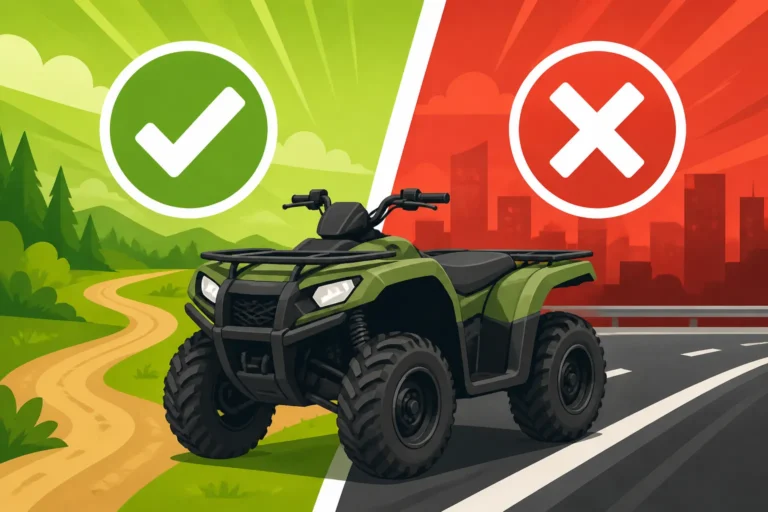
Conversely, ATVs (All-Terrain Vehicles) and UTVs (Utility Terrain Vehicles or side-by-sides) are built for off-road adventure, farm work, or hunting. While many people try to modify them with "street legal kits," these modifications do not change their fundamental classification as off-highway vehicles in Alabama. You might add blinkers or mirrors from brands like SuperATV, which are great for visibility off-road, but these additions alone do not confer federal LSV certification or street-legal status. [Why a Street Legal Kit Will Not Make It Legal] is a common frustration many riders discover too late. Golf carts, on the other hand, are typically slower, less robust, and often have specific local ordinances governing their use, separate from statewide LSV rules. [Alabama Golf Cart Rules Compared to ATVs] offers a good insight into these differences.
The Federal Standard and Alabama's Road Rules
Alabama's approach to low-speed vehicles is deeply intertwined with federal regulations, particularly regarding safety and construction. For a vehicle to be considered an LSV and permitted on certain public roads in Alabama, it must comply with a specific federal motor vehicle safety standard. This is not a casual recommendation; it's a foundational requirement that determines whether a vehicle can ever legally touch a public paved road in the state, beyond specific limited exceptions like crossing a highway or farm use.
Many riders, fueled by marketing for "street legal kits" or anecdotes from other states, mistakenly believe that simply adding required equipment will magically transform their off-road machine into a road-legal vehicle. This is almost never the case for traditional ATVs or UTVs in Alabama because their fundamental design, structure, and certified safety features do not meet the federal standard for an LSV. The federal government sets the baseline, and Alabama adheres to that standard for vehicles operating on its public ways.
What Federal Standard 49 CFR 571.500 Requires
The federal standard 49 CFR 571.500 is the key to understanding what makes a vehicle a true Low-Speed Vehicle. This regulation specifies that an LSV must be a four-wheeled vehicle, other than a truck, that has a gross vehicle weight rating of less than 3,000 pounds and a top speed between 20 miles per hour and 25 miles per hour. Crucially, it also dictates specific safety equipment that must be part of the original manufacturing process, not just bolted on afterward.
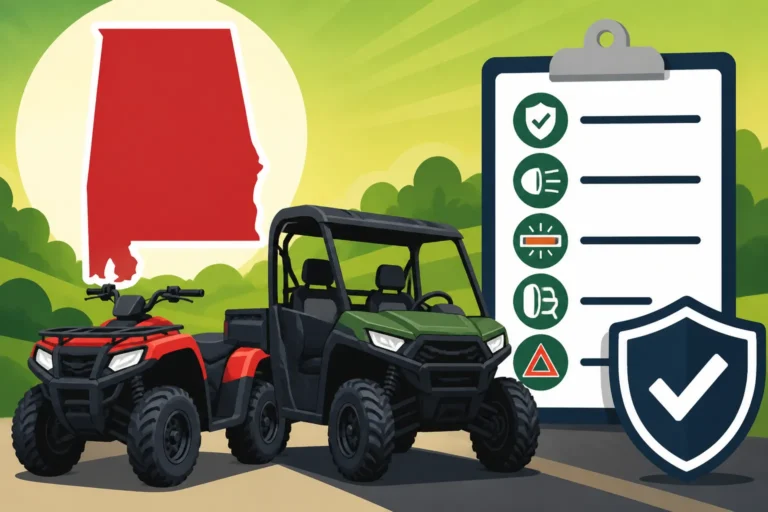
This includes headlamps, tail lamps, stop lamps, turn signal lamps, reflex reflectors, an exterior mirror mounted on the driver's side and either an exterior mirror on the passenger's side or an interior mirror, a parking brake, a VIN, and safety glazing for the windshield. It also requires a vehicle identification number that can be used to track the vehicle. The emphasis here is on the vehicle being manufactured to these standards, ensuring a certain level of occupant protection and road-worthiness that an off-road vehicle simply isn't designed to provide. This is why [What a Low-Speed Vehicle Standard Requires] is so important to grasp.
Why Most ATVs and UTVs Cannot Meet This Standard
The fundamental design and purpose of an ATV or UTV are at odds with the federal LSV standard. ATVs are designed for aggressive off-road handling, often with single-rider configurations and minimal protective enclosures. UTVs, while offering more seating and utility, are still engineered for rough terrain, high ground clearance, and suspension systems that prioritize off-road articulation over on-road stability and crash absorption. They typically exceed the 25 mph top speed limit for LSVs by a significant margin.
Furthermore, the structural components, frame integrity, and occupant restraint systems of most ATVs and UTVs are not certified to meet the same on-road crash safety standards as an LSV. While you might find a robust windshield or seatbelts on a side-by-side, they are generally not rated to the same specifications required for a street-legal LSV. This is the core reason why [Why a Standard Quad Can Never Pass the Standard] for street legality. It’s not just about adding a blinker; it’s about the entire vehicle's engineering and certification process from the assembly line.
Specific Equipment Requirements for LSVs in Alabama
When it comes to Low-Speed Vehicles (LSVs) in Alabama, the required equipment isn't just a suggestion; it's a strict set of mandates derived directly from federal safety standards. These aren't arbitrary rules; they exist to ensure the safety of both the LSV operator and other road users. Riders often get caught up in the idea of adding turn signals and mirrors to their existing off-road vehicle, only to find that the list for a true LSV is far more extensive and deeply integrated into the vehicle’s design. This leads to the painful realization that their modified UTV, while perhaps having a few extra lights, still doesn’t qualify.
The underlying frustration is that many aftermarket companies offer "street legal kits" that provide some of these components, giving owners a false sense of compliance. While these kits might be useful for certain limited road crossings or for riding in private communities with specific ordinances, they do not transform an ATV or UTV into a federally compliant LSV. Alabama's adherence to the federal standard means that the equipment must be original to the manufacturing process and certified as such, not merely added on.
Mandatory Safety Features for Alabama LSVs
For a vehicle to be classified and operated as an LSV in Alabama, it must be equipped from the manufacturer with a specific suite of safety features. These are not options; they are requirements for the vehicle to be considered street-legal in this class. First and foremost, the vehicle must have headlamps that provide adequate illumination for nighttime driving, meeting specific intensity and aiming standards. It also needs tail lamps to indicate its presence from the rear, along with brake lights (stop lamps) that activate whenever the brakes are applied.
Beyond basic illumination, an LSV must have turn signal lamps on both the front and rear, clearly indicating the driver's intention to turn. Reflex reflectors are also required, strategically placed to enhance visibility, especially from the sides and rear when the vehicle's lights might be off. In terms of visibility for the driver, a properly mounted exterior mirror on the driver's side is mandatory, and it must be paired with either an exterior mirror on the passenger's side or an interior rearview mirror. These components are essential for safe operation on roads shared with other traffic.
Braking, Glazing, and Structural Requirements
The safety equipment list for an LSV goes beyond just lighting and mirrors. A fully functional parking brake is a non-negotiable item, ensuring the vehicle can be securely parked without rolling. Perhaps one of the most significant requirements, and one that clearly separates an LSV from most off-road machines, is safety glazing. If the LSV has a windshield, it must be made of safety glazing material, similar to what you'd find in a passenger car. This material is designed to shatter into small, blunt pieces or remain intact upon impact, reducing the risk of severe injury.
Structurally, the vehicle must also be designed to support these features and maintain integrity. While the federal standard doesn't require airbags, it does imply a certain level of crashworthiness through its overall design requirements. It must also have a Vehicle Identification Number (VIN) that unequivocally identifies it as an LSV manufactured to these standards. These requirements, when taken together, paint a picture of a vehicle built specifically for low-speed road use, not an adapted off-road machine. These rigorous standards are what [What a Low-Speed Vehicle Standard Requires] truly entails.
Registering and Titling an LSV in Alabama
Navigating the registration and titling process for any vehicle in Alabama can feel like a labyrinth, and Low-Speed Vehicles (LSVs) add their own unique set of considerations. Unlike ATVs and UTVs, which have specific voluntary registration options through ALEA for public or private use, true LSVs are treated more like traditional motor vehicles when it comes to official paperwork. This distinction is vital for anyone hoping to legally operate an LSV on Alabama's roads, and misunderstanding it can lead to significant headaches and legal issues. The process for an LSV isn't as simple as just getting an off-road decal; it involves state agencies that handle standard vehicle titles and registrations.
The primary frustration here is often that owners of modified side-by-sides, having invested heavily in "street legal" conversions, expect a straightforward registration process only to find that their vehicle doesn't qualify for LSV status at all. They might be able to get an off-road registration if they meet those specific criteria, but that's not the same as registering a street-legal LSV. This difference in processing means you’re looking at procedures more akin to car registration, handled by different departments and requiring different forms and proofs of compliance.
The Titling Process for a True LSV
Beginning January 1, 2026, Alabama will begin titling off-road vehicles. However, true Low-Speed Vehicles (LSVs) are already handled differently due to their street-legal nature. An LSV, because it is a road-going vehicle, is generally subject to the same titling requirements as a car or truck. This means that when you purchase a new LSV, the dealer will typically handle the initial title application, which will then be processed through the state's motor vehicle division. The title serves as definitive proof of ownership and is a prerequisite for registration.
If you're purchasing a used LSV, you'll need a properly assigned title from the previous owner. The process involves transferring that title into your name, usually at your local county licensing office. This also means paying any applicable [Alabama Title Fees at the County] and potentially a [Alabama's $5 Title Transfer Fee]. The title will clearly identify the vehicle as an LSV and will contain its VIN, which should correspond to the federal safety certification. Without a proper title, registering the vehicle for road use becomes impossible.
Registration Requirements and Fees
Once an LSV has been properly titled in your name, the next step is registration. Like cars, LSVs in Alabama require annual registration to be legally driven on public roads. This process is also handled at your county licensing office. You'll need to present your title, proof of insurance (which is mandatory for LSVs, unlike general off-road vehicles), and valid identification. The registration process will result in you receiving a license plate and a registration decal, which must be displayed on the vehicle.
The fees associated with LSV registration are generally similar to those for other passenger vehicles, which include the state registration fee, local county fees, and often a small issuance fee. It's important to remember that these fees are distinct from the voluntary registration fees for off-road vehicles through ALEA, such as the [Alabama's $2.50 Issuance Fee] or [Alabama Registrations Run Three Years]. Since LSVs are considered road-going vehicles, their registration aligns with the conventional motor vehicle system, typically on an annual cycle, not a three-year off-road cycle. [Alabama LSV Requirements Explained] covers these aspects thoroughly.
Where Can You Legally Drive an LSV in Alabama?
One of the biggest misconceptions and sources of frustration for riders is the assumption that if a vehicle is "street legal," it can be driven anywhere a regular car can go. This is absolutely not true for Low-Speed Vehicles (LSVs) in Alabama. While an LSV is indeed permitted on certain public roads, its usage is quite restricted, primarily by speed limits. This is a crucial distinction that often catches drivers off guard, leading to potential fines or even accidents if they operate outside the allowed parameters.
The purpose of an LSV is for local transportation, typically within communities or for short commutes where speeds are low. They are not designed for highways, interstates, or even major arterial roads where traffic flows at speeds above 35 mph. Understanding these limitations is paramount to safely and legally enjoying your LSV in Alabama. Ignoring them not only puts you at risk but also contributes to the negative perception of off-highway-style vehicles on public roads.
Permitted Roadways and Speed Restrictions
In Alabama, a true Low-Speed Vehicle (LSV) is generally permitted on public roads where the posted speed limit is 35 miles per hour or less. This is a critical threshold. You cannot legally operate an LSV on any road with a posted speed limit higher than 35 mph, even if you are only driving 25 mph. The restriction is based on the posted speed limit of the road, not the speed you are actually traveling. This rule is designed to keep slower-moving vehicles off roads where they could impede traffic flow or create a hazard for faster-moving vehicles.
This means LSVs are typically restricted to residential streets, neighborhood roads, and some secondary county roads in Alabama. They are explicitly prohibited from interstates, expressways, and other limited-access highways. The idea is that these vehicles are meant for local, short-distance travel, allowing you to run errands within a community or commute to nearby points without needing a full-size car. Always check the signage, and if there's no sign, assume the speed limit might be too high for an LSV.
Local Ordinances and Designated Areas
While state law sets the general framework for LSV use, it also allows local municipalities and counties in Alabama to create their own ordinances regarding LSVs and golf carts. This means that what's permissible in one city or town might be different in another. Some communities might have specifically designated golf cart or LSV-friendly zones, or they might have stricter regulations than the state minimum. It's not uncommon for resort towns, college campuses, or planned communities to have their own rules.
Before operating an LSV in any specific area, it's always a good idea to check with the local city hall or county commission office for any specific ordinances. For example, some cities might require a special local permit in addition to state registration, or they might have even lower speed restrictions for certain areas. This patchwork of rules can be confusing, but proactive research can save you a lot of trouble. Always assume local rules can be more restrictive than state law. [Alabama City Ordinance Lookups] is a good resource for exploring these local nuances.
Here's a quick comparison of various vehicles and their typical road legality:
| Vehicle Type | Top Speed (Typical) | Federal LSV Compliant? | Primary Use Case | Alabama Road Legal (General Rule) | Registration Type (Alabama) |
|---|---|---|---|---|---|
| ATV | 40-70+ mph | No | Off-road recreation | No (except specific crossings) | Voluntary Off-Road (ALEA) |
| UTV/Side-by-Side | 40-80+ mph | No | Off-road, utility | No (except specific crossings) | Voluntary Off-Road (ALEA) |
| Golf Cart | 15-25 mph | Generally No | Golf courses, private communities | Local ordinances only | None (or local permit) |
| Low-Speed Vehicle | 20-25 mph | Yes | Local street use | Yes (roads <= 35 mph) | Standard Motor Vehicle |
| Passenger Car | Varies | Yes | All road types | Yes | Standard Motor Vehicle |
The Crucial Difference: Manufactured LSV vs. Modified UTV/ATV
This is where the rubber truly meets the road, and where a vast number of Alabama riders encounter profound disappointment. Many people invest significant time and money into modifying their ATVs or side-by-sides with the intention of making them street legal, only to discover that these efforts do not change the fundamental classification of their vehicle. They believe that by adding a signal kit, a horn, and a rearview mirror—perhaps even from a reputable brand like SuperATV—they have effectively transformed their off-road machine into a road-worthy vehicle in the eyes of the law. This belief is almost universally incorrect when it comes to Low-Speed Vehicle (LSV) status in Alabama.
The crux of the matter lies in federal manufacturing standards. A vehicle is either built as an LSV according to stringent federal safety regulations, or it isn't. An aftermarket modification kit, no matter how comprehensive, cannot retroactively confer this original manufacturing certification onto a vehicle that was never designed to meet it. This distinction is not just a bureaucratic technicality; it’s a matter of safety, liability, and legal compliance that can have serious repercussions.
Why a "Street Legal Kit" Doesn't Confer LSV Status
The market is flooded with "street legal kits" that promise to make your ATV or UTV ready for the road. These kits typically include turn signals, a horn, mirrors, and sometimes a license plate bracket. While these components are certainly part of what an LSV needs, they are not sufficient to transform an off-highway vehicle into a federally compliant Low-Speed Vehicle in Alabama. The problem is that the vehicle itself, its chassis, braking system, crash protection, and overall design, was never manufactured to meet the federal standard (49 CFR 571.500) for LSVs.
When you install a SuperATV turn signal kit, for instance, you're adding a useful accessory for signaling your intentions, especially if you're riding on private land with others or need to cross a short stretch of road where allowed. However, that kit doesn't change the vehicle's inherent design, its certified top speed (which for most UTVs is well over 25 mph), or its fundamental safety characteristics for on-road use. It won't give your ATV the "LSV" designation on its VIN or title. This leads to the painful reality of [Why a Street Legal Kit Will Not Make It Legal] for general street use.
The Problem with VINs and Federal Compliance
Every vehicle has a Vehicle Identification Number (VIN), which contains encoded information about its manufacturer, year of production, and specifications. A true Low-Speed Vehicle will have a VIN that reflects its origin as a federally compliant LSV. This VIN is what state titling and registration agencies rely on to classify the vehicle. If your ATV or UTV has a VIN that identifies it as an off-highway vehicle (OHV), no amount of aftermarket parts will change that core designation.
Alabama's motor vehicle division looks at the VIN and the manufacturer's certification of origin to determine a vehicle's legal classification. If the VIN indicates it's an OHV, even if it has every conceivable street-legal accessory, it will not be titled or registered as an LSV. This is a critical point of failure for many who attempt to convert their machines. Without a VIN that designates it as an LSV, you will not be able to get a standard Alabama license plate or register it as a road-legal vehicle outside of specific, limited off-road use registrations. This highlights why [What a Low-Speed Vehicle Standard Requires] is so much more than just a checklist of parts.
Common Misconceptions and Pitfalls for Alabama Riders
The world of off-road vehicles and street legality is absolutely riddled with misconceptions, particularly in a state like Alabama where riders are passionate about their machines. These misunderstandings aren't just minor errors; they can lead to serious legal trouble, fines, impoundment, and even dangerous situations on public roads. Many riders operate under assumptions that simply don't align with Alabama law, leading to frustration, financial loss, and a general sense of being unfairly targeted by authorities.
A common pitfall is relying on anecdotal evidence from other states or from online forums without verifying Alabama's specific statutes. Laws vary wildly from state to state, and even within Alabama, local ordinances can add layers of complexity. It's easy to get caught up in the excitement of "making your machine street legal" without fully understanding the deep legal and safety implications involved, especially when confusing an off-road vehicle with a genuine Low-Speed Vehicle (LSV).
The "Everybody Else Does It" Fallacy
One of the most dangerous misconceptions is the idea that because "everyone else" is driving their UTV or ATV on a certain road, it must be legal. This is simply not true. Alabama law is clear: generally, ATVs and UTVs are not street legal. While you might see people driving them on county roads, dirt roads, or even occasionally paved roads, it doesn't mean it's lawful. Often, these riders are either unaware of the law, are taking a calculated risk, or are operating under very specific, limited exceptions (like farm use or directly crossing a road) that they may not fully understand.
If you follow this "everybody does it" mentality, you run the risk of receiving a citation for [Alabama Penalties for Illegal Road Riding], having your machine impounded, or being involved in an accident for which your insurance might not provide coverage due to illegal operation. Law enforcement officers in Alabama are increasingly aware of these issues and are enforcing the laws strictly to protect public safety. Ignorance of the law is never a valid defense, and seeing others break the law doesn't make it permissible for you.
Confusing Farm Use or Limited Crossings with Full Street Legality
Alabama does provide very specific and limited exceptions for the operation of ATVs and UTVs on public roads. The most common of these is for bona fide farm use, where the machine is primarily used for agricultural purposes on a farm and is operated on a public road only to move between parcels of farmland. Even then, there are often restrictions on time of day, visibility, and distance. Similarly, Alabama law allows for brief, direct crossings of public roads, typically at a 90-degree angle, to get from one section of private property to another.
However, many riders mistakenly interpret these narrow exceptions as general permission to cruise on public roads. Driving your UTV to the corner store, taking it for a joyride on a county road, or using it as a primary mode of transportation is not covered by the farm use or crossing exceptions. These are distinct from the robust requirements of a true LSV, which is designed and certified for road travel. [Alabama Farm Use and Road Riding] provides greater detail on the specific limitations of this exception, emphasizing that it's far from blanket street legality.
Insurance for LSVs in Alabama
When it comes to operating any vehicle on public roads in Alabama, insurance isn't just a good idea; it's a legal requirement. This holds true for Low-Speed Vehicles (LSVs) just as it does for cars, trucks, and motorcycles. Many ATV and UTV owners might have off-road insurance, which is fantastic for protecting their investment and covering liability on private land or designated trails. However, the moment a vehicle transitions to public road use, the type and extent of required insurance change significantly. This is a critical area where misconceptions can lead to devastating financial consequences.
The frustration often stems from the fact that an off-road policy, while covering your side-by-side for a trail mishap, will almost certainly not cover it if you're involved in an accident on a public street, especially if the machine isn't legally designated as an LSV. Insurers are very specific about the type of vehicle and its legal operating environment. Understanding the difference and securing the correct coverage is paramount for any LSV owner in Alabama.
Mandatory Liability Coverage for Road Use
Like all other road-legal motor vehicles in Alabama, Low-Speed Vehicles (LSVs) must carry minimum liability insurance. This coverage protects other parties if you are at fault in an accident, helping to pay for their bodily injuries and property damage. Without this mandatory coverage, you are breaking the law simply by driving on a public road, regardless of whether your LSV is properly registered and equipped. Law enforcement can, and often will, issue citations for lack of insurance, and penalties can include fines, suspension of driving privileges, and even impoundment of the vehicle.
It’s crucial to speak with an insurance agent who understands LSVs specifically. Do not assume your existing ATV or UTV policy will automatically extend to cover your LSV for street use. Most off-road policies are designed for specific off-road risks and legal operation on private land or dedicated trails. You'll need a policy that explicitly covers your LSV for on-road use, reflecting its classification as a street-legal vehicle. This is often referred to as a motor vehicle liability policy, similar to what you'd carry for a car.
Comprehensive and Collision Coverage Options
Beyond the mandatory liability, many LSV owners choose to purchase additional coverage to protect their own investment. Comprehensive coverage helps pay for damages to your LSV from non-collision incidents like theft, vandalism, fire, or natural disasters. Given the value of many LSVs, this can be a wise choice. Collision coverage, on the other hand, pays for damages to your LSV resulting from a collision with another vehicle or object, regardless of who is at fault.
Considering the types of roads LSVs are permitted on—often residential streets with parked cars, mailboxes, and other obstacles—collision coverage can provide significant peace of mind. While brands like SuperATV offer aftermarket accessories that enhance the look and utility of your machine, they don't change its insurance classification. Ensuring your policy explicitly names your LSV and its proper use for road driving is essential. [Insuring a Machine With No Title] is a common issue for many off-roaders, but for an LSV, a title and proper insurance are non-negotiable. Always discuss your specific usage and vehicle classification with your insurance provider to ensure you have adequate protection.
Conclusion: Driving a True LSV on Alabama Roads
Navigating the complexities of Alabama's Low-Speed Vehicle (LSV) rules can feel like a daunting task, especially with the constant stream of misinformation and assumptions circulating among off-road enthusiasts. The most critical takeaway is that simply bolting on a "street legal kit" to your ATV or UTV, while perhaps adding some functional accessories, does not transform it into a federally compliant and legally recognized LSV in Alabama. A true LSV is a vehicle that has been manufactured from the ground up to meet rigorous federal safety standards, specifically 49 CFR 571.500, and is designed for low-speed road use, typically on roads with posted limits of 35 mph or less.
The frustrations many riders face stem from this fundamental misunderstanding, leading to wasted money on modifications that don't confer legal status and, worse, potential legal trouble. Owners of genuine LSVs, manufactured as such, will follow a standard motor vehicle titling and registration process, obtain a regular license plate, and carry mandatory liability insurance. For everyone else with an ATV or UTV, the vast majority of public roads remain off-limits, with very limited exceptions for farm use or direct road crossings. Understanding these distinctions is not just about avoiding a ticket; it's about operating safely and legally within Alabama's specific legal framework, ensuring peace of mind for you and safety for everyone sharing the road.
Disclaimer
This article is for general informational purposes only and does not constitute professional advice. Laws, prices and regulations vary by location and change over time. Consult a qualified professional for guidance on your specific situation.