Where the Registration Decal Sticks on Your Quad
You've gone through the process of registering your ATV or side-by-side in Alabama, you've got your new decal, and now you're staring at your machine wondering, "Where in the world does this thing actually go?" It's a common moment of confusion, and frankly, it can be frustrating when you want to make sure you're doing everything by the book. This guide is here to clear up exactly where that all-important registration decal needs to be placed on your quad, side-by-side, or UTV so you can ride with confidence and avoid any unnecessary headaches.
Understanding the Alabama Registration Decal Requirement
When you register your off-road machine in Alabama, whether it's for public or private use, you're not getting a traditional license plate. Instead, the Alabama Law Enforcement Agency (ALEA) issues you a small, distinctive decal. This decal serves as your official proof that your ATV or UTV is registered in the state. Think of it as your machine's unique identifier that confirms you've completed the necessary steps to operate it according to Alabama law.
This decal isn't just a sticker; it's a critical component of your machine's legal status. Law enforcement or park rangers will look for this decal to quickly verify that your vehicle is properly registered. Without it, even if you’ve paid all your fees, you could face questions or delays out on the trail. It's the tangible representation of your registration, making its proper display non-negotiable for lawful riding.
The requirement for this decal stems from Alabama's off-road vehicle statute, which mandates that all qualifying ATVs and UTVs operated in the state must be registered. This applies whether you're taking your machine to one of Alabama's fantastic public riding parks or simply using it on your own land under the private use registration. The decal is how you visually prove compliance, ensuring that every registered machine can be easily identified.
Remember, the registration itself runs for a specific period, typically three years in Alabama, so this decal is valid for that entire duration. It's a long-term commitment, and thus, the placement and care of your decal become even more important. You wouldn't want it to fade or fall off prematurely, forcing you to go through the hassle of getting a replacement before its expiration. [Alabama Registrations Run Three Years] provides more insight into the duration of your registration.
Official Placement Guidelines for Your ATV or UTV Decal
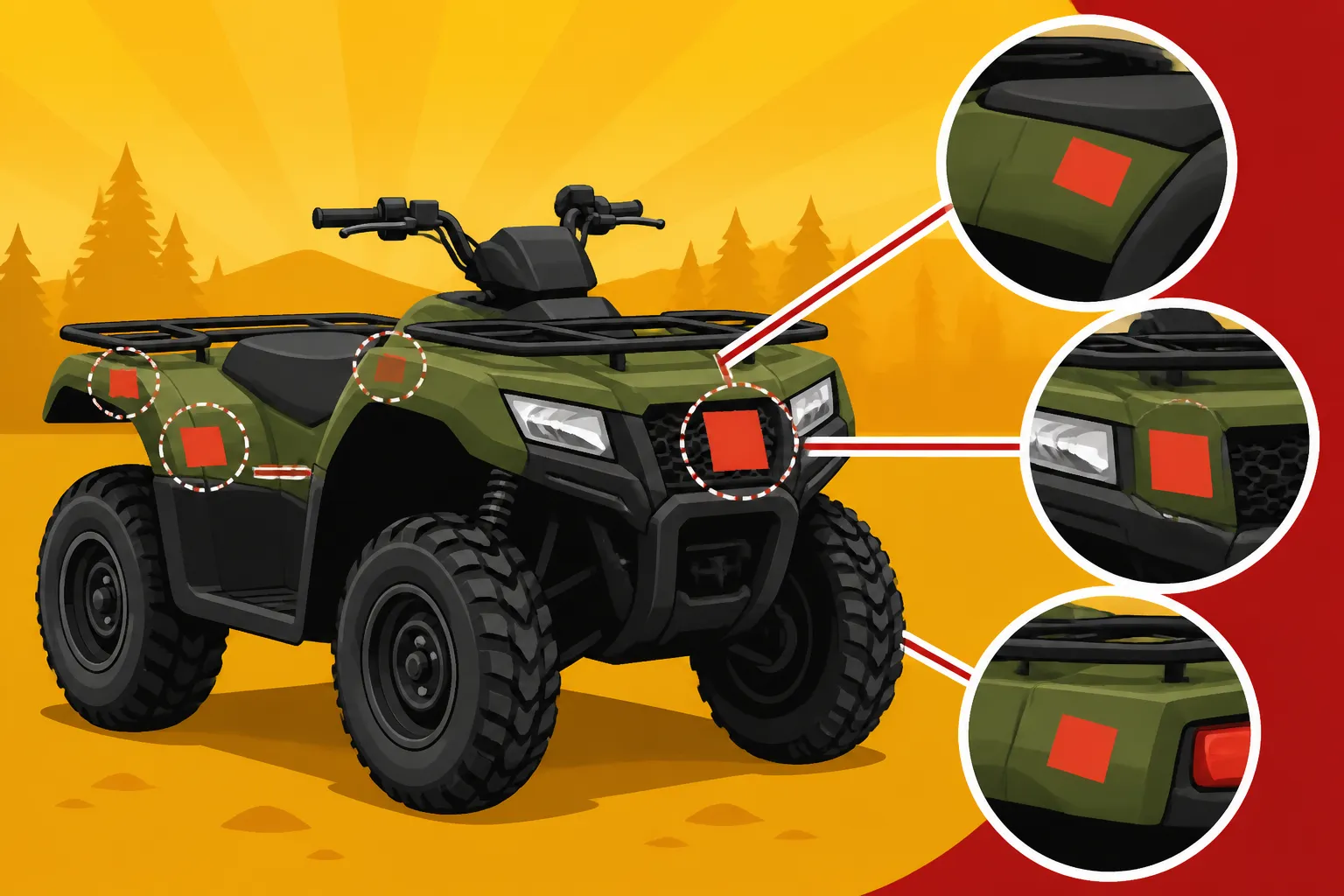
Now for the nitty-gritty: where exactly does that decal go? Alabama's regulations are pretty clear on this, aiming for maximum visibility and consistency across all registered off-road vehicles. The rule states that the registration decal must be permanently affixed and clearly displayed on the left front fork, or if the machine does not have a fork, on the left-front fender, or in another location clearly visible from the left side of the machine. Let's break down what that means for different types of machines.
Placement on ATVs and Quads
For traditional ATVs and quads, which typically have exposed front forks, the instruction is quite specific: the left front fork. Imagine sitting on your quad; the left front fork is the one on your left-hand side, usually just above the wheel. You'll want to place the decal on a flat, clean part of this fork, making sure it's not obscured by cables, hoses, or other accessories. The goal is for anyone approaching the machine from the left side to be able to spot it instantly.
If your ATV's design makes the front fork a tricky spot, perhaps due to heavy brush guards or specific accessories, the regulation offers a bit of flexibility. You can opt for the left-front fender. This is usually the plastic or composite body panel above the left front wheel. Again, the key is "clearly visible from the left side of the machine." Choose a smooth, flat surface that minimizes the risk of the decal peeling due to curves or frequent contact.
It's tempting to put it on the handlebars or somewhere easily seen from the rider's perspective, but that's not what the rule specifies. The intent is for external verification, not just for your own peace of mind. Getting it right ensures you avoid any potential misunderstandings with officials who are just trying to do their job. Always prioritize the letter of the law for the smoothest experience.
Placement on Side-by-Sides and UTVs
Side-by-sides and UTVs don't have front forks in the same way ATVs do, so their placement guidelines are slightly different but follow the same principle of left-side visibility. For these machines, the decal should be placed on the left-front fender. This refers to the fender over the left front wheel, which is usually part of the bodywork. Find a prominent, flat section that allows the entire decal to be seen clearly.
In some UTV designs, the "left-front fender" might be more integrated into the body paneling than a separate, distinct fender. In such cases, you should still aim for a location on the front portion of the left side of the vehicle that is highly visible. This could be on the lower part of the cab frame, the side of the hood, or another accessible and flat surface that ensures the decal can be easily read without obstruction. The critical takeaway is that it needs to be visible from the left side.
Avoid placing the decal where it might be easily damaged by trail debris, mud, or rider entry/exit. While the regulations don't explicitly forbid certain spots, common sense application will save you headaches down the line. A secure, highly visible spot on the left-front bodywork is your best bet for these larger machines. Proper placement is part of your [Alabama Registration Paperwork Explained] and helps ensure you're fully compliant.
Practical Tips for Decal Application and Longevity
Simply knowing where to put the decal isn't enough; you also want to ensure it stays put and remains legible for its full three-year lifespan. Alabama's trails can be tough on equipment, and a poorly applied decal will quickly become a nuisance. Taking a few extra minutes during application can save you a lot of trouble later on.
Cleaning the Surface Thoroughly
The most crucial step before applying your decal is to clean the surface where it will go. Off-road machines are notorious for accumulating dirt, dust, mud, and grime. Even seemingly clean surfaces can have a film of residue that will prevent the decal from adhering properly. Use a degreaser or rubbing alcohol on a clean cloth to meticulously clean the chosen spot.
Once you've cleaned the area, allow it to dry completely. Any moisture trapped underneath the decal will weaken the adhesive and lead to bubbles or peeling. It's a simple step, but one that many people overlook in their eagerness to get the decal on and hit the trails. A perfectly clean, dry surface is the foundation for a long-lasting decal. Consider using a template from a service like LawDepot to ensure all your machine's documentation, including decal instructions, is well organized, just like you would for important personal or business documents.
Take your time during this preparation phase. A quick wipe-down might remove visible dirt, but it often leaves behind microscopic particles or residues that will compromise the decal's stickiness. For a three-year registration, you really want this decal to bond fully to the machine's surface, so don't rush the cleaning process.
Proper Application Technique
Applying the decal itself requires a steady hand and a little patience. Once the surface is clean and dry, carefully peel the backing off the decal, trying not to touch the adhesive side. Position the decal over your chosen spot without pressing down. Once you're sure it's perfectly aligned and straight, start applying it from one edge, slowly working your way across.
Use a squeegee, a credit card wrapped in a soft cloth, or even just your thumb, to smooth out the decal as you apply it. This pushes out any air bubbles and ensures a firm, even bond with the surface. Work slowly and methodically to avoid creases or trapped air, which can lead to premature peeling. If you do get a small bubble, you can sometimes carefully lift a corner and reapply, or for tiny bubbles, a pinprick might help release the air.
After applying, press firmly over the entire surface of the decal for a minute or two, especially around the edges. This helps activate the adhesive and ensures it's fully bonded. Allowing it to set for a few hours before riding, if possible, can also improve its longevity. This attention to detail during application is vital to avoid needing a [Alabama Duplicate Registration Cost] or a replacement decal down the line.
Protecting Your Decal from Wear and Tear
Alabama riding means exposure to all sorts of conditions: harsh sun, pouring rain, mud, dust, and abrasive debris from the trail. All of these can contribute to a decal fading, cracking, or peeling. While no decal is truly indestructible, you can take steps to prolong its life. Try to choose a spot that is somewhat shielded from direct impacts or constant rubbing. For example, on a fender, avoid the very edge where it might be scraped.
Regular cleaning of your machine can also help. While you don't want to scrub the decal aggressively, gently washing it with soap and water as part of your overall machine cleaning prevents dirt and grime from building up and deteriorating the decal's surface. Avoid using harsh chemicals or pressure washers directly on the decal, as these can lift its edges or cause fading.
If you store your machine outdoors, consider a cover. UV rays are a major culprit for fading and cracking. A simple cover can protect not just your decal but the entire machine from the elements, extending its overall lifespan and appearance. Ensuring your decal remains visible and intact makes life easier for everyone involved, from you to the person checking for compliance on public trails. [What Registering Gets You Before Riding Public Land] details why this visibility is so important.
What to Do When Your Decal Needs Attention
Even with the best preparation and care, decals can sometimes meet an untimely end. Whether it's fading, peeling, or accidental damage, knowing what to do next is important so you can maintain compliance. You definitely don't want to be caught riding with a decal that's unreadable or missing entirely.
Replacing a Faded or Damaged Decal
A faded decal isn't just an aesthetic issue; if law enforcement can't clearly read the registration numbers or expiration date, it's as good as not having one at all. If you notice your decal starting to look bleached out, cracked, or if parts of it are peeling off, it's time to consider a replacement. You'll typically need to contact ALEA to request a duplicate. This usually involves a small fee and completing a new application or form.
The process for obtaining a replacement decal is generally straightforward. You'll provide your current registration information, explain the need for a replacement, and pay the associated fee. Think of it like replacing any other important document you might manage with organized records, perhaps assisted by a service like LawDepot for other personal documents. They'll then issue you a new decal, which you'll need to apply following all the same guidelines as the original. Don't wait until it's completely gone; be proactive if it starts showing significant signs of wear.
Remember that getting a replacement doesn't extend your current registration period. The new decal will simply carry the same expiration date as your original one. So, if your original was set to expire in six months, your replacement will also expire in six months. This is why proper application and care from day one are so important to get the full value out of your three-year registration. For more on this, check out [Replacing a Faded Decal].
Selling a Registered Machine
When it comes time to sell your ATV or UTV, the registration decal is a small but important detail. If the registration is still active, the decal stays with the machine. The new owner will then be responsible for transferring the registration into their name. This transfer process often involves a new application and a transfer fee, and while the physical decal doesn't change, the ownership record associated with it does.
It's a good idea for sellers to provide all registration documentation to the buyer, confirming the decal's validity. A clear bill of sale, perhaps generated using a reliable resource like LawDepot, can explicitly state that the machine is registered and that the decal is affixed. This transparency helps both parties and ensures a smooth transfer of ownership. The buyer can then proceed with the necessary steps to put the registration in their own name.
If you're buying a machine with an active registration, confirm that the decal is present and in good condition. You'll still need to perform the ownership transfer yourself. Think of the decal as a visual cue that the machine has been through the registration process, but it doesn't absolve the new owner of their responsibility to update the records. [Selling a Registered Machine in Alabama] and [Buying a Machine With Active Registration] offer more details on this process.
Consequences of a Missing or Improperly Displayed Decal
Riding without a properly displayed or legible registration decal can lead to unwanted attention from law enforcement or park officials. While the exact penalty might vary, it could range from a warning to a citation and a fine. It's a simple compliance issue that is easily avoidable by following the guidelines. The whole point of the decal is quick verification, and if that can't happen, it raises questions.
Imagine you're out enjoying a day at [Stony Lonesome OHV Park in Alabama] or another public riding area. An officer might approach and ask to see your registration. If your decal is missing, obscured, or illegible, they'll have to take extra steps to verify your compliance, which can delay your ride and their work. It's an unnecessary hassle that takes away from the fun.
Ultimately, the registration decal is a small but mighty piece of paper that confirms your legal right to operate your off-road machine in Alabama. Knowing where to put it, how to apply it, and what to do if it needs replacing is all part of being a responsible and informed ATV or UTV owner in the state. Getting it right ensures your adventures on Alabama's red clay trails are as smooth and hassle-free as possible.
| Machine Type | Primary Decal Placement | Alternative/Notes |
|---|---|---|
| ATV / Quad | Left Front Fork | Left-front fender if no fork or obstructed |
| Side-by-Side / UTV | Left-front fender | Visible on front-left bodywork |
| General Requirements | Permanently affixed, visible | Clean, flat surface; free from obstruction |
| Condition | Legible and intact | Replace if faded, peeling, or damaged |
Disclaimer
This article is for general informational purposes only and does not constitute professional advice. Laws, prices and regulations vary by location and change over time. Consult a qualified professional for guidance on your specific situation.