Public Use Versus Private Use Tiers
Navigating the world of ATV and UTV registration in Alabama can feel like trying to find your way through a new trail system without a map. Many folks get tangled up in the question of whether they need to register their machine for "public use" or "private use," and it's a common point of confusion that can lead to frustration. This guide is here to untangle those wires, clarify the differences between these two registration tiers, and help you understand which one is right for your riding adventures.
Understanding Alabama's ATV Registration Tiers
When Alabama established its voluntary ATV and UTV registration system through the Alabama Law Enforcement Agency (ALEA), a significant part of that system involved categorizing how people would primarily use their machines. This wasn't just bureaucracy for bureaucracy's sake; it was a way to acknowledge the diverse ways off-road vehicles are utilized across the state, from leisurely trail riding to hardcore farm work. The core idea was to provide options that made sense for different ownership scenarios, even if the names themselves sometimes cause a bit of a head-scratcher.
The Core Distinction: Where You Ride
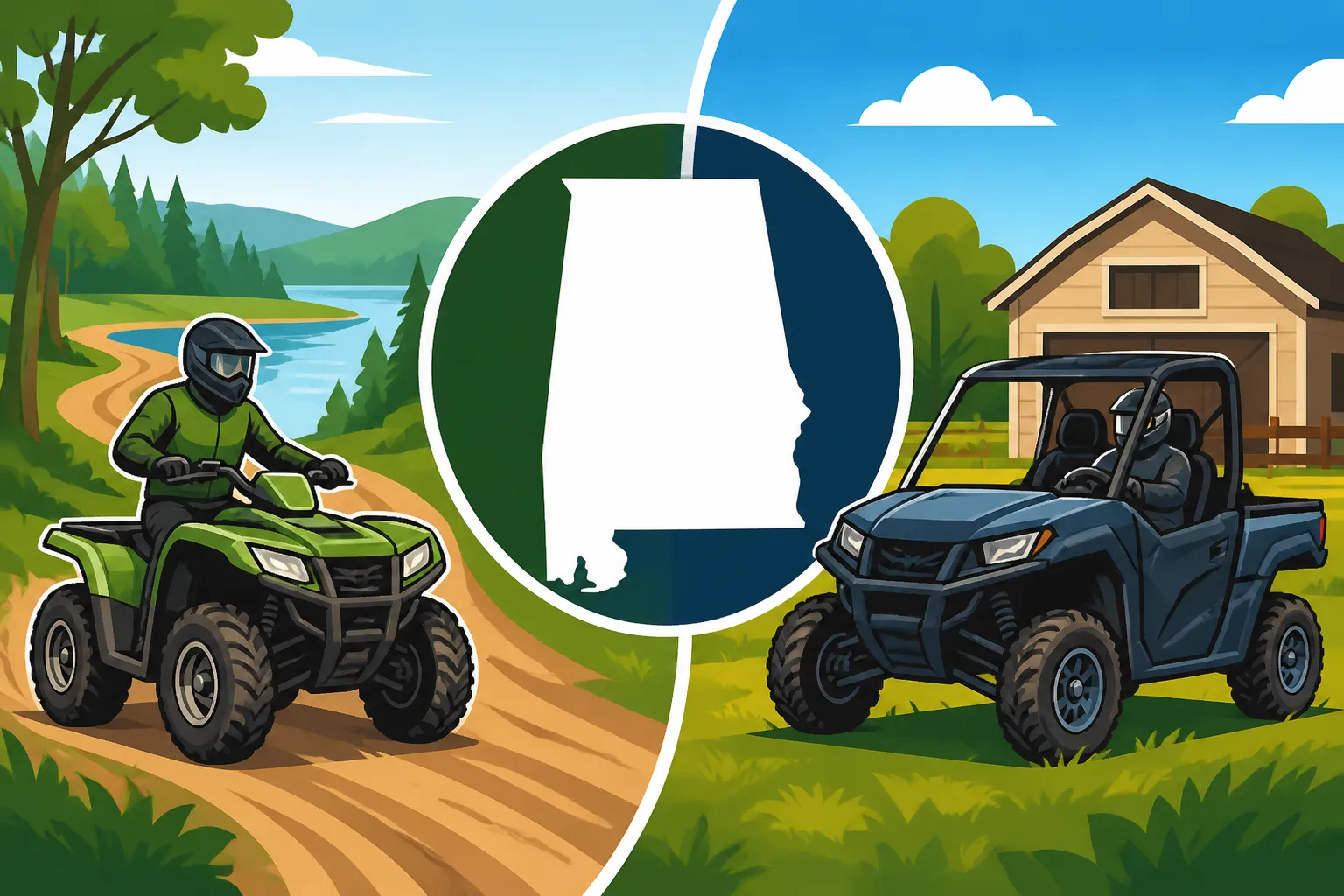
At its heart, the difference between public and private use registration boils down to where you intend to operate your ATV or UTV. Are you planning to stick strictly to your own property or land you have explicit permission to ride on? Or do you dream of hitting designated public trails, like those found in state parks or national forests that allow off-highway vehicle access? This is the fundamental fork in the road that determines which registration tier you should consider. It's a pragmatic distinction designed to align with the legal frameworks surrounding land access and usage, and it directly impacts what your registration actually permits you to do.
It’s easy to assume that "registration" automatically grants you access to all public lands, but Alabama's system is a bit more nuanced. Without understanding these categories, you might inadvertently register your machine under the wrong tier and find yourself facing unexpected limitations down the line. That's why taking the time to understand the intent behind each tier is so crucial, as it affects everything from your annual fees to where you can legally park your rig and unload for a day of riding.
Why Alabama Created These Tiers
Alabama didn't just pull these distinctions out of thin air. The separate public and private use tiers were established to address specific needs within the off-road community and to provide a flexible framework for owners. For many years, owners of ATVs and UTVs operated without any state-level registration at all, leading to challenges with ownership verification, theft recovery, and managing access to public lands. The introduction of registration aimed to bring some order to this, but lawmakers recognized that a blanket "one-size-fits-all" approach wouldn't serve everyone.
Think about a farmer who uses their side-by-side exclusively on their thousands of acres of agricultural land. Their needs for registration are vastly different from someone who tows their quad to [Stony Lonesome OHV Park in Alabama] every other weekend. By creating distinct tiers, Alabama could offer a lower-cost option for those who truly only ride on private property, while ensuring that those who venture onto public lands contribute appropriately to the maintenance and administration of those areas. It was a way to be inclusive of all types of riders while also establishing a clearer system for accountability and management. It truly simplifies the question of [Do You Need to Register an ATV in Alabama?].
The "Private Use" Registration Tier in Alabama
The "Private Use" registration tier is often the go-to for many Alabama ATV and UTV owners, especially those who know their riding will be confined to specific areas. It’s designed to be a simpler, more affordable option for individuals who primarily use their machines on land they own or have explicit permission to use. This tier acknowledges that not every off-road vehicle is destined for the public trail system, and therefore, shouldn't necessarily bear the same administrative burden.
Who Qualifies for Private Use
If your ATV or UTV primarily lives and breathes on your own property – say, a sprawling hunting lease in Wilcox County, your family farm in Limestone County, or simply your backyard acreage – then you're likely a prime candidate for the private use tier. This also extends to land where you have a clear, documented right to ride, such as a timber company lease or a hunting club membership that explicitly grants ATV access. The key here is private land, where public access is either restricted or entirely controlled by the landowner.
Many people choose this option because it's practical and keeps costs down. It’s perfect for the hunter who uses their quad solely to get to their deer stand, the landowner checking fences, or the enthusiast who has built a private trail system for family and friends. What truly qualifies you is the intent and actual practice of limiting your riding to private domains, which helps distinguish your machine from those routinely seen on public access routes. If you're wondering about [Alabama Registration for a Farm Machine], this tier is likely what you're looking for.
Limitations and Responsibilities of Private Use
While the private use tier offers flexibility and lower fees, it comes with a clear understanding of its limitations. The most crucial one is that a private use registration does not authorize you to operate your ATV or UTV on public lands that require registration. This includes many state parks, national forests, and other designated public riding areas that specifically mandate an ALEA public use registration. Attempting to ride in such areas with only a private use decal could lead to fines or other penalties, which is a frustration many riders want to avoid. You can find more details on [Riding Public Land on a Private Tier] in another one of our posts.
Your responsibility as a private use registrant also involves ensuring you have proper permission if you're not riding on your own land. While the state doesn't typically require you to carry written proof of permission on private land, it's always a good idea, especially if you're venturing onto someone else's property. A simple letter or agreement, perhaps drafted using a resource like LawDepot, can save a lot of headaches if questions about your presence ever arise. Moreover, even on private land, you're still expected to operate your machine safely and responsibly, adhering to general safety practices and environmental considerations.
How to Register for Private Use
Registering for private use is a straightforward process handled through ALEA. You'll need to fill out the necessary application, which typically asks for basic information about you and your machine, including the year, make, model, and crucially, the Vehicle Identification Number (VIN) or serial number. Having your [Alabama Registration Paperwork Explained] before you start can make the process even smoother. This is where you'll select the "private use" option, confirming your intent.
You'll submit this application along with the associated fees. Unlike some vehicle registrations, Alabama's ATV/UTV registration is an ownership record, not a plate, so you'll receive a decal to affix to your machine. It’s a relatively simple procedure, and many find the voluntary nature of it appealing, allowing them to gain the benefits of registration – such as improved theft recovery and proof of ownership – without being forced into a system that doesn't fit their primary riding habits. Just be sure to double-check all the details before you send it in, as accurate information helps with [Alabama Registration Processing Time].
The "Public Use" Registration Tier in Alabama
For those who envision their ATV or UTV as a ticket to exploring Alabama’s fantastic network of public trails and parks, the "Public Use" registration tier is the essential choice. This tier is specifically designed to grant you the necessary credentials to legally operate your off-road machine in designated areas that are open to the public and require state registration. It's about contributing to and being a part of the broader off-road community that enjoys these shared resources.
What "Public Use" Really Means for Your Machine
Opting for public use registration signals that your machine is ready for adventure beyond your fence line. It means you've acknowledged the intention to ride on lands managed by state or federal agencies, or privately owned parks that cooperate with the state's registration system. Think of it as your passport to places like [Minooka Park Riding in Alabama] or other venues that have specific requirements for OHV access. This isn't just a different label; it comes with different responsibilities and, often, different expectations from trail management authorities.
The decals you receive for public use often have a slightly different appearance or designation compared to private use decals, making it easy for park rangers or enforcement officers to identify that your machine meets the requirements for public access. It signifies that you're playing by the rules and contributing to the system that helps maintain and manage these valuable riding opportunities for everyone. For a full breakdown, check out [Alabama Public Use ATV Registration Explained].
The Benefits and Requirements of Public Use
The primary benefit of a public use registration is, quite simply, the freedom to ride on designated public lands. Without it, many of these cherished riding spots would be off-limits, limiting your recreational options significantly. This tier allows you to fully take advantage of [What Registering Gets You Before Riding Public Land], opening up miles of trails, diverse terrain, and opportunities for group rides and events. It’s an investment in your access to Alabama’s outdoor playground.
However, with greater access comes greater responsibility. Public use registration often entails a slightly higher fee than private use, reflecting the administrative and maintenance costs associated with managing public trail systems. You'll also be expected to adhere strictly to all posted rules and regulations of the specific park or land you're riding on. This includes things like speed limits, designated trails, noise restrictions, and environmental guidelines – all crucial for preserving these areas for future generations. Additionally, while Alabama does not have a mandatory ATV safety course, many public parks strongly recommend or even require them for younger riders, adding another layer of expectation for public users.
Applying for a Public Use Registration
The application process for public use registration mirrors that of private use, but with the distinct selection of the "public use" tier. You'll complete the same forms, providing your personal details and machine information, including its serial number. Ensure all details are accurate, as errors can cause delays. You can even initiate the process by mail, if that's more convenient for you. Learn more about [Alabama Registration Applications by Mail].
Once your application and fees are processed, ALEA will issue your official registration documents and the public use decal. It’s important to affix this decal in a visible location on your ATV or UTV, as specified by ALEA guidelines, so that it can be easily verified by officials at public riding areas. Keeping a copy of your registration paperwork with you while riding is also a wise practice, providing immediate proof should it ever be questioned. If you ever lose your registration, you can obtain an [Alabama Duplicate Registration Cost] replacement.
Making the Right Choice: Public or Private Use?
Deciding between public and private use registration isn't just about saving a few dollars; it's about aligning your registration with your actual riding habits and intentions. Making the wrong choice can lead to either unnecessary expense or, worse, restricted access and potential legal issues. It's worth taking a moment to genuinely assess where you anticipate spending most of your time on your ATV or UTV.
| Feature | Private Use Registration | Public Use Registration |
|---|---|---|
| Primary Riding Area | Your own property, leased land with permission, private clubs | Designated public OHV trails, state parks, national forests, cooperative private parks |
| Cost (generally) | Lower | Slightly Higher |
| Access Granted | Private land where permission is held | Public OHV trails and designated riding areas |
| Decal Type | Distinct private use decal | Distinct public use decal |
| Required for | Owners needing proof of ownership for private use | Owners intending to ride on state-managed public lands |
| Flexibility | Best for dedicated private land riders | Best for diverse riding environments, wider access |
| Conversion Possible | Yes, can upgrade to public use | Yes, can downgrade to private use (though less common) |
Scenarios for Choosing Private Use
The private use tier is ideal for a specific type of rider. If your ATV or UTV is primarily a workhorse on your ranch, a reliable companion for checking irrigation lines, or solely used for navigating your personal hunting grounds, private use registration makes perfect sense. It provides a formal record of your ownership with ALEA without requiring you to pay for public access you don't need. This is particularly appealing for those who want the security of registration – especially useful for [Alabama Theft and Repossession Motives] – but have no intention of ever hitting a public trail.
Another common scenario involves machines used by private hunting clubs on their leased lands. As long as the club's activities remain strictly within their leased boundaries, a private use registration is generally sufficient. It's about [Choosing the Cheaper Tier] when you know your geographical limits are clear. This tier acknowledges that not every machine needs to contribute to the upkeep of public trails if it never touches them.
When Public Use Becomes Essential
Conversely, if the allure of Alabama’s diverse public trail systems calls to you, public use registration is absolutely essential. Any time you plan to load up your machine and head to a recognized public OHV park, state forest trail, or other managed riding area that requires state registration, you need to be registered for public use. Without it, you could be turned away at the gate, or worse, cited for non-compliance by park authorities. This registration isn't just a suggestion; it's often a prerequisite for entry and legal operation.
This tier is also critical for those who enjoy organized group rides or events that take place on public or cooperative private lands. Event organizers often require proof of public use registration to ensure all participants are legally compliant. If you anticipate any riding that might stray from private property onto publicly accessible areas, even for a short stretch (where allowed), then opting for public use registration from the start is the safest and most convenient option. It removes any doubt and ensures your machine is ready for whatever adventure awaits. [Alabama ATV Trails: Where to Ride] often require this type of registration.
Switching Between Tiers if Your Needs Change
Life happens, and sometimes your riding habits evolve. You might start with a private use registration because you only rode on your land, but then discover a passion for public trails. Or perhaps you move and no longer have access to private acreage, making public parks your only option. The good news is that Alabama's system allows you to switch between the public and private use tiers. This is often referred to as [Switching From the Private Tier to Public Use].
To change your registration tier, you would typically contact ALEA or visit their designated office. You'll likely need to fill out a new application, pay any difference in fees (if upgrading to public use), and receive a new decal corresponding to your updated registration status. While it involves a bit of paperwork, the flexibility to adjust your registration as your needs change is a thoughtful feature of Alabama's system, ensuring that your machine's status always aligns with how and where you want to ride. Always feel free to reach out to ALEA for any [Alabama Registration Questions Owners Ask].
Disclaimer
This article is for general informational purposes only and does not constitute professional advice. Laws, prices and regulations vary by location and change over time. Consult a qualified professional for guidance on your specific situation.