Alabama Registration Processing Time
Waiting for your ATV or UTV registration to arrive in Alabama can feel like watching paint dry, especially when you're itching to hit the trails or get that machine working on the farm. It's frustrating to think your new or newly acquired off-road vehicle is sitting idle because of paperwork. This guide is here to shed some light on the typical processing times for Alabama ATV and UTV registrations, what factors can speed things up or slow them down, and what you can do to navigate the process as smoothly as possible.
Understanding Alabama's ATV/UTV Registration Agencies
Navigating the world of vehicle registrations can feel like a maze, and when it comes to off-road vehicles in Alabama, it's a bit unique. Unlike cars and trucks where everything generally goes through your local county probate office or license commissioner, ATVs and UTVs have a slightly different path, particularly concerning registration. Understanding who handles what is the first step to understanding how long things might take.
ALEA's Role in Off-Road Vehicle Registration
The primary agency responsible for the registration of ATVs and UTVs in Alabama is the Alabama Law Enforcement Agency (ALEA). They oversee the statewide system for off-road vehicles. This means that once your application leaves your local county office, or if you mail it directly, it ultimately ends up at ALEA's central processing facility in Montgomery. This central processing is why you might not get your registration decal and certificate instantly, even if you've handed in all your paperwork at the county level. Think of it like this: your county office is the local branch that collects the information, but the main headquarters in Montgomery is where the real "stamping" and mailing happens. [Why Your Registration Paperwork Goes to Montgomery] explains this in more detail.
When you submit your application, either in person at a county office or through the mail, it's essentially a request for ALEA to issue an official registration for your machine. This involves data entry, verification of the information you've provided, and then the actual printing and mailing of your registration certificate and the all-important decal. Because this isn't handled at every county counter, there's an inherent transit and processing time built into the system that can feel a bit drawn out, especially if you're accustomed to walking out with a car tag right away.
The County's Part in the Application Process
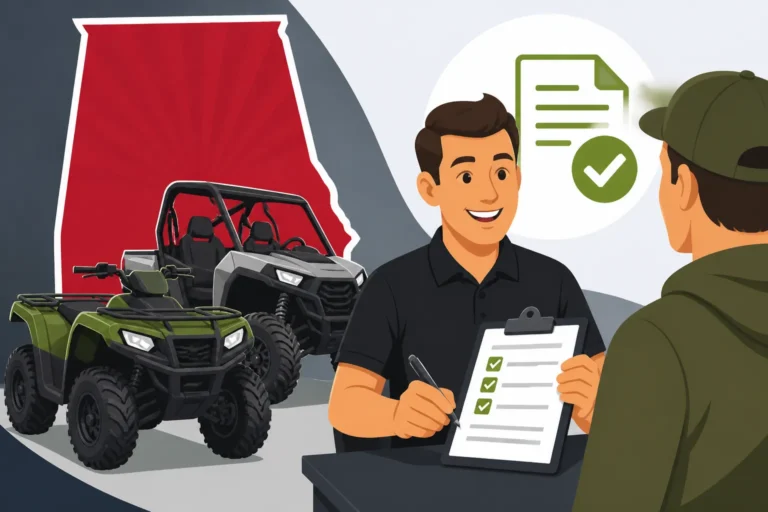
While ALEA is the central authority for issuing off-road vehicle registrations, your local county probate office or license commissioner's office plays a crucial role as the initial point of contact for most riders. This is where many people choose to submit their applications. When you go to your county office, the staff there will help you fill out the forms, verify your identification, and collect the necessary fees. They act as an intermediary, collecting all the required documentation and forwarding it to ALEA.
The efficiency of your local county office can significantly impact the initial leg of the processing time. Some offices are incredibly swift, double-checking everything before sending it off, while others might have varying workloads or procedures that add a day or two to the initial submission. For example, if you submit your paperwork on a Friday afternoon, it might not be bundled with other applications and mailed to Montgomery until the following Monday. This local handling adds a layer to the overall timeline, as the package has to physically travel from your county to ALEA's central office before any central processing can even begin. Knowing this can help set realistic expectations for when your registration journey truly begins with ALEA.
Factors Influencing Your Alabama Registration Processing Time
It's tempting to think there's a magic number for how long registration takes, but the truth is, several factors can sway the timeline. From how perfectly your paperwork is filled out to when you decide to submit it, these elements all play a role in whether you get your decal in a couple of weeks or find yourself waiting a bit longer.
Completeness and Accuracy of Your Application
This is, by far, the biggest make-or-break factor in how quickly your registration is processed. Imagine ALEA's processing center as a river; a complete, accurate application is like a smooth stone that glides right through. But an application with missing information, incorrect serial numbers, or mismatched names is like a snag, stopping the flow. If there's any discrepancy or missing piece, your application will likely be put on hold, and you'll receive a letter or a call requesting clarification or additional documents. This back-and-forth can easily add weeks to your waiting period. [Alabama Registration Paperwork Explained] really digs into what you need.
It's not just about having all the forms, but also making sure every blank is filled out correctly and consistently. For example, if the name on your bill of sale doesn't exactly match the name on your application, or if the serial number is smudged or miswritten, that's an immediate red flag. Even seemingly minor errors, like an outdated address or an unreadable signature, can cause delays. Taking the time upfront to meticulously review everything, perhaps even having a trusted friend or family member double-check it, can save you a ton of frustration and waiting later on.
Mail-In Versus In-Person Submissions
How you submit your application can also influence the processing time. While both methods eventually route to ALEA, their initial journeys differ.
-
In-Person Submission at a County Office: When you submit your application at your local probate or license commissioner's office, you get the benefit of having a clerk review your documents for obvious errors on the spot. This immediate feedback can prevent common mistakes that would otherwise lead to delays. Once reviewed and accepted, your application is then batched with others and mailed by the county to ALEA in Montgomery. The time it takes for the county to mail it, plus the postal transit time, needs to be factored in before ALEA even starts processing. [Alabama Registration Applications by Mail] covers the mail-in process.
-
Direct Mail-In to ALEA: You also have the option to mail your application directly to ALEA. While this cuts out the county's initial handling and mailing time, you lose the benefit of an immediate review for completeness. If there's an error, you won't know until ALEA processes it and potentially sends it back or requests more information. This can sometimes lead to longer delays if an issue arises, as you're only alerted after a processing cycle has already begun.
Regardless of the method, once the application reaches ALEA, the processing time from that point is largely the same, but the journey to get it into ALEA's hands can vary.
Seasonal Fluctuations and Workload
Just like any other government agency, ALEA experiences peak seasons and slower periods, and this can directly affect how quickly they process registrations. For instance, the spring and early summer months often see a surge in off-road vehicle purchases and registrations as people gear up for warmer weather riding. Similarly, before major hunting seasons in the fall, there might be an uptick in registrations from individuals preparing their machines for [Alabama Game Retrieval by Machine] or accessing hunting grounds.
During these peak times, ALEA's processing volume can be significantly higher, meaning it simply takes longer for them to work through the queue of applications. Conversely, if you submit your registration during a slower period, like late winter or mid-fall after the initial rush, you might find that your application moves through the system a bit more quickly. It's not a hard and fast rule, but recognizing these potential ebbs and flows in workload can help you anticipate how long your wait might be. If you're buying a machine around a popular time, mentally add a little extra buffer to your expected processing time.
What to Expect: Typical Processing Times and Beyond
So, you've submitted your application, paid your fees, and now you're wondering, "How long until I see that decal?" It's the question every new owner asks, and while there's no exact answer, we can give you a pretty good idea of what's normal and what might require a follow-up.
Receiving Your Registration Decal and Certificate
Generally speaking, once your complete and accurate application reaches ALEA in Montgomery, you can expect your registration certificate and decal to arrive in the mail within 2 to 4 weeks. This timeframe accounts for the agency's internal processing, printing, and the standard postal delivery time. Keep in mind, this estimate starts from when ALEA receives your application, not necessarily the day you handed it over at your local county office or dropped it in a mailbox. The physical transit time from your county to Montgomery needs to be added to that.
The registration certificate is a paper document that details your machine's information, your ownership, and the registration period, which typically runs for [Three Years Instead of One]. The decal is a small sticker that you'll need to affix to your ATV or UTV, usually in a visible spot on the rear or side, as outlined in [Where the Registration Decal Sticks on Your Quad]. Both are crucial, so keep an eye on your mailbox for an envelope from ALEA. It's not uncommon for the certificate and decal to arrive in the same envelope, but occasionally, they might come separately.
What to Do If Your Registration is Delayed
If you've waited beyond the typical 4-week window and your registration certificate and decal haven't arrived, it's completely understandable to start feeling a bit antsy. Don't panic immediately, but it's a good time to start investigating.
First, revisit your paperwork. Did you make a copy of your application before sending it off? Check the dates you submitted it and confirm all the information was correct. Sometimes, a forgotten detail or an illegible number can cause a holdup that you might have overlooked.
Next, contact your local county probate office or license commissioner's office if you submitted your application there. They might be able to confirm when they forwarded your documents to ALEA or if any issues were noted.
If the county can't provide an answer, or if you mailed your application directly, your next step is to contact ALEA's Off-Road Vehicle Registration Unit. They are the central authority and can check the status of your application in their system. You'll likely need your machine's Vehicle Identification Number (VIN) or serial number, along with your name and address, when you call. Having all your details ready will make the inquiry much smoother. Sometimes, there might be a simple backlog, or they might inform you that they sent a request for more information that perhaps got lost in the mail. If you did receive a request for more information and have already sent it back, be sure to mention that as well. You might also ask about the process for a [Alabama Duplicate Registration Cost] if it seems truly lost, though usually, a delayed initial registration is resolved without that step.
Proactive Steps to Ensure a Smooth Registration
Nobody wants to wait longer than necessary, especially when it comes to getting legal to ride their new machine. While some aspects of the processing time are out of your hands, there are definitely things you can do to grease the wheels and help ensure your Alabama ATV or UTV registration goes through without a hitch.
Preparing Your Documents Meticulously
This cannot be stressed enough: the cleaner and more complete your application is, the faster it will sail through the system. Think of yourself as an auditor scrutinizing every single detail.
- Gather Everything Before You Start: Don't try to fill out forms piecemeal. Have your [Alabama Bill of Sale Requirements], your proof of identity, any previous registration documents (if applicable), and your payment method all ready. If you bought from a dealer, they will often provide a [What a Purchaser's Certificate Does in Alabama] which is key. For private sales, a comprehensive bill of sale is paramount, and it absolutely must include the machine's full serial number. [Alabama Serial Numbers on the Application] are non-negotiable.
- Double-Check Every Entry: Go through the application form line by line. Is your name spelled correctly? Is your address current and complete? Does the machine's VIN or serial number on the application exactly match the one on your bill of sale and on the machine itself? Even a single transposed digit can cause a rejection.
- Use Blue or Black Ink: Always use clear, legible blue or black ink. Pencil marks or faint ink can make your application difficult to read and process.
- Make Copies: Before you submit anything, make a copy of every single document you are sending in. This way, if there's a question or a delay, you have your own records to refer to. This includes the completed application form, the bill of sale, and any other supporting paperwork. LawDepot, for example, offers templates for bills of sale and other legal documents that can help ensure you have all the necessary fields covered, making your documentation as robust as possible for submission. Using a structured template from a service like LawDepot can significantly reduce the chances of errors or omissions.
By being obsessively thorough with your paperwork, you minimize the chances of your application being flagged for errors, which is the most common reason for delays.
Utilizing Dealer Services for Streamlined Registration
If you purchase your ATV or UTV from a licensed dealer in Alabama, you might have an advantage when it comes to registration processing time. Many dealers offer a service where they handle the registration paperwork on your behalf. This can be a huge time-saver and stress reducer for several reasons:
- Expertise in Paperwork: Dealers are constantly processing registrations. They know exactly which forms are needed, how to fill them out correctly, and what common pitfalls to avoid. Their staff is often trained to ensure everything is perfect before submission.
- Direct Submission Channels: Some dealers may have more direct or established channels for submitting paperwork to ALEA, potentially reducing initial mailing times or the likelihood of errors. They can often batch applications, ensuring they are sent efficiently. [Alabama Dealers Filing Registration for You] is a service many riders appreciate.
- Troubleshooting: If an issue does arise, the dealer often has direct contacts or experience in resolving common registration problems, which can be much faster than you trying to navigate the system on your own. They can act as your advocate.
While there might be a small fee for this service, the peace of mind and potential for quicker processing can be well worth it. When you're making your purchase, be sure to ask the dealer about their registration services and what their typical turnaround times are for getting the paperwork submitted to ALEA. They often leverage tools or structured processes, perhaps even similar to the organized document systems offered by platforms like LawDepot, to ensure accuracy and efficiency in their submissions.
Here's a quick comparison of factors affecting registration processing:
| Factor | Impact on Processing Time | Description |
|---|---|---|
| Application Accuracy | High Impact (Delay/Speed) | Complete and error-free applications sail through; missing info or errors lead to significant delays as the agency requires follow-up. |
| Submission Method | Moderate Impact (Initial) | In-person at county: Immediate review, then county mails to ALEA. Direct mail to ALEA: No immediate review, relies on your accuracy. Both need postal transit to Montgomery. |
| Seasonal Workload | Moderate Impact (Delay) | Peak seasons (spring, early summer, pre-hunting season) mean higher volume for ALEA, potentially extending overall processing times. Slower during off-peak times. |
| Dealer Assistance | Moderate Impact (Speed) | Dealers often submit correct paperwork efficiently, leveraging their experience and sometimes established channels, which can streamline the initial submission phase. |
| Postal Transit | Low Impact (Constant) | Inherent time for mail to travel from county to ALEA, and from ALEA back to you. Generally a few days each way. |
Disclaimer
This article is for general informational purposes only and does not constitute professional advice. Laws, prices and regulations vary by location and change over time. Consult a qualified professional for guidance on your specific situation.