Alabama Theft and Repossession Motives
It's an unfortunate truth that owning valuable recreational vehicles like ATVs and UTVs sometimes comes with the stress of potential theft or, for those who finance, the risk of repossession. In Alabama, these issues can be particularly tricky, especially with the evolving laws surrounding how these machines are recorded. Whether you've woken up to an empty shed or are navigating tough financial waters, understanding the specific "motives" behind theft and repossession, and how Alabama's systems work (or don't yet work), is crucial for protecting your investment. This guide aims to shed light on these complex areas, helping you understand the landscape and what you can do to safeguard your machine.
Understanding the Landscape of ATV/UTV Theft in Alabama
The allure of the open trail, the thrill of speed, or the sheer utility of an ATV or UTV makes them fantastic assets. However, these very qualities also make them attractive targets for theft. It's a frustrating reality that your prized possession could become someone else's illicit gain, and knowing why and how these thefts occur is the first step in prevention.
Why ATVs and UTVs Are Prime Targets
ATVs and UTVs present a unique set of characteristics that make them particularly vulnerable to theft. First, their high resale value, both as whole units and for parts, creates a strong incentive for criminals. A decent side-by-side can cost as much as a used car, and the demand for engines, transmissions, wheels, and suspension components remains consistently high. Second, their portability is a double-edged sword; while it makes them easy for owners to trailer to a favorite riding spot, it also makes them relatively simple for thieves to load onto their own trailer or into the back of a truck and disappear.
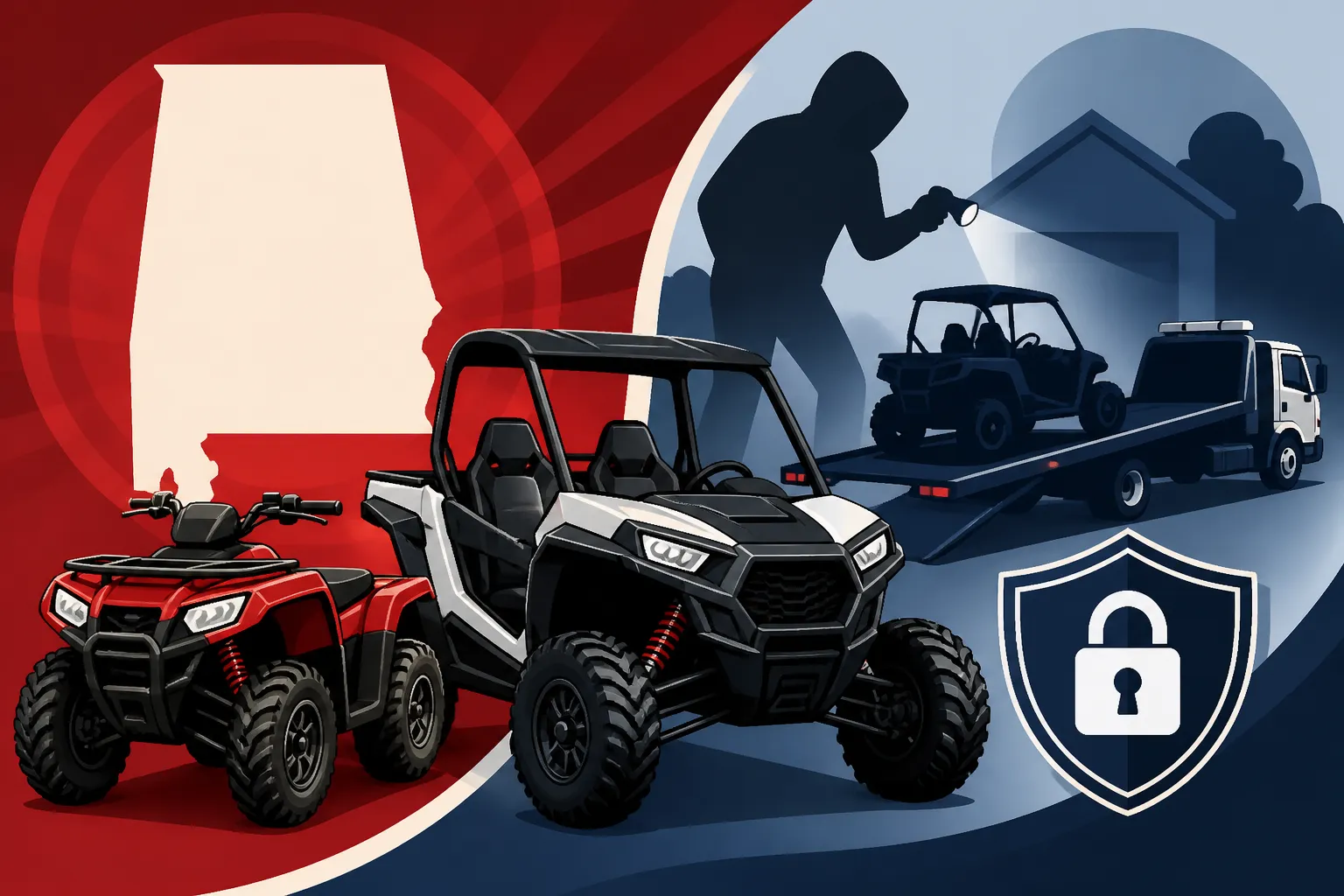
Think about it: a determined thief with a ramp and a truck can have a quad loaded and gone from an unsecured property in minutes, often under the cover of darkness. Unlike a full-sized pickup truck that's hard to conceal, an ATV or UTV can be tucked away in a remote barn or garage, making it harder for authorities to spot. Moreover, until recently, Alabama lacked a statewide titling system for these machines, meaning their identification wasn't always as robust as, say, a passenger car. This made it easier for criminals to attempt to resell them with fraudulent paperwork or simply strip them for parts without fear of being traced to a clear owner.
Common Scenarios for ATV/UTV Theft
The ways ATVs and UTVs are stolen can vary, but certain patterns emerge. A common scenario involves theft from unsecured properties. You might leave your quad in an open-sided shed on your farm, or perhaps parked on an exposed trailer in your driveway after a long day of riding. These opportunistic thefts often occur because the machine is easily accessible, and the thief perceives a low risk of being caught. Rural areas, despite their perceived tranquility, can sometimes be hotbeds for this type of theft due to larger properties, fewer immediate neighbors, and less frequent patrols.
Theft from public areas is another significant concern. Imagine pulling your side-by-side off the trailer at a popular trailhead, only to return hours later to an empty space. Or perhaps you've parked your machine at a campground while you relax by the fire. Thieves often scout these locations, looking for machines that are left unattended or with minimal security. Organized theft rings also play a role, sometimes targeting specific models or brands for their high-demand parts, or even stealing multiple machines in a single night to quickly transport them across state lines. The unfortunate reality is that many owners, ourselves included at times, underestimate the risk and don't employ strong enough anti-theft measures, inadvertently making their machines easier targets.
The Critical Role of Titling in Theft Recovery (Post-2026 Focus)
For years, Alabama ATV and UTV owners have grappled with a fragmented system of ownership records. While some might have a bill of sale or registration through ALEA, a definitive, statewide title was simply not an option for most off-road machines. However, a significant shift is coming, and it promises to dramatically impact how theft and repossession are handled in the state, starting with machines from model year 2026. This change is a game-changer for owners and law enforcement alike.
How a Title Establishes Clear Ownership
Beginning with machines of model year 2026, Alabama is finally implementing a titling system for ATVs and UTVs. This new system means that, much like your car or truck, your off-road machine will have an official, state-issued document – a title – that definitively establishes who the legal owner is. Before this, proving ownership often relied on a paper trail of bills of sale, notarized affidavits, or even just the word of previous owners. While a bill of sale is important, it can be easily forged or lost, leaving a gray area around who truly owns a machine.
With a title, there’s no ambiguity. The state records your name as the owner, and this record is maintained centrally. This official document not only simplifies the process of buying and selling but, more importantly for our discussion, provides undeniable proof of your claim should your machine ever be stolen. It gives you, the rightful owner, a powerful tool in reclaiming your property and prosecuting those who attempt to take it. For a deeper dive, check out [Alabama ATV Titling Starts With Model Year 2026].
Tracking Stolen Machines Through the ALVIN System
The new titling law is more than just a piece of paper; it’s backed by a robust, centralized database: the Alabama Vehicle Information Network (ALVIN) system. This is the same system used for titling other vehicles in the state, and its expansion to include ATVs and UTVs from model year 2026 is a massive step forward for theft recovery. When your machine is reported stolen, law enforcement agencies can immediately flag its VIN in the ALVIN system.
What does this mean in practice? Imagine a thief tries to sell your stolen 2026 side-by-side to an unsuspecting buyer. When that buyer (or their dealer) attempts to title the machine in their name at a county office, the system will instantly show that the VIN is associated with a stolen vehicle. This makes it significantly harder for criminals to "launder" stolen machines through legitimate sales channels, forcing them to either strip them for parts or sell them in shadowy, high-risk transactions. This increased traceability acts as a powerful deterrent and greatly improves the chances of recovering a stolen machine. Learn more about the system at [Alabama's ALVIN System and Off-Road Titles].
Legal Recourse and Insurance Claims with a Title
Having a title profoundly strengthens your position when dealing with both law enforcement and your insurance provider after a theft. When you file a police report for a stolen ATV or UTV, the existence of a clear, state-issued title makes the report more credible and actionable. It eliminates any doubt about your ownership, allowing law enforcement to proceed with their investigation and, upon recovery, return the machine directly to you. It also provides the solid evidence needed for prosecutors to pursue charges against those found in possession of your stolen property.
From an insurance perspective, a title is often the gold standard for proving insurable interest. While insurance companies may accept other forms of proof for untitled machines, a title streamlines the claims process, leaving little room for dispute over who owned the vehicle. This means less hassle and potentially faster resolution when you need to file a claim for theft or damage. A title assures your insurer that you are the legitimate owner, making it easier for them to process your comprehensive coverage claim and get you back on a new machine or reimburse you for your loss. Understanding the nuances of coverage is crucial; see [Insuring a Titled Machine in Alabama] for more.
Repossession Motives and the Importance of a Clear Lien Record
Financing an ATV or UTV is a common way for many Alabamians to enjoy these machines. Just like with cars, lenders provide loans, and in return, they hold a security interest in the vehicle. While most owners diligently make their payments, life can throw curveballs, and sometimes a machine becomes subject to repossession. This isn't just a financial matter; it’s deeply tied to how ownership is legally recorded.
When Lenders Exercise Repossession Rights
Repossession is essentially the lender's legal right to take back collateral (in this case, your ATV or UTV) if you fail to uphold the terms of your loan agreement. The primary motive, of course, is a default on payments. If you miss too many scheduled installments, the lender will typically initiate the repossession process to recover their financial loss. However, it's not always just about missed payments. Loan agreements often contain various clauses that, if violated, can also trigger repossession. These might include failing to maintain adequate insurance on the machine, taking it out of state for an extended period without notifying the lender, or even attempting to sell the machine without clearing the lien first.
We all face financial hardships from time to time, whether it's unexpected medical bills, job loss, or other unforeseen circumstances. While lenders prefer to work with borrowers, their ultimate goal is to protect their investment. If communication breaks down or efforts to renegotiate a payment plan are unsuccessful, they will exercise their right to repossess. This isn't done out of malice, but as a standard business practice to mitigate risk and recover funds.
How Titles Facilitate Lender Security
The introduction of titles for ATVs and UTVs from model year 2026 is a huge win for lenders, significantly enhancing their ability to secure their loans. When you finance a titled machine, the lender can record a lien directly on the title. This means that the official state record, visible in the ALVIN system, will clearly show that a specific financial institution has a security interest in your ATV or UTV. This public record serves multiple crucial functions.
Firstly, it prevents you from selling the machine to another party without first satisfying the loan. Any potential buyer or their lender performing a title check will see the outstanding lien, making it clear that the machine is not "free and clear." This transparency protects buyers from unwittingly purchasing a machine with an existing debt, and it protects the lender by making it extremely difficult for the borrower to dispose of the collateral without their knowledge or permission. Without a title, lenders previously had to rely more heavily on private contracts and a bill of sale, which offered less public transparency. The lien on a title provides a robust, legally recognized claim to the machine. You can find more information about this at [How a Lender's Lien Shows on a New Title].
The Repossession Process with a Title
When a lender needs to repossess a titled ATV or UTV, the process is generally more straightforward and legally defensible than with an untitled machine. The recorded lien on the title provides undeniable proof of the lender's security interest. Typically, if a borrower defaults, the lender will send notices as required by law, attempting to resolve the situation. If these efforts fail, they will then engage a repossession agent. Because the machine is officially titled and the lien is public, the agent has clear legal authority to locate and seize the vehicle.
Once repossessed, the lender holds the title and can then proceed to sell the machine, usually at auction, to recoup the outstanding balance of the loan. The clear chain of ownership and the recorded lien on the title significantly simplify this resale process, as potential buyers can verify that the lender has the legal right to sell. This ease of transfer is crucial for lenders to minimize their losses. For both borrowers and lenders, having clear, documented legal agreements, often using templates from services like LawDepot for security agreements or promissory notes, can help clarify rights and responsibilities from the outset.
Navigating the Challenges of Theft and Repossession for Untitled Machines (Pre-2026 & Older Models)
While the future holds clarity with the new titling law for 2026 model year machines and newer, a vast number of ATVs and UTVs currently operating in Alabama were manufactured before this watershed moment. These older machines, and those of model year 2025 and earlier, will likely remain untitled under the current legislation. This creates a different set of challenges when it comes to theft recovery and repossession, often requiring more effort and a detailed understanding of alternative forms of proof of ownership.
The Hurdles of Proving Ownership Without a Title
For the countless ATVs and UTVs manufactured before model year 2026, the absence of an official state title means that proving ownership can be a far more complex and frustrating endeavor. Unlike a car title, which is a single, definitive document, owners of these older machines must rely on a patchwork of records: the original bill of sale from the dealer, subsequent bills of sale from private party transactions, old registration certificates (if they voluntarily registered with ALEA), and sometimes even notarized affidavits confirming ownership transfers. The problem arises when these documents are lost, misplaced, or were never properly maintained in the first place.
Imagine your older quad is stolen, and all you have is a handwritten bill of sale from a private seller five years ago, perhaps with minimal details. Without a title, law enforcement has a harder time definitively confirming you as the legal owner, which can slow down recovery efforts. If the machine is recovered and someone else also claims ownership with a dubious bill of sale, resolving the dispute becomes a civil matter, requiring more time and legal expense. This highlights why owners of pre-2026 models need to be exceptionally diligent with their paperwork. For a deeper understanding of why these machines won't get a title, refer to [Why Older Alabama ATVs Cannot Be Titled] and [Proving You Own an Untitled Machine].
Increased Risk of Theft and Fraud with Untitled Machines
The lack of a centralized, mandatory titling system for older ATVs and UTVs unfortunately makes them more susceptible to theft and various forms of fraud. Without a statewide database like ALVIN to cross-reference VINs, it’s significantly easier for thieves to acquire a stolen machine and then create new, fraudulent "proof of ownership." They might generate a fake bill of sale, claim they bought it from a distant relative, or even use general templates from online sources, like those you might find on LawDepot, to lend an air of legitimacy to their deceptive documents. These criminals exploit the system's reliance on paper trails that can be easily manipulated.
This vulnerability means that when you buy an older, untitled ATV or UTV, you must exercise extreme caution in verifying the seller's legitimacy and the machine's history. A buyer could unknowingly purchase a stolen machine, only to have it confiscated later if its true owner comes forward with stronger proof. The absence of a title allows for a kind of "paperwork washing" where the true origin of a stolen machine can be obscured, making it a higher risk for both buyers and current owners trying to protect their assets.
Repossession Complications for Untitled Collateral
Lenders who choose to finance older, untitled ATVs and UTVs face a distinct set of challenges when it comes to securing their interest and, if necessary, repossessing the collateral. Without the ability to record a formal lien on a state-issued title, their security interest relies heavily on the promissory note and security agreement signed by the borrower. While legally binding, these documents don't offer the public, centralized record that a title lien does. This means a borrower could potentially sell the machine to an unsuspecting private party, who would have no easy way of knowing there was an outstanding loan on it.
To counteract this, lenders often require more stringent legal agreements and may conduct more thorough due diligence before approving a loan on an untitled machine. They might also register their security interest through Uniform Commercial Code (UCC) filings, which provide a public record, but these are not as directly linked to the vehicle itself as a title lien. Should repossession become necessary, the process can be more complicated. Locating the machine and proving the lender's right to repossess in a disputed situation can be more arduous without the undeniable proof of a recorded lien on a title. For those considering financing an older machine, reading [Financing an Untitled Machine] can offer critical insights.
Practical Steps to Protect Your ATV/UTV in Alabama
Regardless of whether your ATV or UTV is titled or remains an untitled machine, proactive measures are your best defense against theft and will make any repossession scenario more straightforward for all parties. A little effort upfront can save you a world of heartache, expense, and stress down the line.
Proactive Theft Prevention Measures
When it comes to protecting your ATV or UTV, thinking like a thief can be surprisingly effective. The goal is to make your machine as unattractive and difficult a target as possible. Start with physical security: always use heavy-duty chains and disc locks, especially if storing on a trailer or in an open area. Consider a ground anchor for sheds or garages. Secure storage is paramount; a locked garage or a fully enclosed, locked trailer is far better than an open shed or simply leaving the machine parked outside.
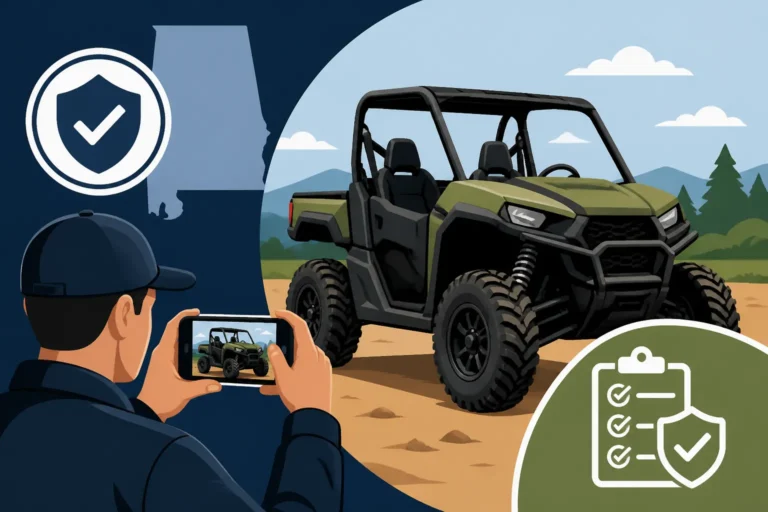
Beyond physical barriers, technology offers additional layers of protection. GPS tracking devices, often hidden discreetly, can lead law enforcement directly to your machine if it's stolen. Additionally, consider VIN etching on various parts of your machine; this makes it harder for thieves to strip and sell parts without the etched VINs giving away the machine's identity. Most importantly, keep meticulous records. Take clear, well-lit photographs of your ATV or UTV from multiple angles, especially noting any unique features or modifications. Document the VIN, engine serial number, and any other identifying marks. Keep all your bills of sale, maintenance records, and any registration documents in a secure, separate location. You might even consider using a basic vehicle information document from a service like LawDepot to organize all these details. For guidance on recording serial numbers, see [Recording Serial Numbers at Home].
The Importance of Comprehensive Insurance Coverage
While prevention is crucial, sometimes, despite your best efforts, theft still occurs. This is where comprehensive insurance coverage becomes your safety net. Unlike liability insurance, which covers damages you might inflict on others, comprehensive coverage protects your machine from events outside of your control, including theft, vandalism, fire, and certain natural disasters. It's an investment that can spare you significant financial loss.
When choosing a policy, ensure that the VIN of your specific ATV or UTV is accurately listed on your insurance documents. This detail is critical for processing a claim. Discuss with your insurance agent the various types of coverage available and select a deductible that you're comfortable with. Even if Alabama does not legally require insurance for ATVs in all situations, it’s a non-negotiable layer of protection for your investment. For related information, check [Does Alabama Require Insurance on an ATV?].
What to Do If Your ATV/UTV Is Stolen or Subject to Repossession
Should the unthinkable happen and your ATV or UTV is stolen, time is of the essence. Report the theft to your local law enforcement agency immediately. Provide them with all the details: the VIN, make, model, year, color, any distinguishing features, and any photos you have. The sooner they have this information, the better their chances of recovery. Next, contact your insurance company to file a claim. Be prepared to provide them with the police report number and all your ownership documentation. This is where your diligent record-keeping pays off, especially if your machine is an older, untitled model. For guidance on recovery, refer to [Theft Recovery Without a Title].
If you find yourself facing repossession, the situation is different, but communication and understanding your rights are still paramount. Contact your lender as soon as you anticipate or experience financial difficulty. Many lenders prefer to work with borrowers to find solutions, such as deferring payments or restructuring the loan, rather than going through the repossession process. Understand the terms of your loan agreement, particularly regarding default and repossession clauses. If repossession becomes unavoidable, cooperating with the lender or their agent can sometimes prevent additional fees or more aggressive collection tactics. Always keep copies of all correspondence and documents related to your loan and any discussions with your lender.
| Feature | Titled Machines (Model Year 2026+) | Untitled Machines (Pre-2026 Model Year) |
|---|---|---|
| Proof of Ownership | Official state-issued title, definitive. | Bills of sale, registration, affidavits (can be less secure). |
| Theft Recovery | VIN flagged in ALVIN system, easier to trace and recover. | Relies heavily on owner's documents, harder to track centrally. |
| Fraud Risk | Lower risk due to centralized title record. | Higher risk of fraudulent paperwork or resale of stolen machines. |
| Lender Security | Lien recorded directly on title, public record. | Relies on security agreements, UCC filings (less transparent than title). |
| Repossession | More straightforward, clear legal basis via title lien. | Can be more complex, proving lender's right may require more effort. |
| Insurance Claims | Streamlined process with clear title proof. | May require more documentation to prove ownership. |
| Resale Legitimacy | Clear title ensures legitimate transfer. | Buyer diligence critical to avoid purchasing stolen/encumbered machine. |
Disclaimer
This article is for general informational purposes only and does not constitute professional advice. Laws, prices and regulations vary by location and change over time. Consult a qualified professional for guidance on your specific situation.