Alabama’s 2024 Titling Law
The world of ATV and UTV ownership in Alabama just got a little more complex, especially when it comes to official paperwork. For years, many of us have just ridden our machines, perhaps registered them for public land use, and never really thought about a title. Now, with new laws on the horizon, a lot of folks are scratching their heads, wondering what exactly they need to do. This comprehensive guide is here to cut through the confusion and explain Alabama's 2024 titling law, helping you understand what it means for your off-road machine and what steps you might need to take.
Understanding Alabama's New Titling Law for Off-Road Vehicles
Let's be honest, dealing with government paperwork for anything can feel like navigating a swamp in flip-flops – confusing, messy, and prone to getting stuck. The State of Alabama has historically treated off-road vehicles like ATVs and UTVs differently than cars and trucks when it comes to ownership records. For many years, you just didn't get a title for an ATV in Alabama, which felt pretty normal to us long-time riders. But that's changing, and it's important for every owner, new or old, to understand why and how.
The new titling law represents a significant shift in how Alabama recognizes ownership of these machines. It’s designed to bring more clarity, help combat theft, and streamline processes that were often murky under the old system. While change can be a bit daunting, especially when it involves new hoops to jump through, ultimately, having a clear record of ownership can save you a lot of headaches down the line. It's about bringing off-road vehicles into a more standardized system, similar to how cars are handled.
The January 2026 Rollout: Why This Date Is Critical
The most crucial date to circle on your calendar, if you're thinking about buying a new machine or are just curious about the future of ATV ownership, is January 1, 2026. This isn't just an arbitrary date; it's the official start line for when titling becomes mandatory for certain off-road vehicles in Alabama. Until then, you won't be able to title an ATV or UTV in Alabama, no matter how new it is or how much you want a title. The state needs time to set up the systems, get the county offices ready, and prepare for this significant change.
This phased approach means there's a window for everyone to get up to speed. It also means that if you buy a brand-new machine tomorrow, you won't be walking out of the dealership with a title in hand – at least not yet. The focus is squarely on machines designated with a model year of 2026 or newer. This distinction is absolutely critical because it forms the backbone of who needs to title their machine and who doesn't. You can learn more about this specific requirement in [Alabama ATV Titling Starts With Model Year 2026].
Alabama Splits Titling and Registration Between Agencies
One of the more frustrating aspects of vehicle paperwork in Alabama has always been navigating which agency handles what. It's rarely a one-stop shop, and the new ATV titling law is no different. You might be used to dealing with the Alabama Law Enforcement Agency (ALEA) for your voluntary ATV registration if you ride on public lands. They're the folks who give you that little decal for your fender.
However, when it comes to titling, that's a whole different ballgame. The responsibility for issuing titles will fall primarily to the county probate offices or license commissioners, similar to how vehicle titles are handled. This means you'll be interacting with different government entities depending on whether you're titling your machine or simply registering it. It's a system that, while perhaps not ideal for convenience, is consistent with other vehicle laws in the state. [Alabama Splits Titling and Registration Between Agencies] delves deeper into this dual agency structure.
Which Machines Are Affected by the New Law
This is where many owners get tripped up, understandably so. The Alabama titling law isn't a blanket rule for every single ATV and UTV in the state. Instead, it draws a very specific line in the sand based on the machine's model year. This distinction is crucial for determining if your machine requires a title or if you're exempt from the new regulations. It's all about ensuring the state can gradually bring these vehicles into the titling system without retroactively burdening every existing owner.
The intent behind this model year cutoff is to implement the new law moving forward, affecting new purchases and newly manufactured machines, rather than forcing every long-time owner to jump through brand-new hoops. This approach tries to balance the need for clearer ownership records with minimizing disruption for the hundreds of thousands of Alabamians who already own and enjoy their off-road vehicles. Understanding where your machine falls in this timeline is the first step to knowing what, if anything, you need to do.
A Model Year 2026 Machine
If you're eyeing a brand-new ATV or UTV with a model year of 2026 or later, then this new law applies directly to you. From January 1, 2026, any off-road vehicle designated by the manufacturer as a 2026 model year machine or newer will be subject to mandatory titling in Alabama. This means when you purchase such a machine, getting a title will become part of the standard buying process, just like buying a car or truck.
Dealers will play a significant role in facilitating this process for new machines. They will be responsible for submitting the necessary paperwork to ensure you receive your title. This is intended to make the transition as smooth as possible for consumers purchasing the newest models. So, if you're planning an upgrade or a first-time purchase in late 2025 or 2026, be prepared for this additional step in securing your ownership documentation. For a deeper dive into this, check out [A Model Year 2026 Machine].
How a Ten-Year Window Exempts Older Machines
Here’s some good news for many current owners: the law also includes a provision that exempts certain older machines from mandatory titling. Specifically, if your ATV or UTV is ten model years old or older at the time of purchase, it will generally be exempt from the titling requirement. This means if you buy a used 2015 model ATV in 2026, you likely won't need to title it under the new law. This is a common practice in vehicle titling laws to avoid the massive administrative burden and potential disputes that would arise from trying to title every single older machine in the state, many of which may have long-lost paperwork.
This ten-year window acts as a rolling exemption. For example, in 2026, machines model year 2016 and older would be exempt. In 2027, machines model year 2017 and older would be exempt, and so on. This clause is a huge relief for anyone who owns an older quad or side-by-side that they bought years ago without any formal title. It acknowledges the existing reality for many off-road vehicle owners in Alabama and avoids retroactively imposing a new requirement on them. You can read more about this in [How a Ten-Year Window Exempts Older Machines].
Why Pre-2026 Owners Do Nothing
If you currently own an ATV or UTV with a model year of 2025 or older, and you purchased it before January 1, 2026, the new titling law essentially requires you to do nothing in terms of titling. Your machine will not need to be titled, nor will you be able to apply for a title for it once the law goes into effect. This means the hundreds of thousands of machines already out there, enjoying the trails and fields of Alabama, will continue to be owned under the previous system, which often relied on a bill of sale or other proof of purchase.
This provision prevents a massive statewide scramble to title older machines, many of which might not have readily available manufacturer statements of origin or other required titling documents. It's designed to implement the new system going forward, rather than trying to fix the past. So, if you've got a trusty old quad from 2010 or even a 2025 model you just bought, breathe easy: the new titling requirement generally doesn't apply to your existing machine. The post [Why Pre-2026 Owners Do Nothing] offers further explanation.
The Titling Process for New Machines
For those of you eagerly awaiting a shiny new 2026 model year ATV or UTV, understanding the titling process will be crucial. It's going to feel very similar to buying a new car or truck, with paperwork that needs to be properly completed and submitted. While it adds a step that wasn't there before, it also provides a clear, official record of ownership that many owners have actually wanted for years. This new process aims to make the transfer of ownership more transparent and secure right from the start.
The key players in this process will typically be the dealership where you purchase your machine and your local county office. Getting familiar with the documents involved, such as the Manufacturer's Statement of Origin (MSO) and a Purchaser's Certificate, will empower you to ensure everything is handled correctly. It’s always a good idea to ask questions at the dealership and understand each piece of paper you're signing.
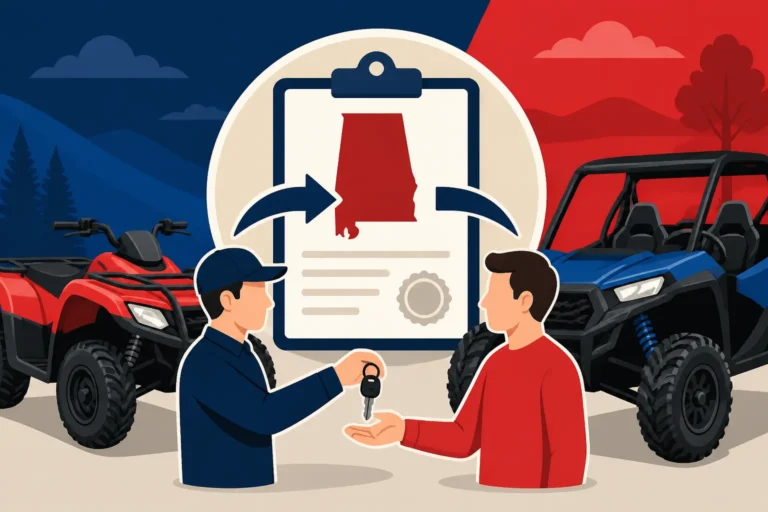
Letting the Dealer File Your Title Application
For most people buying a new 2026 model year ATV or UTV, the easiest and most common route will be to let the dealership handle the title application process for you. This is standard practice for car and truck sales, and it will likely become the norm for new off-road vehicles as well. When you purchase your machine, the dealer will collect all the necessary information and documents, including the Manufacturer's Statement of Origin (MSO) which essentially acts as the "birth certificate" for your new ATV or UTV. They will then submit this paperwork, along with your title application and fees, to the appropriate county office or through the state's ALVIN system.
This service, while often including a small fee, saves you the time and hassle of navigating government offices yourself. Dealers are experienced with these processes, so they can ensure everything is filled out correctly, reducing the chances of errors or delays. Always confirm with your dealer what fees are associated with this service and when you can expect your title to arrive in the mail. For more on this convenient option, see [Letting the Dealer File Your Title Application].
Alabama Title Applications at a County Office
While letting the dealer handle it is often the path of least resistance, you do have the option to file your title application directly with your county's probate office or license commissioner. This might be necessary if you bought a new machine out of state and are bringing it into Alabama, or if for some reason the dealer doesn't offer to file it for you. This route requires you to gather all the necessary documents yourself, including the MSO from the manufacturer, a properly completed application form, and proof of purchase.
Be prepared for a potential wait and ensure you have all your ducks in a row before heading to the county office. You’ll need to pay the applicable title fees and any county processing charges at that time. It's always a good idea to call ahead to your specific county office to confirm their exact requirements, accepted payment methods, and operating hours for title applications. This DIY approach means you're responsible for the accuracy of your submission. [Alabama Title Applications at a County Office] provides more details.
What a Purchaser's Certificate Does in Alabama
When you buy a new off-road vehicle from a dealer, especially one that will be titled, you'll likely receive a Purchaser's Certificate. This isn't the title itself, but it serves as important proof that you legally purchased the machine and initiated the titling process. Think of it as a temporary placeholder, confirming your ownership rights while the official title is being processed by the state. It essentially bridges the gap between your purchase and the receipt of your formal title.
The Purchaser's Certificate typically includes details about the buyer, the seller (dealer), the machine's Vehicle Identification Number (VIN), and the date of purchase. It's a critical document to keep safe, as it verifies your ownership during the interim period. In some cases, it might be required if you need to register the machine for public use before your title arrives. For example, if you wanted to get your [Alabama Public Use ATV Registration Explained] right away, this document could be essential. It’s your official acknowledgment that the titling ball is rolling.
Dealing with Older, Untitled Machines
This section is where a lot of current ATV and UTV owners will find themselves. For years, we've bought and sold these machines with just a bill of sale, or sometimes even less formal documentation. The new titling law doesn't change the status of these older, untitled machines, which can lead to its own set of challenges, particularly when it comes to proving ownership, insuring, or eventually selling them. It’s a common frustration that while new machines get a clear path, older ones remain in a kind of documentary limbo.
The lack of a formal title can complicate matters if disputes arise, if the machine is stolen, or if you simply need solid proof of ownership for a loan or insurance. While the state won't be issuing titles for these machines, there are still practical steps you can take to solidify your ownership record. Understanding these limitations and proactive measures is key to protecting your investment, even without a state-issued title.
Why Older Alabama ATVs Cannot Be Titled
It's a common question, and a source of frustration for many: why can't I just get a title for my 2018 quad, even if I want one? The answer lies in the specific wording and intent of Alabama's new law. The titling requirement is prospective, meaning it looks forward from January 1, 2026, for machines model year 2026 and newer, and also includes that ten-year rolling exemption. This means that if your machine falls outside of these parameters – essentially, if it's a pre-2026 model year – the state simply won't issue a title for it.
The reasons behind this are largely practical and administrative. Retroactively titling every ATV and UTV in Alabama would be an immense undertaking. Many older machines lack the original Manufacturer's Statement of Origin (MSO) or other verifiable documentation that would be necessary for a title. Trying to establish a chain of ownership for machines that have changed hands multiple times with just a handwritten bill of sale, or sometimes no paperwork at all, would be incredibly difficult and prone to fraud. The state has decided to avoid this quagmire and focus on the future. [Why Older Alabama ATVs Cannot Be Titled] explores this in more detail.
Proving Ownership of a Quad Bought at a Farm Sale
The scenario is all too common: you bought a great utility quad at a farm auction or a private sale years ago, paid cash, got a simple handwritten bill of sale – or maybe nothing at all beyond the handshake. Now, with talks of titles, you're wondering how to prove that machine is legitimately yours, especially since you can't get a state title for it. It's a valid concern, and while you won't get an official title, you still need robust proof of ownership for your own protection.
To protect yourself, make sure any bill of sale includes the full names and addresses of both buyer and seller, the date of sale, the purchase price, and most importantly, the complete Vehicle Identification Number (VIN) of the ATV or UTV. If you didn't get a formal bill of sale, consider creating one now and having the seller sign it if possible, even a simple one. If you can't, keep any other evidence of ownership like cancelled checks, bank statements, or even photos with the machine from the time of purchase. Resources like LawDepot can offer customizable bill of sale templates that help ensure all critical information is included, even for older, untitled machines changing hands. This might be your best bet if you ever face a challenge to your ownership or need to file an insurance claim. You can also read [Proving Ownership of a Quad Bought at a Farm Sale] for additional tips.
Titling a Quad Passed Down Through the Family
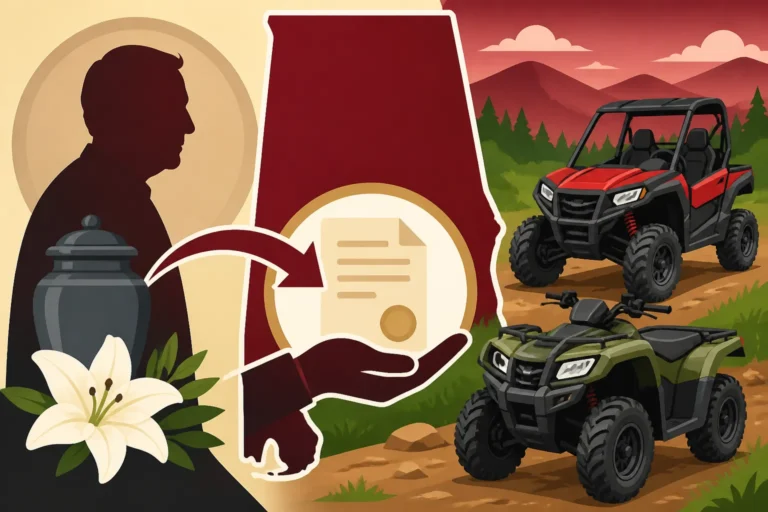
Family heirlooms, including ATVs and UTVs, are often passed down through generations without much formal paperwork changing hands. It’s a beautiful tradition, but it can create challenges when it comes to proving legal ownership, especially if the original owner is no longer around. Since you can't title an older machine in Alabama, you still need to ensure you have a solid paper trail to avoid future headaches.
If the machine's model year is 2025 or older, you won't be able to apply for a title. Instead, focus on creating clear documentation of the transfer within the family. A notarized statement from the original owner (if alive) gifting or selling the machine to you, along with the machine's VIN, is incredibly valuable. If the owner has passed away, copies of wills, probate documents, or even affidavits from other family members can help establish the chain of ownership. Always make sure you have the VIN recorded for your records. This kind of diligent record-keeping, even without a formal title, can be crucial for insurance purposes or if you ever decide to sell the machine. For insights into this topic, refer to [Titling a Quad Passed Down Through the Family].
Why Titling Matters: Beyond Just Compliance
While the new titling law might seem like just another piece of red tape, there are very real, tangible benefits to having a formal title for your ATV or UTV. It goes beyond simply complying with state regulations; a title provides a layer of legal protection and clarity that has often been missing for off-road vehicle owners in Alabama. Without clear ownership, you might encounter difficulties in situations you hadn't even considered.
A title is the ultimate proof of legal ownership. It’s a document backed by the state, officially recording who owns what. This becomes incredibly important in scenarios like theft, financial transactions, or when you decide to transfer ownership. It simplifies processes that could otherwise become incredibly complex and stressful, saving you time, money, and emotional energy in the long run.
Theft Recovery Without a Title
Imagine the worst-case scenario: your beloved ATV is stolen from your barn or hunting camp. Without a title, proving to law enforcement and your insurance company that the machine truly belongs to you can be incredibly difficult. While you might have a bill of sale, it's not always as universally recognized or easily verified as a state-issued title. This ambiguity can slow down recovery efforts and complicate insurance claims.
With a title, your ownership is unequivocally documented in the state's system. When a stolen machine with a title is recovered, law enforcement can quickly identify the rightful owner through the VIN, speeding up the process of getting your machine back. It also strengthens your claim with your insurance provider, as there's no doubt about who held ownership at the time of the theft. This protection against theft is one of the most compelling reasons for the new titling law. [Theft Recovery Without a Title] explores this issue.
Repossession and Why Titles Matter
For those who finance their ATV or UTV purchases, a title plays an absolutely critical role for both the owner and the lender. When you take out a loan for a titled vehicle, the lender typically records a lien on the title. This lien serves as the lender's legal claim to the machine until the loan is fully paid off. It's how they secure their investment and protect themselves in case the borrower defaults on payments.
Should a repossession become necessary due to non-payment, the title with the recorded lien makes the process legally straightforward for the lender. For the owner, understanding that lien means knowing when you truly "own" the machine free and clear. Without a title, lenders are often hesitant to finance such assets, or they may offer less favorable terms due to the increased risk and difficulty in securing their interest. The presence of a title streamlines financing and collection processes for all parties involved. More on this topic can be found in [Repossession and Why Titles Matter].
Selling a Registered Machine in Alabama
Many Alabama ATV and UTV owners have registered their machines for public land use through ALEA's voluntary system. This registration provides a decal and an official record for use in certain areas, but it is not a title. When it comes time to sell a machine that is registered but not titled (which will be most older machines), you’ll transfer the registration, not a title. This distinction is important for both the buyer and the seller.
For machines model year 2025 and older, a bill of sale remains the primary document for transferring ownership. The registration itself can be transferred to the new owner, indicating they are now the recognized user for public land purposes, but it doesn't convey legal title. If you're selling a brand-new 2026 model year machine, however, the title will be transferred, much like a car. This provides a much clearer ownership transfer process for the buyer, giving them stronger legal proof of their purchase. Always ensure you provide a proper [Alabama Bill of Sale Requirements] with the VIN included, whether the machine is titled or just registered.
Common Questions and Misconceptions
Whenever a new law comes into play, especially one that changes long-standing practices, it's natural for confusion and questions to arise. The Alabama ATV titling law is no exception. Many owners have misconceptions about what a title means for their current registration, what documents they actually need, and whether older machines are simply left in the cold. It's crucial to clarify these points so you can navigate the new landscape with confidence.
These questions often stem from the distinct difference between titling and registration, a nuance that can be tricky to grasp. Understanding these differences and how the state defines "ownership records" versus "permission to operate" is key to making sense of the new regulations. Let's tackle some of these common points of confusion head-on.
Alabama Registration Is Voluntary
One of the biggest areas of confusion revolves around the difference between titling and registration. It's vital to understand that the voluntary registration program offered by ALEA for ATVs and UTVs (which has been around for a while) is completely separate from the new mandatory titling law. [Alabama Registration Is Voluntary] clarifies that you do not have to register your ATV or UTV in Alabama unless you plan to ride it on designated public lands.
This registration simply gives you permission to operate on those public lands and does not confer legal ownership in the way a title does. Many owners who ride exclusively on private property, like their own land or a hunting lease, choose not to register their machines at all, and that's perfectly fine under the law. The new titling law, however, is mandatory for applicable machines (model year 2026 and newer), regardless of where you plan to ride them. So, you could have a titled machine that is not registered, or an older registered machine that is not titled.
Why Alabama Issues an Ownership Record, Not a Plate
When you get your official title for a new 2026 model year ATV or UTV in Alabama, you won't be getting a license plate like you would for a car or truck. Instead, the title serves as the state's official record of ownership. The state's off-road vehicle statute does not make provisions for ATVs or UTVs to be street legal or to receive standard license plates. The title is purely an ownership document, not a permit to operate on public roads.
This distinction reinforces the fact that ATVs and UTVs are generally intended for off-road use. While Alabama does have rules regarding crossing public roads or limited farm use, the title doesn't change the fundamental classification of these machines as off-road vehicles. The goal of the titling law is to provide a clear, transferable record of who owns the machine, which helps with theft prevention and sales, rather than to facilitate their use on highways. You can find more information about this in [Why Alabama Issues an Ownership Record, Not a Plate].
Alabama Penalties for a Missing Title
For machines subject to the new titling law (model year 2026 and newer), failing to obtain a title could lead to various complications and potential penalties. While specific fines or enforcement actions are still being solidified as the law approaches its effective date, common issues for untitled vehicles in other categories include difficulties with resale, inability to register for certain uses, and potentially even impoundment in extreme cases if ownership cannot be proven during a stop by law enforcement.
The entire purpose of the titling law is to create a clear chain of ownership. If you purchase a new 2026 model year machine and fail to title it, you are effectively operating outside of the legal framework designed for these vehicles. This could make it incredibly challenging to prove you are the rightful owner if the machine is stolen, involved in an accident, or if you attempt to sell it to another party. It's always best to comply with the titling requirements for applicable machines to avoid future legal or financial headaches. You can also review [Alabama Penalties for a Missing Title] for relevant information.
Here's a quick look at the key differences between Titling and Registration in Alabama for off-road vehicles:
| Feature | Titling (New Law) | Registration (Voluntary) |
|---|---|---|
| Applies To | Machines Model Year 2026 and Newer | Any ATV/UTV for public land use |
| Mandatory? | Yes (for applicable machines) | No (voluntary) |
| Purpose | Legal proof of ownership, theft prevention, sales | Permission to ride on designated public lands |
| Issued By | County Probate Office / License Commissioner (ALVIN) | Alabama Law Enforcement Agency (ALEA) |
| Document | Official Title Certificate | Decal for machine and registration card |
| Exemptions | Machines 10 model years old or older | No specific model year exemptions |
| Affects | Ownership transfer, financing, legal proof | Public access, enforcement of public land rules |
| Cost | Varies by county (title fee + processing) | Flat fee for a three-year period |
Disclaimer
This article is for general informational purposes only and does not constitute professional advice. Laws, prices and regulations vary by location and change over time. Consult a qualified professional for guidance on your specific situation.