Alabama Serial Numbers on the Application
It's incredibly frustrating when you're trying to get your ATV or UTV officially recognized in Alabama, whether for voluntary registration or future titling, and you hit a snag with something as fundamental as the serial number. This tiny string of characters is more than just a label; it's the unique DNA of your machine, absolutely essential for any official paperwork. This guide will walk you through everything you need to know about locating, verifying, and correctly entering your ATV or UTV's serial number on applications, ensuring your journey through Alabama's off-road vehicle processes is as smooth as possible.
The Absolute Necessity of Serial Numbers for Alabama ATV/UTV Paperwork
When you're dealing with official state agencies, especially the Alabama Law Enforcement Agency (ALEA) for registration or county probate offices for future titles, the serial number of your ATV or UTV is the single most critical piece of identification. It's not just a nice-to-have; it's a non-negotiable requirement that forms the bedrock of proving ownership and legitimacy. Without it, you simply cannot complete the necessary steps to get your machine recognized.
Why Serial Numbers Are the Machine's Identity
Think of your ATV or UTV's serial number, often referred to as a Vehicle Identification Number (VIN), as its unique fingerprint. No two machines should ever have the same VIN. This complex string of alphanumeric characters carries encoded information about the manufacturer, the country of origin, the model year, the plant where it was built, and a unique production sequence number. It's how Alabama's systems, like [Alabama's ALVIN System and Off-Road Titles], differentiate your specific quad or side-by-side from every other one out there. When you're trying to register your machine for [Alabama Public Use ATV Registration Explained] or even just for [Alabama Private Use ATV Registration Explained], this number is what ties the paperwork directly to your physical vehicle.
The Legal Requirement for Identification
Alabama's statutes, like those governing off-road vehicle registration, specifically mandate the inclusion of the serial number on all applications. This isn't just bureaucratic red tape; it's a vital legal step to ensure proper identification and record-keeping. The state needs a concrete way to link the legal owner to a specific machine, and the serial number is the only universally accepted method. When you fill out forms like the Off-Highway Vehicle Registration Application, you'll see a dedicated spot for this number, often labeled as "Vehicle Identification Number (VIN)" or "Serial Number." It's imperative that the number you provide matches the one physically stamped on your machine, or you're going to encounter significant delays and complications.
Preventing Theft and Fraud
Beyond just identifying your machine for registration, the serial number plays a crucial role in preventing theft and combating fraud. When a machine is reported stolen, law enforcement agencies use the VIN to identify and recover it. Without a proper VIN on file, tracing a stolen ATV or UTV becomes an almost impossible task. Similarly, if someone tries to sell a machine that doesn't belong to them, the VIN is the first thing a savvy buyer or a diligent clerk will check. It's the primary way to verify legitimate ownership, especially when used in conjunction with a [Alabama Bill of Sale Requirements] or a [Alabama Purchaser's Certificate Requirements]. For the buyer, having the VIN recorded accurately on all purchase documents offers a layer of protection, proving that the machine they bought is indeed the one they intended to purchase.
Where to Find Your ATV or UTV Serial Number (VIN)
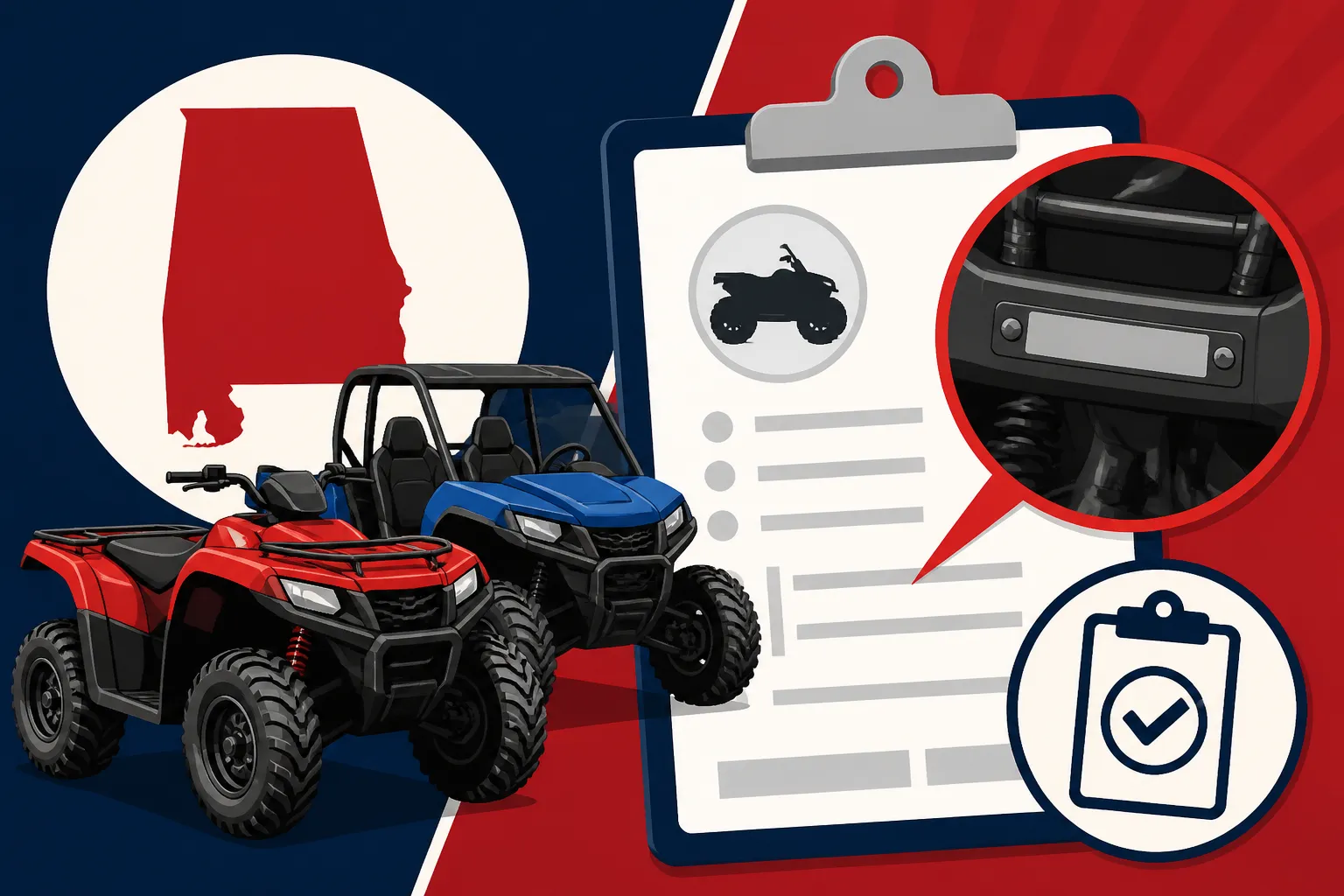
Before you can even begin to fill out any paperwork, you absolutely need to know where your ATV or UTV's serial number is located. While there are common places to look, it's important to remember that manufacturers can have slight variations. Getting down and dirty with your machine to find this number is a necessary first step, so grab a flashlight and perhaps a rag, as these areas can often accumulate dirt and grime.
Manufacturer-Specific Locations
For most ATVs, you'll typically find the serial number stamped on the frame itself. Common locations include:
- Front left frame rail: Often just behind the left front wheel, near the footpeg or where the A-arms attach to the frame.
- Steering head: Look around the base of the steering column, where it connects to the frame. You might need to turn the handlebars to get a good view.
- Engine casing: Sometimes, especially on older models, a shorter engine serial number might be present, but the primary VIN is almost always on the frame.
For UTVs (side-by-sides), the VIN is usually easier to locate and is also stamped on the frame. Common spots include:
- Driver's side frame rail: Often under the driver's seat or near the door opening.
- Under the hood/front cargo area: Some manufacturers place a VIN plate or sticker in an accessible location under the front storage compartment or hood.
- Firewall: Less common, but sometimes found on the metal firewall separating the engine from the passenger compartment.
Always consult your owner's manual if you're having trouble locating it; it usually has a diagram showing the exact spot. The serial number is usually a 17-character alphanumeric code for machines made in recent decades.
Decoding the VIN
While you don't typically need to decode the VIN for registration purposes in Alabama, understanding that it's more than just a random string of characters can be helpful. The 17-character VIN is a global standard (ISO 3779), and each position provides specific information. For instance:
- Characters 1-3 (World Manufacturer Identifier – WMI): Identifies the manufacturer, country, and type of vehicle. For example, "1" for the U.S., "J" for Japan.
- Characters 4-9 (Vehicle Descriptor Section – VDS): Describes the vehicle's attributes, like body type, engine code, model, and sometimes a check digit for authenticity.
- Characters 10-17 (Vehicle Identifier Section – VIS): The unique section of the VIN, identifying the model year (character 10), the manufacturing plant (character 11), and the unique sequential production number (characters 12-17).
Knowing this helps you verify that the VIN you're reading aligns with what you know about your machine, such as its model year. It’s also crucial if you ever need to track down [Alabama Stolen Machine Checks] or verify a machine's history before a purchase.
When the VIN is Obscured or Missing
This is where things can get tricky, and potentially very frustrating. Over years of riding through mud, dust, and brush, the frame where the VIN is stamped can get rusty, painted over, or simply caked with so much grime that it's nearly impossible to read. If your VIN is obscured, start by thoroughly cleaning the area with a wire brush and solvent if necessary. Take a clear photograph once it's clean enough to read.
If the VIN is truly missing, defaced, or appears altered, you have a serious problem. For machines being voluntarily registered with ALEA, a missing or unreadable VIN will likely lead to rejection of your application. For future titling, Alabama counties will require a verifiable VIN. You might need to contact the manufacturer to see if they can provide documentation based on other identifiers, or potentially even seek a law enforcement inspection. If you've bought a machine with a suspicious VIN, you might want to consult a legal document service like LawDepot for advice on how to proceed, as proving legitimate ownership for [Proving You Own an Untitled Machine] becomes incredibly difficult without this key identifier. This scenario can also raise red flags for [Theft Recovery Without a Title], making recovery nearly impossible.
Filling Out the Alabama Registration Application: Serial Number Details
Once you've located and confirmed your ATV or UTV's serial number, the next crucial step is accurately transferring it to the registration application. This might seem straightforward, but even a single transposed digit or character can lead to your application being rejected. Pay close attention to every detail during this phase.
Accurate Entry on the Form
The Alabama Off-Highway Vehicle Registration Application form will have a clearly designated field for the "Vehicle Identification Number (VIN)" or "Serial Number." It is absolutely vital that you transcribe this number character for character from your machine to the application. Double-check for common mistakes:
- Look-alike characters: The letter "O" versus the number "0," the letter "I" versus the number "1," or the letter "B" versus the number "8."
- Transposition: Swapping the order of two adjacent characters (e.g., 12345 becoming 12435).
- Omitting characters: Accidentally leaving out a character, or adding an extra one.
Take your time. Read the number off your machine, then read it on the form, then read it off your machine again. Have someone else verify it if possible. Accuracy here saves you immense headaches down the line, preventing the need to re-submit [Alabama Registration Paperwork Explained] and wait even longer.
Verification by the State
When you submit your application to ALEA, either directly or through a dealer (see [Alabama Dealers Filing Registration for You]), the serial number you provide is not just passively accepted. It's entered into a state database and often cross-referenced with other records. This verification process ensures that the machine isn't reported stolen, hasn't been improperly modified, and that the VIN itself appears legitimate. For future titling purposes starting in 2026, county probate offices will use the [Alabama's ALVIN System and Off-Road Titles] to process titles, which relies heavily on accurate VIN data to track ownership. This system will be much more rigorous in verifying serial numbers as it links directly to official ownership records.
What Happens if There's a Mismatch
A mismatch between the serial number on your application and the number found on your machine or in state records will inevitably lead to problems. At best, your application will be returned to you with a request for correction, delaying your registration significantly. At worst, if the discrepancy is severe or appears suspicious, it could trigger an investigation. For example, if the VIN you provide matches a stolen vehicle, even by accident, you could find yourself in a very uncomfortable situation trying to explain the error to law enforcement.
If your application is returned, carefully review the requested corrections. Often, it's a simple typo. Correct it precisely and resubmit. If you're unsure about the correct number, return to your machine and meticulously re-verify it. This reinforces the importance of [Recording Serial Numbers at Home] and keeping that information in a safe place, maybe even taking a picture of the stamped VIN for future reference.
| Document Type | Serial Number Requirement | Purpose |
|---|---|---|
| Registration Application | Mandatory | Uniquely identifies machine for state records, prevents fraud. |
| Bill of Sale | Highly Recommended | Proves specific machine was sold, protects buyer/seller. |
| Purchaser's Certificate | Mandatory | Links buyer to specific machine, establishes interim ownership. |
| Title Application (from 2026) | Mandatory | Foundation of official ownership record, used for liens/transfers. |
| Insurance Policy | Highly Recommended | Identifies specific machine for coverage, aids in theft recovery. |
| Repair/Service Records | Highly Recommended | Tracks maintenance history for specific machine, helps with recalls. |
Common Serial Number Issues and How to Avoid Them
Even with the best intentions, problems can arise when dealing with serial numbers. Anticipating these issues and knowing how to mitigate them can save you a lot of grief. From simple human errors to the challenges of older machines, understanding the pitfalls is key to a smooth process.
Typos and Transposition Errors
This is perhaps the most common issue. In a hurry, or simply due to a momentary lapse in concentration, it's easy to mistype a number or swap two characters. Imagine you're writing down "ABC123DEF4567890" and accidentally write "ABC132DEF4567890." To the state's system, these are two entirely different machines. When filling out your [Alabama Registration Paperwork Explained], always use a printed form if available, or write clearly and legibly if handwritten. After writing it, step away for a few minutes, then come back and re-read it, comparing it character by character with the actual VIN on your machine. Better yet, have a friend or family member double-check your work. This simple step can prevent the frustration of receiving a rejected application due to a preventable error.
Damaged or Unreadable Numbers
Time and the elements are not kind to vehicle identification numbers. Rust, corrosion, dings, dents, or even thick layers of paint can obscure parts of the stamped VIN, making it impossible to read. If you're struggling to read the number, start with a thorough cleaning. Use a stiff brush, rust remover, or paint stripper cautiously. Sometimes rubbing chalk or a crayon over the numbers can make the indentations stand out better.
If, after all efforts, parts of the VIN remain unreadable, you have a more significant challenge. For a machine that will be subject to [Alabama Title Applications From January 2026], this could pose a serious hurdle. You might need to involve a local law enforcement officer to visually inspect the machine and verify the partial VIN, or even contact the manufacturer for a VIN verification letter if you have other proof of purchase. This is a rare but difficult situation, and having strong supplementary documentation (like a detailed [Alabama Bill of Sale Requirements]) is crucial for proving ownership.
Machines Without a Clear VIN (Homemade, Very Old)
Some machines, particularly very old ATVs or those that are custom-built or significantly modified, might not have a standard 17-character VIN, or any easily identifiable serial number at all. For machines produced before the VIN standard became universal, they might have shorter serial numbers or only engine numbers. If you're in this unique situation, you'll need to approach the registration process with extra documentation. You might need to provide extensive [Proving You Own an Untitled Machine], such as historical sales receipts, sworn affidavits, or even photographs of the machine's construction if it's homemade.
Alabama's titling law generally applies to machines model year 2026 and newer, and some older machines might be exempt from titling requirements entirely (see [Why Older Alabama ATVs Cannot Be Titled] and [Alabama Machines Over Ten Model Years Exempt]). However, even for voluntary registration, ALEA needs some unique identifier. In such cases, contact ALEA directly or your county probate office for guidance. They may have specific procedures for assigning an identification number or accepting alternative proof of identity for these unique situations. Using resources like LawDepot to create comprehensive ownership affidavits might be a helpful step in compiling your documentation.
The Role of Serial Numbers in Alabama Titling (Post-2026 Perspective)
While current ATV and UTV registration in Alabama is voluntary through ALEA, a significant change is coming: mandatory titling for model year 2026 and newer machines. This shift elevates the importance of the serial number from merely an identifier for voluntary registration to the absolute cornerstone of legal ownership. Understanding this future framework is crucial for anyone planning to buy a new machine or who already owns a newer model.
The Titling Application and VIN Verification
Starting with model year 2026, when you purchase a new ATV or UTV in Alabama, you will be required to apply for a title through your county probate office. The [Alabama Title Applications From January 2026] will demand the precise serial number (VIN) of your machine. This isn't a mere suggestion; it's the fundamental piece of data that will allow the state to create an official, legally recognized record of ownership for your specific vehicle. The titling system, which will likely leverage [Alabama's ALVIN System and Off-Road Titles], will conduct rigorous VIN verification. This means comparing the number on your application to manufacturer databases, state records, and potentially even federal registries to ensure its authenticity and to flag any inconsistencies or machines that have been reported stolen.
Linking Ownership to the Unique Identifier
The title itself will be a legal document that unequivocally links you, the owner, to your unique ATV or UTV via its serial number. This is far more robust than the current voluntary registration system. Every time the machine changes hands, the title will be transferred, and the new owner's name will be recorded, always tied back to that specific serial number. This creates a clear chain of custody, making it easier to track the machine's history and preventing disputes over ownership. It’s also important for future financing, as lenders will require a title with the VIN to secure their interest. For example, if you're seeking a loan, a bank will want to see that clear title, proving you truly own the asset you're financing.
Impact on Transfers and Liens
The titling process, driven by the serial number, will significantly streamline transfers of ownership and the recording of liens. When you sell a titled machine, you will endorse the title over to the new owner, much like a car title. This transfer, again, relies entirely on the accurate serial number to ensure the correct machine is changing hands. If you finance your ATV or UTV, the lender will have their lien recorded directly on the title, protecting their interest. This provides a much clearer legal framework for both buyers and sellers, making transactions more secure.
Consider a scenario where you're selling your 2026 side-by-side. The buyer will expect a clean title with the VIN clearly printed on it, matching the machine. Without it, or with an incorrect VIN, the sale could fall through, or you might find yourself in a legal quagmire. Similarly, if you were [Financing a Titled Machine], the bank would hold the title until the loan is paid off, their lien inextricably linked to that specific serial number. If the machine were ever [Repossession and Why Titles Matter], the title provides the legal framework for the lender to take possession of the correct asset.
Beyond Registration: Why Your Serial Number is Always Important
Even after you've successfully registered your ATV or UTV, and even beyond the upcoming titling requirements, your machine's serial number remains a vital piece of information throughout its entire lifespan. It's not just for government paperwork; it plays a critical role in protection, maintenance, and future transactions.
Insurance and Warranty Claims
When you purchase insurance for your ATV or UTV, whether it's liability, comprehensive, or theft coverage, your policy will specifically list your machine's serial number. This is how the insurance company identifies the exact vehicle they are covering. If you ever need to file a claim — whether it's for damage from a rollover, theft from your garage, or a fire — the first thing your insurance company will verify is that the serial number on your claim matches the one on your policy. Without an accurate VIN on your policy, your claim could be denied or significantly delayed. [Insuring a Machine With No Title] becomes much more challenging and relies even more heavily on that precise serial number. Similarly, if your machine is still under warranty, the manufacturer will use the VIN to confirm its warranty status and eligibility for repairs, distinguishing it from other similar models.
Tracking Recalls and Service History
Manufacturers use VINs to track specific production batches. If there's ever a safety recall for a particular model, the VIN allows them to identify exactly which machines are affected. By having your VIN accurately recorded, you ensure you'll receive important recall notices that could prevent a serious accident or costly repair. Furthermore, if you take your ATV or UTV to a dealership or certified service center, they will almost always record the VIN on your service order. This creates a detailed service history tied directly to your machine. This history can be invaluable when troubleshooting future issues, demonstrating regular maintenance, or even for verifying [Recording Serial Numbers at Home] for your own records.
Resale Value and Proof of Ownership
When it comes time to sell your ATV or UTV, the serial number is paramount. A buyer will want to verify that the machine they are purchasing is the legitimate machine described by the seller. They will check the VIN on the machine itself against the VIN on the bill of sale and, if applicable after 2026, the title. A clean, legible, and verifiable VIN significantly enhances the resale value of your machine and makes the transaction smoother. If the VIN is missing, obscured, or doesn't match the documentation, it immediately raises red flags for potential buyers, suggesting possible theft or questionable ownership. This often leads to a lower selling price or makes the machine incredibly difficult to sell. A prospective buyer might even use services like LawDepot to draft a robust [Alabama Bill of Sale Requirements] that specifically includes the VIN, protecting both parties in the transaction.
Ultimately, keeping track of your ATV or UTV's serial number, ensuring its accuracy on all documents, and understanding its pervasive importance across all aspects of ownership in Alabama will save you time, money, and stress throughout your machine's life.
Disclaimer
This article is for general informational purposes only and does not constitute professional advice. Laws, prices and regulations vary by location and change over time. Consult a qualified professional for guidance on your specific situation.