Alabama’s ATV and ROV Legal Definitions
Trying to figure out the exact legal definition of your all-terrain vehicle (ATV) or recreational off-highway vehicle (ROV), often called a side-by-side, in Alabama can feel like you're trying to hit a moving target. It’s a frustrating maze of statutes, regulations, and sometimes even conflicting information that leaves many riders scratching their heads, wondering if their beloved machine even qualifies for registration or if they're breaking some obscure rule. This guide is here to untangle that knot, breaking down the specific legal definitions Alabama uses for these machines and explaining why understanding them is so crucial for every owner.
The Frustration of Ambiguous Definitions
It’s easy to feel lost when diving into legal documents, especially when the language seems designed to confuse rather than clarify. For ATV and ROV owners in Alabama, this feeling is all too common. You’ve invested good money into your machine, whether it’s for thrilling trail rides, essential farm work, or just enjoying the great outdoors, and the last thing you want is to accidentally run afoul of the law because you misunderstood a technicality.
Why Clear Definitions Matter to Riders
Imagine planning a weekend trip to a new riding park, only to find out at the gate that your machine doesn't meet their specific definition of an "ATV" and isn't allowed on certain trails. Or perhaps you're trying to register your side-by-side for the first time, only to be told by a clerk that it falls into a different category than you expected, requiring different paperwork or fees. These aren't hypothetical scenarios; they're everyday frustrations born from unclear or misunderstood legal definitions. For us riders, these definitions aren't just legal mumbo jumbo; they dictate everything from where we can ride, to how we register, to whether we even need a title. It impacts your peace of mind and the enjoyment of your machine.
The Real-World Impact of Legal Jargon
The legal definitions aren't just for bureaucrats; they have very real, tangible effects on your life as an owner. For instance, whether your machine is legally classified as an ATV or an ROV can change the requirements for [Alabama ATV Width and Weight Limits] or [Alabama ROV Width and Weight Limits], which in turn determines where you can legally operate it. It can also influence insurance policies, how you navigate the new titling laws, and even whether you need specific safety equipment. Think about it: if the state considers your four-wheeler a "private use ATV" versus a "public use ATV," that immediately impacts whether you can legally ride it on designated public trails, even if you own a valid registration. It's not about being a stickler for rules; it's about protecting yourself from fines, impoundment, or even more serious legal trouble.
Where the Confusion Often Begins
Part of the confusion stems from the fact that popular usage often differs from legal definitions. We might call all small, off-road vehicles "four-wheelers" or "quads," but the law often distinguishes between an ATV, an ROV (side-by-side), a dirt bike, and even a golf cart. Sometimes, different state agencies or even different sections of the same statute might present slightly varied descriptions, creating an information gap that leaves owners feeling unsure. This is particularly true in Alabama, where titling and registration are handled by separate agencies, each with its own interpretation or focus. It's a classic example of how well-intentioned regulations can become a tangle for the everyday person just trying to follow the rules.
Understanding Alabama's ATV Definition
Let's start with the classic ATV, the machine many of us grew up calling a quad or a four-wheeler. Alabama's legal definition aims to clearly differentiate these machines from other off-road vehicles. This isn't just a technicality; it’s the foundation for how these vehicles are regulated across the state.
The Core Characteristics of an ATV
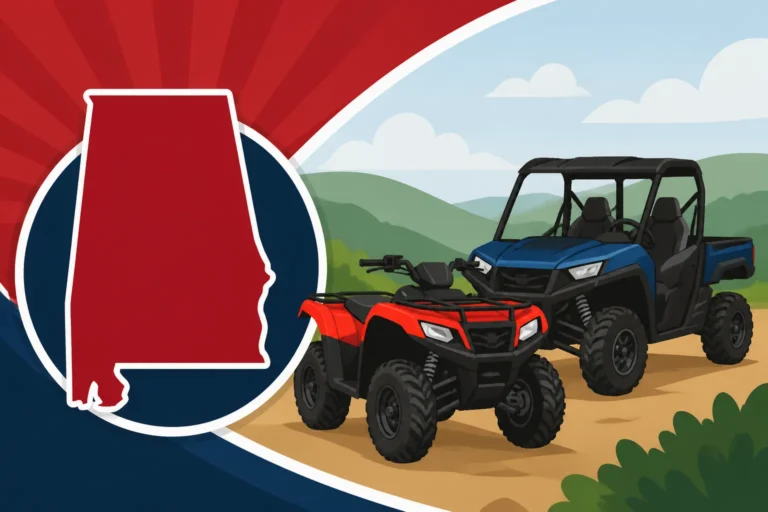
In Alabama, an "all-terrain vehicle" (ATV) is generally defined by several key characteristics that distinguish it from other types of vehicles. Primarily, an ATV is a motor vehicle designed to travel on four low-pressure tires. This tire characteristic is important because it speaks to the machine's intended use off paved roads. It's also designed for use by a single operator, though some larger models might have a designated passenger seat. This focus on a single operator is a major differentiating factor when compared to side-by-sides. You won't find a steering wheel in the traditional sense; instead, ATVs are typically steered by handlebars, much like a motorcycle. These elements together paint a clear picture of the kind of vehicle the statute is referencing.
Key Specifications: Width and Weight Limits
Beyond the general characteristics, Alabama's definition of an ATV includes specific dimensions that are crucial for classification. The law specifies that an ATV must be 60 inches or less in width. This measurement is taken from the widest point of the vehicle, not just the tires. It's a critical dimension, as exceeding it often pushes a machine into the ROV category or beyond, with different rules applying. Additionally, an ATV must have a dry weight (meaning without fuel or fluids) of 1,500 pounds or less. This weight limit helps distinguish lighter, more agile ATVs from heavier, utility-focused ROVs. Many riders find these numbers a little abstract until they measure their own machine, realizing how close some of the larger utility quads can come to these limits. These limits are not arbitrary; they help define the machine's impact on trails and its handling characteristics.
Non-Highway Tires and Seating Capacity
Another defining feature of an Alabama ATV is its tires. The definition explicitly states that an ATV is equipped with "non-highway tires." This is a critical detail that immediately disqualifies any vehicle designed or modified for street use from being classified as an ATV for legal purposes. These tires are typically knobby and designed for maximum traction on loose surfaces like dirt, gravel, or mud, not for the smooth, high-speed demands of asphalt. As mentioned, most ATVs are designed for a single operator, sometimes with an additional passenger if the machine is specifically manufactured for it. Carrying more passengers than the manufacturer intended, or on a single-seat model, can be a safety hazard and a legal issue. Understanding these details helps owners ensure they're operating their vehicle within legal bounds, whether on private land or designated public trails.
Diving into Alabama's ROV (Side-by-Side) Definition
If ATVs are the solo adventurers, ROVs – or side-by-sides as most people call them – are built for company and often more rugged utility. Alabama's legal definition of an ROV, sometimes referred to in statutes as an "off-highway vehicle" or "OHV," distinguishes these machines clearly from their ATV cousins, primarily due to their design for multiple occupants and more car-like controls.
Distinguishing an ROV from an ATV
The most immediate distinction between an ROV and an ATV is how you sit and steer. An ROV typically features a steering wheel, much like a car, and non-straddle seating, where the operator and passengers sit side-by-side on bench or bucket seats. This is a stark contrast to the saddle-style seat and handlebars of an ATV. ROVs also come equipped with seat belts and often have a roll-over protective structure (ROPS) or a full cab, emphasizing passenger safety and protection. They are designed for multiple occupants, making them popular for families, hunting parties, or work crews. While both are designed for off-road use, the ROV's design leans more towards stability, cargo capacity, and passenger comfort, leading to a different set of rules and expectations.
The Weight and Width Nuances for ROVs
Just like ATVs, ROVs have specific dimensional requirements in Alabama. The width limit for an ROV is generally 80 inches or less. This wider allowance accommodates their multi-seat design and greater stability. However, this is one area where riders often encounter confusion, as the law might have slightly [Alabama's Conflicting ROV Weight Figures] across different sections, leading to questions about the exact maximum. For weight, an ROV typically has a dry weight exceeding the ATV limit of 1,500 pounds, often reaching up to 3,500 pounds or more. This higher weight capacity reflects their larger engine sizes, heavier frames, and ability to carry more cargo or passengers. These specifications are crucial not just for legal classification but also for trail access, as some trails may have width restrictions that even an ROV could exceed.
Steering Wheels, Seat Belts, and Passenger Capacity
The presence of a steering wheel and seat belts are fundamental to an ROV's definition. These features underscore its design as a multi-passenger vehicle where safety harnesses are an expectation, not an option. Unlike an ATV where a passenger might just hold on, ROV passengers are typically secured in place. The seating capacity of an ROV varies greatly, from two-seaters to four-seaters and even six-seaters. The law expects owners to adhere to the manufacturer's intended seating capacity, meaning you shouldn't try to cram more people into an ROV than it was designed to safely carry. Understanding these defining features is vital for any ROV owner, as it directly impacts how their machine is regulated, especially when considering [Alabama Public Use Versus Private Use] registration tiers. These distinctions are not just about what a machine looks like, but how it's engineered for safe operation and how the state intends for it to be used.
The Tricky Case of Overlap and Exclusions
The lines between different vehicle types can blur, creating headaches for owners trying to stay compliant. Alabama's off-road vehicle statutes aim to cover a broad range of machines, but they also carve out important exceptions and address areas where definitions might seem to overlap or even contradict.
When Two Official Pages Define an ATV Differently
It's a common frustration: you search for information on an official state website, perhaps the Department of Revenue or the Alabama Law Enforcement Agency (ALEA), and find slightly different wording or specifications for what constitutes an ATV or ROV. This isn't necessarily a mistake, but rather a reflection of different agencies focusing on distinct aspects of the law. For example, one agency might emphasize the physical characteristics for registration purposes, while another might focus on operational aspects for safety enforcement. This can lead to confusion, leaving owners wondering which definition takes precedence. This is why we often highlight [When Two Official Pages Define an ATV Differently], because encountering these discrepancies firsthand can be incredibly confusing and make you second-guess everything you thought you knew. Always try to cross-reference information and, if in doubt, contact the specific agency handling your immediate concern (e.g., ALEA for registration, your county probate office for titling, or local law enforcement for riding rules).
Machines Specifically Excluded from ATV/ROV Status
The Alabama off-road vehicle chapter specifically excludes certain types of machines that, while they might look like off-road vehicles or be used off-road, are not classified as ATVs or ROVs under the relevant statutes. These exclusions are important because they mean different laws and regulations apply to them, often with less stringent requirements for titling or registration. For instance, the statute makes it clear that "special mobile equipment" and "farm equipment" are typically excluded. This is a huge relief for farmers who rely on their utility vehicles for daily chores, as it means their work machines generally don't fall under the same registration mandates as a recreational quad. We go into more detail on this in [Alabama Excludes Farm Equipment], explaining why your tractor or combine attachment isn't lumped in with your weekend trail rider.
Why a Golf Cart Is Not an ATV in Alabama
This is perhaps one of the most common areas of confusion, especially in communities where golf carts are prevalent for local travel. Despite their often-similar appearance to small ROVs and their capability to travel off paved surfaces, golf carts are explicitly not considered ATVs or ROVs under Alabama law. The statute typically defines a golf cart as a motor vehicle designed and manufactured for operation on a golf course for sporting purposes. They have specific speed limitations (often capped around 20-25 mph) and are built to different safety and performance standards than true off-road vehicles. This distinction is critical because it means that laws governing ATV registration, titling, and public land use generally do not apply to golf carts. Instead, golf carts often fall under their own set of local ordinances, particularly when it comes to operating them on public roads in certain towns. This is a topic we delve into specifically in [Why a Golf Cart Is Not an ATV in Alabama], because the differing rules can trip up many owners.
The Importance of Definitions for Titling and Registration
Understanding these legal definitions isn't just an academic exercise; it directly impacts whether and how you’ll title and register your machine in Alabama. With new titling laws taking effect, these classifications become even more critical for compliance.
How Definitions Impact Alabama ATV Titling Starts With Model Year 2026
Effective January 1, 2026, Alabama is stepping into a new era with mandatory titling for ATVs and ROVs. However, this doesn't apply to every single machine out there. The legal definitions of what constitutes an "ATV" and "ROV" are the very foundation for determining which machines require a title. Specifically, the titling requirement applies to new ATVs and ROVs that are model year 2026 and newer. If your machine fits the state's legal definition of an ATV or ROV and is a 2026 model year or newer, you absolutely must apply for a title. This is a significant change, and understanding the core definitions will be your first step in navigating the process described in [Alabama ATV Titling Starts With Model Year 2026]. Without a clear understanding of whether your machine is legally an ATV or ROV, you won't know if you're subject to these new titling requirements.
Different Rules for Alabama Public Use ATV Registration Explained vs. Alabama Private Use ATV Registration Explained
Beyond titling, registration is another critical area where definitions play a starring role. Alabama offers two tiers of voluntary registration for ATVs and ROVs: "public use" and "private use." The legal definitions help clarify what machines are eligible for these registrations and what privileges each tier grants. A machine that fits the legal description of an ATV or ROV is eligible for either. If you intend to ride on designated public trails, such as those found in state parks or national forests that allow OHVs, you'll need a public use registration. This is comprehensively covered in [Alabama Public Use ATV Registration Explained]. However, if your machine is primarily used on your own private property, or exclusively on land where you have explicit permission, the private use registration, detailed in [Alabama Private Use ATV Registration Explained], might be sufficient and is typically less expensive. The machine's inherent classification (ATV or ROV) doesn't change, but your intended use of it, coupled with the legal definition, determines which registration tier you choose.
Navigating the Alabama Splits Titling and Registration Between Agencies System
Adding another layer of complexity, Alabama has chosen to split the responsibilities for titling and registration between two different state agencies. The Department of Revenue handles the new titling process, which begins in 2026, while the Alabama Law Enforcement Agency (ALEA) continues to oversee the voluntary registration system. This division means that you might interact with different offices, different forms, and even different interpretations of the underlying definitions depending on whether you're titling or registering. This split responsibility is a common point of confusion for owners, and it's something we address in [Alabama Splits Titling and Registration Between Agencies]. Knowing which agency is responsible for what, and ensuring your machine correctly fits their respective definitions, is paramount to a smooth process. It's a system that demands attention to detail from the owner, and sometimes, a little patience when dealing with two separate bureaucratic processes.
Practical Implications for Owners and Buyers
For current owners and anyone looking to buy an ATV or ROV in Alabama, the legal definitions have immediate and very practical implications that extend beyond just paperwork. Being informed protects your investment and ensures you’re making smart choices.
Verifying Your Machine's Classification
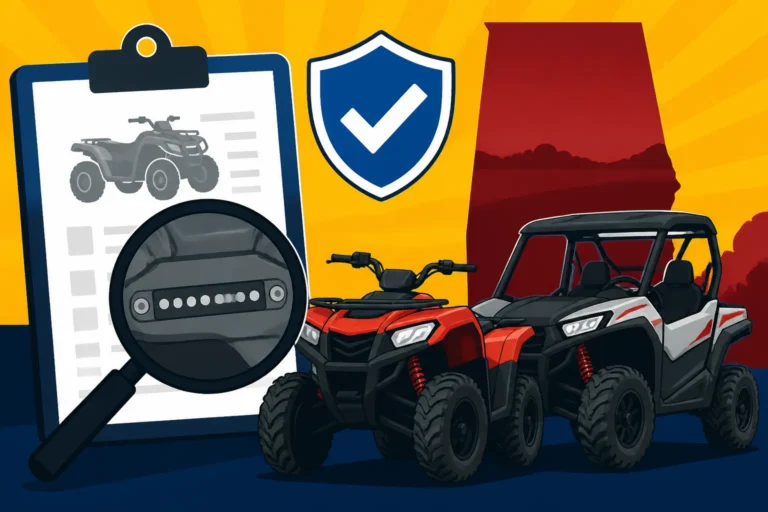
Before you ever fill out a form or hit a trail, it's a good idea to verify how your specific machine aligns with Alabama's legal definitions. This means measuring its width, checking its dry weight (often found in the owner's manual or manufacturer's specifications), and confirming its tire type and seating configuration. Don't just assume because it looks like a "quad" that it automatically fits the ATV definition, especially with the wide variety of utility vehicles on the market today. For example, some larger utility quads might push the 60-inch width limit, placing them closer to ROV characteristics in some contexts. Taking the time to do this quick check upfront can save you a lot of grief down the road, preventing misclassification that could lead to issues with registration, titling, or even trail access at parks.
Documentation and Alabama Bill of Sale Requirements
When you buy or sell an ATV or ROV in Alabama, whether it’s a brand-new side-by-side from a dealer or a used quad from a private seller, proper documentation is key. This is where the machine's classification ties directly into the paperwork. A well-prepared bill of sale, for instance, should accurately describe the machine, including its make, model, year, and crucially, its Vehicle Identification Number (VIN) or serial number. For machines that will require a title from 2026 onwards, having clear documentation that precisely matches the machine's legal definition as an ATV or ROV will be essential for the title application process. Using reliable templates for these documents, perhaps from a resource like LawDepot, can help ensure all necessary information is captured, including details pertinent to its legal classification. Remember to check [Alabama Bill of Sale Requirements] for all the specific details you'll need to include.
What Dealers and Private Sellers Need to Know
If you're a dealer, understanding these definitions is part of your professional responsibility. You're expected to accurately describe the vehicles you sell and inform buyers about their titling and registration obligations based on Alabama law. Misrepresenting a machine's classification could lead to legal issues for both you and the buyer. For private sellers, while you might not have the same legal obligations as a dealer, providing accurate information about your machine's make, model, year, width, and weight is a sign of good faith and helps the buyer avoid problems. If your machine is a 2026 model year or newer, or if it's an older model that might eventually be titled if it's sold to an out-of-state buyer, having clear records and being upfront about its legal status is vital. A buyer might even use a service like LawDepot to create a robust bill of sale that includes these definitional details. It creates transparency and trust, which is invaluable in any private sale transaction.
Common Misconceptions and Clarifications
The world of off-road vehicles is diverse, and with that diversity comes a host of common misunderstandings about what fits where in the legal framework. Let's clear up some frequently asked questions.
Is a Dirt Bike an ATV?
A common question that arises is whether dirt bikes fall under the ATV definition. In Alabama, the answer is a clear "no." Dirt bikes, also known as off-road motorcycles, are distinctly separate from ATVs and ROVs in the legal definitions. They are typically two-wheeled vehicles, ridden with a straddle seat and handlebars, designed for off-road use. While they share the "off-road" characteristic with ATVs, their fundamental design, number of wheels, and operational characteristics place them in their own category. This means that rules and regulations for dirt bikes, including any potential registration or titling, would be found under separate statutes pertaining to motorcycles or off-road motorcycles, not the ATV/ROV chapter. So, if you're riding a dirt bike, don't confuse its requirements with those of your quad or side-by-side.
What About Homemade or Modified Machines?
This is where things can get particularly murky. What if you've built an impressive custom off-road buggy from the ground up, or heavily modified a production ATV? Alabama's statutes are primarily written with mass-produced, factory-designed vehicles in mind. For homemade or significantly modified machines, classifying them can be challenging because they may not fit neatly into the predefined boxes. Generally, if a homemade machine is built to resemble and function as an ATV or ROV, it would likely be treated as such for titling and registration purposes, assuming it meets the width, weight, and operational characteristics. However, proving ownership and obtaining a VIN (if it doesn't have one) can be a hurdle. For titling, particularly, you might need an inspection to verify its characteristics and secure a state-issued VIN. It's a complex area, and anyone with a custom build should be prepared for extra scrutiny and potentially needing to provide detailed documentation of its construction.
Farm Equipment and the Exemption
As mentioned earlier, [Alabama Excludes Farm Equipment] from its ATV and ROV statutes, but it's worth reiterating and clarifying. This exclusion is a significant relief for those who use their machines for agricultural purposes. A "farm machine" or "farm equipment" is typically defined by its primary use in farming operations, rather than its recreational capabilities. This could include utility ATVs or ROVs used for hauling feed, checking fences, or transporting tools on a farm. The key is the intent and primary use of the machine. If your side-by-side is genuinely used as farm equipment, it typically does not fall under the registration requirements that apply to recreational ATVs. However, if you're using that "farm machine" for recreational trail riding outside of its agricultural duties, it might then fall back under the regular ATV/ROV definitions and associated rules, especially if ridden on public land. It's a nuanced distinction that relies heavily on context and usage.
Seeking Further Guidance and Legal Clarity
Navigating these definitions can be tough, and sometimes, you just need a clear answer specific to your situation. Knowing where to turn for reliable information is key.
When to Consult Local Authorities
While this guide provides general information, your specific situation might require direct consultation with local authorities. If you have unique circumstances, such as a highly modified machine, questions about riding on specific local roads, or a dispute over classification, don't hesitate to reach out. Your local county probate office can provide guidance on titling requirements and fees, while the Alabama Law Enforcement Agency (ALEA) is the authority on registration. For questions about local riding ordinances or enforcement, contacting your county sheriff's office or city police department is always a good idea. They can offer insights into how the state definitions are applied at the local level. Remember, it's always better to ask a question beforehand than to deal with a citation or impoundment after the fact.
Using Resources like LawDepot for Documentation
When it comes to creating necessary documents like bills of sale, lease agreements, or other contracts related to your ATV or ROV, having access to reliable legal forms can be incredibly helpful. Resources like LawDepot offer customizable legal templates that can help you ensure your paperwork is thorough and legally sound. While they don't provide legal advice, their platforms can guide you in creating documents that include all the necessary details, such as the machine's VIN, make, model, and clear descriptions that align with Alabama's legal definitions. This can be particularly useful for private sales, ensuring both buyer and seller are protected with comprehensive documentation. Whether you're selling a registered machine or buying a quad with no paperwork, having professional-looking, legally sound documents helps clarify ownership and transfer.
Why Staying Informed Protects Your Ride
The world of laws and regulations is constantly evolving, and off-road vehicle statutes are no exception. New titling laws, potential changes in registration rules, and evolving local ordinances mean that staying informed is not a one-time task but an ongoing commitment. Regularly checking official state websites, subscribing to newsletters from riding organizations, and engaging with the riding community can help you stay abreast of changes. Understanding Alabama's legal definitions for ATVs and ROVs is the bedrock of responsible ownership. It protects your investment, keeps you safe, and ensures you can enjoy your machine without unnecessary legal worries. Ultimately, being a knowledgeable owner makes you a better, more responsible rider, and that's a win for everyone on and off the trails.
Here’s a quick overview of the key differences between Alabama’s general definitions for ATVs and ROVs:
| Feature | All-Terrain Vehicle (ATV) | Recreational Off-Highway Vehicle (ROV/Side-by-Side) |
|---|---|---|
| Primary Steering | Handlebars | Steering Wheel |
| Seating Type | Straddle seat (like a motorcycle) | Non-straddle seating (bench or bucket seats) |
| Passenger Capacity | Primarily single-operator, some manufactured for one passenger | Multiple passengers, side-by-side |
| Width Limit | 60 inches or less | Generally 80 inches or less |
| Dry Weight Limit | 1,500 pounds or less | Typically above 1,500 lbs, often up to 3,500 lbs or more |
| Safety Features | No mandatory seat belts, no roll cage as standard | Seat belts, often with Roll-Over Protective Structure (ROPS) or cab |
| Tires | Low-pressure, non-highway tires | Low-pressure, non-highway tires |
| Titling (from 2026) | Yes, for model year 2026 and newer | Yes, for model year 2026 and newer |
| Registration (Voluntary) | Yes, Public Use or Private Use tiers | Yes, Public Use or Private Use tiers |
Disclaimer
This article is for general informational purposes only and does not constitute professional advice. Laws, prices and regulations vary by location and change over time. Consult a qualified professional for guidance on your specific situation.