Alabama Riding With a Group of Ten
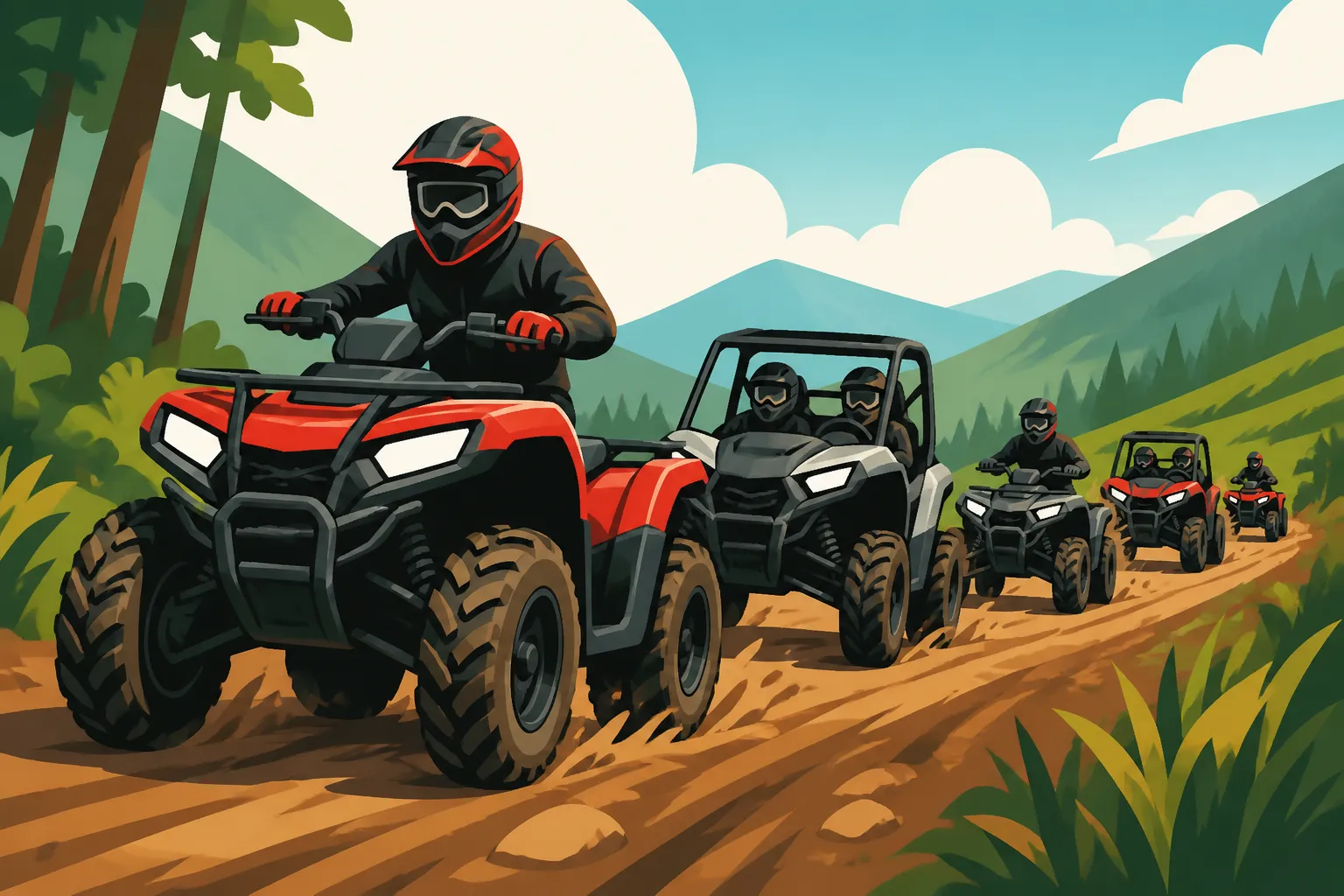
A group of ten can turn an Alabama trail day into a great shared adventure—or a slow-moving convoy with missed turns, crowded staging areas, and riders unsure what to do next. This guide helps you plan a manageable route, check access rules, organize people and machines, and keep the group together without making every decision at the trailhead.
Plan the ride around the group, not just the trail
Choose an area that fits your machines and riders
Start by figuring out who is coming and what they are riding. A group of ten might include experienced riders on sport quads, families in side-by-sides, and someone who has never ridden off pavement. That mix affects the route more than the map’s total trail mileage does. A narrow, technical section that suits confident solo riders may be frustrating or unsuitable for a larger group with different machine sizes.
Look at riding areas such as Stony Lonesome OHV Park near Bremen or Minooka Park near Jemison as possible starting points, then check each park’s current rules, available routes, operating information, and vehicle requirements before making plans. Do not assume that a trail shown on an older map is open, or that every route accommodates every machine. A group may need to use the least suitable machine in the lineup as its practical limit.
Be honest about the least experienced rider’s comfort level. Ask whether they are comfortable with hills, mud, water crossings, and riding near other machines. If they are unsure, choose an easier loop and let confident riders explore more challenging terrain another day. You can also read [Alabama Trail Difficulty Ratings] and [Best Alabama ATV Trails for Beginners] while comparing options.
Check access rules before you invite everyone
A group ride can involve different rules depending on whether you are visiting a private off-road park, public land, a wildlife management area, or property controlled by a landowner or timber company. Permission to ride one place does not carry over to another. Verify access, permitted machine types, required documents, and any rider or passenger rules with the land manager or park office.
For National Forest riding, use the official forest information and maps to identify roads or routes that are open to the type of machine you plan to bring. A map that shows a road does not automatically mean it is open to ATV or UTV traffic. For a WMA, check the specific area’s requirements and restrictions before you go; rules can differ from tract to tract and may depend on season or activity. These guides explain why advance checks matter: [Which Forest Roads in Alabama Are Open to ATVs] and [Alabama WMA Rules Vary by Area].
If your group is considering a private park, call ahead rather than relying only on an old social media post or a map app. Ask whether the park can accommodate your vehicle mix and how it handles groups. You can also review [Alabama Private Off-Road Parks] and [Alabama Private Park Waiver Forms] before choosing a destination.
Organize ten riders so the day runs smoothly
Assign simple roles before the convoy leaves
A ten-rider group does not need a complicated command structure, but it does benefit from a few clear responsibilities. Choose a lead rider who knows the planned route, a sweep rider who stays behind the last machine, and a point person responsible for checking that everyone has the address, meeting time, and rules. The lead and sweep should know how to contact each other if the group gets separated.
Before the ride, agree on a basic regrouping plan. For example, the group can wait at designated trail junctions or other safe, agreed-upon spots rather than stopping in the middle of a narrow trail. Set a simple rule: if someone cannot see the machine behind them, they slow down or stop somewhere safe and signal the lead. That gives the group a chance to reconnect without riders improvising different routes.
Keep the plan uncomplicated. One person can share the route and contact information, while another checks that the sweep rider has the same map and knows the destination. A map app such as onX Offroad can help riders review a planned route and identify their location, but everyone should understand its limitations and follow the land manager’s official access information. Do not treat a recorded track or app label as proof that a trail is open.
Set expectations for pace, stops, and regrouping
Before starting, tell the group what kind of ride you are planning: relaxed exploration, a steady loop, or a more demanding outing. Explain that the lead will ride at a pace that allows the whole group to stay together. This prevents the familiar problem where a few fast riders disappear ahead while newer riders feel pressured to keep up.
Agree on how the group will handle stops. A stop to check a machine, adjust gear, or let a rider catch their breath is sensible; a long stop at every junction can leave the group behind schedule. Pick a few natural places to regroup, and make it clear that no one should take an unplanned side route without telling the lead or sweep.
For a group of ten, two smaller riding groups may be easier to manage if the park or route allows it and the riders can meet safely at planned locations. Keep each group with its own lead and sweep, and do not split simply to fit more comfortably onto a trail if the park’s rules or trail conditions do not permit it. A route-planning tool such as onX Offroad may be useful for sharing a route, but discuss the actual plan face-to-face so no one depends on a phone screen alone.
| Planning question | What to decide before leaving |
|---|---|
| Who is riding? | Names, experience levels, machine types, and passengers |
| Who leads and sweeps? | One lead rider and one rider who stays behind the group |
| Where is the meeting point? | A clear location with room for trailers and vehicles |
| What route is planned? | A route suited to the least experienced rider and smallest-capability machine |
| Where will everyone regroup? | Safe, agreed-upon stopping points |
| What rules apply? | Park, land, permit, machine, age, passenger, and safety requirements |
| What happens if someone separates? | A simple stop-and-wait procedure and a backup contact plan |
Prepare riders, machines, and the meeting point
Share a practical checklist before ride day
Send the group a checklist early enough for people to prepare. Ask riders to bring suitable protective equipment, water, food, any necessary permits or registration documents, and a way to communicate with the group. The requirements may differ by park or land type, so make clear that your checklist supplements—rather than replaces—the rules for the location.
It also helps to ask each rider to inspect their machine before loading. A loose wheel, low tire, weak battery, or worn belt can turn a ride into a recovery job. Have riders check fuel, brakes, lights if needed, tires, and basic fluid levels, and remind them to carry any machine-specific tools they reasonably need. The group should not assume that another rider has a compatible part or tool.
The lead and sweep should carry a charged phone and know where reception may be limited. A tool such as onX Offroad can provide an additional way to review a route or location, but do not make an app the only navigation method. Save useful details in advance, such as the park’s address, the meeting point, and the contact information for the land manager. A paper map can still help if a phone battery dies or service is unavailable.
Make arrival and trailer parking part of the plan
Ten riders may mean ten machines, several trailers, passenger vehicles, and a crowded unloading area. Confirm where the group should meet and whether the staging space can handle your convoy. If vehicles are arriving from different parts of Alabama, choose a specific rendezvous point rather than asking people to “find the parking area” once they reach the park.
Set an arrival window that gives everyone time to unload, check gear, review rules, and use the facilities before the ride begins. Avoid blocking entrances, gates, or access roads while riders wait for late arrivals. If someone is delayed, decide in advance whether they should meet the group at a designated point or skip the ride rather than trying to catch up on an unfamiliar route.
When you arrive, review posted rules with the group before starting. Cover any required waivers, speed limits, trail closures, passenger rules, noise requirements, and instructions for yielding or passing. The lead should confirm the planned route with the sweep and make sure the least experienced riders know how to signal a stop or ask for help. These details may feel like a pause before the fun, but they are much easier to handle in the parking area than halfway through a trail.
Keep the ride safe, flexible, and considerate
Protect the group from preventable problems
A ten-machine convoy needs more space than a few friends riding together. Leave enough distance to see trail conditions and react to stops, but keep the group close enough that riders do not lose the machine ahead around a bend. Dust, mud, steep terrain, and limited visibility can change how much space is appropriate. Remind riders not to pressure the person ahead by crowding or accelerating to catch up.
Set a clear expectation about alcohol and riding: do not ride impaired. Also make sure riders understand that passengers must be allowed by the machine’s design and the applicable rules. A UTV with seating intended for several people is not the same as a single-seat quad carrying an extra passenger on the rack. Review [Alabama Rules for a Child Passenger] if children may be riding along.
Before departing, identify what the group will do if a machine breaks down or a rider gets hurt. Keep the group out of active trail traffic while someone checks the problem, and have the lead or sweep communicate with the rest of the riders. If an incident is serious, prioritize emergency help over sticking to the route or schedule. For additional preparation, see [First Aid on a Long Stony Lonesome Loop].
Leave room for changing conditions
Alabama trails can change substantially with weather. Heavy rain may make clay slick or deepen ruts, while dry conditions can create dust and reduce visibility between machines. A route that felt manageable during a dry scouting trip may be a poor choice after a storm. Check for closures and local conditions before heading out, and be willing to shorten or change the plan.
Do not make a difficult obstacle the test of whether the group is having a good ride. If a route becomes unsafe for one rider or machine, regroup and choose another way forward if the land manager permits it. Turning around is a sound decision, not a failure. A group of ten is more likely to stay together when the plan includes a reasonable exit or alternate route rather than a promise to finish a particular loop at any cost.
Be considerate of other trail users and the land itself. Follow posted directions, yield as required, keep noise under control, and avoid widening trails or creating new tracks around muddy sections. A large group can make a bigger impression than its members realize, particularly when everyone stops or turns around in the same small area. For more on responsible riding, read [Alabama Trail Etiquette Locals Expect].
End with a head count and a clear return plan
At the end of the ride, account for every rider before anyone loads up or leaves the staging area. Check that no one is still on the trail, helping with a machine, or waiting at a planned regrouping point. If the group split into smaller units, confirm that both have returned before calling the day complete.
Give riders time to cool down, hydrate, and secure their machines before the drive home. If a vehicle or trailer has a problem, make a plan for assistance rather than leaving one person to sort it out alone. A quick debrief can also help: ask what worked, whether the route matched the group’s ability, and what should change next time.
A successful group ride is not necessarily the one that covers the most distance. It is the one where people understand the plan, ride within their abilities, respect the place they are visiting, and make it back together. With a little preparation, ten riders can enjoy Alabama’s off-road areas without turning the day into a game of finding the person who took the wrong turn.
Disclaimer
This article is for general informational purposes only and does not constitute professional advice. Laws, prices and regulations vary by location and change over time. Consult a qualified professional for guidance on your specific situation.