Alabama Registration Compared to Tennessee
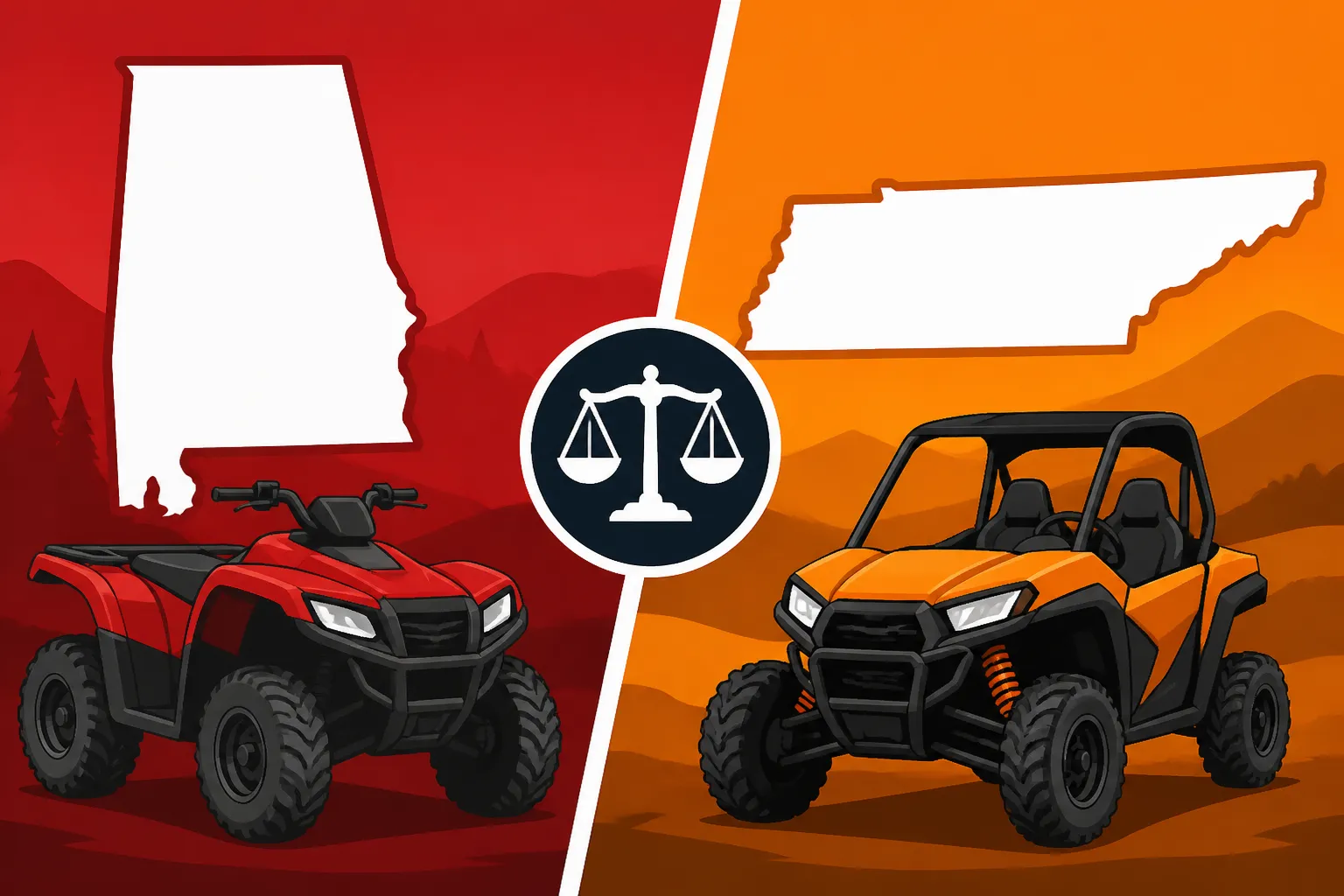
Venturing out on your ATV or UTV across state lines can bring a sudden dose of reality when you realize that what's legal and common practice in one state might be entirely different just a few miles down the road. This is especially true for off-road vehicle registration between neighbors like Alabama and Tennessee. If you've ever found yourself wondering if your Alabama-registered quad is good to go in Tennessee, or vice-versa, you're not alone in that confusion, and this guide will walk you through the key distinctions and what you need to know to stay on the right side of the law.
The Alabama Approach to ATV Registration
Alabama's system for registering off-highway vehicles (OHVs), which include ATVs and UTVs, has often been described as user-friendly and somewhat flexible, particularly compared to other states. It's a system designed to categorize riders based on their primary use, offering different tiers depending on where you plan to ride. This distinction is crucial and often misunderstood by new residents or those visiting from out of state.
Voluntary Registration and Use Tiers
One of the most significant aspects of Alabama's ATV and UTV registration is its voluntary nature. Unlike some states where registration is mandatory for almost all machines, Alabama allows owners to choose whether or not to register their OHV. However, if you plan to ride on any public land or designated OHV trails within the state, you absolutely need to opt into what's known as the "Public Use" registration tier. This is where most confusion arises; while it's "voluntary," if you want to enjoy the state's amazing trails, it becomes a practical necessity. The alternative, "Private Use" registration, is for those who strictly keep their machines on private property, like their own land or leased hunting grounds, and don't anticipate ever hitting public trails. [Alabama Public Use ATV Registration Explained] and [Alabama Private Use ATV Registration Explained] delve deeper into these options.
Choosing the right tier isn't just about paying a different fee; it determines where you can legally operate your machine. If you've only registered for private use and decide to take a spontaneous trip to a state park trail, you could find yourself facing a citation. This flexible but use-dependent system is a cornerstone of Alabama's OHV laws, and it's built to accommodate a wide range of rider habits, from the casual backyard explorer to the dedicated trail enthusiast.
Three-Year Registration Cycle
Another notable feature of Alabama's registration process for ATVs and UTVs is its three-year cycle. Instead of the annual renewals common in many vehicle registration systems, Alabama's OHV registrations are valid for three years from the date of issuance. This can be a convenience for owners, reducing the frequency of paperwork and payments. [Alabama Registrations Run Three Years] offers more details on this. It's important to remember that even with a multi-year registration, your responsibilities as an OHV owner don't diminish. Keeping your machine in good working order and adhering to all safety regulations remains paramount throughout the entire registration period.
When your three-year period is nearing its end, you'll need to go through the renewal process to keep your registration active, especially if you plan to continue riding on public lands. The state's system aims to make this a relatively straightforward process, often involving submitting new paperwork and the associated fees. This longer cycle helps streamline administration for the Alabama Law Enforcement Agency (ALEA), which handles these registrations, and provides peace of mind for riders who don't have to mark their calendars for annual renewals.
Where to Register and What You Get
In Alabama, ATV and UTV registrations are processed through the ALEA, specifically via their Off-Road Vehicle (ORV) program. You generally submit your application either by mail or, in some cases, through a dealer if you're purchasing a new machine. Once your application is processed and approved, you don't receive a license plate like a car. Instead, you'll be issued a registration decal. This decal must be prominently displayed on your ATV or UTV, typically on a visible part of the machine such as the front fender or frame. [Alabama Registration Paperwork Explained] provides a comprehensive look at what forms and documents are typically required for this process.
The decal serves as visible proof that your machine is legally registered for its intended use tier within Alabama. It's what law enforcement officials will look for if they encounter you on public trails or during a compliance check. Getting this decal correctly applied and kept in good condition is vital, as a missing or unreadable decal could lead to questions or even penalties. The system is designed to be efficient, but like any state process, paying close attention to the details on the application ensures a smooth experience.
How Tennessee Handles Off-Highway Vehicle Registration
Just a short drive north, Tennessee presents a somewhat different picture for off-highway vehicle registration. While also aiming to manage OHV use safely, Tennessee's approach has distinct features that riders accustomed to Alabama's system need to be aware of. The Volunteer State has its own set of rules, particularly regarding mandatory registration for certain types of public land access.
Mandatory Registration With Nuances
Tennessee generally requires off-highway vehicles to be registered if they are operated on any public lands, including designated OHV parks, trails, or other areas open to the public. This is a key difference from Alabama's "voluntary if you don't use public land" approach. For most Tennessee riders who want to enjoy the state's extensive network of trails, registration isn't just an option; it's a legal requirement. The state's Department of Environment and Conservation (TDEC) often oversees these rules, especially concerning state parks and natural areas. However, like Alabama, specific exclusions might exist for machines used exclusively on private property, or for certain agricultural or utility purposes.
The emphasis in Tennessee is clearly on ensuring that machines operating on public resources are accounted for. This helps in funding trail maintenance, managing rider impact, and facilitating law enforcement efforts. While the concept of private land exclusion might sound similar to Alabama's "Private Use" tier, Tennessee's overall stance leans more towards mandatory registration for recreational public use. It's crucial for any rider planning to hit Tennessee trails to confirm the current registration requirements for their specific machine and intended riding location.
Proof of Ownership and Application
When registering an ATV or UTV in Tennessee, you'll typically need to provide solid proof of ownership. This usually means a bill of sale if you bought the machine recently, or a previous title or certificate of origin. The application process will also require details about the machine, such as its make, model, year, and crucially, its Vehicle Identification Number (VIN). Similar to Alabama, accuracy in these details is paramount to avoid delays. Forms can often be found on relevant state department websites, and services like LawDepot can be helpful for generating generic bill of sale documents that ensure all necessary information is present, though official state forms must always be used for submission.
The state wants to ensure that the person registering the OHV is indeed its rightful owner, which helps combat theft and ensures proper accountability. If you've inherited a machine or bought one without a clear paper trail, this part of the process can sometimes be more challenging, requiring additional steps to establish legal ownership. It's always a good idea to gather all your ownership documents before starting the application, whether you're dealing with a new purchase or an older machine.
Decals and Display
Upon successful registration in Tennessee, OHV owners are issued a registration decal, much like in Alabama. This decal serves as visible proof of registration and must be affixed to the off-highway vehicle in a clearly visible location. This ensures that park rangers, law enforcement, or other officials can easily verify that the machine is registered when encountered on public lands. Specific instructions for decal placement usually accompany the registration materials, and following these guidelines is important for compliance.
The decal system is a practical way for states to enforce registration requirements without requiring bulky license plates on machines not designed for them. It's a universal method that many states employ for OHVs. Keeping this decal clean, intact, and visible is part of the ongoing responsibility of owning a registered OHV in Tennessee, just as it is in Alabama. Faded, damaged, or improperly displayed decals could lead to questions, even if your machine is technically registered.
Key Differences for Cross-Border Riders
Understanding the distinct approaches of Alabama and Tennessee becomes particularly important when you consider riding your OHV across state lines. The nuances in registration, titling, and even road use can transform a fun trip into a legal headache if you're not prepared.
Reciprocity and Visiting Riders
When it comes to reciprocity, meaning how each state recognizes the registration of the other, things can get a little tricky. Generally, both Alabama and Tennessee tend to honor valid OHV registrations from other states for visitors. This means if your ATV is legally registered in Tennessee, you can typically ride it on Alabama's public trails, provided you adhere to Alabama's specific riding rules (like helmet laws, age restrictions, etc.). The same usually applies to an Alabama-registered machine visiting Tennessee. [What Visiting Riders Need to Ride Legally in Alabama] goes into more depth on this. However, this reciprocity often comes with caveats. It's usually for a limited period—for instance, for short recreational visits, not for someone who has moved to the state and become a resident. If you become a permanent resident, you'll eventually need to register your OHV in your new home state.
It's always a wise move to carry your registration documents with you, even if you're visiting. A physical copy or a clear photo of your registration, along with proof of ownership, can save a lot of hassle if you're stopped by an official. Don't assume that because your machine is registered elsewhere, all local rules are suspended; speed limits, noise ordinances, and designated riding areas still apply regardless of where your machine is registered.
Titling Differences Post-2026 for Alabama
Here's a big one that will become increasingly important: titling. For many years, neither Alabama nor Tennessee issued titles for ATVs and UTVs, focusing instead purely on registration. This made proving ownership a bit more challenging and relied heavily on bills of sale. However, Alabama passed a new law that mandates titling for off-road vehicles with a model year 2026 and newer. This means that if you buy a brand-new quad or side-by-side in Alabama with a 2026 model year or later, it will come with a title. Older machines (pre-2026 model year) will remain untitled. [Alabama ATV Titling Starts With Model Year 2026] explains the specifics.
Tennessee, as of this writing, has not implemented a similar mandatory titling law for OHVs. This means if you buy a new ATV in Tennessee, it likely won't come with a title, relying instead on a certificate of origin and bill of sale for proof of ownership. This divergence creates a significant difference, especially for resale or financing. An Alabama-titled 2026 machine will have a clear, state-backed ownership document, while a Tennessee machine of the same year likely won't, potentially impacting how banks view collateral or how easily you can sell it across state lines. Understanding [Why Older Alabama ATVs Cannot Be Titled] helps clarify the cutoff.
Road Use and Other Restrictions
Beyond registration and titling, the rules for riding ATVs and UTVs on public roads differ significantly between states, and this is where most riders get into trouble. Generally speaking, neither Alabama nor Tennessee permits the widespread use of ATVs or UTVs on public roads or highways. There are often very limited exceptions, such as crossing a road at a designated point or using them for specific agricultural purposes on a county road for a short distance. [Are ATVs Street Legal in Alabama?] and [Alabama ATV Road Rules Explained] clarify Alabama's strict stance.
Tennessee has similar restrictions, largely confining OHV use to designated off-road trails and private property. Both states emphasize that these machines are not built to federal safety standards for highway use, lacking features like proper turn signals, DOT-approved tires, and crash-testing for road speeds. Trying to convert an OHV into a "street legal" vehicle with aftermarket kits is almost universally disallowed by state law in both places, as these conversions rarely meet the stringent federal motor vehicle safety standards (FMVSS). Always check local ordinances in addition to state laws, as some smaller towns or counties might have unique rules or prohibitions.
Navigating Paperwork and Legalities
Regardless of which state you're riding in, dealing with paperwork and understanding the legal nuances can feel like a maze. Having the right documents and knowing where to find reliable information makes all the difference in ensuring a smooth experience.
Essential Documents for Both States
Whether you're registering in Alabama or Tennessee, some core documents are almost always required to prove ownership and identity. A clear and comprehensive bill of sale is paramount, especially for private party transactions. This document should include the seller's and buyer's full names and addresses, the date of sale, the purchase price, and a detailed description of the ATV or UTV, including its make, model, year, and crucially, the full Vehicle Identification Number (VIN). Without a correct VIN, your application will almost certainly be rejected. [Alabama Bill of Sale Requirements] outlines what Alabama expects.
Beyond the bill of sale, you'll need a valid form of identification, such as a driver's license. Proof of residency might also be required, like a utility bill or other official mail. For new machines, a Manufacturer's Statement of Origin (MSO) or Certificate of Origin (COO) will be necessary, acting as the original "birth certificate" for the vehicle before any state title or registration is issued. Keep all these documents in a safe, accessible place, both original and digital copies, as you never know when you might need them for registration, sale, or even insurance claims.
Leveraging Online Resources for Forms
In today's digital age, many of the forms you need for ATV and UTV registration are available online. Both Alabama's ALEA and Tennessee's relevant state agencies (like TDEC or their Department of Revenue for some motor vehicle forms) typically provide downloadable PDF versions of their registration applications and instructional guides. These are your primary, most accurate sources for state-specific paperwork. When you're dealing with private sales, generating a robust bill of sale can be simplified by using online legal document services. Platforms like LawDepot offer customizable templates for bills of sale and other legal forms, helping you ensure all essential information is included and legally sound. While LawDepot can assist with the formulation of a bill of sale, remember to always use official state applications for the actual registration submission.
It's a good practice to download the forms, read the instructions carefully, and fill them out completely before visiting an office or mailing them in. Double-checking every field, especially the VIN and owner information, can prevent significant delays. If you have questions about specific sections, contacting the relevant state agency directly is always the best course of action. Relying on outdated information or unofficial forms can lead to frustration and wasted time.
Alabama vs. Tennessee ATV Registration at a Glance
| Feature | Alabama OHV Registration | Tennessee OHV Registration |
|---|---|---|
| Mandatory/Voluntary | Voluntary, but mandatory for Public Use trails. | Generally mandatory for public land/trail use. |
| Registration Period | Three years. | Varies, often annual or biennial, check current state rules. |
| Issuing Agency | Alabama Law Enforcement Agency (ALEA) | Various agencies, often TDEC or Dept. of Revenue, depending on context. |
| Proof of Registration | Decal displayed on machine. | Decal displayed on machine. |
| Titling (New Machines) | Mandatory for 2026 model year and newer. | Generally no state title issued for OHVs. |
| Reciprocity | Generally honors out-of-state registrations for visitors. | Generally honors out-of-state registrations for visitors. |
| Road Use | Highly restricted; generally illegal on public roads. | Highly restricted; generally illegal on public roads. |
| Key Documents | Bill of Sale, ID, MSO/COO (for new), Application form. | Bill of Sale, ID, MSO/COO (for new), Application form. |
This article is for general informational purposes only and does not constitute professional advice. Laws, prices and regulations vary by location and change over time. Consult a qualified professional for guidance on your specific situation.