A Stony Lonesome Campsite at $42 a Night
A camping weekend at Stony Lonesome can get complicated when you’re trying to confirm what a campsite includes, whether it needs to be reserved, and how it fits around riding hours. This guide explains how to plan an overnight visit, check the current nightly rate, choose a suitable site, and avoid arriving with the wrong gear or assumptions.
Planning a campsite stay at Stony Lonesome
Confirm the nightly rate and what it covers
A campsite’s nightly charge is only one part of the trip budget. Before booking at Stony Lonesome, confirm the current rate directly with the park and ask what the charge covers. The figure associated with a campsite in an older listing or article may not match the amount the park quotes when you plan your visit.
It’s also worth asking whether the quoted amount is per site or per person, and whether it changes with the type of site, the length of the stay, or the number of machines in your group. Check for separate charges that could affect your total, such as park admission, riding fees, extra vehicles, or optional services. Don’t assume that booking a place to sleep automatically includes access to the riding area.
Ask what happens if the park closes a trail or changes operations because of weather. A rainy weekend can change the character of a trip on Alabama clay, and knowing the park’s refund or rescheduling policy beforehand can prevent an unpleasant surprise. For related planning, see Alabama Park Camping Fees and Alabama Park Refund Policies.
Find out what kind of site you are reserving
“Campsite” can mean different things at different parks. Before you choose one, ask whether the site is intended for a tent, an RV, a trailer, or a combination of camping setups. If you’re towing a side-by-side or quad, confirm where the truck, trailer, and machine can be parked. A site that works well for a small tent may be awkward for a long trailer and several vehicles.
Ask whether the site has electrical or water hookups, and whether those amenities are included or available only at certain sites. If you need a level area for an RV, room to unload, or a place to keep riding gear dry, describe those needs when you contact the park. It’s better to get a clear answer than to arrive after a long tow and discover that the site doesn’t suit your setup.
Do not rely on an old review or a photo to confirm what is available now. Site layouts and amenities can change, and a park may have multiple camping options. If you’re comparing different kinds of stays, Primitive Sites and Hookup Sites can help you think through the trade-offs. If a cabin sounds more practical than camping, compare the arrangements described in Alabama Parks With Cabins.
Booking and preparing for the trip
Ask the park the right questions before you reserve
A short call or message can clear up the details that are hardest to infer from a listing. Ask whether reservations are required, how to secure a site, what payment methods are accepted, and whether your arrival time needs to fit specific gate or office hours. If you expect to arrive late, confirm that before setting out; a delayed drive can otherwise turn into an avoidable scramble.
Clarify the park’s rules for the number of people, vehicles, and machines allowed at a site. If friends are arriving separately, ask whether everyone needs to check in together or whether each group should follow a separate process. For a larger outing, find out whether your group needs more than one site. These details matter especially when trailers take up more room than the sleeping setup itself.
Before sending payment, make sure you understand the cancellation terms and what information the park needs from you. Keep the confirmation and any instructions somewhere you can access while traveling. For more planning help, see Calling Ahead for a Reservation and Alabama Park Reservation Systems.
Pack for camping and riding, not just one or the other
A ride-and-camp weekend asks more of your packing list than a regular campground stay. You may need riding clothes, helmets, gloves, eye protection, tools, recovery equipment, and a way to keep muddy gear separate from clean bedding. Pack a change of clothes where it can be reached without unloading the whole trailer. After a wet or dusty ride, that small bit of organization can make the campsite much more comfortable.
Bring the basics you would want at any campground, but confirm which facilities are actually available before deciding what to leave behind. If you’re counting on water, electricity, a bathhouse, or a place to wash equipment, verify that those amenities are open and accessible during your stay. A cooler, drinking water, a first-aid kit, lighting, and weather-appropriate bedding are sensible starting points, but your exact list depends on the site and season.
Alabama weather can shift quickly, and hot, humid conditions can make both riding and sleeping less comfortable. Keep rain gear handy, secure food and loose equipment, and have a plan for charging or storing essential items. For a more complete checklist, use Packing for a Humid Day Out and Alabama Parks With Bathhouses.
Matching the campsite to your riding plans
Make sure camping and riding access are separate in your plan
A campsite reservation does not necessarily answer every question about riding access. Confirm whether you need to pay separately to ride, whether the riding area is open on your planned dates, and what time riders can enter or must leave the trails. Park schedules and access arrangements can vary, so verify details instead of building your itinerary around an assumption.
Ask which machines are allowed and whether there are restrictions on vehicle size, passengers, or trail difficulty. A family arriving with a youth quad, a two-seat ATV, or a wide side-by-side should check that the machine and rider setup fit the park’s rules. If you’re unfamiliar with the area, ask whether a trail map is available and whether routes are marked at junctions.
For a better sense of how to plan your time on the property, see Stony Lonesome’s Operating Days in Alabama and Alabama Trail Difficulty Ratings. Keep in mind that the most useful answer is the one that applies to your specific visit: a trail that suits an experienced rider may feel very different to a beginner, especially after rain.
Plan navigation and trail choices before unloading
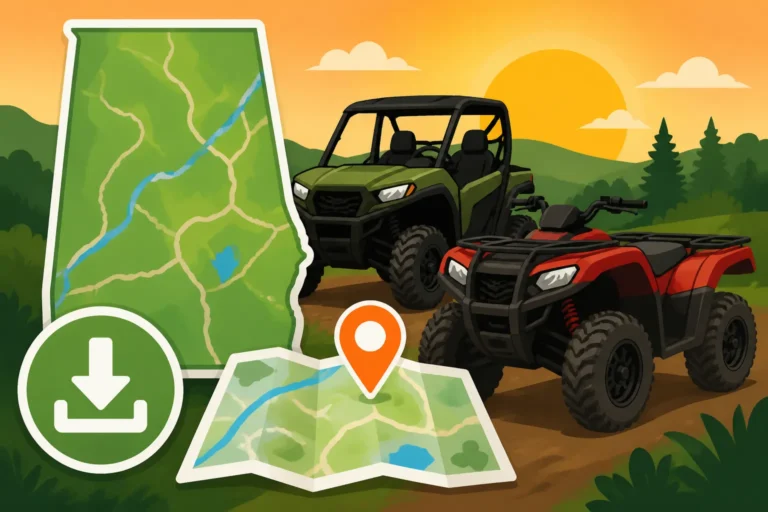
Do not assume that your phone will provide dependable directions once you leave the main road or reach a wooded trail area. Download or save the information you’ll need before traveling, and ask the park which map or route guidance it recommends. onX Offroad can be useful for preparing offline navigation, but check that the map information you plan to use covers your route and do not treat a phone app as a substitute for park rules or posted closures.
A good plan is to identify your campsite, the check-in point, and a conservative first ride before you start exploring. If people in your group have different experience levels, agree on a meeting place and a way to regroup if riders get separated. Keep the park’s contact details accessible, and tell someone where you expect to ride. onX Offroad may help you keep track of a planned route, while a paper map or park-provided map gives you a backup if your phone battery runs low.
After checking in, compare your planned route with current conditions. Heavy rain can make red clay slick, deepen ruts, and change how long a loop takes. Ask about closures before riding, and choose a shorter route if the weather or group’s energy calls for it. For more background on local conditions, see Alabama Trail Closures After Rain and Alabama Trail Etiquette Locals Expect. A second rider can also keep a downloaded map or route in onX Offroad, so the group is not relying on a single phone.
| Planning detail | What to confirm with the park | Why it matters |
|---|---|---|
| Nightly charge | Current rate, how it is calculated, and what it includes | Helps you budget without assuming riding access is bundled |
| Site type | Tent, RV, trailer, or mixed-use suitability | Prevents arriving with a setup that does not fit |
| Amenities | Water, electricity, bathhouse, and other facilities | Helps you pack appropriately and choose the right site |
| Reservation | Availability, payment, arrival instructions, and cancellation terms | Reduces check-in uncertainty, especially after a long drive |
| Riding access | Separate fees, operating days, hours, and machine rules | Keeps camping plans aligned with trail access |
| Conditions | Closures, weather impacts, and route guidance | Helps you choose safer, more realistic riding plans |
Making the overnight stay easier
Arrive with enough time to set up calmly
If you can, plan to arrive while there is still daylight. Unloading a trailer, finding the site, pitching a tent, and sorting riding equipment are all easier when you can see what you’re doing. Give yourself time to check in, review the site boundaries, and get familiar with the route between camp and the riding area. Rushing through setup can leave small but important things—like securing the trailer or locating a flashlight—until after dark.
Once you arrive, follow the park’s instructions about where to park, how to store gear, and which roads or paths are open to vehicles. Keep the campsite tidy and avoid blocking access for neighboring campers or park staff. If you have fuel, tools, or muddy equipment, store them in a way that is safe and does not create a nuisance for other guests.
Check any quiet-hour, generator, fire, pet, and waste rules before settling in. Rules can differ between parks and may be posted at check-in or around the campground. If you’re unsure whether something is permitted, ask rather than relying on what was allowed at another riding area. Alabama Private Park Quiet Hours and Alabama Private Park Camping Rules are useful topics to review when planning a stay at a privately operated park.
Keep a backup plan for weather and changing conditions
A camping reservation can make a weekend feel set in stone, but Alabama weather and trail conditions can change the best plan. Before you leave home, check the forecast and contact the park if storms or heavy rain are expected. Ask whether the campground remains open and whether trails may be closed or limited. If riding is your main reason for going, it helps to know what alternatives are available before you arrive.
Pack clothing that can handle both damp conditions and warm, humid weather. Keep dry bedding protected, store electronics in a waterproof bag, and bring extra socks and gloves. If a storm rolls in, make sure your group knows where to shelter and how to secure loose items at the campsite. A flexible plan might mean shortening a ride, taking a break, or spending more time at camp rather than pushing through poor conditions.
Have a backup navigation plan as well. Save the park’s address and contact details before departure, download maps where available, and make sure more than one person knows how to get back to camp. A phone-based map such as onX Offroad can be one useful part of that preparation, but battery life, signal, and map coverage all deserve consideration. Plan for the possibility that one tool may not work when you need it.
A comfortable Stony Lonesome camping trip comes down to checking the details that affect your particular group: the current nightly charge, the site setup, the campground rules, and the riding access for your dates. Confirm those points with the park before you tow, pack for both camping and trail conditions, and leave room in the schedule for weather or a slower first ride. That preparation makes it easier to enjoy the stay instead of sorting out surprises after arrival.
Disclaimer
This article is for general informational purposes only and does not constitute professional advice. Laws, prices and regulations vary by location and change over time. Consult a qualified professional for guidance on your specific situation.