Alabama Red Clay and What It Does
Alabama red clay can turn a firm-looking trail into a slick, rutted mess after rain, and it can cling to tires, brakes, and underbody parts long after the ride is over. This guide explains how clay affects traction, trail conditions, and machine care, plus what to check before you haul your ATV or UTV to a riding area.
Why Alabama Red Clay Changes a Ride
How clay behaves under your tires
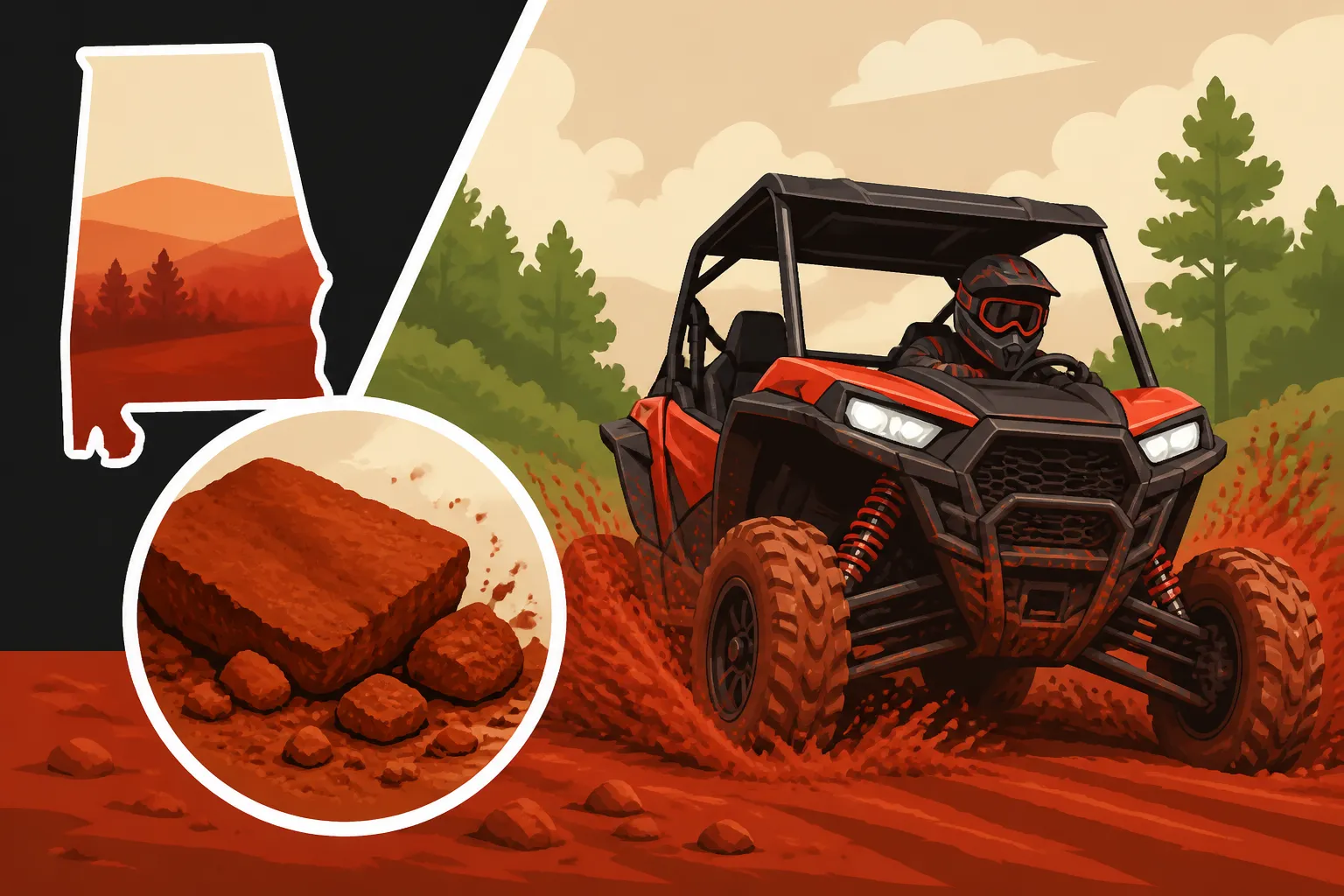
Red clay is not just ordinary dirt with a different color. When it is dry, it can feel hard and supportive, but rain can make the surface slick and cohesive. Instead of scattering like loose sand, wet clay often sticks to tire lugs and packs into narrow spaces around suspension parts. A trail that seemed easy on the way out may feel very different after a shower.
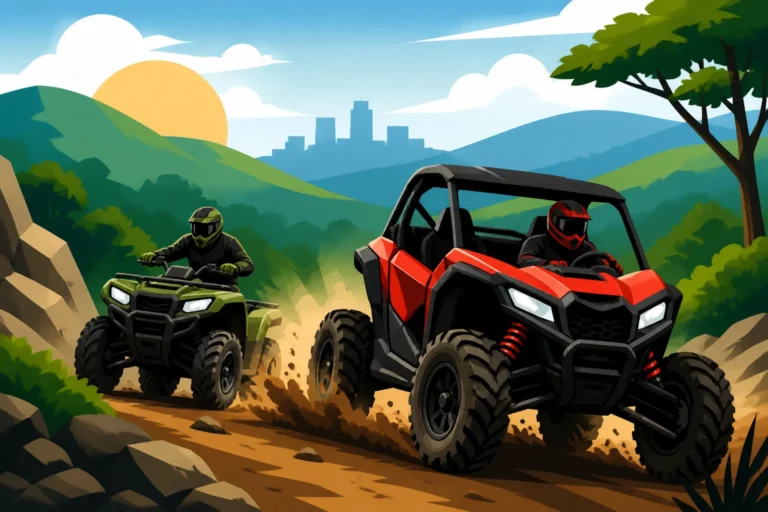
That change can happen unevenly. A sunny stretch may dry quickly while a shaded hollow, wooded climb, or low spot stays greasy. On a side-by-side, the heavier machine may press its tires into soft ground and slide when the tread cannot grip. A lighter quad may float better in some conditions but still lose traction on a steep, polished clay slope.
Clay also builds up as you ride. Packed tread has less room to bite into the ground, so a tire that started the day with open lugs may gradually feel slick. If you notice the machine spinning more than moving, adding throttle usually makes the situation worse: it can dig holes, polish the trail surface, or leave you stuck deeper.
Why slopes, turns, and shaded spots need extra care
A clay hill can be manageable when it is dry and challenging when it is wet. The same applies to off-camber sections, where one side of the machine sits lower than the other. If the tires begin to slide sideways, avoid abrupt steering or throttle inputs. Smooth, steady control is generally easier to manage than a sudden correction that shifts the machine’s weight.
Turns can be just as deceptive as climbs. Clay packed into a bend may offer little grip, especially if riders have already spun their tires there. Slow down before the turn, look where you want to go, and avoid braking hard while the machine is already sliding. On a UTV, take care not to carry too much speed into a corner simply because the cab feels stable.
Water does not make every trail equally unsafe, but it does make conditions harder to judge. A puddle can hide a rut, a soft edge, or a hole left by another machine. Before entering an unfamiliar muddy section, consider whether you can see the exit and whether there is a safe place to turn around. For a wider look at local conditions and trip planning, see [Alabama Trail Conditions Before You Tow] and [Alabama Trail Riding After Heavy Rain].
Getting Traction Without Making the Trail Worse
Choose tires for the kind of riding you do
Tire choice is a trade-off, not a guarantee against getting stuck. More open tread can help clear mud from the tire, while a tread pattern designed for firmer ground may pack up sooner in sticky clay. But a very aggressive tire can also dig into soft trail surfaces, making deep ruts that are difficult for the next rider to cross. Consider your usual terrain, machine, and riding style rather than choosing a tire based on one muddy photograph.
Tire pressure matters, too, but there is no single setting that works for every machine and every trail. Follow the manufacturer’s guidance and make adjustments only within safe limits for your tires and vehicle. If you are unsure, ask a qualified dealer or experienced local rider who knows your machine. Do not assume that lowering pressure will solve poor traction; it can increase the chance of tire damage or bead problems if you go too far.
A useful way to think about tire performance is to ask what the tread is doing. If clay is filling the lugs, the tire may not be clearing itself. If the tread is open but the machine still slides, the surface may simply be too slick for safe progress. [Choosing Tires for Alabama Red Clay] is a helpful next read for comparing tread considerations, while [Alabama Trail Difficulty Ratings] can help you think about matching your machine and experience to a route.
| Trail condition | What you may notice | Practical response |
|---|---|---|
| Dry, firm clay | Solid footing, but loose dust or hard-packed surfaces | Keep a controlled pace and watch for sudden changes in grip |
| Damp clay | Tires begin to smear or pick up a thin layer of mud | Reduce speed and avoid sharp steering or braking |
| Deep, sticky mud | Tread packs with clay and the machine loses forward progress | Stop before repeated wheelspin creates deeper ruts |
| Rutted clay | Uneven grooves pull or tip the machine | Choose a safe line only if you can see the surface and have room to maneuver |
| Soft shoulder beside a rut | Ground looks passable but may give way under a tire | Stay on the established trail where permitted |
Use restraint when a machine starts spinning
When a tire spins, it can quickly turn a passable section into a trench. Ease off the throttle rather than trying to power through every obstacle. If you cannot move without digging, stop and assess the situation before making another attempt. A passenger can help by watching the tires and the trail edge, but they should stay clear of the machine’s path and never stand where it could slide or roll.
A winch may help in some recovery situations, but it is not a reason to enter a section you cannot safely exit. Before relying on one, know how your equipment works, use suitable rated recovery points, and keep people away from a tensioned line. Avoid attaching a winch line to a tree without appropriate protection. On steep or muddy ground, a poor recovery setup can put both people and machines at risk. For related preparation, read [Winches for Steep Clay Climbs].
Trail damage is another reason to stop early. If repeated attempts are carving a rut, blocking the route, or widening the trail, turn around if you can do so safely. Follow posted directions and closures, even if the trail looks rideable from where you are. [Treading Lightly on Erodible Alabama Clay] covers ways to reduce damage, and [Alabama Trail Closures After Rain] explains why a temporary closure may protect a route rather than simply inconvenience riders.
Preparing Your Machine for Clay
Protect the parts mud tends to reach
Sticky clay can collect around the underside of an ATV or UTV, including suspension components, skid plates, wheel wells, and brake areas. A layer of mud may seem harmless at first, but packed material can hide damage or make routine inspections harder. After riding, check for branches, stones, or thick clay lodged near moving parts. Do not reach into a pinch point or touch hot components; follow your owner’s manual for safe inspection and cleaning.
Skid plates can help shield vulnerable underbody areas from rocks and trail debris, but they do not make a machine immune to damage. Mud can still accumulate on or above them, and a bent plate may be difficult to spot if it is coated in clay. If your route also includes rocky sections, [Skid Plates for Talladega Rock] offers relevant protection considerations.
Before setting out, confirm that your tires, brakes, lights, and steering components are in good condition. Muddy riding can make it harder to notice a new vibration or change in handling until the machine is already on a challenging section. Bring basic recovery and repair supplies suited to your machine and trip. For a longer loop, tell someone where you plan to ride and when you expect to return.
Clean the machine before clay hardens
Rinsing soon after a ride usually makes cleanup easier than waiting for mud to dry. Pay particular attention to the areas identified in your owner’s manual, and avoid directing high-pressure water at seals, bearings, electrical connections, or other sensitive parts. A careful rinse is different from blasting every component with a pressure washer.
After washing, look over the machine again. Check for loose fasteners, damaged boots, torn wiring, or pieces of vegetation caught around the drivetrain. If the ride included heavy mud, confirm that brakes and controls feel normal before the next outing. Cleaning is not just cosmetic: it gives you a chance to spot issues that a thick layer of clay could conceal. See [Washing Red Clay Off Before It Sets] for more on post-ride cleanup.
For trip planning, a map tool such as onX Offroad can help riders review routes and orient themselves before heading out, but a map does not replace posted signs, park instructions, or local guidance. Download or carry the information you need before leaving areas with reliable service, and keep a backup plan for navigation. A paper map can be useful if a phone battery runs down or a screen becomes hard to use in wet weather; [Carrying a Paper Map on a Talladega Loop] explains that kind of backup planning.
Planning Around Weather and Trail Access
Check conditions before loading the trailer
A forecast is only one clue. Rainfall at home may not match conditions at a riding area, and a trail can stay wet after the sky clears. Check the riding area’s official notices and contact the park or land manager if conditions are uncertain. Ask specifically whether the trails are open, whether certain routes are closed, and whether wet-weather rules apply.
This matters when you are making a long drive. A family leaving Birmingham, Huntsville, or Montgomery with a trailer full of machines may be frustrated to arrive and find a route closed, but riding a closed trail can create damage and safety problems. Confirm access before you leave rather than relying on an old social media post or a map label that does not show temporary restrictions.
If you use onX Offroad as part of your planning, treat it as a navigation aid rather than the final authority on trail access. Check the riding area’s own current notices and posted signs, and do not assume that a visible road or track is open to off-highway vehicles. Those distinctions are especially important around managed land, private property, and routes that may change with weather or seasonal access.
Decide when to ride, wait, or turn back
A little moisture can make clay dusty trails more comfortable, but saturated conditions can create slick climbs and deep ruts. There is no universal rainfall amount that determines whether a trail is safe. The ground, drainage, shade, slope, machine, and local rules all matter. If a park is open but conditions feel beyond your group’s ability, choosing a shorter route—or postponing the ride—is a reasonable decision.
At the trailhead, look for fresh ruts, standing water, and signs that traffic has churned up the surface. Ask staff or other riders what they have encountered, but make your own decision based on your machine and experience. Keep an eye on the weather during the ride. A route that is comfortable in the morning may become much more difficult after a heavy shower.
Build time into the day for a slower pace, recovery, and cleanup. If you are riding with children or newer riders, stay on routes suited to their skills and leave extra room between machines on slick ground. Do not pressure anyone to follow a group into a section they are uncomfortable riding. onX Offroad may help you keep track of your planned route, but everyone in the group should understand the turnaround plan and know how to regroup if the riders become separated.
Disclaimer
This article is for general informational purposes only and does not constitute professional advice. Laws, prices and regulations vary by location and change over time. Consult a qualified professional for guidance on your specific situation.