What to Do When Your Town Bans Quads
There's nothing quite like the frustration of hearing that your beloved ATV or UTV, which you've poured time, money, and passion into, might be unwelcome in the very town you call home. You bought it for recreation, for work around the property, or maybe for family fun, only to find a new local ordinance threatening to ground your machine. This guide aims to help you understand why towns implement such bans, how to navigate these local rules, and what steps you can take to adapt or even advocate for responsible off-road vehicle use in your community.
Understanding Why a Town Bans ATVs and UTVs
It’s easy to feel personally targeted when a local government decides to ban off-road vehicles. For many riders, an ATV or UTV is a tool, a hobby, or a way of life. But from the perspective of city or town councils, these decisions often stem from a combination of concerns that, while sometimes misinformed about modern machines, are usually aimed at public safety and quality of life for all residents. Understanding these motivations can be the first step in finding a path forward.
Safety Concerns and Public Perception
One of the primary drivers behind local ATV and UTV bans is often safety. Many towns, especially those that aren't rural hubs, aren't accustomed to seeing these machines on their streets or even in public spaces. There's a lingering perception, sometimes fueled by sensationalized media or past incidents, that ATVs are inherently dangerous, prone to rollovers, or operated recklessly. People might not distinguish between a utility UTV being used on a farm and a sport quad ridden by teenagers. They see a vehicle without seatbelts (on many ATVs), often without turn signals or brake lights (unless aftermarket modifications like those from brands like SuperATV are installed), and without the full suite of safety features found on a passenger car.
This perception is compounded when people witness machines being ridden improperly, like speeding through neighborhoods, performing stunts, or having too many passengers. Even if the vast majority of riders are responsible, the actions of a few can unfortunately shape the public's overall view. Town officials are often pressured by residents who worry about children playing near roads where ATVs might be present or by drivers who are unsure how to share the road with these vehicles. They may cite the lack of federal motor vehicle safety standards (FMVSS) compliance for most ATVs and UTVs, noting that these machines were not designed for pavement use and therefore pose a risk when mixed with traditional traffic. This leads to blanket bans in an attempt to mitigate perceived dangers.
Noise Complaints and Nuisance Ordinances
Ah, the rumble of an engine! For us, it’s the sound of adventure or getting work done. For some neighbors, it’s just noise, and often, a legitimate reason for complaint. Noise is another significant factor leading to local bans. ATVs and UTVs, especially those with aftermarket exhaust systems or older, less-muffled engines, can be quite loud. Even factory-standard machines produce a distinct sound that can carry, particularly in quieter residential areas. Imagine a retired couple trying to enjoy their porch, only to have a group of riders pass by repeatedly with loud machines – it can quickly become an annoyance.
Local governments often receive complaints about excessive noise, especially during evenings, early mornings, or on weekends when people are trying to relax. These complaints can pile up, leading city councils to consider nuisance ordinances that specifically target off-road vehicles. These ordinances aren't always about outright bans but can include restrictions on operating hours, noise limits, or areas where ATVs and UTVs are permitted. In some cases, if the complaints are pervasive enough and the council sees no other way to maintain peace, a full ban might be enacted. It’s a common scenario, and it’s why being a good neighbor and riding respectfully is so crucial, even on private land, if sound carries. [Alabama Noise Complaints About Quads] is a real concern for many residents.
Infrastructure Damage and Maintenance Costs
While perhaps less common than safety or noise issues, concerns about infrastructure damage can also play a role in a town's decision to ban ATVs and UTVs. This is particularly true if machines are frequently ridden on unpaved shoulders, public easements, or areas not designed to handle off-road vehicle traffic. For instance, repeatedly riding on soft verges can create ruts and erosion, leading to higher maintenance costs for public works departments. Damage to sensitive ecosystems, green spaces, or even historical areas can also be a point of contention for local officials.
Some might argue that the tires designed for off-road use, with their aggressive treads, can be more damaging to paved surfaces than regular street tires, especially during sharp turns or braking. While this might be less of a concern on major roads, it can be a legitimate worry for towns with older, less robust pavement or those trying to maintain specific aesthetic standards in parks or public squares. The cost of repairing these minor damages, while seemingly small individually, can add up, and towns may view a ban as a preventative measure to keep their public spaces intact and their maintenance budgets under control.
Navigating Local Ordinances and Finding Legal Riding Opportunities
Once a town has put a ban in place, or even if they're just considering it, your first step is to truly understand the specifics. Don't rely on hearsay or what a friend of a friend heard. Get the actual ordinance. It's frustrating, yes, but knowledge is power, and it’s the only way to find legal avenues.
How to Research Your Local Laws
When a ban pops up, the absolute first thing you need to do is get your hands on the actual text of the ordinance. Don't just go by what's posted on social media or what someone mentioned at the hardware store. Town and city ordinances are public records, and you have a right to see them. Start by visiting your city hall or town clerk's office. They can provide you with a copy of the specific ordinance that addresses ATVs and UTVs. Many municipalities now also publish their ordinances online on the town's official website. Look for sections related to "motorized vehicles," "off-road vehicles," "nuisance," or "traffic regulations."
When you're reading the ordinance, pay close attention to the definitions. Does it explicitly define what an ATV or UTV is? Sometimes, older ordinances might use outdated terminology or definitions that might not even apply to your specific machine. Look for details on where the ban applies (is it town-wide, or only specific areas?), when it applies (are there time restrictions?), and any specific exemptions that might exist. For example, some bans might have carve-outs for utility use on private property, emergency vehicles, or even specific parades. Don't be afraid to ask clarifying questions to the town clerk or even a council member. The more precise you are in your understanding, the better equipped you'll be to either comply or explore alternatives. [Alabama City Ordinance Lookups] is a critical skill here.
Exploring Designated Riding Areas and Private Land Options
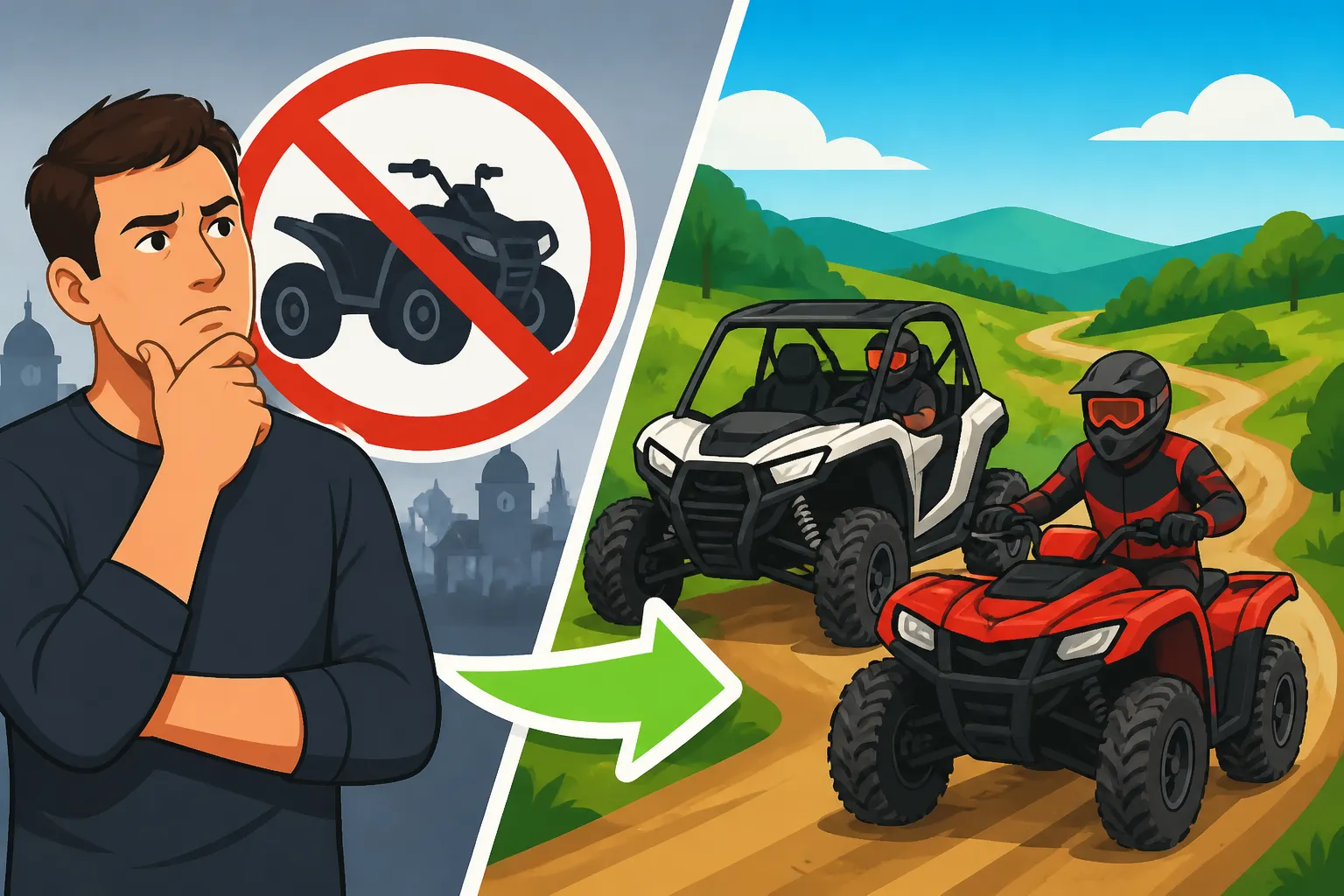
If your town has indeed banned riding within its limits, it doesn't necessarily mean the end of your off-roading adventures in Alabama. It just means you'll need to expand your horizons a bit. Alabama is rich with opportunities for responsible riders. Your first avenue should be private land. If you own rural property, you're usually free to ride there, away from city restrictions, as long as you're not causing a nuisance to neighbors or violating any environmental regulations. If you don't own land, consider asking friends or family who do for permission. Always get explicit, preferably written, permission before riding on someone else's property to avoid any [Alabama Trespass Law for Riders] issues.
Beyond private land, Alabama boasts some fantastic public and private riding parks. Places like Stony Lonesome OHV Park or Minooka Park offer miles of trails and dedicated spaces where off-road vehicles are not just tolerated, but celebrated. These parks often have specific rules regarding machine types, helmets, and age restrictions, but they provide a legal and often highly enjoyable environment. You might need to trailer your machine to these locations, but it's a small price to pay for legal, organized riding. [Alabama ATV Trails: Where to Ride] is a great resource for finding these spots. Many of these parks are well-equipped, providing wash stations, camping, and even parts from brands like SuperATV if you need a quick repair.
Seeking Exemptions or Permitted Uses
Even in towns with bans, there might be subtle pathways to limited use or specific exemptions you can explore. These are often not widely advertised, but they exist in some ordinances. For instance, does the ban explicitly state that it applies to all uses, or does it differentiate between recreational use and utility use? Many communities will have exemptions for machines used for legitimate work purposes, such as landscaping, property maintenance, or snow removal (though snow is rare in most of Alabama!). If you use your UTV to haul equipment for your small business or to maintain your large property, you might fall under such an exemption.
Another area to investigate is specific events or parades. Some towns might grant temporary permits for ATVs or UTVs to participate in community events, like a Fourth of July parade or a local festival. This requires proactive engagement with the town council or event organizers, but it can be a way to keep your machine visible and show its positive contributions to the community. Similarly, if there are designated community areas, like a local fairground or a large park, you might be able to advocate for specific sections to be opened for limited, supervised riding events. This requires persistent, polite communication and a willingness to compromise, but it can be a way to chip away at a blanket ban.
Advocating for Responsible ATV and UTV Use in Your Community
Feeling frustrated by a ban is natural, but simply complaining won't change anything. To truly make a difference, you need to channel that energy into positive, proactive advocacy. This means showing up, speaking out, and demonstrating that ATV and UTV riders are responsible, valuable members of the community.
Engaging with Local Officials and Community Leaders
If you want to see a change, you have to be at the table. Attending town council meetings is a critical first step. Don't go in hot; listen to discussions, understand the council's perspective, and when it's your turn to speak, be calm, articulate, and respectful. Focus on facts, not emotions. Present data about the economic benefits that off-road vehicle recreation brings (tourism to riding parks, local sales of parts from companies like SuperATV, etc.). You might point out that [Alabama Registration Is Voluntary] for private use, showing that many owners are already using their machines responsibly on their own property.
Consider setting up individual meetings with council members, the mayor, or even the police chief. Explain your passion for the sport, highlight the safety measures you take, and express your willingness to work with the town to find solutions rather than just fight the ban. Propose alternatives to an outright ban, such as designated routes for crossing specific roads, specific hours of operation, or even a local permitting system that ensures riders are educated on local rules. The goal is to shift their perspective from viewing ATVs as a problem to seeing them as a legitimate recreational activity that can be managed responsibly within the community.
Forming or Joining Local Riding Clubs
There's strength in numbers, and a well-organized local ATV or UTV club can be a powerful voice for riders. If there isn't one in your area, consider starting one. A club provides a platform for unified communication with local officials, demonstrating that riders are a cohesive, responsible group, not just a collection of individuals causing trouble. Clubs can organize community clean-up days, volunteer for trail maintenance at nearby parks, or even host safety clinics. This kind of positive community engagement can significantly improve the public image of off-road vehicle riders.
A club can also serve as a resource for new riders, teaching them proper etiquette and safety, which directly addresses many of the concerns that lead to bans. When you can show a town council that your group is actively promoting safe riding, environmental stewardship, and community involvement, you build trust and credibility. It’s much harder for officials to dismiss a well-organized, civic-minded group than it is to ignore individual complaints. Use your collective voice to advocate for designated riding areas or to challenge blanket bans with reasonable alternatives.
Promoting Safety and Environmental Stewardship
Ultimately, the best way to combat negative perceptions and bans is through exemplary behavior. Every time you ride, whether on private land or in a designated park, you are an ambassador for the sport. This means always wearing appropriate safety gear, including helmets (even if [Does Alabama's Motorcycle Helmet Law Cover ATV Riders?] is debated for ATVs, it's always smart), and never riding under the influence. It means understanding [Alabama Public Use Versus Private Use] differences and sticking to the rules for each. When you're in a public-facing situation, such as trailering your machine through town, ensure your machine is clean, well-maintained, and that you're driving your tow vehicle safely.
Beyond personal conduct, actively promote environmental stewardship. Stay on marked trails, "tread lightly" to minimize impact, and always pack out whatever you pack in. Consider participating in or organizing trail maintenance days, demonstrating a commitment to preserving the natural spaces we all enjoy. If your machine from SuperATV has a quiet exhaust option, consider it. By proactively demonstrating that ATV and UTV riders are responsible, safety-conscious, and environmentally aware, you chip away at the negative stereotypes and build a foundation for respectful dialogue with local authorities. This long-term effort is essential for shifting public opinion and potentially reversing or modifying bans.
Practical Steps When Faced with a Ban
While advocacy is crucial for long-term change, you might need immediate solutions when a ban is in place. Adapting to the new rules, or preparing for them, involves some practical considerations for your machine and your riding habits.
Checking Your Machine's Legal Status If Applicable
One of the nuances often missed in local bans is whether your specific machine might already have a unique legal status. For instance, the discussion around "street legal" can be complex in Alabama. Most factory ATVs and UTVs do not meet federal motor vehicle safety standards (FMVSS) and thus cannot be legally registered for road use in Alabama. However, some newer UTVs or specialty vehicles might be manufactured to meet Low-Speed Vehicle (LSV) requirements, which could allow them limited street use, depending on local ordinances and proper registration. It's a long shot for most, but worth investigating. [Are ATVs Street Legal in Alabama?] is a complex topic.
If your town has a ban, even an LSV might be prohibited. But if the ban is specifically on "off-road vehicles" and your machine (perhaps a modified UTV with turn signals, mirrors, and a horn, sourced from a company like SuperATV, that technically could be street legal if registered elsewhere) could pass as something else, it's worth checking the exact wording of the ordinance. Some ordinances might be so broadly written that they cover everything, while others might focus on "non-highway vehicles." Understanding this distinction, if it exists, could give you an angle for discussion, even if it doesn't allow you to ride freely. However, for most traditional ATVs, the answer to [Can You Drive an ATV on the Road in Alabama?] is generally no, making this less relevant for direct road use in a banned area.
Alternative Transportation or Storage Solutions
If you can no longer ride your machine directly from your home, you'll need to figure out how to get it to legal riding areas. This almost invariably means investing in a trailer and a suitable tow vehicle if you don't already have one. A utility trailer, even a small one, allows you to transport your ATV or UTV safely and legally to designated parks or private lands outside the town limits. This might seem like an added expense, but it opens up a world of riding opportunities that aren't restricted by your immediate town's rules. Consider exploring lightweight aluminum trailers for ease of towing, or enclosed trailers for added security and weather protection, especially for those longer hauls to a destination like Stony Lonesome.
Beyond transportation, consider storage. If your machine used to sit in your driveway or front yard, a ban might necessitate a change. Keeping it less visible can reduce friction with neighbors, especially if public perception of ATVs is low. This might mean investing in a shed, utilizing a garage space, or even looking into off-site storage units if space is limited at home. While an inconvenience, these steps demonstrate respect for community standards and can prevent further complaints, allowing you to ride discreetly and responsibly elsewhere.
Selling or Relocating Your Machine
In some unfortunate cases, after exhausting all advocacy and alternative riding options, you might find that holding onto your ATV or UTV in a town with a strict ban just isn't practical or enjoyable anymore. This is a tough decision, but it's a realistic one for some owners. If you rarely get to ride, or the effort required to transport your machine continually outweighs the fun, selling it might be the best course of action. You could then invest in a machine that's more suitable for your new circumstances, or simply allocate your resources elsewhere.
Alternatively, if you have access to a second property outside of the town limits – perhaps a family farm, a hunting lease, or a cabin near a riding park – relocating your machine there could be a viable solution. This allows you to keep your beloved quad or side-by-side and enjoy it when you visit that location, without the hassle of constantly trailering it back and forth from a banned area. It's a way to keep your passion alive, even if your immediate surroundings no longer accommodate it.
Disclaimer
This article is for general informational purposes only and does not constitute professional advice. Laws, prices and regulations vary by location and change over time. Consult a qualified professional for guidance on your specific situation.