What an Alabama Officer Can Ask to See
There's nothing quite like the sudden rush of anxiety when you see blue lights in your rearview, especially when you're out enjoying your ATV or UTV. Many of us wonder, "What exactly can an Alabama officer ask me to show them?" This comprehensive guide is here to demystify those roadside stops, explaining what information and documentation law enforcement might request when you're riding your off-road machine in Alabama, so you can ride with a bit more peace of mind.
The Initial Encounter: What Triggers a Stop?
It's natural to feel a knot in your stomach when an officer approaches, but understanding why you might be stopped can help alleviate some of that stress. Law enforcement officers have a duty to ensure public safety and adherence to the law, and off-road vehicles, while a blast to ride, often operate under specific regulations. Sometimes, a stop is entirely random, but more often than not, there's a specific reason.
Visible Infractions and Suspicion
The most common reason for a stop is a visible infraction. This could be something as obvious as riding your ATV or UTV on a paved public road in an area where it's strictly prohibited. We all know that feeling of needing to quickly get from one trail segment to another, or perhaps just running down a short stretch of a county road, but if you're caught, that's a clear violation. An officer might also observe reckless driving, excessive speed, or operating in an unsafe manner, which can definitely draw their attention. These aren't just minor annoyances; they're public safety concerns that an officer is trained to address.
Beyond direct violations, an officer might stop you if your machine appears to be heavily modified in a way that suggests it might not be safe, or if you're riding in an area that raises suspicion. For example, if you're riding late at night without adequate lighting, or in a remote area known for illicit activity, it's not unreasonable for an officer to want to check things out. It's not about being targeted; it's about the circumstances.
Random Checks Versus Targeted Enforcement
While some stops might feel random, they rarely are without some basis. Officers may set up checkpoints in areas popular with off-road riders to ensure compliance with registration, safety gear requirements, and age restrictions. This is particularly common near popular riding parks or access points to public lands where rules are often strictly enforced. These kinds of stops are generally for the overall safety of the riding community, making sure everyone is following the rules that keep us all safe.
Sometimes, enforcement can be targeted due to specific complaints from residents about noise, property damage, or illegal trespassing. If a neighborhood has been experiencing issues with ATVs tearing up yards or creating excessive noise, local law enforcement might increase patrols in that area. It's not always about catching you doing something wrong, but rather about addressing broader community concerns. Understanding this can help you anticipate areas where you might want to be extra vigilant about following all rules. [Alabama Noise Complaints About Quads] is a real issue in some communities.
The Importance of Safe and Legal Riding
Ultimately, the best way to minimize your interactions with law enforcement is to always ride safely and legally. This means knowing where you're allowed to ride – whether it's on [Alabama Public Use Designated Areas] or exclusively on private property – and adhering to all local and state regulations. If you're riding a powerful machine, understanding its limits and your own is crucial.
Being prepared also means understanding the specific equipment requirements for your machine, which can sometimes vary depending on where you're riding. For example, some public lands might require a spark arrester, while private parks might have their own specific rules about helmets or machine width. Investing in quality safety gear and ensuring your machine is well-maintained isn't just about avoiding a ticket; it's about protecting yourself and others. Many riders choose to upgrade their machines with components from brands like SuperATV, but it's important to remember that all modifications should still comply with local regulations, especially if you plan to ride on public land.
Documents and Information an Officer May Request
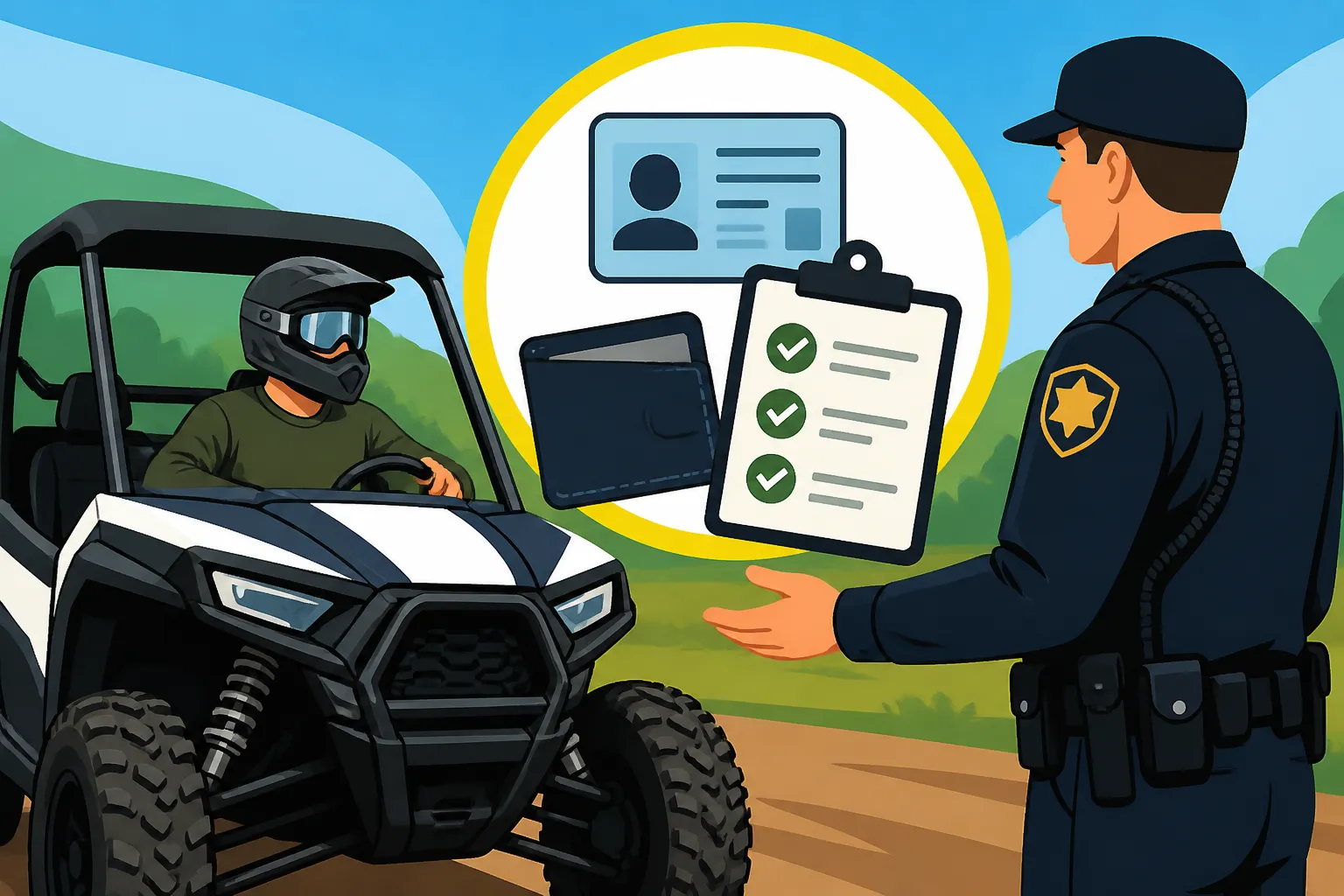
When an officer approaches you, they are essentially trying to establish who you are, if you have the right to be operating the machine, and if the machine itself is legitimately yours and legally allowed to be where it is. Having your paperwork in order can make the process much smoother and quicker.
Proof of Ownership and Identification
First and foremost, an officer will likely ask for your personal identification. This typically means a driver's license or a state-issued ID. Even if you're not riding on a public road, law enforcement needs to identify individuals they interact with. It's a standard procedure to verify who you are and to check for any outstanding warrants or other legal issues. While you might not need a driver's license to operate an ATV or UTV on private land, having valid identification is always a good idea when dealing with law enforcement in any context.
Beyond personal ID, you should be prepared to prove that the ATV or UTV you are operating belongs to you or that you have permission to use it. This might include a bill of sale, a previous registration document, or, in the case of newer machines, a title. Since [Alabama ATV Titling Starts With Model Year 2026], if your machine is a 2026 model year or newer, you will have a title. For older machines, you might only have a bill of sale or prior registration paperwork. If you're borrowing a friend's machine, carrying a written note of permission from the owner can save a lot of headaches. [Proving You Own an Untitled Machine] can sometimes be tricky without a title, so having solid paperwork is key.
Registration and Permits, If Applicable
Alabama has a voluntary registration system for ATVs and UTVs through ALEA. This means that [Do You Need to Register an ATV in Alabama?] depends entirely on where and how you plan to ride. If you plan on riding on designated public trails or lands, you'll need to purchase a public use registration. If you're sticking solely to private property, a private use registration is available but not mandatory. An officer will want to see proof of this registration if you're on public land that requires it. This usually comes in the form of a small decal on your machine and a paper registration card.
In addition to state registration, if you're riding on specific public lands, such as Wildlife Management Areas (WMAs) or some national forests, you might need additional permits. For example, [Alabama WMA Permits for Riders] are often required, and these can sometimes be purchased daily or annually. It’s critical to research the specific requirements for any public land you plan to visit before you load up your machine. Carrying printed copies or having digital versions accessible on your phone can really help smooth things over during a stop.
Operator Licensing and Age Verification
While Alabama does not have a statewide mandatory ATV safety course or licensing requirement for off-road operation, age restrictions do apply. For example, generally, youth under 14 may not operate an ATV or UTV on public property without direct adult supervision, and often machines must be of appropriate size. At private parks, [Alabama Private Park Age Minimums] can vary significantly. An officer might ask for your age or the age of a young rider to ensure compliance with these rules.
If you are riding on public roads where it's specifically allowed (which is very rare for ATVs, but might apply to certain low-speed vehicles or farm equipment), you would absolutely need a valid driver's license. [Are ATVs Street Legal in Alabama?] The short answer for typical recreational ATVs is generally no, but specific local ordinances might exist for golf carts or other specialized vehicles. Be ready to provide your driver's license if you're on any paved surface that even remotely resembles a public road.
Machine-Specific Checks and Equipment
Beyond your personal documents, an officer might also take a closer look at your machine itself. This inspection is usually focused on safety, compliance with environmental standards, and ensuring the machine hasn't been altered in a way that makes it illegal or unsafe for the riding conditions.
Safety Gear and Machine Compliance
Safety gear is often a point of interest for officers, especially when dealing with younger riders. While [Does Alabama's Motorcycle Helmet Law Cover ATV Riders?] is a nuanced question, many public riding areas and private parks do mandate helmets, and it's always a good idea to wear one. An officer might observe if riders are wearing appropriate eye protection, closed-toe shoes, or other recommended safety gear. While they may not issue a citation for lack of a helmet if it's not legally required in that specific location, they might offer a safety warning.
Machine compliance can cover a range of things. For instance, if you are operating after dark, working headlights and taillights are usually required. [Alabama Lighting on a Machine at Night] is essential for visibility. Some public lands or parks might also have rules regarding spark arresters to prevent wildfires, or even width and weight limits, like [60 Inches and 1,500 Pounds] for ATVs or [80 Inches for a Side-by-Side]. If your machine has been heavily modified, perhaps with a lift kit or oversized tires from a company like SuperATV, an officer might check if these modifications push the machine beyond the legal width or height limits for specific trails or public access points.
Condition of the Machine and Modifications
The overall condition of your ATV or UTV can also factor into an officer's assessment. If your machine appears unsafe – for example, with visibly worn tires, broken lights, or exhaust issues – an officer might consider it a safety hazard. While they might not issue a ticket for every small defect, severe issues could lead to warnings or even a directive to cease operation if it poses an immediate danger to yourself or others. This is about ensuring the vehicle is in a safe operating condition.
Modifications are common, and for many of us, customizing our ride is part of the fun. Whether it's a new exhaust, a lift kit, or a powerful winch, many riders love to personalize their machines. However, some modifications can draw unwanted attention if they violate local ordinances. For instance, overly loud exhaust systems can lead to [Alabama Noise Complaints About Quads] in populated areas, or might violate specific park rules. Officers are trained to spot non-compliant vehicles, and sometimes the very nature of an aftermarket part might prompt them to ask questions about its legality or safety. It's always best to check local regulations before making significant changes, especially to parts that affect sound, width, or safety.
Sound and Environmental Concerns
Environmental concerns are increasingly becoming a focus for law enforcement, especially on public lands. This ties back to spark arresters, but also includes preventing fluid leaks or excessive emissions. If your machine is visibly leaking oil or fuel, or emitting excessive smoke, an officer might investigate further. These issues aren't just bad for the environment; they can also be indicators of a poorly maintained machine that could pose a fire hazard or mechanical breakdown risk.
Another aspect is responsible riding. Damaging trails, riding in prohibited sensitive areas, or creating excessive ruts can lead to stops and potential citations. Officers in these areas are often protecting natural resources, and observing riders causing environmental harm is a serious concern. While not directly about what they ask to see, it's what they observe that leads to the stop, and then they'll ask for your paperwork.
What to Do During a Stop and Your Rights
Encountering law enforcement can be stressful, but knowing how to react and what your rights are can make a significant difference in how the situation unfolds. Staying calm and cooperative is almost always the best approach.
Remaining Calm and Cooperative
When an officer signals you to stop, do so safely and promptly. Find a clear, safe spot to pull over, turn off your engine, and keep your hands visible. This immediately de-escalates the situation and shows respect for the officer's authority. Reaching for documents too quickly or making sudden movements can be misinterpreted. Wait for the officer to instruct you.
When asked for documents, retrieve them calmly and present them. Answer questions truthfully, but avoid volunteering unnecessary information. If you're unsure how to answer a question, you can state that you don't know or don't recall. Politeness goes a long way. An officer is more likely to be understanding if you are cooperative, even if you've made a minor infraction. Remember, their primary goal is usually to ensure safety and compliance, not to ruin your day.
Understanding Your Rights and Consequences
You have the right to remain silent if an officer asks you questions that might incriminate you. You can politely state, "I choose to remain silent." However, you are generally required to provide identification and documentation related to your vehicle if you are suspected of a violation. If an officer asks to search your machine, you have the right to refuse, unless they have a warrant, probable cause, or your consent. Knowing these rights is important, but asserting them should be done respectfully.
The consequences of a violation can range from a verbal warning to a citation with a fine, or even impoundment of your machine in more severe cases, like [When Police Impound a Quad After a Stop]. Fines for illegal road riding, trespassing, or unsafe operation can add up quickly, and court costs can make them even more expensive. Understanding the potential penalties can highlight the importance of knowing and following all ATV/UTV laws in Alabama.
When to Seek Legal Counsel
If you receive a citation that you believe is unjust, or if you're facing more serious charges, it's always wise to seek legal counsel. A local attorney specializing in traffic or off-road vehicle laws can provide guidance, explain your options, and represent you in court if necessary. Don't feel pressured to admit guilt or pay a fine if you genuinely believe you were not in violation or if there were extenuating circumstances. Getting advice from a professional can help you navigate the legal system effectively.
Remember, this is about being informed, not about being confrontational. Knowing what to expect and what an officer might ask for empowers you to handle these situations with confidence.
Here's a quick summary of what an Alabama officer might ask to see during an ATV/UTV stop:
| Category | Specific Items | Purpose |
|---|---|---|
| Personal ID | Driver's License or State-Issued ID | Identify the operator |
| Ownership Proof | Bill of Sale, Previous Registration, Title (2026+) | Verify legitimate ownership of the machine |
| Registration | ALEA Public/Private Use Registration Card & Decal | Ensure compliance for riding on public land or for voluntary private use |
| Permits | WMA Permits, Park Passes, Other Special Permits | Confirm access rights for specific public or private riding areas |
| Age Verification | Birth Certificate (for minors), ID | Verify compliance with age restrictions for operators |
| Machine Status | VIN (Vehicle Identification Number) | Verify the machine's identity and check for theft |
| Safety Gear | Helmet (if required), Eye Protection | Assess compliance with safety regulations |
| Machine Condition | Lights, Tires, Spark Arrester (if required) | Ensure safe and environmentally compliant operation |
Disclaimer
This article is for general informational purposes only and does not constitute professional advice. Laws, prices and regulations vary by location and change over time. Consult a qualified professional for guidance on your specific situation.