Riding Two Up on a Single-Seat Quad in Alabama
We've all been there: you're out on the trail, enjoying the incredible Alabama scenery, and a friend or family member expresses an interest in joining you, but you've only got a single-seat ATV. It's a common scenario, and it's easy to think, "Oh, we'll just squeeze on. What's the harm?" But before you double up on that quad, it's crucial to understand the very real risks, safety implications, and legal considerations here in Alabama. This guide will walk you through why riding two-up on a single-seat ATV is generally discouraged, how Alabama law approaches the issue, and what your safer, smarter options are for enjoying the trails with company.
Understanding "Single-Seat" Versus "Two-Up" in Alabama
When we talk about ATVs, it's important to differentiate between machines designed for one rider and those explicitly built for two or more. A "single-seat quad" is exactly what it sounds like: a four-wheeled vehicle manufactured and intended by design for a single operator. These machines typically have a saddle-style seat, handlebars, and footrests positioned for one person to control and maneuver the vehicle effectively. You'll often see warnings right on the machine, or certainly in the owner's manual, stating "Operator Only" or "No Passengers."
On the other hand, some manufacturers produce ATVs specifically designed for two riders. These are sometimes called "two-up" ATVs or "tandem" ATVs. They'll have an extended seat, often with a backrest and handholds for a passenger, and typically a longer wheelbase to accommodate the additional weight and maintain stability. This design difference isn't just about comfort; it's fundamental to safety and handling. When a manufacturer designs a machine for a specific capacity, they've engineered the suspension, braking, frame, and overall balance to handle that load under various riding conditions.
The frustration often stems from seeing friends with side-by-sides (ROVs) that easily seat two, four, or even six people. You might think, "Well, my quad is big enough, why can't I just take someone along?" The core issue is that ATVs are built to be actively ridden, meaning the operator shifts their weight to control the machine. Adding a passenger completely throws off that delicate balance, making the machine unpredictable and significantly increasing the risk of an accident. Alabama's legal definitions, while sometimes a bit dense, distinguish between these types of machines, and understanding that is your first step. Check out [Alabama ATV and ROV Legal Definitions] for a deeper dive into how the state categorizes these vehicles.
Manufacturer's Intent and Safety Warnings
Every ATV you buy, whether new or used, comes with a clear set of guidelines from the manufacturer, often displayed prominently as stickers on the machine itself and detailed in the owner's manual. These aren't just suggestions; they are critical safety warnings based on extensive engineering and testing. For a single-seat ATV, the overriding message is almost universally "Operator Only." This isn't a ploy to get you to buy a second machine; it's a fundamental aspect of the vehicle's design and safe operation.
When you add a passenger to a machine designed for one, you immediately overload it. This impacts several critical performance aspects:
- Balance and Stability: ATVs rely on the rider's active weight shifting to navigate turns, climb hills, and absorb bumps. A passenger, who cannot anticipate or react in the same way, becomes dead weight that throws off the center of gravity, making the machine much harder to control and significantly increasing the risk of a rollover, especially on uneven terrain or during sharp turns. Imagine trying to turn a bicycle with someone sitting on the handlebars – it’s just not how it’s meant to work.
- Steering and Braking: The added weight affects steering responsiveness, making the machine feel sluggish and harder to maneuver quickly. Braking distances will increase significantly because the brakes are designed to stop the machine and one rider, not two. This is particularly dangerous on downhill slopes or when you need to react quickly to an obstacle.
- Suspension and Tires: The suspension system on a single-seat ATV is tuned for one rider's weight. Adding a second person will compress the suspension beyond its intended limits, potentially bottoming it out, making the ride rougher, and reducing ground clearance. Tires might also be overloaded, leading to premature wear or even blowouts, especially if they are already worn.
It's common to see aftermarket accessories for carrying gear, like cargo racks or storage boxes. Companies like SuperATV offer fantastic solutions for expanding your machine's utility for hauling equipment, tools, or even extra fuel. However, these accessories are designed for inanimate cargo, not living passengers. They distribute weight differently and are not meant to provide a safe, stable, and ergonomic place for a person to ride. The crucial difference is that gear doesn't move or shift its weight unexpectedly, and it doesn't need to brace itself or hold on for dear life. Always stick to accessories designed for their intended purpose and never modify your machine to carry a passenger if it wasn't built for it.
Alabama's Legal Stance on Passengers on ATVs
Now, let's talk about what Alabama actually says about this. While Alabama's off-road vehicle statute doesn't always spell out every single scenario with explicit "thou shalt nots," the spirit and intent of the law, combined with general safety principles, heavily discourage and often implicitly prohibit passengers on single-seat ATVs. The focus is always on safe operation and preventing accidents.
For example, while there isn't a specific line item saying "no two-up riding on a one-up quad," consider the general safety regulations. Alabama does have specific rules regarding who can operate an ATV, including [Alabama ATV Age Rules] and [Alabama Rules for a Teen Rider]. The underlying assumption in these regulations is that the machine is being operated safely and according to its design. If you're operating a machine in a manner that makes it inherently unsafe – such as with an extra passenger on a single-seat model – you could easily find yourself in violation of general reckless operation laws or other public safety statutes.
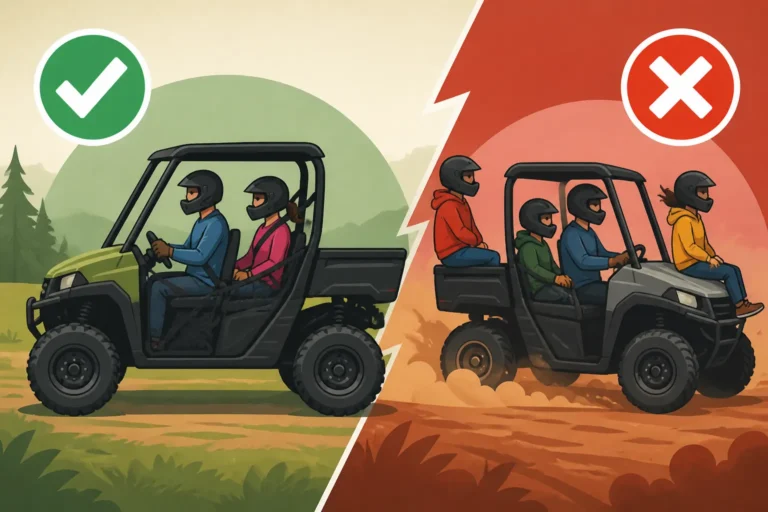
It's also important to understand the distinction between an ATV and a side-by-side (ROV) in Alabama. Side-by-sides are specifically designed with multiple seats, seatbelts, and roll-over protection, making them inherently safer for carrying passengers. If you're looking to ride with company, a side-by-side is the designed and legally compliant choice. Information on [Registering a Side-by-Side in Alabama] can give you more insight into this alternative. Attempting to make your ATV function like a multi-passenger vehicle when it's not designed to do so puts you and your passenger at significant risk.
Furthermore, local ordinances can come into play. While the state statute provides a framework, individual counties or cities might have their own specific rules regarding ATV use, especially on certain public lands or designated riding areas. A private park, for instance, will almost certainly have its own detailed rules. They might explicitly forbid passengers on single-seat ATVs in their waiver forms or posted rules, often citing safety and liability concerns. It’s always a good idea to check the specific regulations for where you plan to ride. For riding on public lands, you'll need to understand the difference between [Alabama Public Use Versus Private Use] and what rules apply to each.
If you are caught riding with a passenger on a single-seat ATV, especially in a way that is deemed unsafe, you could face consequences. While not specifically enumerated as "two-up riding," a law enforcement officer could cite you for reckless operation, endangering a passenger, or other safety violations. Penalties can vary, but generally involve fines, and in the event of an accident, the legal repercussions could be much more severe, potentially including liability for injuries.
The Risks Beyond the Law: Why It's a Bad Idea
Beyond the legal technicalities and manufacturer warnings, the real-world dangers of riding two-up on a single-seat quad are substantial and simply not worth the risk. Many riders, in the moment, underestimate just how precarious the situation becomes.
- Increased Risk of Rollovers and Loss of Control: This is the primary and most immediate danger. ATVs have a high center of gravity, and they are designed to be dynamic. When a passenger is added, the center of gravity shifts upwards and outwards, making the machine much more prone to tipping, especially during turns, climbs, descents, or when encountering obstacles. The passenger cannot effectively brace themselves or shift their weight to counter the machine's movements, essentially becoming a static, destabilizing force. A sudden bump or a sharp turn that you'd easily handle alone can become a recipe for disaster with a passenger.
- Severe Injuries for Both Riders: In a rollover or collision, the passenger is at an extreme disadvantage. They have no controls, no steering, and often inadequate handholds on a single-seat machine. They are essentially along for the ride and completely at the mercy of the operator's ability to maintain control – which is already compromised. Injuries for both riders can range from broken bones and concussions to far more severe trauma. Even at low speeds, a sudden stop or impact can throw a passenger off, potentially under the machine or into an obstacle. It's why there are specific [Alabama Rules for Passengers on a Quad] when the machine is designed for it, and almost none for those not intended for passengers. And don't forget, [Are Helmets Required for ATV Riders in Alabama?] often has local nuances, but for safety, a helmet for both riders is always recommended, if you must carry a passenger.
- Insurance Implications and Liability Nightmares: This is a huge factor many overlook. Does your ATV insurance policy cover an incident where the machine was being operated outside of its manufacturer's intended use and design? In many cases, the answer is no. If an accident occurs and your insurance company determines you were operating the ATV unsafely by carrying an unauthorized passenger, they could deny your claim. This means you would be personally responsible for all damages, medical bills for yourself and your passenger, and any potential legal fees. This financial burden alone should be a significant deterrent. It's worth reviewing your policy and asking your provider specific questions about scenarios like this, as it links directly to [Does Alabama Require Insurance on an ATV?].
- Impact on Trail Etiquette and Reputation: Riding unsafely, including carrying unauthorized passengers, can give all ATV riders a bad name. It can lead to increased restrictions, closures of riding areas, and stricter enforcement. When one rider acts irresponsibly, it can negatively impact the entire community. Safe riding is not just about personal safety; it's about preserving access to the trails we all love.
- Better, Safer Alternatives: If you want to share the adventure, invest in a machine designed for it. A two-up ATV (tandem ATV) or a side-by-side (UTV or ROV) are built from the ground up to safely accommodate multiple riders. These vehicles have appropriate seating, restraints, roll cages, and handling characteristics for passengers. While it might seem like a bigger upfront investment, it's a far more responsible and ultimately more enjoyable way to ride with company. Accessories from SuperATV, for instance, are fantastic for customizing a side-by-side to enhance its utility for multiple passengers, such as adding windshields, roofs, or upgraded seating, all while staying within the vehicle's design parameters.
Ultimately, the desire to share the joy of ATV riding is understandable, but trying to force a single-seat quad to do the job of a multi-passenger vehicle is a dangerous shortcut. For the safety of yourself and your passenger, adhere to the manufacturer's guidelines, respect Alabama's laws, and invest in the right equipment if you plan to ride with company.
Disclaimer
This article is for general informational purposes only and does not constitute professional advice. Laws, prices and regulations vary by location and change over time. Consult a qualified professional for guidance on your specific situation.