Alabama Rules for Towing With a UTV
There's nothing quite like the versatility of a UTV when you're out in the Alabama wilderness, whether you're working on the back forty, heading to your deer stand, or just enjoying some trail riding. But when it comes to hitching up a trailer or pulling a heavy load, especially off your own private property, things can get mighty confusing. This guide is here to untangle the often-misunderstood rules about towing with your UTV in Alabama, helping you stay safe and on the right side of the law.
The Nuances of UTV Towing on Private Versus Public Land
Let's face it, the vast majority of UTV towing happens right there on private land, where the rules are largely set by you and the landowner. But the moment those tires touch anything remotely public, the conversation changes entirely. It's a critical distinction that many folks overlook, leading to unexpected headaches down the line.
Towing on Your Own Property or Leased Land
When you're working on your own spread, or on private land you have permission to use, the world of UTV towing largely becomes one of common sense and manufacturer recommendations. If you're using your UTV on your own property, say, at your deer camp or your farm, you generally have a lot more leeway. There aren't state-level laws dictating how much you can tow, how wide your trailer can be, or what kind of lights you need on that trailer – not unless you’re getting onto public roadways, that is.
Think about it: you might be hauling a small utility trailer loaded with bags of corn out to your food plot, pulling a log splitter down a muddy two-track, or dragging a freshly harvested deer back to the cleaning station. In these scenarios, the main concerns are the capabilities of your UTV and your own safety. Overloading can still damage your machine, compromise your braking, and create dangerous situations, but you're not going to get a ticket for it. Many of us rely on our UTVs for serious work, and accessories like a heavy-duty receiver hitch from a brand like SuperATV can certainly make the job easier and more secure on private land, giving you peace of mind that your hitch won't fail under strain. However, it's always crucial to know your machine's actual towing capacity.
The Gray Areas of Public Land Towing
This is where things get tricky, and many riders find themselves scratching their heads. The moment your UTV, especially with a trailer attached, leaves the confines of private property and enters public land – whether it's a designated OHV park, a Wildlife Management Area (WMA), a national forest, or even just crossing a county road – a whole new set of regulations kicks in.
Generally, most public riding areas and managed lands have very specific rules about what type of vehicles are allowed, where they can go, and what activities are permitted. Towing a utility trailer, for instance, might be perfectly fine if you're retrieving game on a WMA during hunting season, provided the WMA rules allow UTVs on specific roads for that purpose. However, trying to pull a camper trailer behind your UTV on a national forest road that's only designated for licensed vehicles? That's a definite no-go. These areas often differentiate between a UTV simply driving on a trail and a UTV actively towing something. The key is always to check the specific rules of the public land you intend to use. [Alabama Public Use ATV Registration Explained] covers some of the general requirements for public land use, but specific towing rules are often found in the localized ordinances for those areas. Your innocent fishing kayak on a small trailer could land you in hot water if the specific public use area prohibits towed implements.
Understanding Alabama's Road Rules and UTV Towing Limitations
One of the biggest misconceptions surrounding UTVs is their legality on public roads, and this directly impacts towing. It's a common frustration to see a UTV driving down a paved road and wonder why yours can't, especially when you need to tow something just a short distance. The truth is, Alabama's stance on UTVs on public roads is pretty clear, and it has significant implications for towing.
Why Most UTVs Aren't "Street Legal" for Towing on Roads
The core issue boils down to federal regulations. Most UTVs, as they come from the factory, are manufactured for off-road use. They simply don't meet the Federal Motor Vehicle Safety Standards (FMVSS) required for vehicles to be legally operated on public highways. This isn't just about having headlights or brake lights; it's about crashworthiness, emissions, specific tire ratings, and a host of other engineering requirements that differentiate a road-legal vehicle from an off-road utility machine. [Alabama's Federal Standard Barrier to Road Use] explains this in more detail.
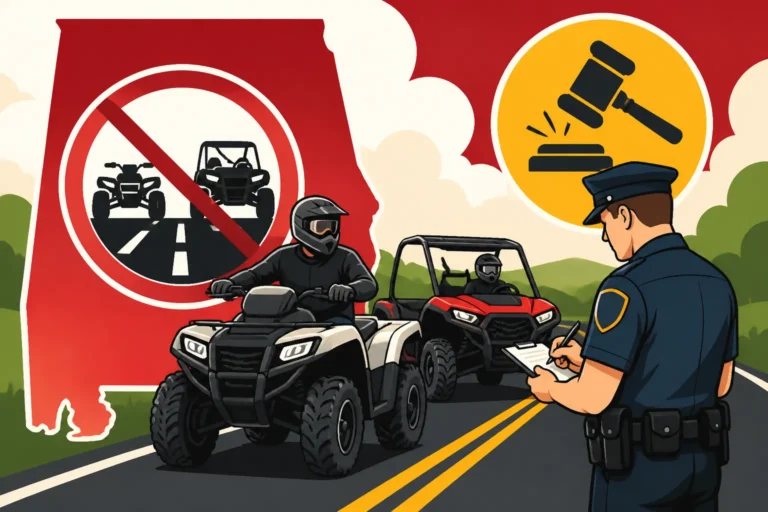
Because your UTV isn't street legal in Alabama, towing anything on a public road becomes a double violation. Not only are you operating an unregistered, non-compliant vehicle on the road, but you're also doing so with an added load that further compromises safety for other road users. This applies even if you're only trying to move a small trailer across a paved county road to get to another section of your property. While it might seem like a quick, harmless trip, law enforcement sees it differently. Simply adding a "street legal kit" with turn signals and a horn won't magically make your UTV compliant either; [Why a Street Legal Kit Will Not Make It Legal] clarifies this crucial point. The dangers are real: reduced braking performance, increased instability, and limited visibility make towing on public roads incredibly risky, both for you and for other drivers.
Exceptions and Designated Areas for UTV Road Use (and Towing)
Now, there are a few very narrow exceptions where UTVs might legally encounter public roads, and some of these could involve towing. However, these are exceptions, not the rule, and they often come with their own strict caveats.
- Farm Use Exceptions: Alabama law does provide some limited allowances for farm equipment to operate on public roads for agricultural purposes. If your UTV is primarily used for farming operations and you're crossing a road or traveling a short distance on it for farm work, you might fall under this exemption. This typically means moving between fields or hauling feed. However, this isn't a blanket permit to cruise down the highway with a trailer full of firewood just because you have a small garden. [Alabama Farm Use and Road Riding] delves into this, and it's something you need to be very clear about with local law enforcement. [Alabama Rules for Farm Machines on Roads] also provides more context.
- Crossing Roads: For many off-road enthusiasts, the necessity of simply crossing a public road to access another trail or piece of private property is a common occurrence. Alabama law allows for this, but with strict conditions. You must cross at a 90-degree angle, yield to all traffic, and do so safely and quickly. This permission to cross a road generally doesn't extend to traveling down the road, and certainly not to traveling a significant distance while towing. [Crossing a Road on an ATV in Alabama] outlines these specific rules.
- Local Ordinances (Rare): Very few Alabama cities or counties have specific ordinances that allow for UTV operation on certain local roads. Where these exist, they are highly localized and typically govern vehicles that meet low-speed vehicle (LSV) standards, which most UTVs don't. Even in these rare cases, the ordinances often focus on the UTV itself and might not extend to towing. It's crucial to check with the specific city or county if you believe such an ordinance exists where you plan to ride. [Alabama Low-Speed Vehicle Rules] clarifies the specific requirements for actual LSVs, which are very different from typical UTVs.
Practical Considerations and Safety When Towing with Your UTV
Even when you're legally towing on private land, or within those rare exceptions, safety should always be your top priority. Pushing your UTV beyond its limits or neglecting basic safety measures can lead to serious accidents, damage to your machine, or worse.
Matching Your UTV's Capacity to the Load
Every UTV manufacturer specifies a maximum towing capacity and a maximum tongue weight. This isn't just a suggestion; it's a critical safety limit. Exceeding these limits can have severe consequences:
- Loss of Braking Power: The added weight of a trailer and its load will significantly increase your stopping distance. If your UTV isn't designed to tow that much weight, its brakes simply won't be able to handle the strain effectively, especially on declines or in emergency situations.
- Reduced Stability and Control: Too much weight, or an improperly balanced load, can make your UTV incredibly unstable. This can lead to dangerous swaying, loss of steering control, and even rollovers, particularly on uneven terrain, during turns, or when stopping suddenly.
- Transmission and Engine Strain: Overloading puts immense stress on your UTV's drivetrain. This can lead to premature wear and tear on your belts, clutches, engine, and transmission, resulting in costly repairs or even complete failure.
- Suspension Damage: Excessive tongue weight or overall trailer weight can bottom out your UTV's suspension, reducing ground clearance and making it harder to navigate rough terrain. It can also lead to cracked frames or damaged axles.
Before you hitch up, always consult your owner's manual for the precise towing capacity and tongue weight. Products like heavy-duty hitches are fantastic for durability and ensuring a secure connection, and SuperATV, for instance, offers robust hitch receivers designed to handle tough jobs. However, a stronger hitch doesn't magically increase your UTV's rated towing capacity. It's about pulling the weight your machine was engineered to handle, not just what the hitch can physically connect to. If you're going to be routinely towing heavy loads, consider investing in a UTV specifically designed for higher towing capacities, or think about adding aftermarket springs or air shocks to help manage the load more effectively.
Essential Safety Practices for UTV Towing
Beyond matching the load to your machine, good towing practices are non-negotiable for safety:
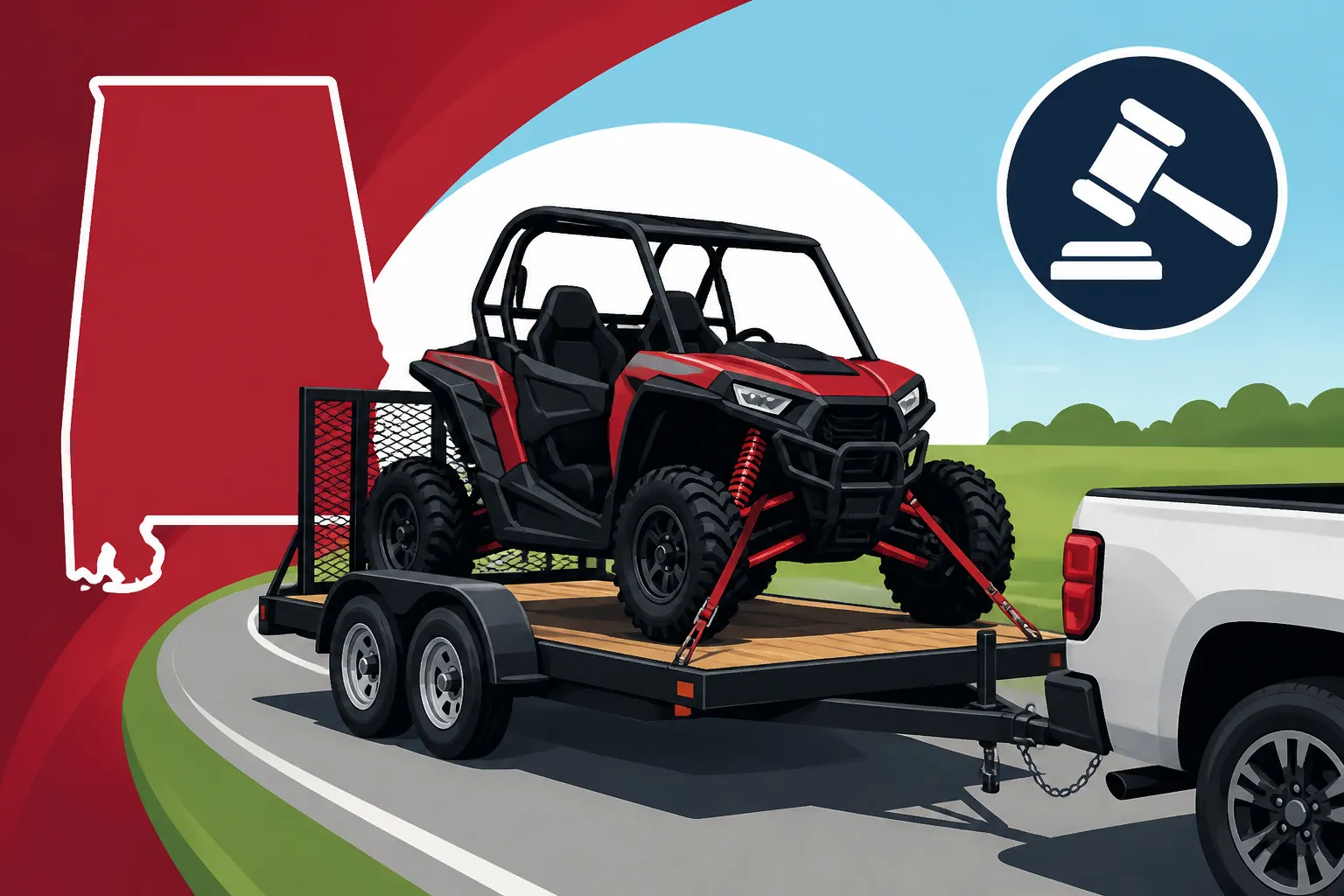
- Proper Hitching: Always use the correct size hitch ball for your trailer and ensure it's securely fastened. Use a hitch pin that's rated for the load and double-check that it's fully engaged. Always, always use safety chains. These are your last line of defense if the primary hitch connection fails. Cross them under the trailer tongue so they form a cradle, preventing the tongue from dropping to the ground if it disconnects.
- Load Distribution: Distribute the weight on your trailer correctly. Generally, about 10-15% of the total trailer weight should be on the tongue (the part that connects to your UTV's hitch). Too much tongue weight can overload your UTV's rear suspension and make steering light; too little can cause the trailer to sway violently, especially at speed or over bumps. Secure your load with straps, ropes, or nets so it can't shift during transport. A shifting load is a dangerous load, even at low speeds.
- Braking Distance: Remember that your stopping distance will be significantly longer when towing. Anticipate stops, give yourself plenty of room, and brake smoothly and gradually. Avoid sudden braking whenever possible.
- Speed and Terrain: Slow down. Towing greatly reduces your agility and increases the risk of tipping. Take turns wide and be extra cautious on uneven terrain, hills, and descents. Downshift to use engine braking on declines, rather than relying solely on your service brakes.
- Visibility: Ensure your trailer doesn't obstruct your view. If it does, consider adding extended mirrors. If you're towing after dark, make sure your trailer has working tail lights and turn signals, even on private property. While not legally mandated for private land, it's a smart safety move. [Alabama Lighting on a Machine at Night] discusses general lighting considerations that are good practice even off-road.
Penalties and Enforcement for Improper UTV Towing
Ignoring Alabama's rules regarding UTV road use and towing isn't just risky; it can also be costly. Law enforcement, especially county deputies and state troopers, are increasingly aware of off-road vehicle regulations and are prepared to enforce them.
What an Alabama Deputy Might Look For
If you're caught towing illegally on a public road, an Alabama deputy isn't going to be looking for just one thing; they'll likely be assessing the whole situation. They might pull you over for:
- Operating an unregistered vehicle on a public road: This is usually the first and most obvious violation. Unless your UTV is a bona fide Low-Speed Vehicle (LSV) and properly registered as such, it shouldn't be on paved roads.
- Unsafe equipment: If your UTV or trailer lacks proper lighting (especially at night), has bald tires, or appears to be in disrepair, that's an immediate red flag. [Alabama Equipment Checks by Deputies] outlines some of the general things deputies look for.
- Unstable or overloaded trailer: A trailer that's swaying violently, dragging, or appears to be straining your UTV is a clear sign of an unsafe operation. This puts other drivers at risk.
- Reckless driving: If you're speeding, swerving, or otherwise operating your UTV and trailer in a manner that seems careless, you're inviting a closer look.
It's common for deputies to encounter UTVs crossing or briefly traveling on county roads. While some might offer a warning for a minor crossing violation, if you're actively traveling a distance with an improperly towed load, expect more stringent enforcement. They will want to know if you have [Alabama Registration Paperwork Explained] for private or public use, but neither of those registrations permits street-legal towing.
Fines, Citations, and Vehicle Impoundment Risks
The consequences for improper UTV towing on public roads can range from significant fines to having your UTV impounded.
- Fines and Citations: You could face multiple citations, each carrying its own fine. These might include operating an unregistered vehicle, illegal road use, reckless endangerment, or even specific violations related to unsafe towing if they exist in local ordinances. The total cost can quickly add up, easily reaching hundreds of dollars, not including court costs. [Alabama Penalties for Illegal Road Riding] gives a broader overview of the financial implications.
- Impoundment: In more severe cases, or if you're deemed a significant hazard, law enforcement has the authority to impound your UTV and trailer. This means you'll not only have to pay the fines but also impoundment fees, storage fees, and potentially towing fees to retrieve your machine. This can be a substantial financial burden and a major logistical headache, especially if you're far from home. Imagine being out on a hunting trip, and your UTV gets impounded – that's a ruined weekend and a costly recovery.
Ultimately, knowing the rules and adhering to them is paramount. While your UTV is an invaluable tool for work and recreation, respect the boundaries between private land, public trails, and public roads. When in doubt, err on the side of caution and always prioritize safety, whether you're relying on a SuperATV hitch or just hauling a light load.
Disclaimer
This article is for general informational purposes only and does not constitute professional advice. Laws, prices and regulations vary by location and change over time. Consult a qualified professional for guidance on your specific situation.