Alabama Rules for a Teen Rider
Navigating the world of off-road vehicle rules for teenagers in Alabama can feel like trying to hit a moving target while blindfolded. Parents often find themselves scratching their heads, wondering if their eager young rider needs a license, how old they truly have to be, or what safety gear is genuinely required by law. This guide will cut through the confusion and explain the specific rules, guidelines, and best practices for teen riders of ATVs and UTVs across Alabama's diverse landscapes.
Understanding Alabama's Core ATV & UTV Definitions
Before we dive into the specifics of age or permits, it’s absolutely vital to understand what Alabama considers an ATV or UTV in the first place. This isn't just bureaucratic jargon; these definitions dictate which rules apply and can save a lot of headaches (or even legal trouble) down the road. If you’re a parent looking to get your teen set up for riding, knowing these distinctions is your first step.
What Qualifies as an ATV or UTV in Alabama?
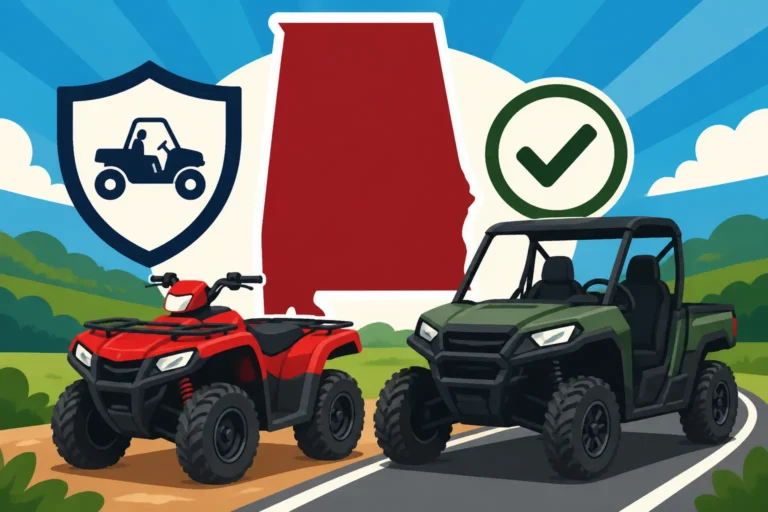
Alabama's law, specifically in the Off-Road Vehicle Statute, lays out some clear parameters for what counts as an all-terrain vehicle (ATV) or a utility terrain vehicle (UTV), often called a side-by-side. For an ATV, we're generally talking about a motorized off-highway vehicle designed to travel on four low-pressure tires, with a seat designed to be straddled by the operator, and handlebars for steering. The key here is that it's intended for a single operator, though some larger models might be designed for a passenger. The statute often references [60 Inches and 1,500 Pounds] as key identifiers.
UTVs, or side-by-sides, are a bit different. While they also ride on non-highway tires and are designed for off-road use, they feature a steering wheel, foot pedals, and side-by-side seating for the operator and at least one passenger. These are the machines you see more often with roll cages and seatbelts, built to carry more gear or more people. Alabama's definitions can be a bit tricky, with some [Alabama's Conflicting ROV Weight Figures] appearing in different parts of the statute. Why does this matter for your teen? Because a youth model quad, a full-size ATV, or a multi-passenger UTV from a company like SuperATV, designed for trail riding, will all fall under these classifications, making them subject to the same set of rules regarding where and how they can be operated by a minor. It's not about the brand, but about the vehicle's design and intent.
The Crucial Public Versus Private Land Distinction
This is perhaps the single most important concept to grasp when it comes to teen riders in Alabama. The state's laws treat riding on private property vastly differently than riding on public land. This isn't just a slight difference; it’s a chasm. On private property – your own land, a friend's farm, or a private off-road park like [Stony Lonesome OHV Park in Alabama] – the rules are much more relaxed and primarily determined by the landowner or the park's specific policies. State laws regarding age, helmets, or licensing for off-road vehicles simply don't apply in the same way they would on a public trail.
However, the moment your teen (or anyone) takes an ATV or UTV onto public land, like state parks, designated trails within Wildlife Management Areas (WMAs), or national forests, a completely different set of regulations kicks in. This is where you'll encounter specific age restrictions, helmet requirements, and permit mandates. It’s a distinction that can catch many parents off guard, especially if they assume the rules are uniform everywhere. Understanding [Alabama Public Use Versus Private Use] is paramount to keeping your teen safe and legal. Always know exactly whose land you're on and what rules apply before the tires hit the dirt.
Age and Supervision Requirements for Alabama Teen Riders
When it comes to age and supervision for riding ATVs and UTVs in Alabama, it’s not as straightforward as a single statewide minimum age. Instead, it’s a patchwork quilt of different rules depending heavily on where your teenager is riding. This can be frustrating for parents seeking clear guidance, but understanding the nuances is key.
No State-Mandated Age for Private Land Riding
Here's where many parents find a sigh of relief, but also where individual responsibility weighs heaviest. Alabama state law does not specify a minimum age for operating an ATV or UTV exclusively on private property. This means if your teen is riding on your own land, a family farm, or a friend's acreage, the state isn't dictating whether they are old enough to operate the machine. This is a significant distinction from many other states that impose age limits even on private land.
However, "no state law" doesn't mean "no rules" or "no consequences." It places the burden squarely on parents or guardians to make responsible decisions. You are the ultimate authority on your property. This means considering your teen's maturity, their physical size relative to the machine, their experience level, and whether they've received proper training. Many private off-road parks, like Minooka Park, will have their own age minimums or supervision requirements, even if the state doesn't. They often have waivers that outline these rules, and they can send riders home if these are violated. While a 10-year-old might be physically capable of operating a youth model quad, a parent must weigh the inherent risks and provide constant, vigilant [Alabama Supervision at a Private Park].
Public Land Riding: Where Age Rules DO Apply
Now, let's switch gears dramatically. The moment your teen's tires touch public land – think designated trails in state parks, national forests, or Wildlife Management Areas (WMAs) – the age rules become much more specific and binding. These areas often have explicit regulations that can vary. For example, within Alabama's WMAs, there are frequently rules requiring operators to be at least 16 years old, or if younger, they must be supervised by an adult of a certain age, often 18 or 21, and possibly even possess a valid driver's license for some machines on specific WMA roads. It's crucial to check the specific regulations for the particular WMA or public land you plan to visit, as [Alabama WMA Riding Rules Vary by Area].
National forests, such as the Talladega National Forest, also have their own set of rules, which often align with federal guidelines, emphasizing designated routes and sometimes requiring a valid driver's license for certain motorized uses. The key takeaway here is: never assume. Always check with the governing authority of the public land – be it the Alabama Department of Conservation and Natural Resources for WMAs, or the U.S. Forest Service for national forests – before letting your teen ride there. These rules are enforced, and violations can lead to fines, citations, or even confiscation of the machine.
The Role of Parental Supervision and Training
Regardless of whether state law mandates it, active parental supervision and proper training are the bedrock of safe ATV/UTV riding for teenagers. Even on private land where age limits don't apply, a young rider needs guidance. Think of it like learning to drive a car; you wouldn't just hand over the keys without lessons, would you? The same principle applies here, perhaps even more so, given the dynamic and unpredictable nature of off-road terrain.
Parents should ensure their teen rider has completed a reputable ATV safety course, even though [Alabama Has No Mandatory ATV Safety Course]. These courses teach vital skills like proper braking, turning, hill climbing, descending, and emergency maneuvers. They also cover awareness of terrain, environmental impact, and responsible riding etiquette. Furthermore, matching the machine size to the rider is critical. A full-size ATV is too powerful and heavy for a small teen. Reputable manufacturers and accessory providers like SuperATV offer components and gear designed to enhance safety and rider comfort across various machine sizes, but the ultimate decision for a proper fit rests with the parent. SuperATV, for instance, offers diverse suspension and protection components that, while not specific to youth models, highlight the overall importance of machine safety features for all riders. Constant, engaged supervision, especially for younger teens, ensures immediate intervention if a situation goes awry and reinforces good habits.
Safety Gear and Training for Young Riders in Alabama
When it comes to keeping teen riders safe on Alabama's trails, gear and training aren't just good ideas—they're often critical to preventing serious injury. While Alabama's laws might not be as strict as some other states, common sense and best practices absolutely demand a focus on protection and preparation.
Helmet Use: State Law vs. Common Sense
This is an area that often causes confusion. Many people assume that because Alabama has a [Alabama's Motorcycle Helmet Statute], it automatically applies to ATVs and UTVs. However, that's not quite the case. Alabama's helmet law is specifically written for motorcycles and similar two-wheeled vehicles. It does not explicitly mandate helmet use for ATV or UTV riders on private property or even on most public off-road trails.
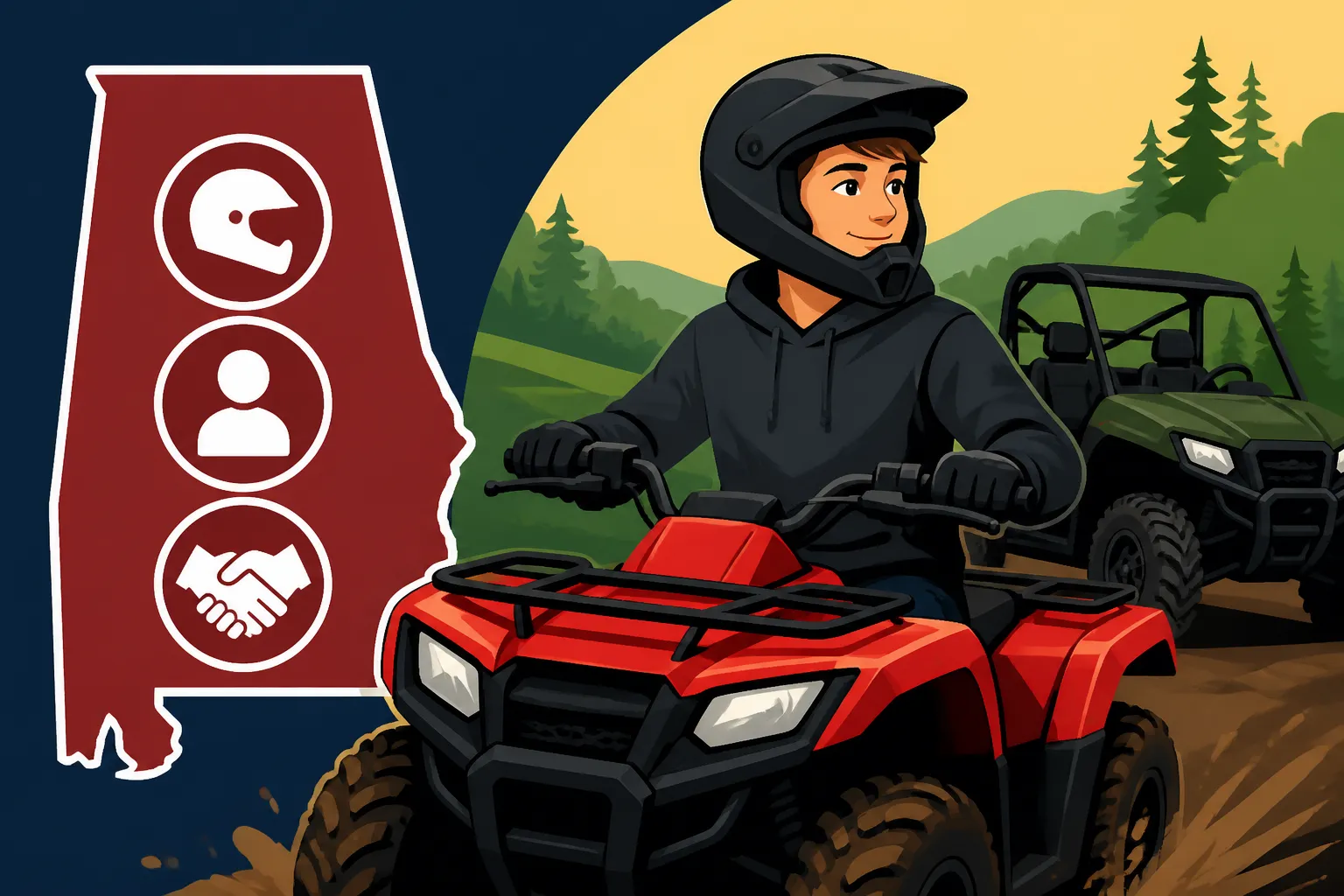
However, and this is a HUGE "however," that doesn't mean helmets aren't essential. Every single expert, safety organization, and experienced rider will tell you that a properly fitted, DOT-approved helmet is the most critical piece of safety equipment for any ATV or UTV rider, especially a teenager whose developing brain is particularly vulnerable. A crash, a rollover, or even just hitting a low-hanging branch can cause a severe head injury that a helmet could prevent. Many private parks will require helmets, even if the state does not, and it’s a rule to absolutely abide by. [Choosing a Helmet When Alabama Does Not Require One] is still the smartest decision you can make for your teen. Beyond helmets, good eye protection (goggles), long sleeves, long pants, gloves, and sturdy over-the-ankle boots are also highly recommended to protect against scrapes, impacts, and debris.
The Value of ATV Safety Courses
While [Alabama Has No Mandatory ATV Safety Course], signing your teen up for one is one of the best investments you can make in their safety and your peace of mind. These courses, often offered by certified instructors through organizations like the ATV Safety Institute (ASI), teach fundamental riding techniques, risk awareness, and proper machine operation. They cover everything from pre-ride inspections and starting/stopping procedures to turning, climbing hills, descending hills, traversing slopes, and emergency stopping.
For a teenager, learning these skills in a controlled environment under expert guidance is invaluable. It helps them develop confidence, good judgment, and the muscle memory needed to react safely in unexpected situations. It also instills a respect for the machine and the environment. Many insurance companies even offer discounts for riders who have completed a certified safety course. Think of it as defensive driving for off-roaders; it gives your teen the tools to anticipate and avoid hazards, rather than just reacting to them. This training can be particularly beneficial for navigating challenging terrain, for which many SuperATV products are designed to enhance performance and safety, complementing the rider's skill set.
Road Use and Teens: A Strict No-Go in Alabama
This section is where clarity is absolutely crucial, as misinformation can lead to severe consequences. The bottom line for ATVs and UTVs in Alabama, especially when it comes to teen riders, is this: they are generally not legal to operate on public roads, highways, or streets. This is a hard and fast rule that most people get wrong.
Why ATVs and UTVs Aren't Street Legal for Anyone, Especially Teens
The primary reason ATVs and UTVs are not street legal in Alabama has nothing to do with age, and everything to do with federal safety standards. To be legally operated on public roads, a vehicle must meet specific Federal Motor Vehicle Safety Standards (FMVSS). These standards cover things like headlights, taillights, turn signals, brake systems, tires, mirrors, and crashworthiness. ATVs and most UTVs, as manufactured, simply do not meet these standards. They are designed exclusively for off-road use.
Alabama law, specifically [Alabama's 49 CFR 571.500 Standard], references these federal requirements. Because ATVs and UTVs lack the necessary safety features and certifications, they are considered "non-highway vehicles" and are generally prohibited from public roadways. This isn't just a suggestion; it's law. For a teenager, who might have less experience and judgment, the risks of riding on a public road are amplified exponentially. Even a quick jaunt across a paved county road to get to another trail could result in a serious accident or a hefty citation. Parents need to clearly communicate this to their teens: public roads are off-limits. You cannot [Can You Drive an ATV on the Road in Alabama?].
Exceptions and Local Ordinances for Farm Use or Designated Paths
While the general rule is "no public roads," there are a few extremely limited exceptions in Alabama, though they rarely apply to general recreational riding by teens. One common misconception revolves around farm use. Alabama does provide for certain farm equipment to operate on public roads for short distances during daylight hours for agricultural purposes. However, a recreational ATV or UTV being used by a teen for joyriding is almost certainly not going to qualify under this narrow exemption, even if the family owns a farm. The intent and primary use of the vehicle are key here. [Alabama Farm Use and Road Riding] is not a free pass.
Some municipalities or counties may also have very specific, narrowly defined local ordinances that permit the use of ATVs or UTVs on certain designated, low-speed public streets or paths, often resembling golf cart ordinances in retirement communities or very small towns. These are exceedingly rare and always come with strict conditions (e.g., specific times, specific streets, adult supervision, etc.). You absolutely cannot assume such an ordinance exists or applies to your situation. Always verify directly with local law enforcement or city/county officials. Relying on hearsay or what "everyone else does" is a recipe for trouble. For a teen, it is safest to assume that roads are always off-limits, no matter how tempting a shortcut might seem.
Here's a quick reference table outlining the key differences for teen riders on private versus public land in Alabama:
| Feature | Private Land (e.g., Own Land, Private Park) | Public Land (e.g., WMA, National Forest) |
|---|---|---|
| Minimum Age | No state-mandated age; landowner/park rules apply | Often 16+, or supervised by an adult (check specific area rules) |
| Parental Supervision | Highly recommended; often required by parks | Often legally mandated for younger riders |
| Helmet Requirement | No state mandate; highly recommended, often park rule | No state mandate; often recommended/required by area |
| Safety Course | Recommended; not legally required | Recommended; not legally required |
| Registration/Permit | Not required (unless private park fee) | Often requires WMA permit, daily permit, or other access pass |
| Road Use | Permitted on private roads/paths (landowner's discretion) | Generally prohibited on public roads |
| Proof of Ownership | Good practice to carry, but not always required | Good practice to carry, especially if machine is new |
| Insurance | Recommended (liability, comprehensive) | Recommended, often required by some parks |
Disclaimer
This article is for general informational purposes only and does not constitute professional advice. Laws, prices and regulations vary by location and change over time. Consult a qualified professional for guidance on your specific situation.