Non-Highway Tires in the Definition
It’s easy to get lost in the jargon when you’re trying to understand the rules for your ATV or side-by-side in Alabama. One of the most critical, yet often overlooked, aspects of whether your machine is considered an off-road vehicle in the first place boils down to its tires. This guide will walk you through how "non-highway tires" are central to Alabama's legal definitions for ATVs and UTVs, and what that means for you as an owner or potential buyer.
Alabama's Legal Definitions: The Role of Non-Highway Tires
When the state of Alabama defines an all-terrain vehicle (ATV) or a recreational off-highway vehicle (ROV), the type of tires equipped on the machine is a foundational element. It’s not just about how many wheels it has or whether it has a steering wheel versus handlebars; the tires are a primary indicator of its intended use and, consequently, its legal classification. This distinction between highway and non-highway tires is crucial because it directly impacts where you can legally operate your machine.
The Core Distinction: Highway Versus Non-Highway Tires
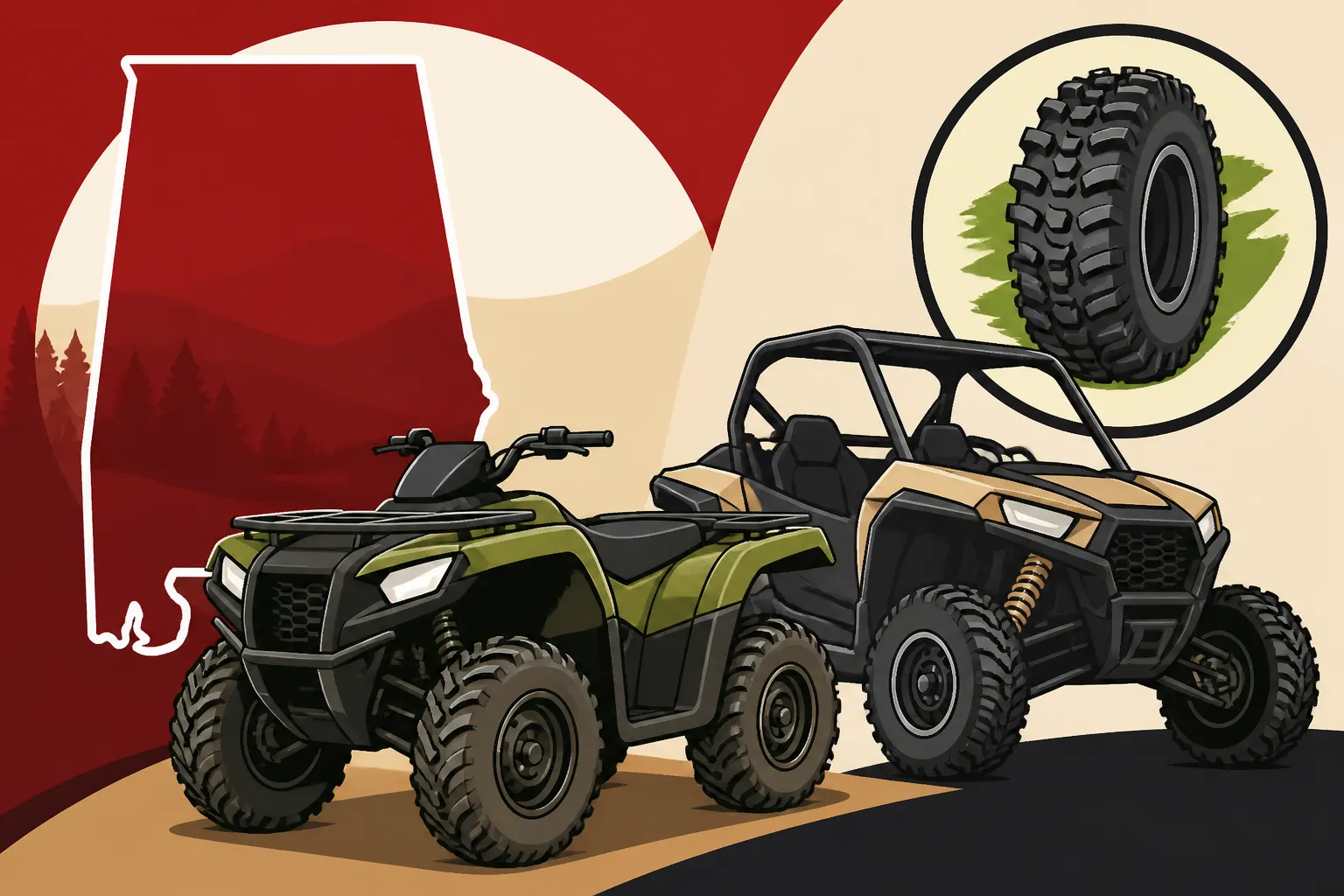
At its heart, the difference is simple: highway tires are designed and certified for safe use on public roads at various speeds and conditions, meeting strict federal safety standards. They typically have specific tread patterns for road grip, robust sidewalls, and a speed rating. Non-highway tires, on the other hand, are engineered for grip and performance in off-road environments like mud, sand, rocks, or loose dirt. Their aggressive tread patterns, often deep and knobby, provide traction where pavement tires would fail.
The legal system sees these two types of tires as defining the very nature of the vehicle. If a vehicle is equipped with tires specifically designed not for highway use, it flags it as primarily an off-road machine in the eyes of the law. This isn't just a technicality; it's a fundamental part of the state's efforts to regulate safety and ensure that vehicles operating on public roads meet appropriate safety benchmarks. Understanding this distinction is the first step toward understanding many of Alabama's ATV and ROV regulations.
How Alabama Law Describes Non-Highway Tires
Alabama's off-road vehicle statute clearly delineates the characteristics that typically define non-highway tires. While the exact wording might seem a bit dry, the intent is plain: these are tires built for rugged terrain, not asphalt. We're talking about tires with low-pressure construction, often meaning they operate effectively at lower PSI than a typical car tire, which helps them conform to uneven surfaces. They also feature aggressive tread designs, characterized by large, widely spaced lugs or knobs designed to dig into soft ground, providing maximum traction away from paved surfaces.
The law also implies a lack of federal certification for highway use. Unlike your car or truck tires, which bear specific markings indicating they meet Federal Motor Vehicle Safety Standards (FMVSS), off-road tires lack these certifications. This absence is a key legal differentiator, signifying that the tire manufacturer did not design or test them for the demands of public highway travel. This legal description helps define what Alabama's off-road vehicle statute covers and sets the stage for restrictions on road use.
Implications for ATV and Side-by-Side Classification
This tire distinction is pivotal for how your machine is classified. If your vehicle has these non-highway tires, it’s most likely falling squarely into Alabama's legal definitions of an ATV or ROV. This means it will be subject to all the specific rules and regulations that apply to these off-road categories. This classification affects everything from where you can ride to potential registration requirements, and even how you might transfer ownership using documents like a bill of sale.
For example, a traditional four-wheel ATV with knobby, low-pressure tires will clearly be classified as an ATV. Similarly, a side-by-side (ROV) with aggressive mud tires designed for trail riding will fall under the ROV classification. This legal framework helps prevent confusion and ensures that machines intended for challenging terrain aren't mistakenly or illegally operated in environments where they pose a safety risk or don't meet necessary standards. Understanding this classification is key for avoiding legal headaches down the road.
Why Tire Type Matters for Alabama Road Use
Many riders dream of simply slapping a license plate on their ATV or UTV and hitting the open road. However, Alabama's laws, heavily influenced by federal standards, make this a very difficult, if not impossible, proposition for most off-road machines. The type of tires your machine uses is a primary reason why you cannot legally drive it on public roads in Alabama. It’s a fundamental safety and regulatory barrier.
The Federal Standard Barrier
The biggest hurdle for taking an ATV or UTV with non-highway tires onto Alabama roads is the federal standard barrier. Vehicles that operate on public highways in the United States must comply with Federal Motor Vehicle Safety Standard (FMVSS) 500, which includes rigorous requirements for everything from headlights and turn signals to brakes and, yes, tires. These standards are designed to ensure vehicles are safe for shared public roadways.
Non-highway tires, by their very design and construction, simply do not meet these federal standards. They aren't built to safely handle high speeds, sustained asphalt contact, or the rapid braking and maneuvering often required on public streets. Their aggressive treads can wear rapidly on pavement, reduce traction, and even cause instability at speed. This is why Alabama's federal standard barrier to road use explicitly prevents most ATVs and ROVs from being street legal, regardless of any other modifications you might make. It’s a clear case of safety regulations dictating legal use.
Why Your Machine Cannot Be Plated
Because most ATVs and UTVs fail to meet the FMVSS standards, particularly concerning their tires, they cannot be issued a standard vehicle license plate for street use in Alabama. A license plate signifies that a vehicle is approved for highway operation, meaning it meets all relevant safety requirements. Since machines equipped with non-highway tires fall short of this fundamental requirement, they simply don't qualify.
This isn't a unique Alabama rule; it's rooted in broader federal guidelines that all states largely adhere to. Trying to get around this by simply swapping tires is often futile because the entire vehicle chassis, suspension, and braking system of an off-road machine are not designed for highway speeds and conditions either. The state also has specific rules regarding [Alabama machines that cannot be plated], reinforcing that these vehicles are not intended for street use. Therefore, if your machine rolls on non-highway tires, you can be almost certain it won't be plated for the road.
Navigating Local Ordinances and Exceptions
While the general rule is clear – non-highway tires mean no public road use – some riders might hear whispers of local ordinances or exceptions. It's true that in Alabama, some very specific, limited exceptions exist, usually allowing for the crossing of a road, or perhaps operating a short distance for agricultural purposes, like moving from one field to another. You might even find very rare instances where a specific small town has its own, highly localized ordinance allowing golf cart-like operation on certain low-speed streets.
However, these are almost never carte blanche permissions for full road riding. For the vast majority of machines with non-highway tires, attempting to make them road-legal with a "street legal kit" is generally a waste of time and money, as [why a street legal kit will not make it legal] because it doesn't address the underlying federal standard issue for the entire vehicle, especially its tires. These small, specific exceptions should always be verified with local law enforcement or county offices, and never assumed to override the core state and federal regulations regarding non-highway tires and road use. Always remember, the general rule holds: off-road tires mean off-road use.
Navigating the Tire Talk: What Riders and Buyers Need to Know
Understanding the legal implications of non-highway tires isn't just for avoiding tickets; it's crucial for making informed decisions when buying a machine and for ensuring your safety. Whether you're a seasoned rider or a first-time buyer, paying attention to the tires is just as important as checking the engine or the suspension.
Checking Tire Markings Before You Buy
When you're looking at a new or used ATV or UTV, take a moment to inspect the tires. Beyond just looking at the tread depth, pay attention to the sidewall markings. Highway-legal tires will typically have "DOT" (Department of Transportation) stamped on them, indicating they meet federal standards for road use. They'll also have a load index and speed rating suitable for highway speeds. Non-highway tires, on the other hand, will generally lack the "DOT" stamp. Instead, you might see markings like "NHS" (Non-Highway Service) or other designations that clearly indicate their off-road-only intended use.
This quick visual check can give you immediate insight into the legal status and intended purpose of the machine. If a seller claims a machine with clearly marked non-highway tires is "street legal," that should be a major red flag. Always confirm these details, and if you’re unsure, a little research into [Alabama's ATV and ROV legal definitions] can provide clarity. This simple check can save you a lot of trouble and potential legal issues down the line.
The Dangers of Modifying for Road Use
It's tempting to think that if you just swap out the knobby tires for something smoother, your off-road machine will magically become street legal. Unfortunately, this is a dangerous misconception. The issue isn't just the tires; it's the entire vehicle's design. ATVs and UTVs are built with suspension, steering, and braking systems optimized for uneven, low-speed, off-road conditions. They often lack essential safety features required for highway use, such as proper lighting, mirrors, turn signals, and crash protection.
Attempting to modify an off-road machine for road use by changing only the tires, or even adding a so-called "street legal kit," doesn't change the fundamental fact that it was never designed to meet the rigorous [Alabama's 49 CFR 571.500 standard] for highway vehicles. Driving such a modified machine on public roads creates significant safety risks for you, your passengers, and other motorists. It also exposes you to serious legal penalties if caught, including fines and potentially having your machine impounded. It’s always safer and wiser to ride your off-road machine where it’s intended to be ridden.
Documenting Your Machine's Characteristics
Having clear documentation for your ATV or UTV is always a good practice, especially when it comes to understanding its legal definition and intended use. When you purchase a machine, ensure your [Alabama Bill of Sale requirements] are fully met and that it accurately describes the vehicle, including its serial number and any details about its original equipment. This can be critical for proving ownership, especially for untitled machines, and for clarifying its status if ever questioned by authorities.
If you're dealing with a private sale, using a robust, clear bill of sale template, perhaps sourced from a service like LawDepot, can make a huge difference. This document can explicitly state the machine’s characteristics, including its tire type, further solidifying its classification. Even if you obtain other legal documents or agreements, platforms like LawDepot can help ensure they're comprehensive and legally sound. Keeping these records handy, alongside any registration paperwork, helps you confidently assert your machine’s legal standing and ensures you have all the necessary information should you ever need to register it for public or private use.
Highway vs. Non-Highway Tires: A Quick Comparison
Here's a simplified look at the key differences between highway and non-highway tires and their implications for ATV and UTV owners in Alabama:
| Feature | Highway Tires | Non-Highway (Off-Road) Tires | Implications for ATVs/UTVs in Alabama |
|---|---|---|---|
| DOT Marking | Present, indicates Federal certification | Absent, or "NHS" (Non-Highway Service) | Key legal differentiator |
| Tread Pattern | Grooved, designed for asphalt, water dispersion | Aggressive, knobby, deep lugs for grip on loose surfaces | Defines intended operating environment |
| Operating Pressure | Higher PSI, rigid sidewalls | Lower PSI, flexible sidewalls | Affects stability and wear on pavement |
| Speed Rating | Specific rating for sustained high speeds | Lower speed rating, not for sustained highway speeds | Safety barrier for public roads |
| Primary Purpose | Safe, efficient travel on paved roads | Traction and performance on unpaved terrain | Dictates legal areas of operation |
| FMVSS Compliance | Meets Federal Motor Vehicle Safety Standards | Does NOT meet FMVSS for public roads | Prevents street legal classification |
| Road Legality in AL | Generally legal if vehicle meets all standards | Generally NOT legal for public road use (exceptions rare) | Most ATVs/UTVs cannot be street legal |
| Stability on Pavement | Good stability, predictable handling | Less stable, prone to wandering, rapid wear on pavement | Safety hazard for road use |
Understanding the nature of non-highway tires, as defined by Alabama law and federal standards, is paramount for every ATV and UTV owner. It dictates not only where you can ride but also the safety considerations and legal responsibilities you carry. By recognizing these distinctions, you can ensure you’re enjoying your machine safely and legally within the beautiful landscapes Alabama has to offer.
Disclaimer
This article is for general informational purposes only and does not constitute professional advice. Laws, prices and regulations vary by location and change over time. Consult a qualified professional for guidance on your specific situation.