3,500 Pounds Dry for a Side-by-Side
One of the most common points of confusion for side-by-side owners in Alabama revolves around how their machine is legally defined, especially concerning its size and weight. If you've ever found yourself scratching your head, wondering if your UTV truly fits the state's criteria for a "recreational off-highway vehicle" (ROV), you're certainly not alone. This guide aims to clear up that fog, specifically focusing on the critical 3,500-pound dry weight limit for side-by-sides, and what it means for you as an Alabama owner or future buyer.
Understanding Alabama's UTV Weight Definition
Alabama's legal framework for off-road vehicles isn't always as straightforward as we might hope. When it comes to side-by-sides, which the state often refers to as Recreational Off-Highway Vehicles (ROVs), one of the defining characteristics is its weight. Specifically, state law sets a benchmark of 3,500 pounds dry weight as a key differentiator. This isn't just a number tossed out arbitrarily; it has real implications for how your machine is categorized and, by extension, how it's treated under various regulations, from registration to potential restrictions on public lands.
It's easy to assume all UTVs are treated the same, but the nuances in the law, particularly around specifications like weight, can catch even seasoned riders off guard. Understanding this figure is crucial because it helps solidify what an ROV truly is in Alabama, distinguishing it from an ATV or other types of vehicles. When you're looking at manufacturer specifications or even a bill of sale, seeing this particular weight class mentioned can confirm that you're dealing with a vehicle that falls squarely into the ROV category according to state statutes.
How the Weight Figure Impacts Your Machine's Classification
The 3,500-pound dry weight figure is pivotal in separating ROVs (side-by-sides) from their smaller cousins, ATVs (all-terrain vehicles), in the eyes of Alabama law. While ATVs typically have a dry weight limit of 1,500 pounds, a side-by-side often far exceeds that. This distinction isn't just for curiosity's sake; it directly influences several aspects of ownership. For instance, the legal definition itself, which includes this weight threshold, dictates which sections of the off-road vehicle statute apply to your machine. Knowing your vehicle's classification as an ROV due to its weight, among other factors, helps you understand the specific rules you must follow. You can dive deeper into these definitions by reading [Alabama's ATV and ROV Legal Definitions].
This classification also plays a role in the upcoming titling requirements. While ATVs and ROVs with a model year of 2026 and newer will both require titles, the underlying definitions confirm what kind of machine is being titled. An ROV's weight helps cement its identity in the ALVIN system when titles begin to be issued. Furthermore, for those considering any form of public use, whether voluntary registration or merely understanding where you can legally ride, the machine's classification as an ROV impacts the specific rules and regulations that govern its operation.
Why "Dry Weight" Matters for Compliance
The term "dry weight" is a specific detail that's sometimes overlooked but critically important. When Alabama law references 3,500 pounds dry weight for a side-by-side, it means the vehicle's weight without fuel, engine oil, coolant, hydraulic fluid, passengers, or cargo. This is the weight as it rolls off the factory floor, not its operational weight with a full tank and a cooler strapped to the back. For compliance purposes, you need to know this precise factory specification, not what your machine weighs when you put it on a scale fully loaded for a weekend trip to the trails.
Finding this "dry weight" is usually straightforward: check your owner's manual, the manufacturer's website, or sometimes a sticker on the vehicle itself. It's vital to rely on these official sources rather than estimates, especially if you're ever questioned about your machine's classification. When you're dealing with a private sale, ensuring the bill of sale accurately reflects your machine's make, model, VIN, and dry weight, perhaps using a template from a service like LawDepot, can save headaches down the road. Discrepancies here can lead to confusion regarding your machine's legal status, even though [Alabama Bill of Sale Requirements] primarily focus on ownership transfer. For a comprehensive look at how these weights compare, you might find [Alabama ATV Width and Weight Limits] helpful as well.
Other Key Dimensions and Their Role in Alabama Law
While the 3,500-pound dry weight is a significant factor in defining a side-by-side in Alabama, it's not the only one. The legal definition for an ROV is a combination of specifications, and other dimensions like width are equally important. These combined figures paint a complete picture of what the state considers an ROV, influencing everything from how you transport your machine to where you can legally ride it. Understanding this multi-faceted definition helps you stay compliant and avoid potential issues, especially when encountering different types of terrain or public land access rules.
It's common for off-road enthusiasts to focus on power and suspension, but the actual dimensions of your vehicle are what the law often scrutinizes first. These figures exist not to complicate your life but to ensure a degree of consistency in regulating these powerful machines. Knowing these limits can prevent a lot of frustration, whether you're trying to fit your side-by-side through a gate on a hunting lease or ensuring it meets the requirements for a particular trail system.
The 80-Inch Width Limit for Side-by-Sides
Alongside the weight, Alabama law typically specifies a width limit for ROVs, generally set at 80 inches. This measurement is usually taken from the widest point of the vehicle, excluding mirrors. This 80-inch maximum width is another critical factor in defining a side-by-side (ROV) and helps differentiate it from an ATV, which typically has a maximum width of 60 inches. This difference is visually apparent and functionally significant; an 80-inch wide side-by-side is a much larger machine, requiring more space for trails, transport, and parking. For a detailed comparison, check out [60 Inches and 1,500 Pounds] vs. [80 Inches for a Side-by-Side].
This width limit isn't just about fitting through gates; it's a core part of the statutory definition for ROVs. Trails designated for ATVs often have width restrictions that would exclude a typical side-by-side, meaning you need to be aware of your machine's dimensions before heading out to a new riding spot. Knowing your ROV adheres to the 80-inch maximum helps ensure it falls within the intended legal category, which can be crucial if you ever need to reference state definitions or clarify your machine's status.
Non-Highway Tires: A Definitional Requirement
Beyond weight and width, Alabama's definition for an ROV also includes a stipulation regarding its tires: it must be equipped with non-highway tires. This might seem like a minor detail, but it's a fundamental part of what distinguishes an off-road vehicle from something designed for public roads. Non-highway tires are specifically engineered for traction and durability in diverse off-road conditions – mud, rocks, sand, and dirt – rather than the smooth, consistent grip required for paved roads at highway speeds. This design choice is not just about performance; it's a safety and legal demarcation. More on this can be found in [Non-Highway Tires in the Definition].
The inclusion of non-highway tires in the definition underscores the state's intent: these machines are primarily for off-road use. Attempting to modify an ROV for street legality, for example, would often involve changing these tires, which would then fundamentally alter its classification under Alabama law. Therefore, maintaining the proper tire type is essential for your side-by-side to continue being recognized as an ROV, impacting everything from how you use it to any voluntary registration you might pursue. Understanding [Alabama's Conflicting ROV Weight Figures] might also shed light on other definitional challenges.
The Practical Implications for Alabama UTV Owners
So, you know your side-by-side weighs under 3,500 pounds dry and is less than 80 inches wide, and it runs on non-highway tires. What does all that mean for you on a practical, day-to-day basis as an owner in Alabama? These technical definitions aren't just academic exercises; they have real-world consequences for how you can legally purchase, own, operate, and even sell your ROV. Navigating these rules successfully means you can enjoy your machine without unnecessary worry or legal snags.
From ensuring you have the right documentation when you buy or sell, to understanding where you can ride and under what conditions, the details of your side-by-side's classification are always at play. It's about more than just reading a manual; it's about connecting those specifications to the state's expectations for off-road vehicle ownership. When in doubt, a quick check of your vehicle's specs against the state's definitions can provide much-needed clarity.
Navigating Registration and Titling with UTV Dimensions
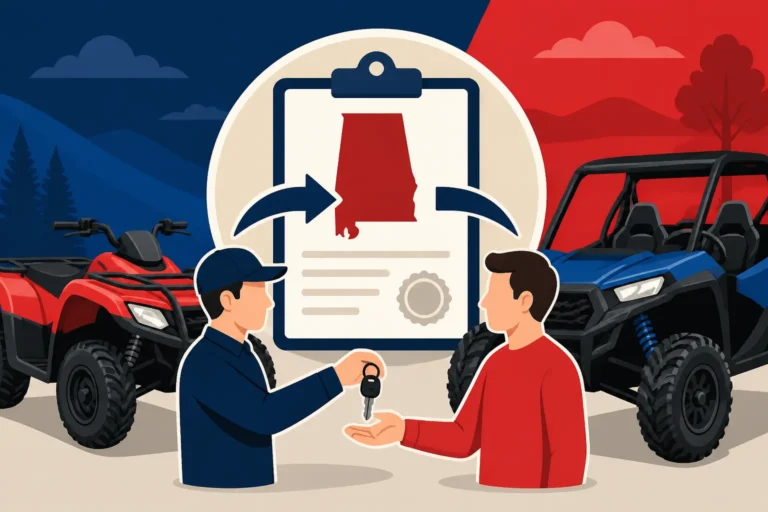
The dimensions and weight of your side-by-side directly influence its requirements for both voluntary registration and the upcoming mandatory titling in Alabama. While registration through ALEA has been voluntary for off-road machines like ATVs and ROVs, these definitions help determine which fee tier might apply (public vs. private use) and simply confirm that your machine is indeed an ROV eligible for such registration. For details on this, look into [Registering a Side-by-Side in Alabama].
Starting with the 2026 model year, titling will become mandatory for new ROVs. When you go to title a new side-by-side, the county office will process an application that confirms it meets the state's definition of an ROV, including its weight and width. This is where the accuracy of the manufacturer's data and your understanding of terms like "dry weight" become crucial. Ensuring your new 2026 side-by-side meets these criteria is the first step in getting your [Alabama Title for a 2026 Side-by-Side]. If your machine falls outside these definitions, it might be categorized differently, potentially leading to a different set of rules or even disqualification from certain benefits or areas of use.
What to Look for When Buying or Selling a Side-by-Side
Whether you're buying a used side-by-side from a private seller or preparing to sell your own, knowing these definitional specifications is incredibly important. As a buyer, always verify the manufacturer's listed dry weight and width to ensure the machine genuinely qualifies as an ROV under Alabama law. This information is usually readily available and can prevent future misunderstandings or issues with registration or titling. Don't just take the seller's word for it; do your own research.
As a seller, being transparent about your machine's specifications, including its dry weight and width, builds trust and ensures a smoother transaction. You'll want to provide a detailed bill of sale that includes the VIN, make, model, and year, along with confirmation of its general dimensions. Tools like those found on LawDepot can help you generate a clear, legally sound bill of sale for your transaction. This level of detail is particularly useful for the buyer when they go to register or title the machine, confirming it aligns with [What Alabama's Off-Road Vehicle Statute Covers] and the specific requirements for an ROV. It helps both parties ensure the machine is properly identified and exchanged according to the rules.
Here's a quick comparison of how Alabama generally defines ATVs versus ROVs (Side-by-Sides):
| Feature | ATV (All-Terrain Vehicle) | ROV (Recreational Off-Highway Vehicle / Side-by-Side) |
|---|---|---|
| Max Dry Weight | 1,500 pounds | 3,500 pounds |
| Max Width | 60 inches | 80 inches |
| Steering | Handlebars | Steering wheel |
| Seating | Straddle seat | Non-straddle seat (bucket or bench) |
| Tires | Non-highway tires | Non-highway tires |
| Propulsion | Engine with piston displacement under 1,000 cubic cm | Engine with piston displacement over 1,000 cubic cm |
| Passenger Cap | Designed for one rider, sometimes a designated passenger | Designed for multiple passengers sitting side-by-side |
Disclaimer
This article is for general informational purposes only and does not constitute professional advice. Laws, prices and regulations vary by location and change over time. Consult a qualified professional for guidance on your specific situation.