Why Your Policy Should Name the Serial Number
When you've invested good money in an ATV or UTV, whether it's a trusty workhorse for the farm or a zippy sport quad for the trails, the last thing you want is a headache when something goes wrong. Too many folks in Alabama find themselves in a tough spot after a theft or an accident, only to discover their insurance policy isn't as solid as they thought, simply because a crucial detail — the machine's serial number — was overlooked. This guide is here to walk you through why that little string of digits on your off-road machine is absolutely vital to your insurance coverage and how to make sure you're properly protected.
The Critical Link Between Your Machine and Your Insurance
It might seem like a small thing, a mere formality, but the serial number on your ATV or UTV is the backbone of its identity. Without it clearly documented on your insurance policy, you could be setting yourself up for a long, frustrating battle if you ever need to file a claim.
Why a Serial Number is More Than Just a String of Digits
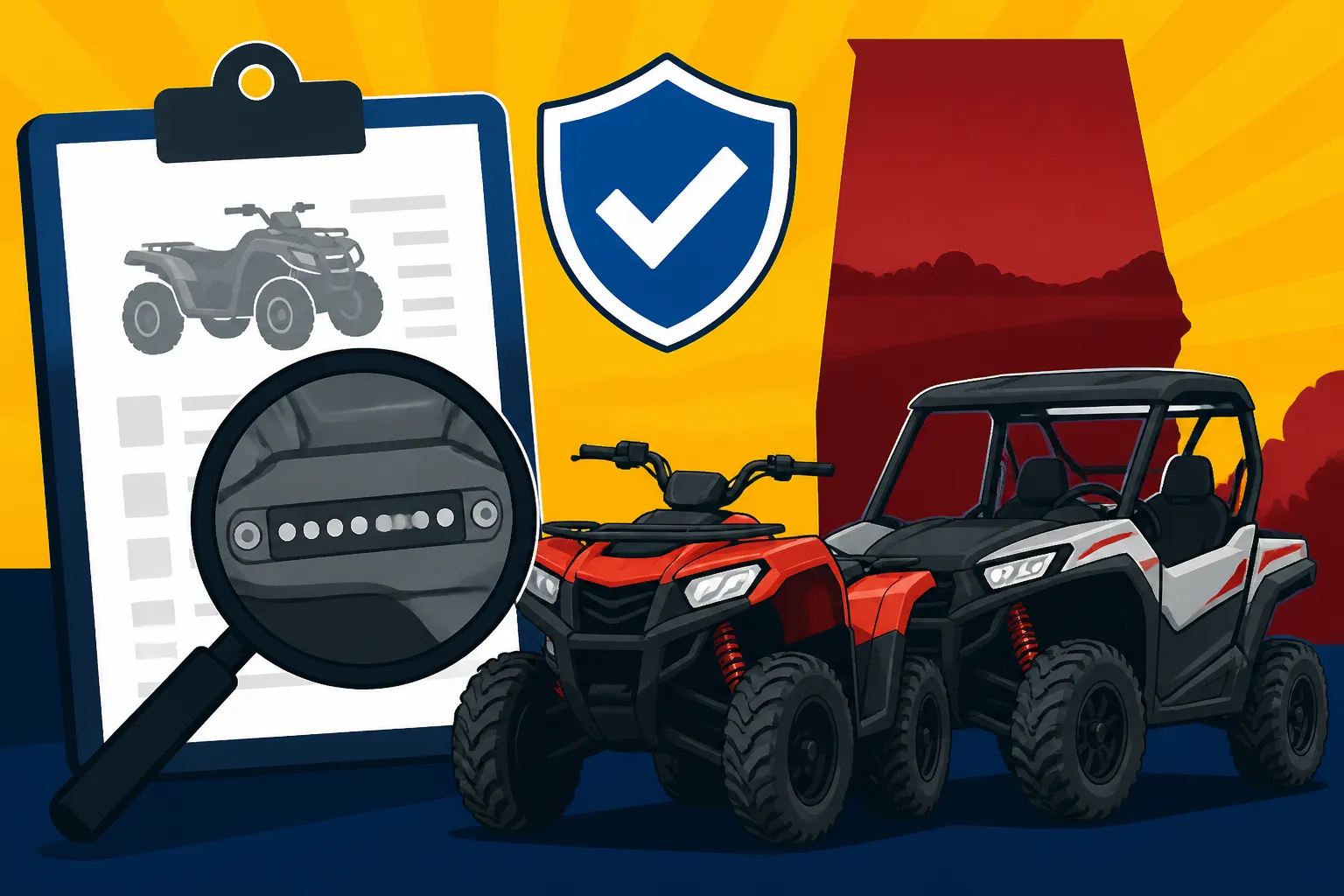
Think of your ATV or UTV's serial number like its DNA. It’s a unique identifier that distinguishes your specific machine from every other one out there. For ATVs, this is often called the Vehicle Identification Number (VIN), just like cars, though sometimes on older models or certain types, it might be referred to more simply as a serial number. This number is etched onto the frame, often on the steering neck or a main frame rail, and sometimes replicated elsewhere, like the engine case.
This isn't just a random series of letters and numbers; it encodes vital information about your machine: its manufacturer, make, model, year of production, and even the plant where it was assembled. When you're trying to prove that the red Polaris Scrambler involved in a trail mishap is, in fact, your red Polaris Scrambler, that serial number is the definitive proof. Without it, you’re trying to describe a needle in a haystack. Imagine a fire sweeps through your pole barn in Chilton County and destroys your quad. How do you definitively prove to your insurance company that the charred remains are indeed the machine you insured without that unique identifier? Or worse, if someone makes off with your side-by-side from your hunting camp near Talladega, that serial number is the first, and often only, concrete detail law enforcement and your insurance company have to go on.
How Missing Serial Numbers Complicate Claims in Alabama
Here in Alabama, as anywhere else, insurance adjusters rely on concrete evidence to process claims efficiently. When your policy explicitly names the serial number of your ATV or UTV, it leaves no room for doubt about which machine is covered. If that serial number is missing from your policy, it creates an immediate red flag and a significant hurdle.
Let's consider a couple of frustrating scenarios. If your machine is stolen, the insurance company needs to verify that the reported stolen ATV matches the one you claim to have insured. If your policy simply says "one ATV," without a serial number, they might question the specific make, model, or even the existence of the machine itself. This can lead to lengthy investigations, requests for additional proof of ownership like a bill of sale, and ultimately, significant delays in getting your claim paid. In some cases, if you can't adequately prove the identity of the machine, your claim could even be denied. It’s a nightmare nobody wants to face, especially when you’re already dealing with the loss or damage of your valuable machine.
This issue isn't just about theft, either. Comprehensive coverage, which protects against things like fire, vandalism, or falling objects, also hinges on identifying the specific insured item. If your machine suffers damage from a fallen tree limb after a severe thunderstorm in Cullman County, your insurance company needs to be certain it's the right quad. Without the serial number, proving the direct link between your policy and the damaged machine becomes unnecessarily complicated, slowing down the repair or replacement process. This is particularly relevant when you're dealing with [Insuring an Untitled Machine in Alabama], where the serial number often serves as the primary form of identification.
Protecting Your Investment: Best Practices for Alabama ATV/UTV Owners
Getting your ATV or UTV insured is a smart move, but ensuring that policy is ironclad requires a few proactive steps. Don't assume everything is handled just because you've paid your premium.
Proactively Adding Your Serial Number to Your Policy
The best defense is a good offense, and in this case, that means making sure your serial number is on your insurance policy from day one. When you first get a quote or purchase a policy for your new (or new-to-you) machine, provide the full and accurate serial number to your insurance agent. Don't just give them the make and model; insist on the serial number being explicitly listed in your policy documents.
Here's how to make sure it's done right:
- Locate the Serial Number: Before you even call your agent, find the serial number on your machine. It's typically stamped into the frame. For most ATVs, look on the left side, often near the steering head. For UTVs, it can be in various places, including under the driver's seat, on a frame rail, or in the glove compartment area. Consult your owner's manual if you can't find it.
- Provide it During Application: When you're getting your insurance quote or purchasing your policy, verbally provide the serial number to your agent. Then, double-check that they've recorded it correctly.
- Review Your Policy Documents: Once you receive your insurance declaration pages or policy documents, carefully review them. Look for a section that lists the insured vehicles and ensure your ATV or UTV is listed with its correct make, model, year, and crucially, its full serial number. If it's missing or incorrect, contact your agent immediately to have it rectified. Do not put this off!
- Keep Records: Keep a separate record of your serial number, perhaps a photograph of it on the machine, and store it in a safe place, separate from the machine itself. This is good practice for all your valuable possessions, but especially for an off-road vehicle that might be kept in a shed or remote location. This also ties into [Alabama Registration Paperwork Explained], as your registration often requires the serial number, creating another layer of official documentation.
- New Purchases or Renewals: Every time you acquire a new machine or renew your existing policy, make it a habit to confirm the serial number is accurately reflected. Even small clerical errors can cause big problems down the line.
If you ever need to create formal documents to prove ownership, such as a bill of sale when selling the machine, or a sworn statement for insurance purposes, consider using a service like LawDepot. They can help you generate legally sound documents that include all the necessary identifying details, including the serial number, which adds another layer of verification.
What to Do If Your Machine Doesn't Have a Standard VIN
Not every ATV or UTV will have a perfectly legible, modern VIN like a car. This is especially true for older machines, custom builds, or off-brand models. But don't despair – you still have options to protect your investment.
If your machine has an older-style serial number that isn't a 17-digit VIN, or if the number is faded, rusted, or otherwise difficult to read, here’s what you should do:
- Document What You Can Find: Take clear photographs of any numbers you can locate on the frame, engine, or other major components. Even if it's not a full VIN, any identifying numbers are better than none.
- Consult Your Dealer/Manufacturer: Reach out to a dealer for your specific brand or the manufacturer directly. They may be able to provide guidance on where to find the primary serial number or offer a letter of authenticity based on other identifying marks.
- Work with Your Insurer: Be transparent with your insurance agent about the situation. Explain that the machine is older or has a non-standard identification. They might ask for additional forms of proof of ownership. This is where a detailed [Alabama Bill of Sale Requirements] comes in handy, especially if it was a private sale. A robust bill of sale, particularly one generated using a tool like LawDepot, can serve as strong evidence, detailing the machine's features and any identifiable numbers.
- Affidavits and Photos: Your insurer might accept a sworn affidavit from you, coupled with extensive photos of the machine from various angles, clearly showing its unique characteristics. The more evidence you can provide, the better. When trying to establish [Proving You Own an Untitled Machine], this kind of detailed documentation is absolutely critical. It helps create a clear picture for the insurer, even without a perfect VIN.
The goal is to provide your insurance company with enough unambiguous information that they can confidently identify your specific machine, should a claim arise.
Beyond Insurance: The Broader Importance of Serial Numbers
While insurance protection is a huge reason to care about your ATV or UTV's serial number, its significance stretches much further into the realm of legal ownership, theft recovery, and even future resale value.
Theft Recovery and Law Enforcement Efforts
Imagine your beloved Yamaha Grizzly, which you use for hauling deer stands and scouting land in Clarke County, goes missing from your property. This is a gut-wrenching experience for any owner. When you report a theft to law enforcement, the very first piece of identifying information they'll ask for is the serial number.
Police departments and sheriff's offices across Alabama rely on these unique identifiers to enter your machine into national and state databases for stolen property. Without that serial number, their ability to recover your ATV is severely hampered. It becomes incredibly difficult to distinguish your stolen quad from any other similar-looking machine.
However, if you have that serial number readily available and documented, it greatly improves the chances of a successful recovery. If your machine is stopped by an officer, or if it turns up at a pawn shop or is sold by an unscrupulous individual, a quick check of the serial number against the stolen vehicle database can flag it as yours. There are countless stories of happy owners in Alabama who’ve had their machines returned thanks to diligent law enforcement work and the critical serial number being recorded. This is a key part of [Theft Recovery Without a Title], showing that even without a formal title, the serial number is indispensable.
Resale Value and Ownership Verification
When the time comes to sell your ATV or UTV, whether you’re upgrading to a newer model or just changing your recreational pursuits, the serial number plays a crucial role in the transaction.
For any potential buyer, seeing the serial number and verifying it against any existing paperwork (like a bill of sale, or a title if your machine is a [A Model Year 2026 Machine] or newer) instills confidence. It allows them to perform their own due diligence, such as running a check to ensure the machine isn't stolen or hasn't been extensively salvaged. A buyer in Alabama is much more likely to trust a seller who can provide clear, verifiable documentation. If the serial number is missing, unreadable, or doesn't match the paperwork, it raises immediate red flags and will likely scare off serious buyers, driving down the potential resale value of your machine.
When you're engaged in [Buying From a Private Seller in Alabama], you absolutely want to verify that serial number and ensure it's on a solid bill of sale. Using a template from a reputable source like LawDepot can ensure that all necessary details, including the serial number, buyer and seller information, and sale terms, are clearly documented. This protects both parties and makes for a smoother transaction, giving the buyer peace of mind and the seller a clear record of the sale.
Common Pitfalls and How to Avoid Them
Even with the best intentions, it's easy to fall into traps that can undermine your ATV or UTV's insurance coverage. Being aware of these common mistakes can save you a lot of grief.
Assuming Your Policy Automatically Covers It
One of the biggest pitfalls many ATV and UTV owners fall into is assuming that once they've bought a policy, their machine is automatically covered for every eventuality. It’s a classic case of "set it and forget it." But insurance policies are contracts with specific terms and conditions, and details matter.
Just because you told your agent you have an ATV doesn't mean they've recorded every crucial detail. It's a common oversight for a serial number to be missed during the initial setup, or for an older machine to be listed generically. If your policy simply states "ATV," without specific identifying information, it opens the door for potential disputes. Your insurance company might argue that the damaged or stolen machine isn't the one specifically covered by your policy, leading to delays or even a claim denial.
The solution here is simple: always, always, always review your policy documents thoroughly. Don't just file them away; read the sections pertaining to your vehicle description. If you see any discrepancies, or if the serial number is missing, pick up the phone and talk to your agent. Insist on a revised declaration page that accurately reflects your machine's full details. This proactive approach ensures there are no ambiguities should you ever need to file a claim.
What to Do If You Can't Locate the Serial Number
It happens. You've looked everywhere—under the seat, near the footpegs, around the steering column—and you just can't seem to find a legible serial number on your ATV or UTV. This can be particularly frustrating with older machines, those that have seen a lot of hard use, or machines where the serial number might be in an obscure location.
Here’s a practical approach if you find yourself in this situation in Alabama:
- Consult Your Owner's Manual: This is always the first stop. Your owner's manual should have a diagram or description of where the serial number (or VIN) is located on your specific model. It also often has a space for you to write down the number for your records.
- Contact a Dealer: Reach out to a local dealership for your machine's brand. They are often experts at locating serial numbers on various models and might be able to guide you over the phone or even offer to inspect it for you. They might have proprietary databases that can help cross-reference other numbers if the main one is truly gone.
- Search Online Forums: Sometimes, specific models have unique serial number locations that are well-known within enthusiast communities. Online forums for your particular ATV or UTV brand can be a goldmine of information from other owners who have faced similar challenges.
- Consider a Professional Inspection: If all else fails, a reputable mechanic or a powersports dealership might be able to inspect the machine and locate any identifying numbers. In extreme cases, they might even be able to help document that a number is indeed missing or illegible, which you can then provide to your insurer. This becomes crucial in scenarios like [Alabama Registration When the Serial Is Gone], where official verification of a missing serial number might be needed for other administrative processes.
No matter how difficult it is to find, putting in the effort now to document your machine's serial number accurately on your insurance policy is one of the smartest things you can do as an Alabama ATV or UTV owner. It's a small detail that offers enormous protection.
Here's a quick look at why this detail makes all the difference:
| Feature | Policy with Serial Number | Policy without Serial Number |
|---|---|---|
| Claim Processing | Swift, clear identification of the insured machine. | Potential for delays, questions, and extra proof requirements. |
| Theft Recovery | Law enforcement can easily enter into stolen vehicle databases. | Significantly harder for police to track and recover. |
| Ownership Proof | Strong, undeniable link between you and the machine. | Relies on other, potentially less reliable, documentation. |
| Resale Value | Instills buyer confidence, easier to sell. | Raises buyer suspicion, can decrease market value. |
| Dispute Resolution | Reduces ambiguity, stronger position in disputes. | Opens the door to challenges and protracted arguments. |
| Peace of Mind | High. Knowing your investment is truly protected. | Low. Lingering doubt about full coverage. |
[Alabama's ALVIN System and Off-Road Titles]
[Alabama Title Applications at a County Office]
[Alabama ATV Title Cost]
[Why Your Registration Paperwork Goes to Montgomery]
[Why a Bill of Sale Must Carry the Serial Number]
[Recording Serial Numbers at Home]
[Alabama ATV & UTV]
[Alabama ATV Registration Paperwork Explained]
[Alabama Registration Questions Owners Ask]
[Buying From a Private Seller in Alabama]
[Alabama Machines With No Paperwork]
Disclaimer
This article is for general informational purposes only and does not constitute professional advice. Laws, prices and regulations vary by location and change over time. Consult a qualified professional for guidance on your specific situation.