Recording Serial Numbers at Home
It's a sinking feeling, isn't it? That moment you realize your prized ATV or UTV is gone, vanished from your shed, garage, or even a hunting camp. Your heart races, your mind scrambles, and then the critical question hits you: "Do I even remember the serial number?" For many folks across Alabama, the answer is a panicked "no," and that's where the real headache begins. This guide is all about preventing that exact scenario, showing you how to securely record your machine's serial number at home, ensuring you have the vital proof you need, whether it's for law enforcement, an insurance claim, or just for your own peace of mind.
Why Your ATV's Serial Number is Its Fingerprint
Think of your ATV or UTV's serial number—often called a Vehicle Identification Number, or VIN—as its unique genetic code. Just like your fingerprints identify you and only you, this sequence of letters and numbers identifies your specific machine and no other. It’s stamped onto the frame and sometimes the engine, a permanent marker placed there by the manufacturer. Losing track of it is like forgetting your own name when you need to prove who you are.
More Than Just a Number: Your Machine's Identity
The serial number isn't just a random string; it decodes a wealth of information about your machine. It tells you the manufacturer, the model year, the specific factory where it was made, and sometimes even the engine size and type. This information is critical for everything from ordering the correct replacement parts to ensuring you're getting the right service at a dealership. Without it, you're essentially dealing with an anonymous machine, which can be incredibly frustrating. It's also the first piece of information anyone—from an insurance agent to a deputy—will ask for if anything happens to your beloved quad or side-by-side. Imagine trying to explain what's missing without being able to describe it beyond "a red Polaris." That VIN is the description.
The Nightmare of a Stolen Machine Without Proof
This is where the rubber truly meets the road. If your ATV or UTV is stolen and you don't have its serial number readily available, the chances of recovery plummet dramatically. Law enforcement agencies rely heavily on VINs to enter stolen vehicles into national databases. Without that number, their ability to track it, identify it if found, or even process a proper report becomes severely hampered. It's like trying to find a needle in a haystack, but you can't even describe the needle. Furthermore, your insurance company will almost certainly require the serial number to process a theft claim. They need to verify that the machine you're claiming was stolen actually existed and belonged to you. Trying to piece together that information after the fact, under the stress of a theft, is a nightmare you absolutely want to avoid. Being able to calmly provide the exact serial number drastically speeds up the process and increases your odds of a positive outcome.
Essential for Sales, Service, and Insurance
Beyond theft, your machine's serial number is a cornerstone for many other aspects of ownership. When you go to sell your ATV or UTV, especially in a private sale, the buyer will want to verify the VIN against the bill of sale or any existing registration. This ensures they're buying the machine you say you're selling and helps prevent issues with [Alabama Machines With No Paperwork]. Similarly, when you take your machine in for service, the shop will use the VIN to look up service bulletins, recall notices, and to ensure they order the correct parts for your specific model and year. Even getting an accurate insurance quote often requires the VIN, as it helps the insurer properly identify the machine and assess its value and risk. [Why Your Policy Should Name the Serial Number] is a crucial piece of advice every Alabama owner should follow.
Where to Find Those Elusive Numbers on Your Machine
Before you can record it, you need to find it! Manufacturers place serial numbers in relatively standard locations, but there can be variations depending on the make, model, and year of your ATV or UTV. Don't just glance; you might need a flashlight, a rag, and some elbow grease to reveal it, especially if your machine sees a lot of mud and dirt.
The Obvious Spot: The Frame and Engine
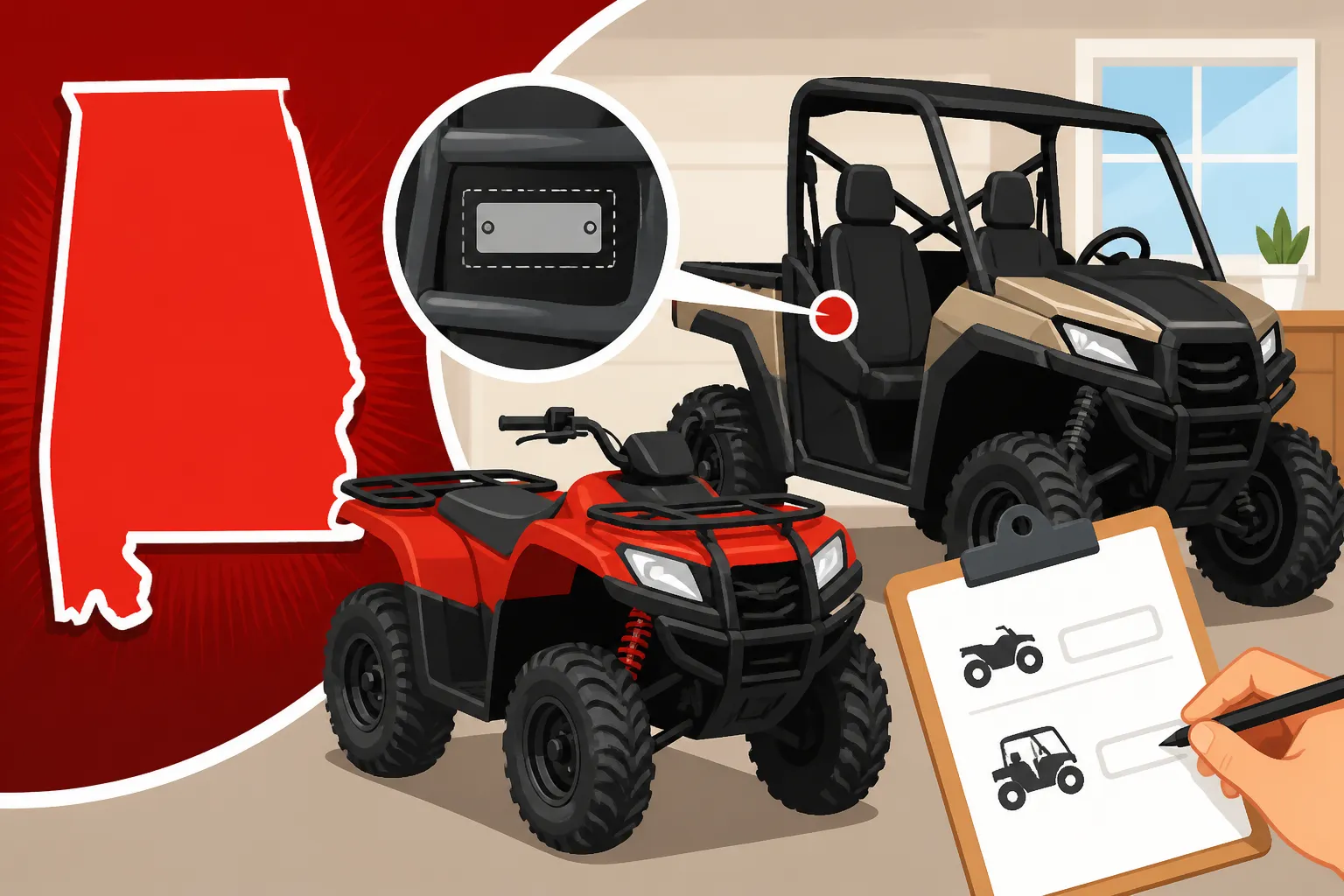
For most ATVs, the VIN is commonly found stamped directly onto the frame. Often, you'll find it on the left-hand side, near the front wheel, or beneath the seat. Sometimes it's on a sturdy frame rail where it's less likely to be damaged. For UTVs, it might be on the frame near the driver's side front wheel, under the hood, or on the passenger side near the firewall. Many machines also have a separate engine serial number stamped directly onto the engine block itself. While the frame VIN is the primary identifier for the whole machine, having the engine serial number can be incredibly helpful for verification or if the frame number ever becomes unreadable. Always check your owner's manual first; it will typically have a diagram showing the exact location of the VIN and other important numbers. This saves a lot of crawling around in the dirt!
Hidden Nooks and Crannies: Don't Stop Searching
Sometimes, manufacturers will stamp secondary or partial serial numbers in other, less conspicuous locations. These might be harder to find, but they can be invaluable if the primary VIN is ever defaced or removed. Look inside tool compartments, on suspension components, or even on various plastic parts. While these might not be the complete 17-digit VIN, they can still provide crucial identifying information that can corroborate ownership or help law enforcement in an investigation. Don't be afraid to get a little dirty and explore every inch of your machine. The more identifying marks you can document, the better.
What If the Serial Number is Missing or Damaged?
This is a scenario no one wants to face, but it does happen. If your machine's serial number is missing, defaced, or unreadable, it presents a significant problem. It immediately raises red flags about the machine's history and legality. If you discover this issue, your first step should be to contact the manufacturer or a reputable dealer for advice. They may be able to guide you on how to apply for a replacement VIN plate or verify the machine through other means. In some cases, you might need to involve law enforcement to document the situation, especially if you suspect foul play or that the machine might have been stolen previously. For machines purchased in a private sale, a missing or defaced VIN can complicate [Buying From a Private Seller in Alabama] and severely impact its resale value. It can also make it much harder to get [Insuring a Machine With No Title] or even a titled machine. Don't ignore it; address it head-on.
Practical Steps to Securely Record Your Serial Numbers at Home
Finding the serial number is just the first step. The real goal is to create a secure, redundant record that you can access easily whenever needed, and that will stand up to scrutiny if you ever need to prove ownership.
The "Old School" Method: Pen, Paper, and a Safe Place
Sometimes, the simplest methods are the most reliable. Grab a sturdy piece of paper and clearly write down the full serial number, exactly as it appears on your machine. Don't forget to include the engine serial number if it's separate. Then, make several photocopies. Keep one copy with your other important documents, like your deed or birth certificate, in a fireproof safe or safety deposit box. Another copy could go into a file cabinet at home, separate from where you usually keep vehicle documents. Some folks even write the VIN inside their owner's manual or a logbook dedicated to their machine's maintenance. The key here is physical separation and security. Even in a power outage, you'll have access to this vital information. Make sure your [Alabama Bill of Sale Requirements] and [Alabama Registration Paperwork Explained] are also kept securely. LawDepot could be a useful resource for creating official-looking documents like a bill of sale to complement your records.
Leveraging Digital Tools for Easy Access
In today's digital world, there are countless ways to store this information electronically, offering both convenience and redundancy.
Here are a few popular and effective digital methods:
| Method | Description | Best Use Case |
|---|---|---|
| Smartphone Photo | Take a clear, well-lit photo of the VIN directly on the machine. | Quick, visual proof; immediate backup. |
| Cloud Storage | Upload VIN photos or a text document with the number to services like Google Drive, Dropbox, or iCloud. | Secure, accessible anywhere with internet; automatic syncing. |
| Email to Yourself | Send an email to your primary email address with the VIN in the subject line or body. | Simple, creates a searchable record, often a good "last resort." |
| Password Manager | Store the VIN in a secure password manager (e.g., LastPass, 1Password) as a secure note. | Highly secure, encrypted storage; easy to retrieve with master password. |
| Spreadsheet/Doc | Create a simple spreadsheet or document (Google Sheets, Excel, Word) with all machine details. | Comprehensive record-keeping for multiple machines/details. |
For digital storage, always remember the importance of strong, unique passwords and two-factor authentication. You want this information secure, but also accessible to you in an emergency. Consider backing up your phone photos to the cloud regularly, too.
Building a Comprehensive Ownership Folder
Beyond just the serial number, create a dedicated physical and/or digital folder for all documents related to your ATV or UTV. This comprehensive folder should include:
- The bill of sale: This is your primary proof of purchase and ownership. Ensure it includes the full serial number, seller and buyer details, and date. Remember, [What a Bill of Sale Must Carry the Serial Number] is crucial.
- Any registration documents: Even if Alabama's ATV registration is voluntary, if you've chosen to register, keep these papers safe.
- Title documents (if applicable): While older Alabama ATVs generally don't have titles, models 2026 and newer will. Keep that title secure.
- Photos of the machine: Take multiple pictures from different angles, showcasing unique features or modifications. Include close-ups of the serial number itself.
- Insurance policy documents: Keep a copy of your policy that lists your machine and its VIN.
- Maintenance records: These prove you've cared for the machine and can boost resale value.
This folder becomes your "go-to" source for everything related to your machine. Keep it organized, and everyone in your household who might need it should know where it is. This is particularly vital for situations like [Proving You Own an Untitled Machine].
Regular Checks and Updates
Life happens, and sometimes records get misplaced or machines get modified. It's a good practice to periodically check your recorded serial number against the actual stamping on your machine, maybe once a year or when you perform major maintenance. This ensures accuracy and that the number hasn't somehow become obscured or damaged. If you sell your machine, make sure all your records are updated, and if you buy a new one, immediately go through this recording process. Don't procrastinate; that's when mistakes happen.
Beyond Just Recording: Maximizing Your Machine's Security
While knowing your serial number is foundational, there are additional steps you can take to further protect your investment and improve your chances of recovery or successful claims.
Photographing Your Machine for Insurance
High-quality photographs are your best friend if your ATV or UTV is ever stolen or involved in an accident. Take photos from all four sides, front and back, and any unique features. Did you add a special winch, unique tires, a specific light bar, or even a custom sticker? Photograph it! These details help law enforcement identify your machine if it's recovered and give your insurance company a clear picture of what was lost. Include a close-up, clear photo of the serial number itself. This visual proof is irrefutable and can be incredibly powerful in a claim, especially for [Theft Recovery Without a Title].
Engraving and Marking for Extra Protection
For an added layer of security, consider marking your machine in ways that aren't immediately obvious but are permanently tied to you. Some owners choose to engrave their driver's license number or another unique identifier in a discreet, hidden location on the frame or even on major components. This acts as a secondary identification mark that a thief might overlook when trying to deface a VIN. While not a guaranteed deterrent, it can make it much harder for a criminal to resell the machine without fear of it being traced back to you. Always choose a spot that won't compromise the machine's structural integrity or be easily visible to casual inspection.
What to Do if Your Machine is Stolen
Despite all precautions, theft can still happen. If your ATV or UTV is stolen, act quickly.
- Call Law Enforcement Immediately: Provide them with all the information you've meticulously recorded, starting with the serial number. The sooner it's reported and entered into databases, the better.
- Contact Your Insurance Company: Report the theft to your insurer as soon as possible. They will need the serial number and your detailed photos to start the claim process.
- Spread the Word (Carefully): Share information with local riding clubs or online forums, but be cautious about sharing too much sensitive personal data. Focus on machine details, unique features, and the last known location.
- Monitor Online Sales Platforms: Keep an eye on local online marketplaces and classifieds. Sometimes, thieves are not the smartest and try to sell stolen goods locally.
Having your [Alabama Theft and Repossession Motives] documentation in order and all serial numbers recorded makes this incredibly stressful process much more manageable. Don't let the panic of a theft prevent you from taking these crucial steps to protect your valuable off-road machine.
Disclaimer
This article is for general informational purposes only and does not constitute professional advice. Laws, prices and regulations vary by location and change over time. Consult a qualified professional for guidance on your specific situation.