Repossession and Why Titles Matter
There's nothing quite like the feeling of hitting a muddy trail or cruising down a backwoods path on your ATV or UTV. These machines aren't just toys; for many of us in Alabama, they're essential for work, hunting, or simply escaping the everyday hustle. But like any significant investment, especially one you might finance, understanding the nitty-gritty of ownership can feel overwhelming, particularly when financial hardship looms. The thought of losing your prized machine to repossession is a real and often terrifying concern, and how Alabama's titling laws interact with that process is something every owner, and especially every financed owner, needs to grasp. This guide is here to walk you through exactly why titles matter so much in the world of ATV and UTV repossession in our great state.
The Role of a Title in ATV/UTV Financing
When you're dreaming of that new side-by-side or sport quad, the focus is usually on the ride itself, the features, and how quickly you can get it on the trailer. What often gets less attention, but is critically important, is the financing agreement and how the lender protects their interest. This is where the concept of a title, or the lack thereof for older machines, becomes absolutely central to understanding repossession in Alabama.
How a Lender Records Their Interest
Imagine you've found the perfect utility UTV for your farm or hunting lease. It's a significant purchase, so you decide to finance it through your local credit union or a dealership's lending partner. From the lender's perspective, they're essentially buying the machine for you and trusting you to pay them back. To safeguard that investment, they need a way to legally claim the machine if payments aren't made. This is where the title comes in.
For vehicles that are titled – like cars, trucks, and beginning with certain ATVs and UTVs in Alabama – the lender records what's called a "lien" on the physical title document. This lien is a legal claim that states the lender has a financial interest in the machine until the loan is paid off. Think of it as a stamp on the ownership paper saying, "Hey, this machine belongs to John Doe, but Big Bank also has a claim on it until John pays up." This makes the lender a "secured creditor." Without a clear, documented lien, a lender's ability to easily recover their money, or the machine itself, becomes significantly more complicated. When a lien is clearly recorded, it provides a crucial layer of security for the lender, which in turn makes them more willing to offer financing. You can learn more about this by reading [How a Lender's Lien Shows on a New Title].
When Alabama's Titling Law Kicks In (Model Year 2026+)
Alabama's approach to ATV and UTV titling is undergoing a significant change, and this directly impacts financing and the repossession process. Starting with specific model years, ATVs and UTVs will require titles, just like road vehicles. For instance, any ATV or UTV that is a [A Model Year 2026 Machine] or newer will fall under the new titling requirements. If you're financing one of these newer machines, the process will look a lot more like financing a car. The lender will ensure their lien is properly recorded with the state titling agency, using Alabama's new ALVIN system. This provides a clear, official record of who owns the machine and who holds a lien against it.
This clear record simplifies things for everyone involved, especially lenders. They have a definite legal path to follow if a borrower defaults on their loan. It means that if you default on a loan for a 2026 Polaris Ranger, the lender has a government-backed document that proves their claim and makes the repossession process more straightforward and legally sound. This system helps prevent disputes over ownership and makes the collateral truly secure for the lender, impacting both how you finance the machine initially and how it might be repossessed if necessary.
What Happens Without a Title (Pre-2026 Machines)
Now, this is where it can get a little murky and where many Alabama ATV and UTV owners find themselves feeling a bit lost. If your machine is a [A Model Year 2015 Machine] or any model year prior to Alabama's new titling requirements, it doesn't have an official state title. This is a common situation for a vast number of machines currently operating across the state, and it doesn't mean your machine is somehow illegitimate. It simply means the state hasn't historically issued a certificate of title for it. As such, you might wonder [Why Older Alabama ATVs Cannot Be Titled].
When a machine doesn't have a state-issued title, lenders have to get a little more creative to secure their interest. They can't record a lien on a title that doesn't exist. Instead, they might rely on other legal instruments, such as a Uniform Commercial Code (UCC) financing statement. This is a public notice filed with the Secretary of State that indicates a lender has a security interest in certain collateral – in this case, your ATV or UTV. While not a title, it still provides the lender with a legal claim. They will also rely heavily on the initial bill of sale and the loan agreement itself, which will explicitly state their rights to the collateral if you default.
This situation can sometimes lead to more confusion or potential disputes because there isn't one universally recognized document (like a title) to definitively prove ownership and liens. This is why it's so important to keep your [Alabama Bill of Sale Requirements] in order and any other documents that prove you own the machine, especially if you're dealing with a lender who needs to secure an interest in an untitled machine. It can be a challenge for lenders to feel confident in [Financing an Untitled Machine], and their terms might reflect this added complexity.
The Repossession Process for ATVs and UTVs
No one wants to think about losing their machine, but understanding the repossession process is a critical part of being a responsible owner, especially when financing is involved. It’s a tough reality, and knowing the steps can help you navigate difficult situations or avoid them altogether.
Triggers for Repossession
Repossession isn't something that happens out of the blue; it's almost always a direct consequence of defaulting on your loan agreement. The most common trigger, of course, is failing to make your scheduled payments. Even missing just one payment can put you in default, though most lenders will try to contact you multiple times before escalating to repossession. Beyond missed payments, other actions can also trigger a default. These might include failing to maintain required insurance coverage on the machine, letting the policy lapse, or even attempting to sell the machine without paying off the loan and getting the lien released.
It’s easy to feel overwhelmed when bills pile up, and an ATV or UTV payment might seem less urgent than rent or groceries. But lenders are businesses, and they have contractual obligations to their shareholders and depositors. When you sign that loan document, you're agreeing to certain terms, and failing to uphold them gives the lender the legal right to act. The emotional toll of receiving notices about impending repossession or the shock of finding your machine gone can be immense, which is why prevention and early communication are always the best strategies.
Legalities of Taking Back Collateral
Once a lender has established a lien on a titled ATV or UTV (for 2026 models and newer), or has properly secured their interest through a UCC filing and a robust loan agreement for an older machine, they have the legal right to repossess the collateral if you default. In Alabama, lenders typically hire a licensed repossession agent to carry out the physical retrieval of the machine. These agents must follow specific laws, often varying by state, regarding how and where they can seize property. Generally, they can take the machine from public property or from your private property without breaching the peace. This means they cannot use force, threats, or break into a locked garage to take the machine.
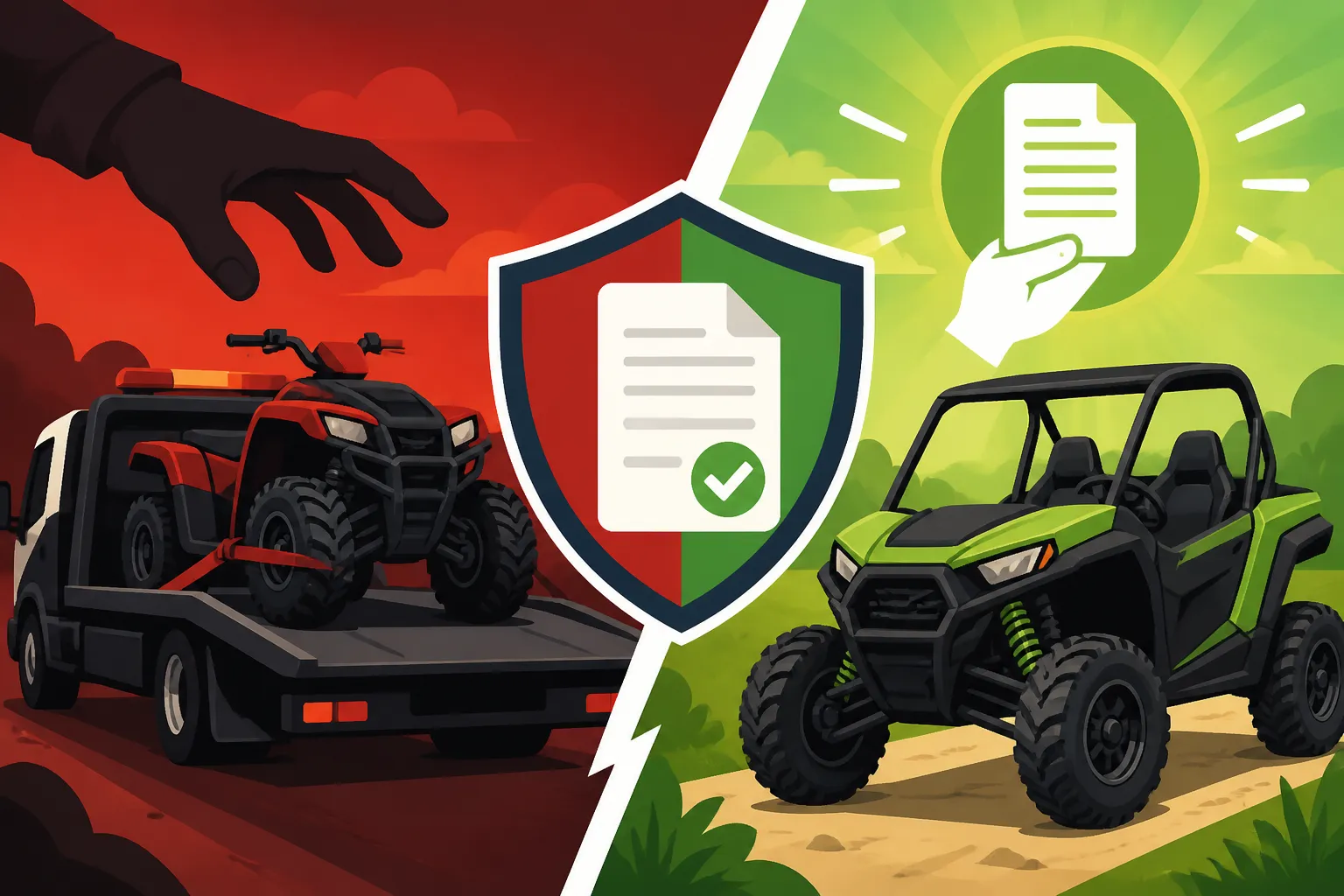
Imagine you leave your side-by-side parked in your driveway after a weekend ride, only to wake up the next morning and find it gone. This scenario is unfortunately common when a repossession agent acts. The legal authority for them to do this stems directly from the lien recorded on the title, or the security interest established in your loan documents. This is why understanding [Alabama's ALVIN System and Off-Road Titles] is crucial, as it creates a clear, searchable record that protects lenders and facilitates these legal processes. Without a title, a lender still has rights through the loan agreement, but the repossession might involve more paperwork to ensure all legal bases are covered.
Your Rights and Responsibilities During Repossession
Even when facing repossession, you, as the borrower, still have rights. First and foremost, you have the right to try and resolve the situation before repossession occurs. This often means working with your lender to catch up on payments, negotiate a payment plan, or even voluntarily surrender the machine. After repossession, the lender is usually required to send you a notice informing you of the repossession and your right to redeem the property (by paying the full outstanding balance, plus repossession fees) within a certain timeframe.
The lender also typically has to sell the repossessed machine in a "commercially reasonable manner," often through an auction. If the sale price doesn't cover the remaining loan balance, plus all the fees associated with repossession and sale, you could still be on the hook for the difference, known as a "deficiency balance." This is a tough pill to swallow: not only do you lose your machine, but you might still owe money. Conversely, if the machine sells for more than what you owe, you're entitled to the surplus. Understanding these aspects of the process can help mitigate the financial fallout, and sometimes, proactive communication with the lender is your best defense.
| Aspect | Titled Machine (Model Year 2026+) | Untitled Machine (Pre-2026) |
|---|---|---|
| Lender's Security | Lien recorded on state-issued title (ALVIN system) | Security interest via UCC filing, loan agreement, Bill of Sale |
| Proof of Ownership | State-issued title in borrower's name | Bill of Sale, historical registrations, prior ownership documents |
| Repossession Ease | Generally more straightforward due to clear lien | Can be more complex, relying heavily on contractual terms |
| Transfer After Sale | Lien released, new clear title issued to buyer | Transfer via new Bill of Sale, clearing any UCC filings |
| Buyer Protection | Can easily check for liens via state title records | Requires diligent search for UCC filings and seller's proof of ownership |
The Implications for Buyers and Sellers of Repossessed Machines
Repossession isn't just about the borrower and the lender; it also creates a distinct market for repossessed ATVs and UTVs. Whether you're considering buying one of these machines or are involved in the process from the seller's side, understanding the implications is crucial.
Buying a Repossessed ATV/UTV
For many, buying a repossessed ATV or UTV can seem like a golden opportunity to snag a deal. These machines are often sold at auctions by banks or finance companies, sometimes at prices below market value because the lender's primary goal is to recoup their losses quickly. However, this isn't a scenario where you should rush in blind. The phrase "buyer beware" rings especially true here.
When you're looking at a repossessed machine, whether it's a 2026 model with a title or an older, untitled quad, your first priority is to ensure you'll receive clear ownership. For newer, titled machines, you'll want to verify that the lien will be released and you'll receive a clean title. For older, untitled machines, it's about making sure any existing UCC filings are cleared and that you receive a solid [Alabama Bill of Sale Requirements] that accurately reflects the sale and transfer of ownership from the entity that legally repossessed it. Don't be afraid to ask questions, examine all paperwork, and if possible, run a serial number check to confirm there are no other undisclosed claims or [Alabama Stolen Machine Checks] issues.
Clearing Liens and Transferring Ownership
The beauty of a robust titling system, like what Alabama is implementing for 2026+ ATVs and UTVs, is how it facilitates clear transfers of ownership. Once a machine has been repossessed and sold, the lien that the original lender held on the title must be cleared. This means the lender formally notifies the state that their financial interest has been satisfied, usually after the sale proceeds have been applied to the outstanding debt. Once the lien is released, a new, clean title can be issued to the new buyer, showing them as the sole owner without any encumbrances. This makes it a straightforward process to prove ownership of a titled machine.
For older, untitled machines, the process is similar in principle but relies on different documentation. Any UCC financing statements would need to be formally terminated, and a new bill of sale from the repossessing entity to the new buyer serves as the primary proof of transfer. While Alabama does not have a formal process to title these older machines, obtaining solid proof of ownership from a reputable seller, like a bank that has legally repossessed it, is your best bet to ensure you can claim the machine as yours. You'll want to review [Proving You Own an Untitled Machine] for more context here.
The Importance of Due Diligence
Regardless of whether a machine has been repossessed or is simply being sold privately, due diligence is non-negotiable. For a titled machine, always, always check for existing liens. This can typically be done through a state's titling agency, as liens are public record. A reputable seller, whether a dealer or a private individual, should be able to provide you with a clean title or proof that any existing liens have been satisfied. If you're buying a machine that is supposed to have a title and the seller can't produce it, or the title shows an outstanding lien, you should be very wary. Doing your homework can save you a world of headaches, potential financial loss, and even protect you from inadvertently purchasing a machine that could still be subject to someone else's claim. Learning about [Alabama Penalties for a Missing Title] can further underscore why this due diligence is so vital.
Protecting Your Investment and Understanding Your Agreements
When you invest in an ATV or UTV, you're not just buying a machine; you're often buying freedom, utility, and adventure. Protecting that investment, especially if you're financing it, goes beyond just maintenance and safe riding. It starts with understanding the agreements you sign and being proactive.
Understanding Your Loan Documents
I cannot stress this enough: read your loan documents carefully. It’s not the most exciting part of buying a new machine, but it’s arguably the most important when it comes to protecting your financial well-being and preventing repossession. These documents, whether from a dealership, a bank, or a credit union, lay out all the terms and conditions of your loan. They specify your payment schedule, interest rate, and, crucially, what constitutes a default. This will include not only missed payments but also often clauses about maintaining insurance, not selling the machine without the lender’s consent, and keeping the machine in reasonable condition.
Don't just skim through and sign. If there's anything you don't understand, ask questions. Get clarifications in writing if necessary. Knowing exactly what you've agreed to is your first line of defense against unexpected issues down the road. This also applies if you're looking at [Financing a Titled Machine] versus one without a title; the terms and security clauses might differ slightly to accommodate the difference in how the lender records their interest.
Communication is Key with Your Lender
Life happens. Financial situations can change unexpectedly due to job loss, illness, or other unforeseen circumstances. If you find yourself struggling to make your ATV or UTV payments, the absolute worst thing you can do is avoid your lender. Ignoring calls and letters will only worsen the situation and accelerate the path to repossession.
Instead, be proactive. Contact your lender as soon as you anticipate a problem. Explain your situation honestly. Many lenders are willing to work with borrowers who are upfront and communicative. They might offer options like deferring a payment, adjusting your payment schedule temporarily, or even a short-term forbearance. While they are not obligated to offer these solutions, a lender would often prefer to work with you to get their money back than go through the costly and time-consuming process of repossession and auctioning off a machine. A little communication can go a very long way in keeping your machine in your garage.
Recording Serial Numbers and Other Proof
Whether your machine is titled or not, having impeccable records is always a smart move. For machines that fall under the new titling laws (2026+ models), the title itself will be your primary proof of ownership and show any liens. For the many, many older ATVs and UTVs in Alabama that don't have titles, your collection of documents becomes even more critical.
This includes your original bill of sale, any past registration documents from ALEA, maintenance records, and certainly photographs of your machine. Make sure you accurately record the full Vehicle Identification Number (VIN) or serial number, which is usually stamped on the frame. Take pictures of the VIN plate and any unique identifying marks. Store these records securely, perhaps digitally and in a physical file. This kind of diligent record-keeping can be invaluable if you ever need to prove ownership, deal with an insurance claim, or even navigate a [Theft Recovery Without a Title] situation. While it doesn't replace a title for newer machines, for older ones, it serves as your best defense and proof of your legal ownership.
Disclaimer
This article is for general informational purposes only and does not constitute professional advice. Laws, prices and regulations vary by location and change over time. Consult a qualified professional for guidance on your specific situation.