Proving Ownership of a Quad Bought at a Farm Sale
Buying an ATV or UTV at a farm sale in Alabama can feel like hitting the jackpot – a great deal, a sturdy machine, and the thrill of a new adventure waiting. But once the dust settles and the excitement cools a bit, a nagging question often surfaces: "How do I prove I actually own this thing, especially without a formal title or clear-cut paperwork?" This guide is dedicated to helping you navigate the unique challenges of establishing and documenting ownership for an off-road vehicle acquired in an informal farm sale setting, ensuring you can confidently register your machine with the Alabama Law Enforcement Agency (ALEA) and hit the trails without worry.
The Unique Hurdles of an Alabama Farm Sale ATV Purchase
There's a certain charm to a farm sale. It's often a local transaction, sometimes even among folks who know each other, built on trust and a handshake. The problem is, while a handshake seals the deal emotionally, it doesn't create the paper trail that official agencies, like those handling your ATV's registration, are looking for. You're left with a fantastic machine but a potential headache when it comes to proving legal ownership.
The Informal Nature of Buying Off the Farm
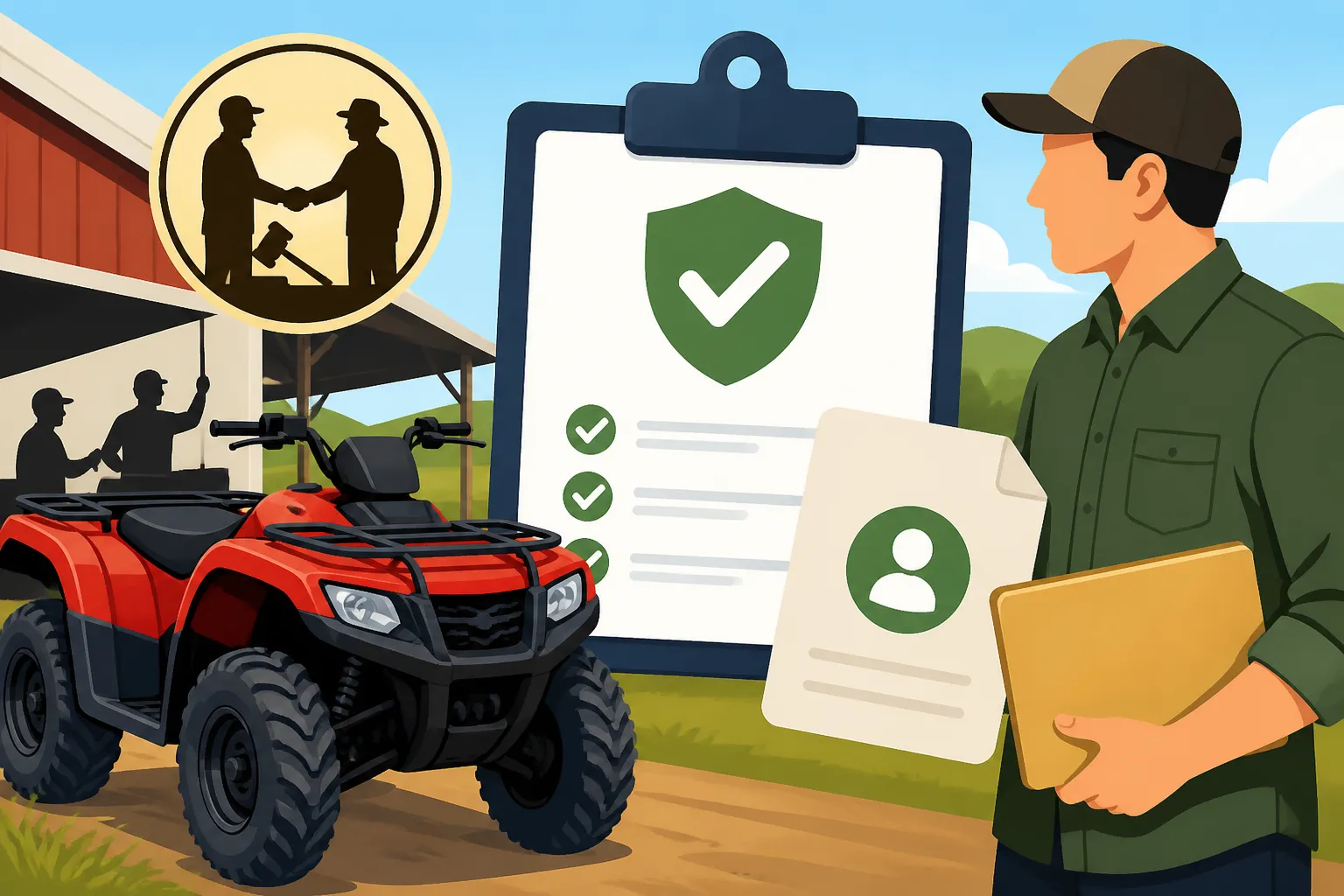
Imagine the scene: you drive out to a rural property, see a used quad parked beside a barn, kick the tires, negotiate a price with the owner, hand over a wad of cash, and load it up. You probably rode away feeling great, excited for your next adventure. But then, as you think about getting it registered or insured, the thought creeps in: "What exactly do I have to prove this is mine?" This scenario is incredibly common in Alabama's agricultural communities. Sellers might not have had a formal bill of sale themselves when they bought it years ago, or they might simply not think about providing one because it's "just an old farm machine."
Many farm transactions are cash-based and happen quickly, without the formal documentation you'd expect from a dealership. There's no finance manager to print out forms, no sales consultant to guide you through a stack of papers. It's often just a receipt scribbled on a piece of notebook paper, or perhaps nothing at all. This lack of initial paperwork, while understandable in the context of a private sale, becomes a significant hurdle when you need to interact with official state agencies.
The informal process, while traditional and often convenient, doesn't always align with modern legal requirements for proving asset ownership. This gap is precisely what makes buyers feel frustrated and uncertain. You've made a legitimate purchase, but the means to officially substantiate it can seem elusive.
Why Titles Are a Newer Concept for Alabama Off-Road Vehicles
Historically, ATVs and UTVs in Alabama were not required to be titled like cars, trucks, or motorcycles. This means that a vast number of older machines in our state simply don't have a formal title document. If you're buying a quad from a farm sale that's been around for years, chances are it never had one to begin with. This is a critical point to understand and one that often causes confusion for new owners. The absence of a title doesn't necessarily mean the machine is stolen or that there's an issue with ownership; it simply reflects the previous regulatory landscape.
However, the landscape is changing. Starting with [Alabama ATV Titling Starts With Model Year 2026], new ATVs and UTVs will be required to have titles. This new law means that if you buy a machine that is model year 2026 or newer, you will eventually receive a title for it. For anything older than that, the situation remains largely the same as it has been: no title required or even available. This split creates a unique situation where understanding the model year of your farm sale machine is paramount. [Why Older Alabama ATVs Cannot Be Titled] is a common question, and it's because the law simply didn't exist for those machines when they were new.
Even without a formal title, Alabama's voluntary registration system still requires you to prove you own the machine before they'll issue a registration decal. This is where the challenge for farm sale buyers truly lies. You can't just show up and say, "I bought this!" You need to present sufficient evidence that the machine belongs to you, whether it's eligible for a title or not.
The Crucial Difference Between Ownership and Registration in Alabama
It's vital to understand that in Alabama, ownership and registration are two distinct concepts handled by different parts of the state's administrative system, even though they are closely linked. Ownership refers to the legal right to possess and control a piece of property, which in this case, is your ATV or UTV. When you buy a machine at a farm sale, you are transferring ownership from the seller to yourself. However, this transfer often happens without the kind of documentation that Alabama's state agencies prefer to see.
Registration, on the other hand, is the act of officially recording your off-road vehicle with the Alabama Law Enforcement Agency (ALEA) for the purpose of tracking and identification. It allows you to legally operate your machine on designated public trails (with a public use registration) or simply identifies your machine as lawfully belonging to you, even if you only ride on private land (with a private use registration). Both [Alabama Public Use ATV Registration Explained] and [Alabama Private Use ATV Registration Explained] tiers require proof of ownership before a registration can be issued.
You absolutely cannot register a machine that you cannot adequately prove you own. The state needs to ensure that the person registering the vehicle is its rightful owner, primarily to prevent fraud and the registration of stolen property. This is why even for older, untitled machines, a solid paper trail, however informal at the point of sale, is critical for moving forward with your [Alabama Registration Paperwork Explained].
Building Your Proof: Essential Documents for a Farm Sale ATV
When dealing with a farm sale ATV, you might feel like you're starting from scratch without a dealer's stack of papers. But don't worry, there are concrete steps you can take to build a compelling case for ownership. The key is to be proactive in gathering and creating the necessary documentation, even if it means some legwork after the fact.
Crafting a Comprehensive Bill of Sale from Scratch
Even if your farm sale transaction was initially just a handshake and a cash exchange, it's not too late to create a robust bill of sale. This document is arguably the single most important piece of evidence you can have. If you didn't receive one, or if the one you did get was minimal (like a handwritten note with just a price), you need to get one done properly. A comprehensive bill of sale should clearly identify both the buyer and the seller, the machine being sold, and the terms of the transaction.
Here's what a strong bill of sale for an ATV in Alabama must include:
- Date of Sale: The exact date the transaction occurred.
- Full Names and Addresses: Complete legal names and current physical addresses for both the buyer(s) and seller(s).
- Purchase Price: The agreed-upon amount paid for the ATV or UTV.
- Machine Description: This is crucial. Include the make (e.g., Honda, Polaris), model (e.g., Foreman, Ranger), model year, and color.
- Vehicle Identification Number (VIN) or Serial Number: This is non-negotiable. Every ATV or UTV has a unique serial number, often stamped on the frame. If it's a newer machine, it will typically be called a VIN. This number links the document directly to your specific machine.
- Signatures: Both the buyer and the seller must sign and date the document. Having it notarized adds significant weight, as it verifies the identities of the signers.
If you need a template, services like LawDepot offer customizable bill of sale forms that you can easily fill out and print. This can be a lifesaver if you're trying to create a professional-looking document for a private sale. Even if the seller is gone, if you have their contact information, reaching out to get this done is worth the effort. It directly addresses [Alabama Bill of Sale Requirements] by ensuring all pertinent details are formally recorded.
The Indispensable Role of the Machine's Serial Number
The VIN or serial number is the unique identifier for your ATV or UTV, much like a fingerprint. It is absolutely critical for proving ownership and for registration purposes. You'll typically find this number stamped into the machine's frame, often in an easily accessible location like the front frame rail, under the seat, or on the steering column. It might be challenging to locate on older or well-used machines, but it's essential to find it. Once located, record it accurately, double-check every character, and take clear photographs of it on the machine.
This number serves multiple purposes: first, it specifically identifies the machine you are claiming ownership of, preventing any ambiguity. Second, it's the number that will be entered on your registration application. Third, it allows the state to check if the machine has been reported stolen, offering peace of mind to both you and the authorities. Without a verifiable serial number, proving ownership becomes incredibly difficult, and the Alabama Law Enforcement Agency will be highly unlikely to process your registration.
When you apply for registration, ALEA will require this number on the application, as detailed in [Alabama Serial Numbers on the Application]. They use this data to populate their records and ensure the machine is properly tracked. Take the time to meticulously find, record, and verify this number; it's the backbone of your ownership claim.
Supplemental Evidence to Strengthen Your Claim
Beyond a well-executed bill of sale, other pieces of evidence can significantly bolster your claim of ownership, especially when you're dealing with a transaction that wasn't perfectly documented from the start. Think broadly about anything that connects you to the machine and the seller.
Consider gathering the following:
- Photographs: Take pictures of the ATV at the time of purchase, ideally with the seller present, or photos of it on their property before you took possession. These photos can establish the timing and location of the sale.
- Canceled Checks or Bank Statements: If you paid by check or through an electronic transfer, a copy of the canceled check or your bank statement showing the transaction to the seller's account provides irrefutable proof of payment. This links the funds directly from you to the person you claim sold you the machine.
- Text Messages or Emails: Any digital correspondence between you and the seller discussing the sale, the price, the pickup arrangements, or the machine's details can serve as supporting evidence. These communications establish a timeline and confirm the terms of the agreement.
- Notarized Affidavit from the Seller: This is a particularly powerful document, especially if the original bill of sale was minimal or non-existent. An affidavit is a sworn statement, signed by the seller in front of a notary public, confirming that they sold the specific ATV (identified by its serial number) to you on a particular date for a stated amount. This document carries significant legal weight because the seller is attesting to the facts under oath. Services like LawDepot can provide templates for affidavits, making it easier to draft this crucial document. This kind of declaration is often the strongest way for [Proving You Own an Untitled Machine].
Even if you only have one or two of these items, compiling them all creates a much stronger and more credible case for your ownership than just a verbal claim. Each piece of evidence helps to paint a comprehensive picture of a legitimate transaction.
Navigating Alabama's Registration Process With Your Farm Sale Proof
Once you've diligently gathered all your ownership evidence, the next step is to present it to the Alabama Law Enforcement Agency (ALEA) through your local county probate office or licensing commissioner. This can feel daunting, but being prepared and understanding their perspective will make the process much smoother.
Understanding ALEA's Approach to Untitled Machines
The Alabama Law Enforcement Agency (ALEA) is responsible for the voluntary registration of off-road vehicles. While they certainly prefer clear, formal documentation, they also understand that many ATVs and UTVs in Alabama, especially older ones, simply do not have a title. Their goal isn't to deny you registration unnecessarily; it's to ensure that the machine is legally owned by you and isn't stolen property.
When you present your documentation for an untitled machine from a farm sale, the ALEA representatives (usually at the county level) are looking for a "preponderance of evidence." This means they want enough consistent and credible information to be reasonably convinced that you are the rightful owner. They will review your bill of sale, any affidavits, and other supporting documents to establish a clear chain of custody from the previous owner to you. The key is to provide a comprehensive package that leaves little room for doubt about your claim. Without this, you might find yourself stuck in a frustrating loop of trying to explain the informal nature of your purchase.
Your proactive efforts in documenting the sale, even after the fact, demonstrate your good faith and commitment to following the law. This approach significantly increases your chances of a successful registration, whether you're seeking [Alabama Public Use ATV Registration Explained] for designated trails or [Alabama Private Use ATV Registration Explained] for your own land.
The Power of a Sworn Statement or Affidavit
In situations where your initial bill of sale is weak, missing, or if the transaction was purely verbal, a notarized affidavit from the seller can be the most powerful tool in your arsenal. This document transcends a simple handwritten note because the seller is making a formal declaration under oath, witnessed by a notary public. The legal weight of such a statement is considerably higher.
Consider this scenario: You purchased a quad from an elderly farmer who retired to a different state shortly after the sale. You have a vague memory of a cash payment and a scribbled note, but nothing formal. If you can reach that seller and explain your need for an affidavit, it can unlock your ability to register the machine. The affidavit would typically state the seller's full legal name, their address, the specific ATV (identified by its unique serial number), the date of sale, the amount paid, and to whom it was sold (your full name).
LawDepot, for example, offers templates for various affidavits, which can help you draft a clear and legally sound document for the seller to sign and have notarized. This formal statement from the previous owner directly addresses concerns about the legitimacy of the transaction and helps bridge any gaps in your documentation. It serves as crucial proof of ownership, directly addressing the question of [Alabama Proof of Ownership Without a Title].
What to Bring and Expect at Your Local Registration Office
When you're ready to register your farm sale ATV, gather all your ownership documents and head to your county's probate office or licensing commissioner's office. Being organized and prepared will make the experience smoother.
Here's a checklist of what to bring:
- Your comprehensive bill of sale: The one you've painstakingly created or refined.
- The notarized affidavit (if applicable): This is often your strongest piece of supplemental evidence.
- Photos of the serial number: Clear pictures directly from the machine.
- Any other supplemental evidence: Canceled checks, bank statements, text messages, emails.
- Your valid Alabama driver's license or state ID.
- Payment for registration fees: Be prepared for potential fees, though specific amounts can vary slightly.
When you arrive, explain your situation clearly: you purchased an older ATV at a private farm sale, and you have compiled the best possible ownership documentation given the informal nature of the transaction. Be polite, patient, and ready to answer questions. The clerk may review your documents thoroughly and might even consult with a supervisor, especially if your case is unique. Their primary goal is to verify legitimate ownership. By presenting a well-organized and compelling set of documents, you significantly increase your chances of walking out with a valid registration for your machine. This interaction is part of the [Alabama Registration Questions Owners Ask] that clerks are trained to handle.
Protecting Your Investment After the Paperwork Is Done
Successfully proving ownership and registering your farm sale ATV is a significant accomplishment. But the journey doesn't end there. Taking a few more proactive steps can safeguard your investment, ensure you stay legal, and provide peace of mind for years to come.
Securing Your Newly Established Ownership Records
Once you've successfully registered your ATV and received your registration documents and decal, consider this new paperwork as a critical part of your ownership history. These documents, combined with your original bill of sale and any affidavits, now form the official paper trail that Alabama recognizes as proof of your ownership. Don't just toss them in a drawer and forget about them!
It's essential to secure these records properly. Make several copies of everything: your registration card, the bill of sale, and any supporting affidavits or photos of the serial number. Keep one set of originals in a secure, fireproof location at home, like a safe or a fireproof box. Store another set of digital copies on a cloud storage service or an external hard drive. It's also wise to keep a copy of your current registration card with the machine (perhaps in a waterproof pouch under the seat) and another in your tow vehicle, so you have immediate access to it if needed while out riding. These records are your lifeline if your machine is ever stolen, damaged, or if you decide to sell it down the road. They are your confirmed [Alabama Proof of Ownership Without a Title].
Voluntary Registration: Public vs. Private Use
Alabama's ATV/UTV registration is voluntary, but it's highly recommended, especially if you plan to ride anywhere other than exclusively on your private property. As you now know, Alabama offers two distinct tiers for this voluntary registration: public use and private use. Choosing the correct one is important based on your riding habits.
- Private Use Registration: This tier is generally cheaper and is intended for machines that will only be operated on private property, such as your own land, leased hunting grounds, or timber company land with permission. It essentially confirms your ownership and adds your machine to the state's database without granting public access privileges.
- Public Use Registration: This tier is for riders who intend to use their ATVs or UTVs on designated public lands or trails, such as those found in state-managed OHV parks. This registration tier typically comes with a slightly higher fee but grants you the legal right to ride in these specified public areas.
Carefully consider where you plan to ride most often. If there's even a slight chance you'll visit a public OHV park, opting for the public use registration from the start might save you the hassle of switching later. You can always switch your registration tier if your riding habits change, but it involves additional paperwork and potentially new fees. Understanding [What Alabama's Off-Road Vehicle Statute Covers] can help guide your choice.
| Registration Type | Intended Use | Cost (Compared to Other Tier) | Access to Public Trails | Primary Benefit |
|---|---|---|---|---|
| Private Use | Private land, leased property, farm use | Lower | No (generally) | Proof of ownership, legal identification |
| Public Use | Designated public OHV parks, specific trails | Higher | Yes | Legal access to public riding areas, ID |
The Smart Choice: Insuring Your Newly Owned Machine
Even if your farm sale ATV is older and therefore doesn't have a formal title (because it's pre-2026 model year), you can and absolutely should still insure it. Many owners make the mistake of thinking that without a title, insurance isn't possible or necessary. This couldn't be further from the truth. Insurance protects your valuable asset against unforeseen events, providing crucial financial security.
Talk to an insurance agent about comprehensive coverage, which protects against theft, vandalism, and damage from incidents like fire or natural disasters, and collision coverage, which covers damage from accidents. Given the rough-and-tumble nature of off-road riding, collision coverage is particularly important. Theft coverage is also paramount, as ATVs and UTVs are unfortunately common targets for thieves, and recovering a stolen machine without strong ownership proof (even if you now have registration) can still be a challenge. [Insuring a Machine With No Title] is a common practice for many Alabama riders.
Imagine the peace of mind knowing that if your machine is stolen from your barn, or if you accidentally roll it on a trail, your insurance policy is there to help cover the costs. When you speak with an insurance provider, be sure to provide them with the machine's make, model, year, and especially that unique serial number you worked so hard to document. This ensures your policy is accurately tied to your specific machine.
Disclaimer
This article is for general informational purposes only and does not constitute professional advice. Laws, prices and regulations vary by location and change over time. Consult a qualified professional for guidance on your specific situation.