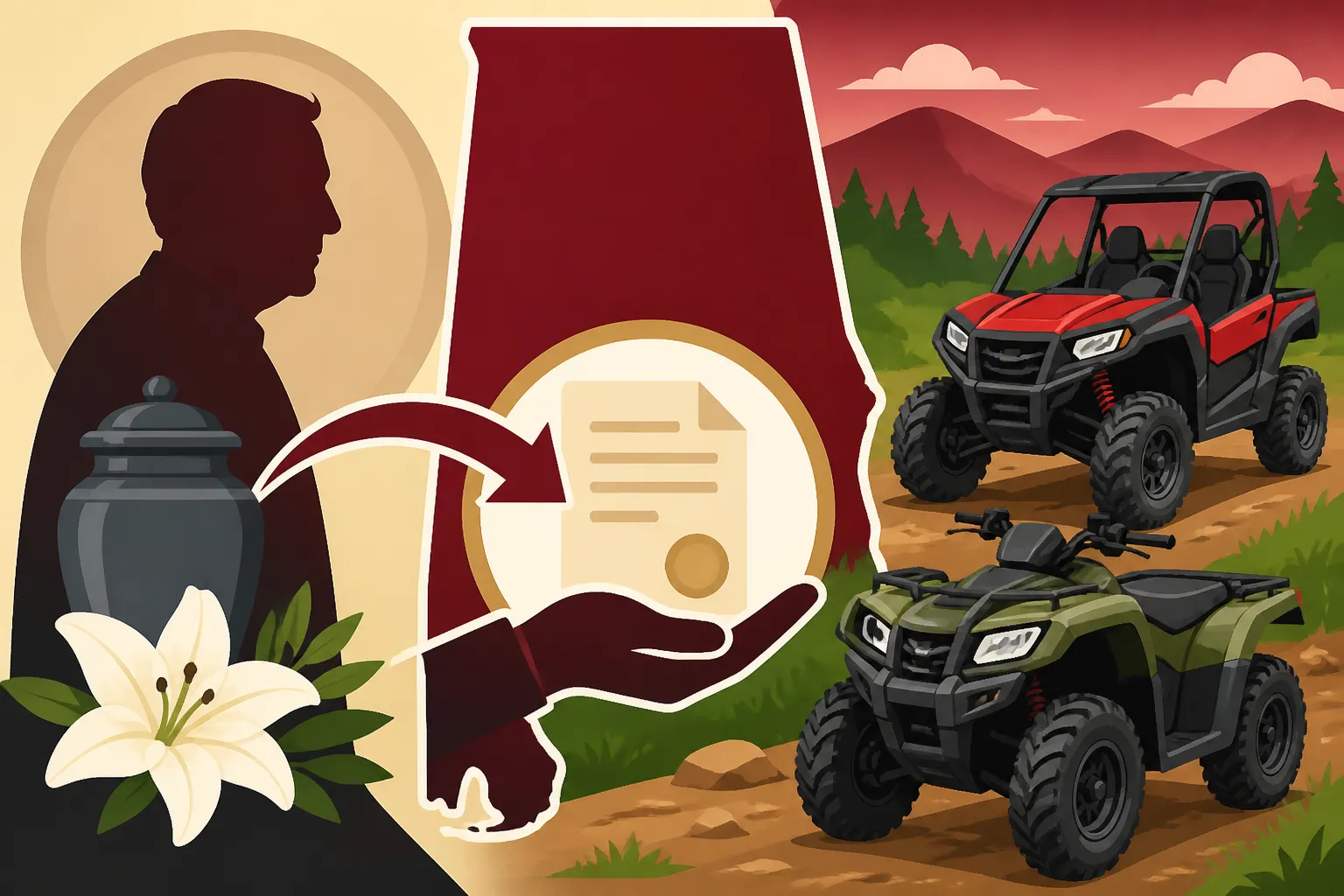
Alabama Registration After the Owner Dies
Losing a loved one is an incredibly difficult experience, and the last thing you want to worry about amidst grief is navigating bureaucratic processes for their possessions. If you've found yourself in the unfortunate position of needing to handle the registration of an ATV or UTV after its owner has passed away in Alabama, you're likely feeling overwhelmed and unsure where to even begin. This guide aims to gently walk you through the steps and common scenarios you might encounter, making a complicated process a little less daunting.
Navigating the Immediate Aftermath and First Steps
When an individual passes away, a mountain of practical tasks often falls to their surviving family members or appointed executor. Dealing with vehicles, including ATVs and UTVs, can be particularly perplexing because they fall into a unique category between everyday cars and untitled personal property. Your first steps, while emotionally taxing, are crucial for setting the stage for everything that follows.
Understanding the Emotional Weight and Practical Hurdles
It's completely normal to feel a mix of sadness, confusion, and even frustration when confronted with tasks like transferring vehicle registrations during a period of mourning. Many people assume that if a machine isn't a street-legal car or truck, it'll be simple. However, Alabama's registration system for off-road vehicles, while voluntary for private use, still requires specific steps when ownership changes, especially in cases of death. You might be asking yourself, "Where is the old registration card?" or "Do I even need to register this if it's just staying on my land?" These are valid questions that add to the burden. The goal here isn't to rush you, but to provide clarity so you can tackle this when you feel ready.
Gathering Initial Information and Documents
Before you can officially do anything with the ATV or UTV's registration, you'll need to gather some fundamental documents. Think of it as laying out all the pieces of a puzzle. Start by locating the deceased owner's important papers. This includes the death certificate, any will or estate planning documents, and crucially, the original registration certificate for the ATV or UTV. If you can't find the registration, don't panic entirely; there are often ways to proceed, but having it makes things much smoother. Also, check for any records of purchase, such as a bill of sale or receipts, as these can help establish the machine's history. Understanding [Alabama Registration Paperwork Explained] can give you a head start on what you're looking for.
The Role of the Estate and Legal Ownership
In Alabama, like most places, how an asset like an ATV or UTV is handled after an owner's death largely depends on whether there was a will and how the estate is being settled. This legal framework dictates who has the authority to make decisions and sign documents related to the machine.
When There's a Will and an Executor
If the deceased left a valid will, it likely names an executor. This person is legally responsible for carrying out the instructions in the will, which includes managing and distributing assets. The executor will typically need to have the will probated, which is the legal process of proving the will's validity. Once the court officially appoints the executor (often through "Letters Testamentary"), they gain the legal authority to act on behalf of the estate.
With Letters Testamentary in hand, the executor can then approach the Alabama Law Enforcement Agency (ALEA) to address the ATV or UTV's registration. They essentially step into the shoes of the deceased owner for official purposes. This authority is crucial for signing any transfer documents or applications to renew or update the registration. They'll need to demonstrate their legal right to represent the estate, so keep those court documents handy.
When There's No Will: Intestacy and Affidavits of Heirship
Things can get a bit more complex if the deceased did not leave a will. This situation is called "intestacy," and Alabama state law will dictate how the assets are distributed among legal heirs. Depending on the value of the entire estate, you might need to go through a formal probate process even without a will, where a personal representative is appointed by the court. This representative would then have the same authority as an executor.
However, for smaller estates, or if the ATV/UTV is the only major asset, it might be possible to transfer ownership using a "small estate affidavit" or an "affidavit of heirship." These legal documents, signed by heirs, essentially declare who the rightful owners are according to state law, bypassing the need for a full probate court process. You might find tools like those offered by LawDepot helpful for drafting an affidavit of heirship if formal probate isn't needed, as they provide customizable templates that can simplify the process of proving who should inherit the machine. It's always wise to consult with an attorney to confirm the best path for your specific situation, especially with a valuable asset. The challenge here often revolves around [Proving You Own an Untitled Machine] when the original owner is gone and there's no will.
Handling the Registration Transfer in Alabama
Once you've established legal authority, whether through an executor or an affidavit of heirship, the next step is to interact directly with ALEA to update the ATV or UTV's registration. This process will vary slightly depending on your intentions for the machine.
Transferring Registration to a New Owner (Family Member)
If a family member wishes to keep the ATV or UTV, the goal is to transfer the existing registration into their name. This is often treated similarly to a transfer after a sale, but with the added layer of proving inheritance. You will generally need:
- Proof of Death: The original or certified copy of the death certificate.
- Proof of Legal Authority: Letters Testamentary (for an executor) or a properly executed Affidavit of Heirship (for heirs without probate).
- Original Registration Certificate: If available.
- Application for Registration: The new owner will fill this out.
- Payment for Fees: There will be a nominal transfer fee and potentially a new issuance fee. The [Alabama Duplicate and Transfer at $5] fee is specifically for transfers.
The new owner will then receive an updated registration certificate and decal. Remember, Alabama's ATV/UTV registration runs for [Alabama Registrations Run Three Years], so you'll want to ensure the registration is current or renewed if it's expired. This is also where understanding whether the machine is considered [Alabama Public Use Versus Private Use] becomes important, as the registration tier will carry over or need to be updated.
Transferring for Sale to a Third Party
If the family decides to sell the ATV or UTV, the executor or legal heir will need to ensure they can provide clear proof of ownership to the buyer. In this scenario, the registration is first, in essence, transferred to the estate or the heir, and then subsequently sold. The buyer will then register the machine in their own name.
The executor or heir will need to sign a [Alabama Bill of Sale Requirements] document, clearly stating that they are selling the machine on behalf of the deceased owner's estate or as the legal heir. The bill of sale should include the machine's make, model, year, and crucially, its Vehicle Identification Number (VIN) or serial number. For newer machines (Model Year 2026 and newer), titles will be involved, making the process more akin to selling a car, and the executor or heir will sign off on the title transfer. Even if you have a simple will, reviewing it or creating a new one with a service like LawDepot might be something you consider for other assets down the line, ensuring clarity for your own estate.
Special Considerations for Alabama ATVs and UTVs
Alabama's off-road vehicle laws have some unique aspects that come into play, especially when dealing with older machines or those without a clear title history.
The Titling Changes Starting in 2026
It's important to remember that Alabama's titling law for ATVs and UTVs started with Model Year 2026. This means that if the deceased's machine is a 2026 model year or newer, it will have a title. If it's older than that, it likely won't, and the registration certificate is the primary proof of ownership. This distinction is vital when discussing transfer or sale. [Alabama ATV Titling Starts With Model Year 2026] is a game-changer for these transactions. If you're dealing with a pre-2026 machine, you'll be dealing primarily with registration documents, which can sometimes simplify things but also means you'll need robust proof of ownership for [Alabama Registration Without a Bill of Sale] if the original is missing.
| Document Type | Purpose | Required for Transfer? |
|---|---|---|
| Death Certificate | Proves owner has passed away | Yes |
| Will / Letters Testamentary | Establishes Executor's authority | Yes (if applicable) |
| Affidavit of Heirship | Declares legal heirs without full probate | Yes (if applicable) |
| Original Registration | Proof of prior registration and machine details | Highly Recommended |
| Bill of Sale (New) | For transferring to a new owner (family or third party) | Yes |
| Photo ID (New Owner) | For the individual registering the machine | Yes |
| Payment for Fees | State and county charges for transfer/new registration | Yes |
Handling Machines Without Formal Titles (Pre-2026)
For the vast majority of ATVs and UTVs currently in Alabama, there isn't a state-issued title, especially if they are older machines. This can sometimes make establishing clear ownership a bit more challenging, especially if the original bill of sale or previous registration records are missing. In these cases, the original registration certificate, combined with a death certificate and legal heirship documents, becomes paramount. If you're looking to acquire ownership of a pre-2026 machine that belonged to a deceased family member, understanding [Why Older Alabama ATVs Cannot Be Titled] is crucial. The absence of a title means you rely heavily on other forms of documentation.
If the machine was passed down through generations or purchased informally, you might need to rely on alternative proofs. An affidavit of heirship, for example, can serve as a legal declaration of ownership for heirs, which can then be presented to ALEA when seeking to update the registration. Again, this is where LawDepot or similar legal document services can be incredibly useful for drafting legally sound affidavits without needing extensive legal counsel for every single step.
What if the Registration is Expired?
If the ATV or UTV's registration has expired, the process is largely the same, but the new owner will simply be applying for a new registration rather than explicitly a transfer of an active one. You'll still need all the documentation proving legal ownership or heirship. ALEA handles [Alabama Registration Processing Time] and will issue a new registration certificate and decal for the appropriate three-year period once all paperwork and fees are submitted. Whether it's a transfer or a new registration, the goal is to get the machine correctly listed under the new owner's name, allowing them to ride legally, particularly if they plan on utilizing [Alabama Public Use Designated Areas].
Ultimately, while dealing with the estate of a loved one is never easy, taking these steps to properly manage the ATV or UTV's registration will provide peace of mind and ensure that the machine's ownership is clear and legally recognized in Alabama.
Disclaimer
This article is for general informational purposes only and does not constitute professional advice. Laws, prices and regulations vary by location and change over time. Consult a qualified professional for guidance on your specific situation.