Alabama Splits Titling and Registration Between Agencies
It's easy to get tangled up in the paperwork for your ATV or side-by-side in Alabama, especially when you realize that different parts of the process are handled by entirely separate agencies. Many riders find themselves scratching their heads, wondering why they can't just go to one place for everything. In this guide, we're going to untangle the roles of the various state and local agencies involved in Alabama's off-road vehicle world, so you know exactly where to go and what to expect, whether you're trying to title your brand-new machine or just register an older one.
The Core Confusion: Why Two Agencies for One Machine?
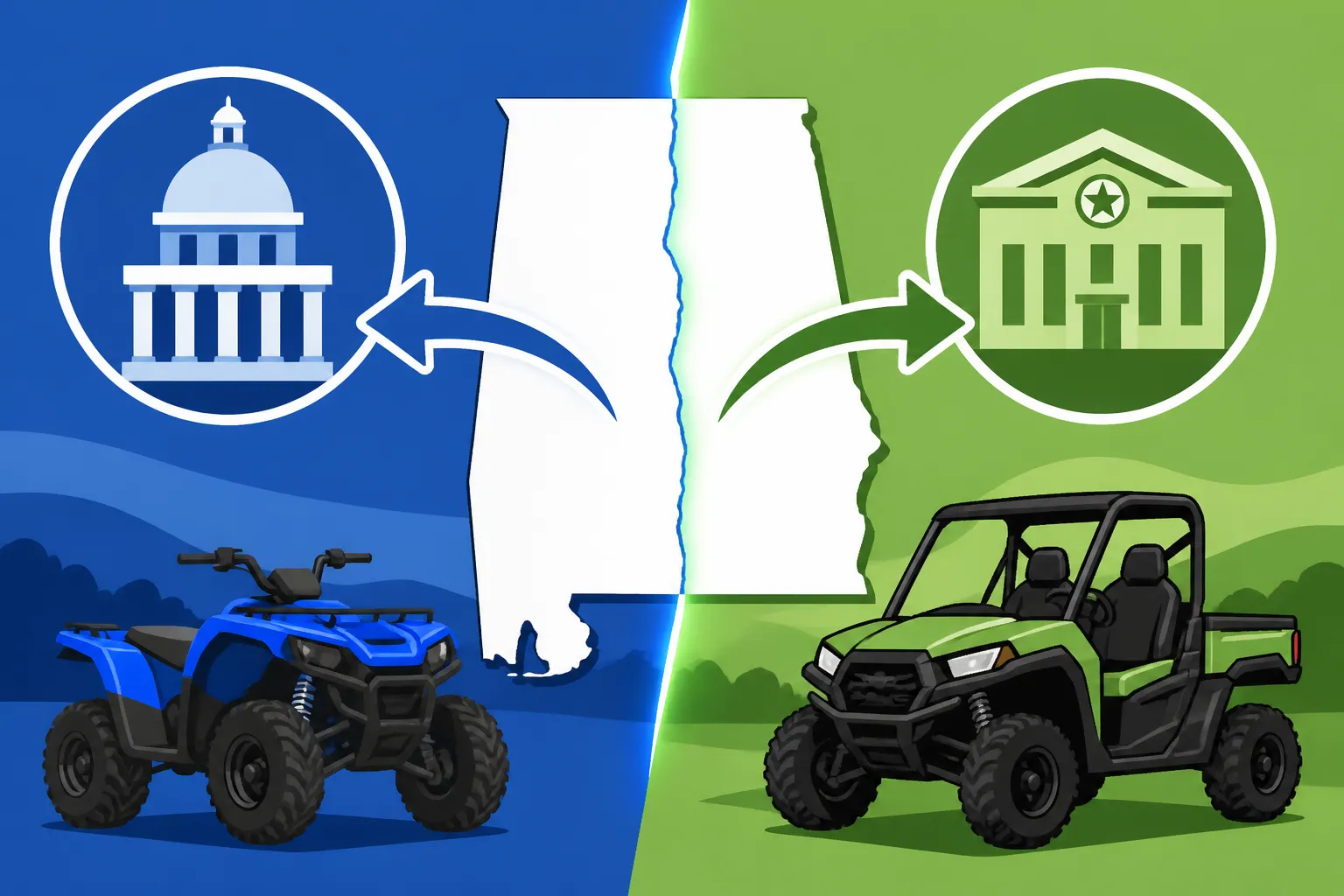
Let's be honest, it feels a bit like a bureaucratic maze when you discover that your trusty quad or side-by-side doesn't have a single, unified governmental home for all its official documents. You might be thinking, "It's just one machine, why do I have to deal with two different entities?" This frustration is completely valid, and it stems from how Alabama has traditionally structured its vehicle administration and how new laws, like the 2026 titling requirement, have been layered on top of existing systems. Most other vehicles, like cars and trucks, often have their titling and registration handled by the same county office, which makes the ATV/UTV situation feel particularly disjointed.
This division isn't arbitrary, even if it feels inconvenient. It's rooted in the distinct legal purposes that titling and registration serve. One is about proving who legally owns the machine, much like a deed proves ownership of a house. The other is about granting permission to operate that machine under specific conditions, often on public land. Because these functions have historically been managed by different arms of the state government, the new requirements for off-road vehicles have followed suit, leading to the split we see today. It adds a layer of complexity that new and seasoned owners alike have to navigate.
Imagine you've just bought a shiny new side-by-side, excited to hit the trails, and then you're told to go to one office for your title and another for your registration. It can certainly take the wind out of your sails and make the initial excitement of a new purchase turn into a paperwork headache. Understanding that this isn't a glitch, but rather an intentional (if somewhat cumbersome) system, is the first step in successfully getting your machine properly documented in Alabama. Knowing which agency handles what, and more importantly, why, will save you a lot of time and potential missteps.
Understanding Alabama's Titling Agency: Your County Office
When it comes to proving ownership of your ATV or UTV in Alabama, especially if it's a newer model, you'll be primarily dealing with your local county probate office or license commissioner's office. This is the same type of office where you'd handle car titles, property deeds, and other vital records. This connection to the county office highlights the importance of the title itself: it's a fundamental legal document confirming who holds rightful possession of the machine. The titling process is all about creating a clear chain of ownership, which is crucial for things like sales, inheritance, and even theft recovery.
The shift to mandatory titling for certain ATVs and UTVs in Alabama, specifically those with a model year 2026 or newer, brings these machines into a more formal legal framework. Before this change, many off-road vehicles operated without a formal title, relying instead on bills of sale or other informal proofs of ownership. While this was simpler in some ways, it also created challenges when machines were stolen, sold privately, or involved in legal disputes. The title, issued by your county, provides a centralized, official record of ownership, making these transactions much more secure and trackable. [How to Title an ATV in Alabama] explains this in more detail.
When you submit your application for an ATV or UTV title, you'll be interacting directly with county staff. They are responsible for reviewing your paperwork, verifying the machine's information (like the VIN), collecting any applicable fees, and ultimately processing your application through the state's titling system. This local interaction means you'll deal with people who are likely familiar with your community and its specific nuances, even if the overall rules are state-mandated. It's worth noting that while the process is local, the information often gets routed through a larger state database, like the ALVIN system, to ensure consistency and prevent fraud.
The Role of the County Probate Office
The county probate office, or in some counties, the license commissioner, serves as the frontline for title applications. This office is steeped in the tradition of managing official records that establish legal ownership of various assets. For your ATV or UTV, this means they are the gatekeepers for creating that initial, ironclad proof that you are the machine's rightful owner. They'll scrutinize your bill of sale, any previous ownership documents, and your identification to ensure everything lines up perfectly before they submit your application. This meticulous review is critical because a title, once issued, is a powerful legal document.
When you walk into a county office to apply for a title, you'll typically be working with a title agent or clerk who is specially trained in these processes. They can help you navigate the forms, ensure you have all the necessary [Alabama Title Requirements for 2026], and explain any local fees that might apply in addition to the state titling fees. These agents play a crucial role in ensuring the accuracy of the titling record, which in turn protects you as the owner and any future buyers. They are essentially verifying the legitimacy of your ownership claim before it becomes an official state record.
It’s important to remember that these county offices have specific hours and procedures, and it’s often a good idea to call ahead or check their website to confirm what you need to bring. They're processing thousands of documents, from marriage licenses to car titles, so being prepared with all your forms and identification can make the process much smoother. Think of them as the official record-keepers, whose job is to ensure that every piece of property, including your new side-by-side, has a clear and unambiguous owner on record.
What the Title Proves and Why It Matters
A title document for your ATV or UTV is more than just another piece of paper; it is the definitive legal proof of ownership. In the world of off-road vehicles, where informal sales used to be the norm, a title brings a level of legitimacy and security that was often missing. It clearly states who the owner is, provides a detailed description of the machine including its Vehicle Identification Number (VIN), and, if applicable, lists any liens against the machine, such as from a lender. This single document consolidates all that vital information into one official record.
This clear proof of ownership becomes incredibly important in several scenarios. If your ATV is stolen, having a title on record with its VIN makes it significantly easier for law enforcement to track, recover, and return your machine. Without a title, proving you owned it can become a much more complicated and drawn-out process, often relying on shaky bills of sale or sworn affidavits. Similarly, when you go to sell your machine, a clean title reassures potential buyers that they are acquiring a legally owned asset, increasing its value and making the transaction smoother. [Selling a Registered Machine in Alabama] touches on related aspects.
Furthermore, if you ever need to finance an ATV or UTV, lenders will almost always require a title to record their lien. This allows them to secure their interest in the machine until the loan is paid off. Without a title, financing options can be extremely limited or non-existent for the very reason that there's no official mechanism to record a security interest. So, while the process of obtaining it might seem like just another hoop to jump through, the title provides essential legal protection and facilitates future transactions, making it an indispensable document for any owner of a titlable machine.
Understanding Alabama's Registration Agency: ALEA
In stark contrast to titling, the registration of your ATV or UTV in Alabama falls under the purview of the Alabama Law Enforcement Agency (ALEA), specifically through its Marine and Off-Highway Vehicle Division. While the county office focuses on who owns the machine, ALEA focuses on who can operate the machine, especially when it comes to riding on public lands. This agency is responsible for enforcing off-road vehicle laws, managing designated riding areas, and ensuring that machines meet certain operational criteria, such as having a spark arrestor or meeting sound limits, where applicable.
ALEA's role in registration signifies a shift from property ownership to operational permissions. When you register your ATV or UTV with ALEA, you're essentially applying for a permit to ride your machine in designated public areas, like state parks, specific trails within national forests, or other public use lands that allow off-road vehicles. This registration helps ALEA track the number of machines being used on public lands and provides a means to fund enforcement, trail maintenance, and safety programs. It's a system designed to manage and regulate off-road recreation responsibly across the state.
Unlike the titling process, which is a one-time event (unless you transfer ownership), registration is something you'll renew periodically, typically every three years in Alabama. This recurring process ensures that the state has an up-to-date record of active riders and machines using its public resources. You can often handle ALEA registration online, through mail, or at certain designated vendor locations, which can be different from your county's probate office. This separate administrative pathway underscores that registration is about ongoing permission and regulation, not just a one-time establishment of ownership. [Alabama Registration Paperwork Explained] clarifies the specifics here.
The Marine and Off-Highway Vehicle Division
The Alabama Law Enforcement Agency's (ALEA) Marine and Off-Highway Vehicle Division has a broad mandate that includes everything from boating safety to regulating off-road vehicle use. When it comes to ATVs and UTVs, this division is the central hub for administering the state's registration program. They are responsible for processing applications, issuing the distinctive three-year registration decals, and maintaining the statewide database of registered machines. Their oversight ensures a consistent approach to off-road vehicle regulation across Alabama, regardless of which county you happen to reside in.
This division's focus extends beyond just collecting fees and issuing decals; they are also heavily involved in safety education, enforcement of riding laws, and managing public lands access. The funds generated through registration fees directly support these efforts, helping to maintain trails, provide rescue services, and ensure compliance with environmental regulations. So, when you pay your registration fee to ALEA, you're not just getting a sticker; you're contributing to the infrastructure and safety programs that make off-road riding possible and enjoyable on public lands throughout the state. [Alabama Public Use ATV Registration Explained] delves into what this covers.
The personnel within this division are experts in off-road vehicle regulations, often working closely with game wardens, park rangers, and local law enforcement to ensure safe and legal riding practices. If you have questions about where you can ride, what equipment is required, or specific rules for a public use area, this is often the agency to consult. Their comprehensive knowledge makes them a vital resource for anyone planning to use their ATV or UTV in Alabama's public outdoor spaces. They are the operational arm, ensuring that rules are followed and resources are managed properly.
Public Use vs. Private Use Registration
One of the most common points of confusion for Alabama ATV and UTV owners when it comes to registration is the distinction between "public use" and "private use" tiers. This isn't just a different colored sticker; it represents two fundamentally different levels of operational permission granted by ALEA. Understanding which tier applies to you, and more importantly, which one you need, can save you money and ensure you're riding legally. The core difference lies in where you intend to operate your machine.
The "public use" registration tier is specifically designed for owners who plan to ride their ATVs or UTVs on state-owned land, designated public trails, or other areas where a state-issued registration is required. This is the more expensive of the two options, reflecting the increased administrative and maintenance costs associated with public land use. If you envision weekend trips to [Stony Lonesome OHV Park in Alabama] or exploring designated trails in a national forest, then a public use registration is absolutely essential. Riding on public land with only a private use registration could lead to fines or other penalties, as you wouldn't have the necessary authorization.
On the other hand, the "private use" registration tier is a more limited and less expensive option, intended for those who will only ride their ATV or UTV on their own private property or on private land where they have explicit permission, and where no state registration for public access is needed. This tier acknowledges that many Alabamians use their machines primarily for farm work, hunting on leased land, or simply recreational riding in their own backyard. If you never plan to take your machine onto a state-managed trail or park, this option can save you some money while still providing a basic level of official recognition for your machine. [Alabama Private Use ATV Registration Explained] details this further. It's about aligning your registration choice with your actual riding habits.
The "Why": Different Purposes, Different Processes
At the heart of Alabama's two-agency system for ATVs and UTVs is a fundamental distinction in purpose: titles are about ownership, and registrations are about permission to operate. While they both pertain to your machine, they serve entirely different legal and administrative functions, which naturally leads to different agencies handling them. This separation isn't unique to off-road vehicles; many states have similar divisions for various types of property and operational permits.
Think of it this way: your house has a deed (ownership) and you might need a permit to build an addition (permission to operate on your land in a certain way). Your car has a title (ownership) and a license plate/registration (permission to operate on public roads). While ATVs and UTVs have historically been less regulated, the increasing popularity and new legislation are bringing them more in line with these established distinctions. [Why the Model Year Decides If You Title It] is a key factor here, as the new titling law only impacts machines from a certain year forward, while registration has been a longstanding program.
Understanding this core "why" helps to demystify the process. The county office, steeped in property law, is the logical place for a title that establishes who owns the machine outright. ALEA, as a law enforcement and regulatory body, is the logical agency to handle registration, which grants operational permission and enforces rules for public safety and land use. Each agency plays to its strengths and existing legal mandates, even if it means you have to visit two different places or interact with two separate systems. It's not designed to be difficult, but rather to ensure each distinct legal requirement is met by the appropriate authority.
Titling: Proving Legal Ownership and Protecting Your Investment
The primary purpose of titling your ATV or UTV is to create an irrefutable legal record of ownership. This document provides a clear and official paper trail that links you directly to your machine. For most other large assets like cars, boats, or real estate, a title or deed is standard. The introduction of mandatory titling for newer ATVs and UTVs in Alabama brings these machines into a similar framework, offering greater protection for owners and facilitating legitimate transactions. It's about solidifying your property rights.
This official documentation is a critical safeguard for your investment. If your machine is stolen, the title acts as undeniable proof for law enforcement and insurance companies, significantly improving the chances of recovery and a fair claim settlement. Imagine trying to prove you own a valuable piece of equipment without any official document; it can quickly become a "he said, she said" situation. A title from your county probate office eliminates that ambiguity, giving you peace of mind that your ownership is legally recognized and protected.
Moreover, a title simplifies the process of buying and selling. When you purchase a titled ATV, you know exactly who the previous legal owner was, and when you sell one, you can confidently transfer that legal ownership to the new buyer. This transparency helps prevent fraud and provides a level of consumer protection that was less prevalent in the past for off-road vehicles. For instance, when using a service like LawDepot to create a robust bill of sale, having a clear title to reference strengthens the entire transaction, ensuring both parties are protected. It formalizes the exchange of a valuable asset.
Registration: Granting Operational Permission and Managing Public Access
In contrast to titling, registration with ALEA is all about granting you the permission to operate your ATV or UTV, especially on public lands. It's essentially your license to ride in designated areas. This system allows the state to manage the impact of off-road vehicles on its natural resources, ensure public safety, and fund the maintenance of trails and riding facilities. Without registration, managing public access to these areas would be chaotic and unsustainable, leading to potential overuse, environmental damage, and safety hazards.
The funds collected through registration fees are typically earmarked for programs directly related to off-highway vehicle use. This can include trail development and maintenance, signage, law enforcement patrols on public trails, and educational initiatives aimed at promoting responsible riding. So, when you pay for your registration, you're not just complying with a rule; you're actively contributing to the upkeep and availability of the very places you enjoy riding. This makes the distinction between "public use" and "private use" registrations particularly important, as the public use fee directly supports the infrastructure you're accessing.
Furthermore, registration helps ALEA enforce regulations related to safety and environmental standards. For example, it provides a mechanism for authorities to track machines involved in accidents or those that are found operating illegally. It’s a regulatory tool designed to ensure that off-road recreation is conducted in a responsible manner that respects both the environment and other users of public lands. From a legal standpoint, [Do You Need to Register an ATV in Alabama?] is answered by your intent to ride on public land, which highlights the operational permission aspect.
Navigating the Paperwork Maze: Where to Go for What
Understanding that two different agencies are involved is one thing; knowing exactly where to go for each piece of paperwork is another. This is where many people get tripped up, making unnecessary trips or submitting the wrong forms to the wrong office. The key is to remember the core distinction: ownership documents (titles) go to the county, and operational permits (registrations) go to ALEA.
For a new, titlable ATV or UTV (model year 2026 and newer), your first stop for formal ownership documentation will be your local county probate or license commissioner's office. This is where you'll submit your [Alabama Bill of Sale Requirements] and apply for the actual title. Once that's squared away and you're officially the owner, then you'll turn your attention to ALEA for registration if you plan on riding on public land. For older machines that aren't titlable, you'll skip the county title step entirely and go straight to ALEA for registration if public riding is your goal.
It's helpful to visualize these as two distinct paths, occasionally intersecting but ultimately handled by separate entities. Think of it as a two-stage process for new machines: first, establish ownership, then get permission to ride. For older machines, it’s a single stage: get permission to ride if you need it. Being organized with your documents and knowing which pile goes where will save you a lot of time and frustration. Having a checklist can be invaluable here.
Applying for Your ATV/UTV Title at the County Office
When you're ready to apply for your ATV or UTV title, especially for a machine model year 2026 or newer, your local county probate or license commissioner's office is your destination. This process is generally handled in person, although some counties may have specific mail-in options, especially for dealer-filed applications. You'll need to gather several crucial documents to ensure a smooth application process. Typically, this includes your manufacturer's statement of origin (MSO) if it's a new machine, or a properly executed bill of sale if you purchased it from a private seller or from out of state.
You'll also need proof of identity, such as a driver's license, and payment for the title fee and any local processing charges. It's a good idea to call your specific county office beforehand to confirm their exact requirements and accepted payment methods, as these can sometimes vary slightly from one county to another. They will review all your documents meticulously, enter your machine's VIN into the ALVIN system, and process your application. Once approved, the title will typically be mailed to you, though the processing time can vary. [Alabama Title Processing Through ALVIN] details the system used.
This is also the point where any liens from a financing company would be recorded on the title. If you financed your ATV or UTV, the lender will often send the necessary lien perfection documents directly to the county office, or you might be required to present them. This ensures that the title accurately reflects all legal interests in the machine. A properly titled machine has a clear and undisputed record of ownership, making future transactions much more straightforward.
Registering Your ATV/UTV Through ALEA
Once you've secured your title (if applicable) or if you own an older, non-titlable machine and plan to ride on public lands, your next step is to register it with ALEA. Unlike the in-person requirement often associated with titling, ALEA offers more flexibility for registration. You can usually complete the application online through the ALEA website, by mail, or sometimes at designated vendors or ALEA offices. This convenience reflects the more widespread and ongoing nature of registration, aiming to make it as accessible as possible for all riders.
When registering, you'll need to provide details about your machine, your personal information, and choose between the public use or private use registration tier based on your riding intentions. You'll pay the applicable registration fee, which, as mentioned, runs for three years. Once your application is processed, ALEA will mail you a registration card and a decal to affix to your ATV or UTV. This decal is your visible proof that your machine is legally registered for its intended use. [Alabama Registrations Run Three Years] explains the duration.
It's crucial to keep your registration card with you when you ride on public land, as law enforcement or park rangers may ask to see it. The decal, clearly displayed on your machine, serves as quick visual confirmation of your compliance. Renewing your registration every three years follows a similar process, ensuring your operational permission remains current. This system provides a convenient way for riders to comply with public land access requirements, directly supporting the areas they enjoy.
Key Dates and Model Years: When Each Agency Becomes Relevant
The introduction of Alabama's titling law for off-road vehicles brought a significant change, creating a clear dividing line based on the machine's model year. This specific date is crucial because it dictates whether you'll even need to interact with your county office for a title in the first place. This date-specific rule can be a major source of confusion for owners who might assume all ATVs and UTVs are now titled, or conversely, that none are.
For machines with a model year of 2026 or newer, the titling process with your county probate or license commissioner's office is mandatory. This is a hard cutoff, meaning any brand-new machine rolling off the dealership floor with a 2026 (or later) model year will require a title to establish legal ownership. On the other hand, machines with a model year of 2025 or older are generally exempt from this new titling requirement. This means if you own a 2020 quad, for example, you don't need to worry about getting a title from your county office.
Regardless of the model year, the registration process through ALEA remains a separate consideration. If you plan to ride any ATV or UTV, regardless of its age, on public lands in Alabama, you will need to register it with ALEA. The titling law did not change the registration requirements. This dual system, with a model-year specific titling mandate and a general registration requirement based on public use, is a prime example of why understanding the roles of both agencies is so important. [Alabama ATV Titling Starts With Model Year 2026] details the change.
The 2026 Model Year Cutoff for Titling
Alabama's specific statute establishing mandatory titling for certain off-road vehicles set a clear benchmark: the model year 2026. This means that if you purchase a brand new ATV or UTV, or even a used one, that has a 2026 model year or later, it will be subject to the new titling requirements. This is a pivotal date that divides the world of Alabama off-road vehicles into "titlable" and "non-titlable" categories based on their manufacturing year. This provision aims to standardize ownership records for newer machines, bringing them more in line with other titled vehicles in the state.
For owners of machines with a 2026 model year or newer, interacting with your county's probate or license commissioner's office for a title is no longer optional; it's a legal requirement. This process establishes clear, undisputed ownership, which is beneficial for tracking machines, preventing theft, and facilitating secure transactions. This means that if you're looking at a brand-new side-by-side with a 2026 sticker, you'll need to factor in the county title application as part of your initial paperwork alongside any financing or insurance arrangements. [Alabama Title Applications From January 2026] outlines the timing.
Conversely, understanding this cutoff is equally important for those considering older machines. If you're buying a used ATV with a 2025 model year or earlier, you will not need to apply for a title through the county office. This specific exemption means that the traditional methods of proving ownership for older machines, primarily a solid bill of sale, remain sufficient for ownership purposes. It simplifies things for the vast existing fleet of older ATVs and UTVs, preventing a massive, retroactive titling effort that would be both costly and cumbersome for owners and the state.
Registration: A Separate, Ongoing Requirement
Regardless of whether your ATV or UTV falls under the 2026 titling mandate, the requirement to register your machine with ALEA remains a distinct and ongoing responsibility if you plan to ride on public land. The titling law did not replace or alter the existing registration program. This means that even if you own a pre-2026 machine that doesn't need a title, you still need to register it with ALEA if you plan to use it in public riding areas like [Minooka Park Riding in Alabama] or on designated state trails.
Registration is essentially an operational permit, a three-year authorization from the state to use your off-road vehicle in public spaces. It's about compliance with the rules governing public land use and contributing to the resources that maintain those areas. This separation often catches people off guard because they might assume that once they get a title for a new machine, they're all set. However, the title proves ownership, while the registration grants riding privileges. [Alabama Registration Questions Owners Ask] often revolve around this distinction.
Therefore, for any ATV or UTV owner in Alabama, the decision matrix looks like this:
- Is my machine model year 2026 or newer? If yes, get a title from your county.
- Do I plan to ride on public land? If yes (regardless of model year), register with ALEA.
This clarifies that while the title is a one-time (per ownership transfer) event for newer machines, registration is a recurring requirement for all machines used publicly, bridging the gap between old and new vehicles in terms of access to state resources.
Potential Pitfalls and How to Avoid Them
Navigating a system split between two different agencies can certainly lead to confusion and potential missteps. Many owners find themselves unknowingly making errors that can cause delays, incur extra costs, or even lead to legal issues. A common pitfall is assuming that one form of documentation covers both requirements. For example, some might think that simply registering their machine with ALEA means they have a legally established ownership record, or conversely, that a title from the county negates the need for public use registration. This misunderstanding is precisely why clarifying the roles of both agencies is so vital.
Another frequent issue arises from the model year cutoff for titling. Owners of older machines might mistakenly try to title them at the county office, only to be turned away because their vehicle doesn't meet the 2026 model year requirement. On the flip side, owners of brand-new machines might neglect the titling process, thinking their dealer handled everything or that a bill of sale is sufficient, only to find themselves without legal proof of ownership down the road when they try to sell or if the machine is stolen. Being proactive and understanding these nuances can save a lot of headaches.
The best way to avoid these pitfalls is through clear communication and thorough preparation. Don't hesitate to call your specific county probate or license commissioner's office to confirm titling requirements for your machine's model year. Similarly, if you have questions about public versus private use registration, reach out to ALEA directly or consult their official resources. Being informed and double-checking requirements for your specific machine and your intended use is the most effective strategy to ensure full compliance and avoid any unpleasant surprises.
Common Mistakes with Titling Applications
One of the most common mistakes people make when dealing with titling for their ATV or UTV is submitting incomplete or incorrect paperwork. The county offices, which are the [Who the Title Agent Is at Your County Office], operate under strict guidelines, and even a small error can lead to your application being rejected or significantly delayed. For instance, a bill of sale that's missing crucial information like the VIN, the full names and addresses of both buyer and seller, or the purchase price can hold up the entire process. Similarly, if you've purchased a used machine, ensuring you have the proper chain of ownership documented from the previous owner is paramount.
Another significant pitfall is failing to understand the model year cutoff. Owners of pre-2026 machines might attempt to apply for a title, only to be informed that their machine is not eligible under current Alabama law. While this doesn't invalidate their ownership, it's a wasted trip and a source of confusion. Conversely, owners of 2026 or newer models sometimes delay applying for a title, relying on just a bill of sale. This leaves them vulnerable, as a bill of sale alone, while important, doesn't carry the same legal weight as a state-issued title for proving ownership, especially in cases of theft or resale. [Why Older Alabama ATVs Cannot Be Titled] explains the reasons for the cutoff.
Finally, not accounting for lien recording is a common oversight, particularly for financed machines. If you've taken out a loan to purchase your ATV or UTV, the lender will require their interest to be noted on the title. Failing to provide the necessary documentation from your lender during the titling application can complicate matters, as the county office needs this information to issue a clear and accurate title that reflects all legal interests. Always communicate with your lender and the county office to ensure all lien documentation is submitted correctly and promptly. Using a reputable service like LawDepot for a comprehensive bill of sale can help ensure all necessary details are captured, even if a title isn't required for older machines.
Common Mistakes with Registration Applications
When it comes to registering your ATV or UTV with ALEA, a frequent mistake is choosing the wrong registration tier—specifically, opting for "private use" when you actually intend to ride on public lands. Many owners might select the cheaper private use option, thinking it's sufficient, only to find themselves cited by law enforcement or turned away from public riding parks. This can be an expensive lesson, as you'd then have to pay for the correct public use registration and potentially a fine. It's crucial to be honest about your riding intentions when filling out the application.
Another common oversight is simply forgetting to renew the registration after the three-year period. Unlike vehicle tags that might have more prominent reminders, ATV/UTV registrations can sometimes slip through the cracks. Riding with an expired registration is just as problematic as riding without one, potentially leading to fines or other penalties. Keeping track of your renewal date and setting a reminder is a simple but effective way to avoid this. [Alabama Registration Renewal After Three Years] provides further guidance.
Lastly, failing to properly display the registration decal on your machine is a recurring issue. ALEA specifies where the decal should be placed for visibility and compliance. If it's not affixed correctly or becomes obscured, law enforcement may still issue a citation even if your machine is technically registered. Ensuring the decal is clean, visible, and placed according to instructions helps avoid unnecessary hassle. Remember, the registration process isn't just about paying a fee; it's about visibly demonstrating your compliance with public access regulations.
The Big Picture: Why This System Matters for Owners
While navigating two separate agencies for your ATV or UTV might feel like a bureaucratic hurdle, understanding Alabama's system is ultimately beneficial for owners. This dual approach, with counties handling definitive ownership through titling and ALEA managing operational permits through registration, creates a more robust and secure environment for off-road enthusiasts across the state. It's about providing both property protection and responsible land management.
For new machines (2026 model year and newer), the mandatory titling through your county probate office offers a level of legal protection that was previously missing. It safeguards your investment against theft, simplifies resale by providing clear proof of ownership, and facilitates financing options. This formal documentation ensures that your valuable asset is recognized within Alabama's legal framework, offering peace of mind that your ownership is undisputed.
For all machines used on public lands, the registration system managed by ALEA ensures that these valuable recreational areas are properly maintained and managed. Your registration fees directly contribute to trail upkeep, safety programs, and law enforcement efforts, preserving the very places you love to ride. This responsible approach helps sustain off-road recreation for future generations. So, while it requires a bit more effort upfront to understand the distinction between the agencies, the overall result is a more secure, well-regulated, and enjoyable experience for all Alabama ATV and UTV owners.
Benefits of Clear Ownership Records (Titles)
The introduction of mandatory titling for newer ATVs and UTVs in Alabama offers a significant array of benefits to owners, primarily by establishing clear and undeniable ownership records. In the past, the absence of a formal title often led to ambiguities, making transactions more complex and leaving owners vulnerable. Now, with a title issued by your county, your machine is firmly placed within the state's official property registry. [Alabama's ALVIN System and Off-Road Titles] is the backbone for this.
One of the most immediate and tangible benefits is enhanced security against theft. A titled machine, with its VIN recorded on an official document, is much easier for law enforcement to track, identify, and return if stolen. It provides irrefutable evidence for insurance claims, streamlining the process and ensuring you receive proper compensation if your machine is unrecoverable. Without a title, proving you owned the machine after a theft could become a challenging and frustrating ordeal, often relying on less formal proofs.
Furthermore, a clear title significantly simplifies the process of buying and selling your ATV or UTV. When you go to sell a titled machine, potential buyers have the assurance that they are purchasing from the legal owner, free from disputes or hidden liens. This transparency often commands a higher resale value and makes the transaction smoother and more trustworthy for both parties. Similarly, for those financing a new machine, a title is essential for lenders to record their lien, opening up financing options that might not be available for untitled machines. This formal recognition protects your investment and facilitates future dealings.
Benefits of Managed Public Land Access (Registration)
The registration system, administered by ALEA, plays a crucial role in ensuring that Alabama's public lands remain accessible and enjoyable for off-road vehicle enthusiasts. Far from being just a fee, registration is a mechanism for responsible management, fostering a sustainable environment for recreation. It allows the state to regulate traffic, implement safety measures, and maintain the very trails and parks that riders cherish. [What Registering Gets You Before Riding Public Land] highlights these perks.
The funds generated from registration fees are often directly reinvested into the off-road vehicle program. This means your contribution helps fund the upkeep of trails, the repair of riding facilities, and the creation of new opportunities for riders. Without these funds, many public riding areas would fall into disrepair or even close due to lack of resources. It's a direct investment in the future of off-road riding in Alabama, allowing enthusiasts to continue exploring the state's diverse natural landscapes.
Beyond financial support, registration helps maintain order and safety on public trails. It provides a means for law enforcement and park rangers to identify legal operators, enforce rules, and ensure that riders are aware of and adhere to safety guidelines. This managed approach protects not only the riders themselves but also the delicate ecosystems and other users of public lands. By participating in the registration system, you're not just complying with a rule; you're actively contributing to the preservation and responsible enjoyment of Alabama's beautiful outdoor spaces for yourself and generations to come.
Agency Comparison: Titling vs. Registration
To help clarify the distinct roles and processes, here's a table comparing the key aspects of titling and registration for ATVs and UTVs in Alabama.
| Feature | Titling (County Probate/License Commissioner) | Registration (ALEA Marine & OHV Division) |
|---|---|---|
| Primary Purpose | Establishes legal ownership of the machine. | Grants permission to operate the machine on public land. |
| Relevant Machines | ATVs/UTVs with a model year of 2026 or newer. | All ATVs/UTVs, regardless of model year, for public use. |
| Where to Apply | Your local county probate or license commissioner's office. | Online, by mail, or through authorized vendors/ALEA. |
| Key Documents | MSO, Bill of Sale, proof of identity, lien documents. | Application form, machine details, owner info. |
| Frequency | One-time (or upon transfer of ownership). | Every three years (renewal required). |
| What You Receive | Official Title document. | Registration card and decal. |
| Associated Costs | Title fee, county processing fee. | Public Use or Private Use registration fee. |
| Legal Importance | Proof of ownership, facilitates sales/financing, theft recovery. | Authorization for public land use, supports trail maintenance. |
| Example Scenario | Buying a brand-new 2026 side-by-side. | Taking your 2018 quad to a state OHV park. |
| LawDepot Relevance | Generating a strong bill of sale for private sales. | Not directly involved with ALEA registration process. |
This table should provide a quick reference point for differentiating between the two processes and knowing which agency handles what. Remember, while they are distinct, they both contribute to the legal and responsible enjoyment of your off-road vehicle in Alabama.
Disclaimer
This article is for general informational purposes only and does not constitute professional advice. Laws, prices and regulations vary by location and change over time. Consult a qualified professional for guidance on your specific situation.