Alabama Park Rules for Dogs
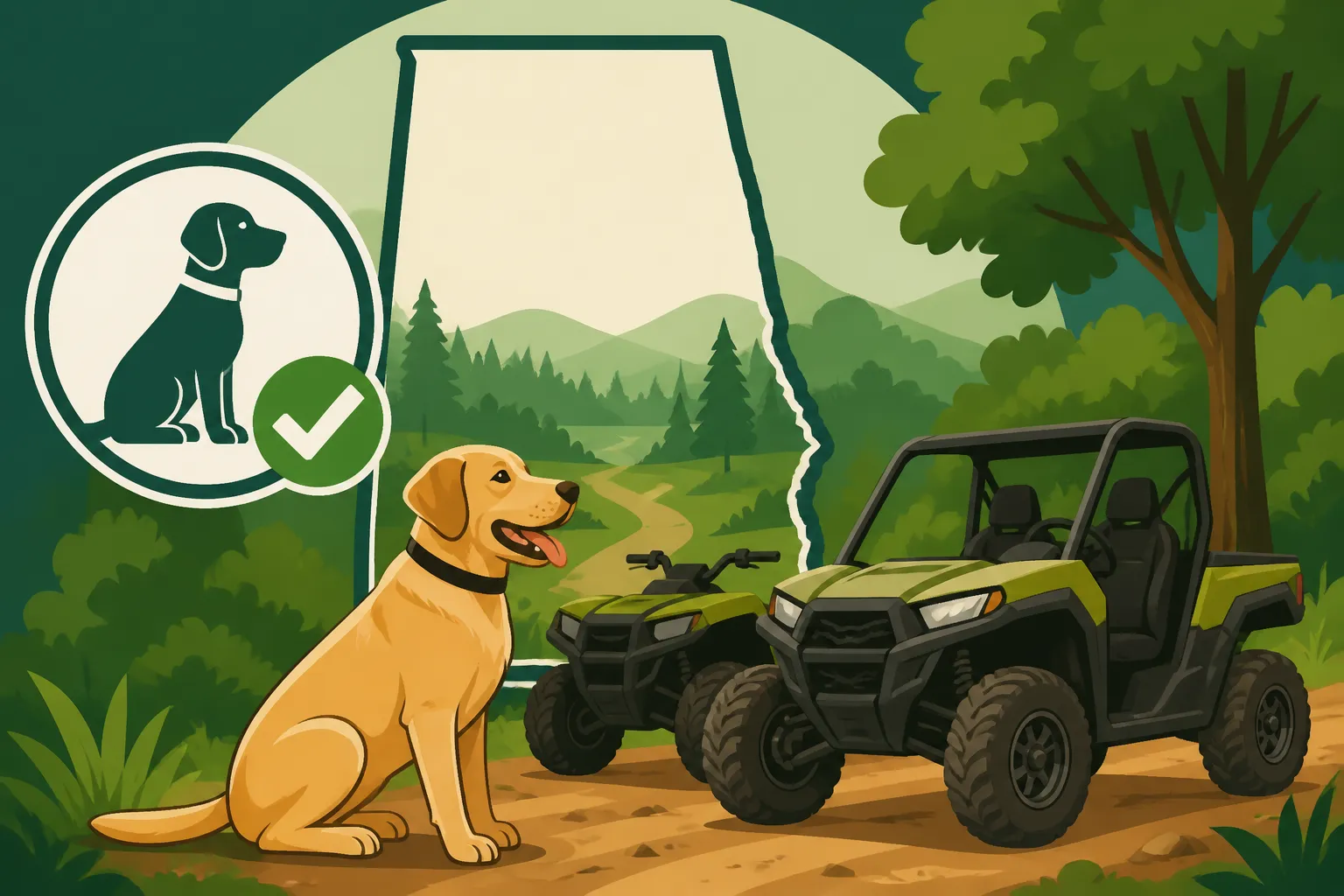
Taking a dog to an Alabama ATV or UTV park can be a good way to include the whole family, but pet access is not automatic. Each park sets its own rules, and permission to camp with a dog does not necessarily mean the dog can go on the trails. Check the operator’s current policies before you travel, then plan for heat, noise and safe supervision.
Start With the Park’s Current Pet Policy
There is no single pet rule that applies to every Alabama off-road park. A private park may allow dogs in some areas, restrict them to campsites, require a leash, or prohibit pets altogether. Policies can also differ between the riding area, campground, cabins and shared facilities. Do not rely on an old review or assume that a dog allowed on a previous visit will be allowed at another park.
Before booking, ask the park directly:
- Are dogs allowed on the property?
- Can a dog accompany a rider on any trails, or must it stay at the campsite?
- Are there leash, crate or tie-out rules?
- Are dogs allowed in cabins, bathhouses, pavilions or other common areas?
- Does the park require vaccination records or have a pet fee?
- Are there limits on the number or size of dogs?
- Can a dog be left unattended at a campsite or in a vehicle?
- Are there restrictions during events or busy weekends?
For a broader overview of how operator rules can differ, see Alabama Private Park Pet Rules and Alabama Private Park Waivers and Rules. A park may require a waiver for the rider while handling pet access under a separate policy, so ask about both rather than treating one form as permission for everything.
Get the answer from the park’s own staff or current written rules, and keep a copy or screenshot with your booking information. If you receive a verbal answer, confirm the details: “Dogs are allowed” may refer only to the campground, not the riding trails. Ask whether that permission applies to the date you plan to visit, especially if the park is hosting an event or has seasonal restrictions.
| Location or activity | What to confirm before you go |
|---|---|
| Riding trails | Whether dogs may enter, and whether there are route or time restrictions |
| Campsite | Leash, tie-out, noise and unattended-pet rules |
| Cabin or other lodging | Whether pets are accepted and what limits apply |
| Shared facilities | Whether dogs are allowed near bathhouses, pavilions or food areas |
| Event day | Whether temporary rules change pet access or parking arrangements |
| Arrival and check-in | Whether staff need vaccination records, a waiver or other documentation |
If the park’s website is unavailable or its posted information is unclear, call before towing a machine and dog to the gate. A reservation does not necessarily settle the pet question; the booking system may not ask whether you are bringing an animal. For other practical reservation questions, Alabama Park Reservation Systems may help you plan the trip.
Decide Whether the Ride Is Safe for Your Dog
Permission is only the first consideration. A dog may be allowed on a property but still be a poor fit for a day on an OHV trail. ATV and UTV parks can involve loud engines, sudden acceleration, dust, mud, uneven ground, other riders and limited shade. A dog that is calm at home may become frightened or overwhelmed in that setting.
Do not assume a dog can safely ride as a passenger on a quad or side-by-side. A machine’s passenger seat and restraints are designed for people, not dogs. A dog can shift unexpectedly, distract the driver, interfere with controls or be thrown during a sudden stop or rollover. Even riding in a UTV’s cargo area is risky: it may expose the dog to heat, debris, falls or contact with moving parts. Unless the park and the machine manufacturer provide clear, appropriate guidance for transporting an animal, leave the dog at home or arrange care away from the riding area.
A leash does not make trail riding safe by itself. A dog on a trail may dart toward another machine, get tangled in equipment, run off after wildlife or be injured by traffic. A leash attached to a rider or vehicle can create a serious entanglement hazard. If the park does not explicitly allow dogs on trails and explain how they must be controlled, treat the trails as off-limits to the dog.
Consider the dog’s temperament and health before bringing it even to the campground. Dogs that are anxious around loud noise, reactive toward unfamiliar animals, elderly, very young, or easily overheated may be more comfortable at home. Think about how your dog responds to vehicles, crowds, unfamiliar dogs and long periods outdoors. A park’s permission is not a recommendation that every dog will enjoy the environment.
Alabama heat deserves particular attention. A dog can overheat while walking, waiting at a campsite or riding in a vehicle. Shade and water help, but they do not make a hot vehicle safe. Never leave a dog unattended in a parked vehicle, even for a short errand. Plan regular breaks, carry enough drinking water, and be ready to end the trip if the dog shows distress. Heavy panting, weakness, confusion, vomiting or collapse can signal an emergency; seek veterinary help promptly.
Prepare for Campground Rules and Practical Risks
If your dog is allowed only at the campsite, plan around that limit before you arrive. Bring a secure leash and harness, a way to keep the dog contained without tying it near a vehicle, drinking water, a bowl, waste bags and a familiar resting place. A well-fitted harness can be useful for ordinary walks, but it is not a substitute for keeping the dog away from moving machines.
Tie-outs need special care. A long line can cross a walkway, wrap around a person or another dog, or reach into a parking area. Do not secure a dog to a trailer, ATV, UTV or another object that might move. Follow the park’s instructions for containment, and supervise the dog rather than relying on a tether to prevent every problem.
Keep the dog away from parked and moving machines. Hot exhaust and engine parts can burn, and a sudden start can frighten or injure an animal. Choose a campsite location where the dog can rest away from traffic and where its barking is unlikely to disturb nearby campers. If the dog is unsettled by noise, arrange a quieter place to stay rather than expecting it to adapt after arrival.
A simple supply kit makes compliance easier. Pack the items you already use at home, plus extras for a muddy or wet day. A pet store or Amazon can be a source for basics such as a sturdy leash, collapsible water bowl and waste bags; check that anything you buy is suitable for your dog and the park’s requirements. Avoid bringing a new restraint or unfamiliar food for the first time on a busy trip.
Good campground manners matter, even when a park allows dogs:
- Pick up waste promptly and dispose of it where the park directs.
- Keep the dog under control around other campers and animals.
- Do not let it roam through neighboring campsites.
- Avoid leaving it alone where it may bark, escape or become distressed.
- Follow rules about dogs in cabins, common areas and on walking paths.
- Keep food and rubbish secured so they do not attract animals.
These steps protect other visitors and reduce the chance of staff asking you to leave. If the park has quiet hours or specific campground rules, read them before arrival. Alabama Private Park Camping Rules covers the kinds of campsite policies riders may need to check, while Alabama Trail Etiquette Locals Expect offers useful context for sharing riding areas respectfully.
Keep Park Rules Separate From Public-Land Rules
A private OHV park controls access to its property and can set conditions for visitors, including pet restrictions. A dog policy at one park does not establish what is allowed at a different park, a county recreation area or public land. Likewise, a hunting or public-land permit should not be treated as permission to bring a dog into every riding area.
If your plans include land beyond a private park, check the rules for that specific place and activity. Public-land access can depend on the managing agency, the area, the season and the purpose of the visit. For example, rules for a riding area may differ from rules for a wildlife management area, and a permit for a person or vehicle does not necessarily answer whether a pet is allowed. See Alabama WMA Rules Vary by Area if your ride includes a wildlife management area, and verify pet access with the relevant land manager.
Before setting out, use this checklist:
- Confirm that dogs are allowed on the specific property and in the areas you intend to use.
- Ask whether trail access is allowed; do not infer it from campground permission.
- Check leash, containment, vaccination, fee and unattended-pet requirements.
- Decide honestly whether your dog can handle the noise, heat and crowds.
- Arrange safe supervision away from machines, or leave the dog with a caregiver.
- Recheck the rules if you change parks, add public land or visit during an event.
When the answer is unclear, ask the park or land manager rather than relying on another visitor’s experience. Policies can be changed by the operator, and local requirements may also apply. A short phone call is easier than arriving with a dog and discovering that the campsite, cabin or trail is off-limits.
Disclaimer
This article is for general informational purposes only and does not constitute professional advice. Laws, prices and regulations vary by location and change over time. Consult a qualified professional for guidance on your specific situation.