Alabama Trail Etiquette Locals Expect
A ride can go sideways fast when a narrow trail, a blind bend, and a group coming the other way meet at once. In Alabama, mud, changing weather, private land boundaries, and shared-use areas make courtesy more than good manners. This guide explains how to prepare, pass, ride in groups, and protect trails so everyone can enjoy the day and get home safely.
Plan the ride before you reach the trail
Confirm that the route is open and permitted
A trail shown on a map is not automatically open to ATVs or UTVs. Access may depend on the land manager, the type of machine, the season, recent weather, or a temporary closure. Before unloading, confirm that the specific route allows your vehicle and that you have any permits or passes required for that area. Rules can differ between a private riding park, public land, a wildlife management area, and a forest road.
This matters especially when a route crosses or runs near land managed by different owners. A public road, a timber road, and a trail inside a private park may look alike, but the permission to ride there is not the same. If you are unsure whether a route is open, ask the land manager or park office rather than relying on an old post or a trail line that appears on an app. For federal land, [Which Forest Roads in Alabama Are Open to ATVs] can help you think through the distinction between an open road and a riding trail.
A mapping tool such as onX Offroad can help you plan and orient yourself, but treat it as one part of your preparation, not as proof of permission. Check the land manager’s current rules, posted signs, and any gate or closure notices when you arrive. Save or download the information you need before leaving home, since cell reception can be unreliable in wooded or hilly areas. For a broader overview of places to explore, see [Alabama ATV Trails: Where to Ride].
Check the conditions and set a realistic route
Alabama trails can change substantially after heavy rain. Red clay that was firm earlier in the week can become slick, deeply rutted, or difficult to climb. A route that suits an experienced rider on a well-equipped machine may be an unpleasant surprise for a new rider, a small youth quad, or a two-wheel-drive utility vehicle. Ask about recent conditions and choose a route that fits the least experienced rider in your group.
Build in time for stops, delays, and a slower return trip. A common mistake is planning around the distance alone, then pushing the group to keep moving when someone needs a break or a machine needs attention. If your party includes children, new riders, or several different machine types, choose a route with straightforward places to regroup and turn around. [Alabama Trail Difficulty Ratings] is a useful related topic when comparing route demands.
| Before you ride | What to check | Why it matters |
|---|---|---|
| Access | Land manager, open routes, posted signs, and closures | A mapped route may not be authorized for your machine |
| Conditions | Recent rain, mud, washouts, and trail notices | Slick or damaged ground can change the difficulty |
| Group | Rider experience, machine size, and fuel range | The route should suit the whole party, not just its strongest rider |
| Navigation | Offline map, meeting point, and return route | Cell service may disappear in wooded or remote areas |
| Gear | Helmet, eye protection, water, and basic repair supplies | Small problems are easier to handle when you are prepared |
Share the trail with patience and awareness
Slow down where sightlines are limited
Blind bends, hill crests, creek crossings, and narrow wooded sections deserve extra care. Reduce speed before entering them, stay on your side of the trail where the route allows, and be ready to stop. A rider coming around the bend may be moving slowly, walking beside a machine, or managing a mechanical problem. Dust and foliage can make it harder to see than you expect.
Do not assume that everyone on the route is riding an ATV or UTV. Depending on the location, you may encounter hikers, bicyclists, horseback riders, maintenance crews, or other motorized users. Ease off the throttle, give people room, and follow any site-specific instructions about yielding or speed. If the trail is narrow, wait for a safe place to pass instead of trying to squeeze by.
Dust can make a busy trail feel more hazardous, especially when riders follow too closely. Leave enough space for the dust to settle and for the person in front to slow or stop without being crowded. In a group, avoid racing to catch up after a gap opens; keeping a calm pace is safer than turning a short delay into a fast chase.
Pass carefully and communicate clearly
When you meet another group, slow down well before the pass. Make eye contact when possible, use a simple wave or verbal greeting, and agree who will move first if the trail is tight. Do not assume the other rider has seen you. A short pause can prevent a tense squeeze between machines, trees, or an eroded edge.
On a steep or narrow section, use caution rather than relying on a blanket rule about who has priority. The rider in the more exposed position may need the clearest path, and a machine already climbing or descending may have limited room to maneuver. Stop in a stable place if you can, avoid blocking the trail, and communicate before either vehicle moves. Never try to pass on a blind crest or where one machine would have to leave the durable trail surface.
If you are new to a park, learn its local passing customs and posted rules at the entrance. Some sites may have one-way routes, marked intersections, or designated stopping areas. [Alabama Trail Etiquette Locals Expect] is not a substitute for those local instructions; the land manager’s signs and rules take priority.
Ride responsibly in a group
Keep the group together without crowding
Before setting off, agree on a leader, a sweep rider at the back, a pace, and a regrouping point. The leader should avoid taking unplanned turns without making sure the group has noticed. The sweep rider should let the leader know if someone falls behind or stops. This simple structure is especially helpful when riders have different levels of experience or when the route has multiple junctions.
Leave enough room between machines to stop safely. Tailgating can turn an ordinary braking moment into a collision, and it can make dust worse for everyone behind. At the same time, keep the group close enough that riders do not take a wrong turn or feel pressured to speed up to catch up. If the group stretches out, stop at a safe, visible place rather than accelerating to close the gap.
A pre-ride conversation can prevent awkward disagreements later. Confirm who has a map, who carries basic tools, what to do if someone gets separated, and whether the group will wait at every junction. If your party includes a youth rider, make sure the route and pace are appropriate and that a responsible adult is positioned to help. For preparation ideas, see [Alabama Group Ride Planning] and [Alabama Rules for a Teen Rider].
Give people space at stops and trailheads
Trailheads, staging areas, fuel stops, and narrow pullouts can become congested when several groups arrive together. Park in designated areas, leave room for trailers to maneuver, and do not block gates, access roads, or emergency routes. If you need to stop on the trail, move to a wide, safe location where other users can see and pass you.
Keep noise and unnecessary engine revving down, particularly near homes, campgrounds, and other quiet-use areas. A group that is friendly on the trail can still create a poor experience if it blocks a shared space, leaves trash behind, or keeps machines running while people are trying to talk. Pack out everything you bring in, including food wrappers, straps, broken parts, and containers.
When another group is waiting to use a narrow feature or crossing, be courteous about taking turns. Do not claim a spot for a large party while the rest of the group is still far away, and do not crowd riders who are trying to negotiate a difficult section. A few minutes of patience helps keep the area safer and more welcoming.
Protect Alabama trails and land access
Avoid making muddy or damaged sections worse
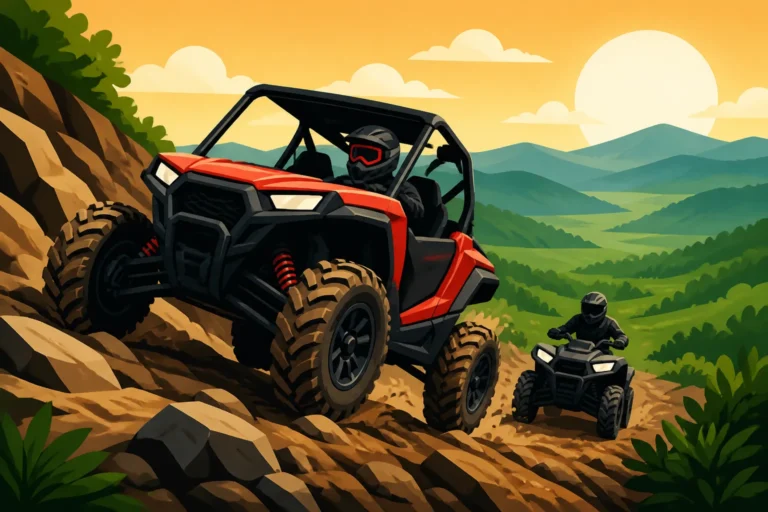
Riding through mud may be part of the fun, but repeated wheelspin can deepen ruts and damage the trail. If a section is too slick or soft to cross without spinning tires, stop and choose a safer option if one is available. Do not widen the route by cutting around a muddy stretch through vegetation or across an unmarked area. That can create a new track, damage soil, and encourage others to leave the established trail.
After heavy rain, reconsider whether the outing makes sense. A closed trail is not an invitation to find a way around a barrier. If the land manager closes an area or posts a restriction, respect it even if the trail appears passable. [Alabama Trail Closures After a Storm] and [Treading Lightly on Erodible Alabama Clay] offer more context on why surface conditions and closures matter.
Leave natural features as you found them. Do not move barriers, cut branches, disturb wildlife, or ride through sensitive areas to create a shortcut. If you see a damaged sign, fallen tree, or unsafe washout, report it to the appropriate park or land manager when practical. Do not attempt a risky repair that could put you or other riders in danger.
Respect property boundaries and local rules
Being near a trail does not mean you have permission to ride across adjoining land. Stay on authorized routes, observe signs and gates, and do not treat an open-looking track as public access. A trail can cross private property or land with special seasonal restrictions. If you are riding near a hunting area, timber property, or leased land, confirm the rules with the relevant manager or landowner before entering. [Alabama Posted Land Rules for Riders] explains why visible boundaries and permission matter.
An app such as onX Offroad may help you review a route and notice where land boundaries or access questions could arise, but it cannot grant permission or replace posted restrictions. Use it alongside official maps and direct confirmation from the land manager. If a route is ambiguous, turn around until you can verify access. That may be disappointing after a long drive, but it is far better than trespassing or creating conflict that could affect access for other riders.
Courtesy also matters when sharing trails with hunters, hikers, neighbors, and workers. Keep a respectful distance, avoid disturbing people or animals, and comply with any temporary closure or access notice. If someone asks you to leave private property, do so calmly and promptly. A courteous response can prevent a disagreement from escalating and helps preserve goodwill toward responsible riders.
Leave the area ready for the next group
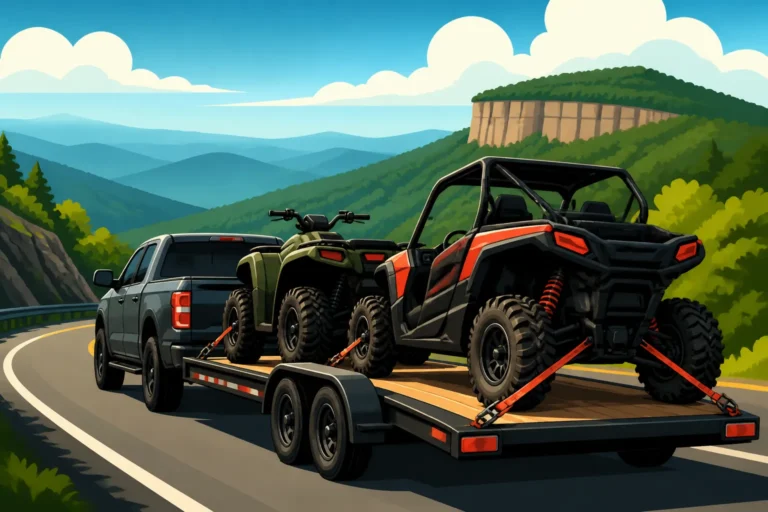
Before heading home, check the staging area and your route out for belongings, litter, and equipment. Secure your load and make sure mud or debris is not creating a road hazard. If your machine has a mechanical problem, move it out of the way only if doing so is safe, and ask for assistance rather than risking an injury on a busy trail.
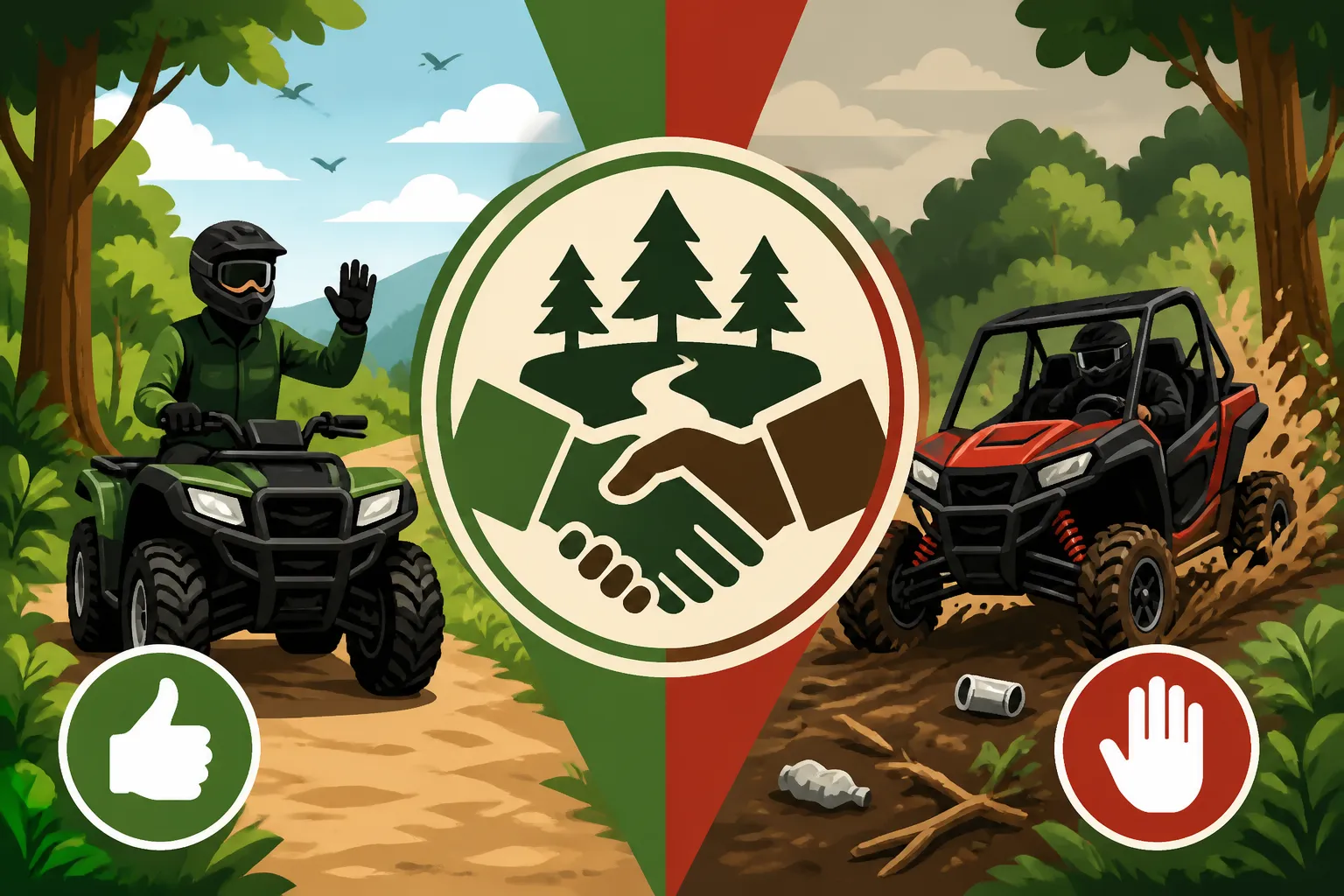
A good ride is not just one where everyone has fun. It is one where the group follows the rules, gives others room, avoids needless damage, and leaves the land as usable as it was at the start. When riders consistently do those things, parks and land managers have fewer reasons to restrict access, and the trail experience is better for everyone.
Disclaimer
This article is for general informational purposes only and does not constitute professional advice. Laws, prices and regulations vary by location and change over time. Consult a qualified professional for guidance on your specific situation.