What a Low-Speed Vehicle Standard Requires
It's a common dream for many Alabama ATV and UTV owners: taking your trusty machine from the trails or the farm directly onto public roads for a quick trip to the store, a neighbor's house, or simply to connect to another trail system. The reality, however, is often a frustrating maze of rules, regulations, and misunderstandings about what actually constitutes a "street-legal" off-road vehicle. This guide is here to untangle the complexities of low-speed vehicle (LSV) standards in Alabama, helping you understand precisely what's required for a machine to legitimately share the road.
Defining Low-Speed Vehicles LSVs in Alabama
Before we dive into the nitty-gritty of federal standards, it's crucial to understand what Alabama considers a Low-Speed Vehicle (LSV) and how it differs from your typical ATV or side-by-side. The state has specific legal definitions that carve out a very narrow path for these types of machines on public roads, and honestly, it’s a path that most off-road vehicles simply aren't designed to take.
Alabama's Legal Stance on LSVs
In Alabama, a Low-Speed Vehicle isn't just any golf cart or modified UTV. It’s a very specific class of vehicle, defined in the state's statutes, that is held to a federal safety standard. This isn't a "wink and a nod" kind of regulation; it's a serious set of requirements that dictate everything from how the vehicle is built to the equipment it must carry. The Alabama Department of Revenue plays a key role in clarifying how these vehicles are treated, especially when it comes to registration and titling, although the rules about what makes a vehicle an LSV come from higher up. Understanding this distinction is the first hurdle for anyone hoping to navigate Alabama's roads legally on something other than a traditional car or truck.
It’s easy to get confused, especially when you see golf carts zipping around small towns or modified side-by-sides with blinkers and horns. But simply adding a few accessories doesn't magically transform an off-road vehicle into a federally compliant LSV. The critical element is whether the vehicle was manufactured to meet the stringent federal safety standards for LSVs. This is a point of contention for many riders who invest in aftermarket parts, thinking they've achieved street legality, only to find themselves on the wrong side of the law.
Distinguishing LSVs from Golf Carts and ATVs
One of the biggest sources of confusion stems from mistakenly lumping LSVs, golf carts, and traditional ATVs or UTVs all into the same category. While they might share some superficial similarities, their legal definitions and permitted uses are vastly different in Alabama. For instance, [Alabama Golf Cart Rules Compared to ATVs] shows just how distinct these categories are. A golf cart, by definition, is typically much slower, designed for short-distance travel on golf courses or within gated communities, and usually falls under separate local ordinances, if it's allowed on public roads at all. It does not, by default, meet the LSV standard.
An ATV or UTV, on the other hand, is built for off-road performance—mud, trails, hills, farm work. They lack the fundamental safety features and structural integrity required for highway use. An LSV, however, is a breed apart. It's a low-speed motor vehicle designed for public roads, and it must meet specific federal criteria. Think of it less as a beefed-up golf cart and more as a scaled-down, purpose-built car that just happens to be limited in speed. This distinction isn't just bureaucratic; it's about the safety and design intent of the vehicle.
The Speed Limit Constraint
A defining characteristic of an LSV, and where the "low-speed" part truly comes into play, is its maximum speed. According to the federal standard, a Low-Speed Vehicle must be capable of speeds greater than 20 miles per hour (mph) but not greater than 25 mph. This specific speed range is crucial. If a vehicle can go faster than 25 mph, it's generally considered a conventional motor vehicle and must meet a completely different, much more rigorous set of federal safety standards. If it can't even reach 20 mph, it often falls into the golf cart category or isn't considered an LSV at all.
This speed limitation directly impacts where an LSV can legally operate. You won't see an LSV on an interstate highway or even a busy four-lane road where traffic moves at 45 mph or more. They are specifically intended for slower, local roads, often in urban or suburban environments where the posted speed limits align with their capabilities. This constraint is a fundamental part of its definition and purpose, ensuring that LSVs operate safely within the flow of traffic for which they were designed.
The Federal Motor Vehicle Safety Standard FMVSS 500 Explained
When it comes to understanding what truly makes a vehicle "street legal" as a Low-Speed Vehicle in Alabama, you absolutely have to understand the Federal Motor Vehicle Safety Standard (FMVSS) 500. This isn't some obscure state regulation that varies from county to county; it's a federal mandate that all manufacturers must adhere to if they want to sell an LSV in the United States. [Alabama's 49 CFR 571.500 Standard] is the specific regulation that governs these requirements.
The Purpose of the Federal Standard
The primary purpose of FMVSS 500 is consumer safety. The federal government recognized that there was a class of small, relatively slow-moving vehicles that could fill a niche for local transportation, but they needed to ensure these vehicles had a basic level of safety when sharing public roads with full-sized automobiles. Without this standard, manufacturers could produce dangerously flimsy vehicles, and buyers would have no guarantee of safety. This standard aims to provide that assurance, specifying everything from brakes and lighting to occupant protection.
It’s about protecting not just the occupants of the LSV, but also other drivers on the road. A vehicle operating on public streets needs to be predictable, visible, and capable of stopping and signaling effectively. The standard isn't about making LSVs as safe as a car designed for highway speeds, but about establishing a baseline for low-speed environments. This is why when you look at a truly compliant LSV, you'll notice it has features that are conspicuously absent on most off-the-assembly-line ATVs or UTVs.
Critical Components of the Standard
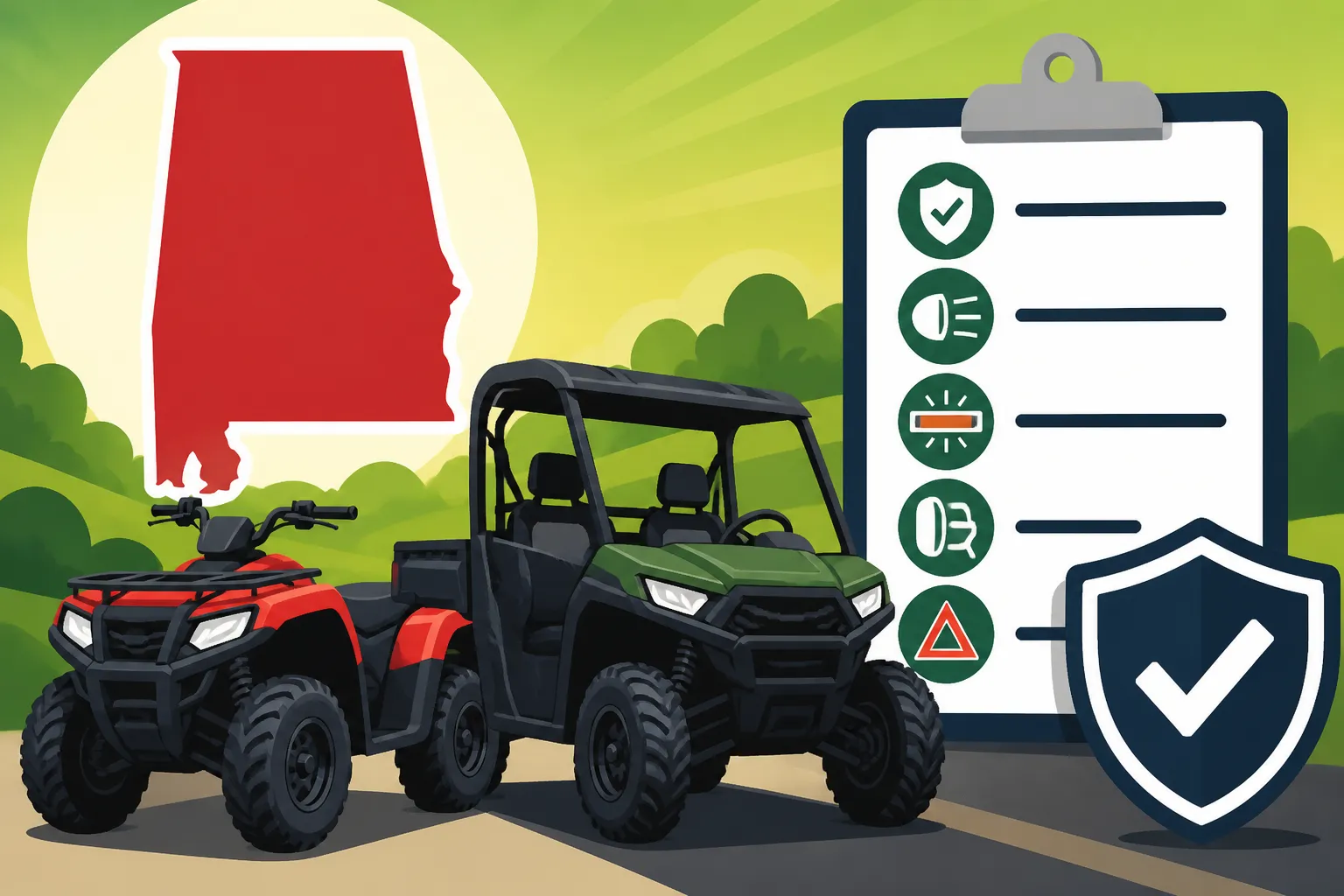
FMVSS 500 outlines a comprehensive list of equipment and performance criteria that a vehicle must meet to be classified as an LSV. These aren't suggestions; they are mandatory features. Here's a breakdown of some of the critical components:
- Headlamps: Must have two headlamps that meet specific federal requirements for brightness and beam pattern, just like a regular car.
- Stop Lamps: At least two stop lamps (brake lights) visible from the rear.
- Turn Signal Lamps: Front and rear turn signals for indicating turns and lane changes.
- Tail Lamps: Two rear tail lamps, constantly illuminated when the vehicle is on.
- Reflex Reflectors: Specific reflective material on the front, sides, and rear to enhance visibility, especially at night.
- Mirrors: An exterior mirror on the driver's side and either another exterior mirror on the passenger's side or an interior mirror.
- Parking Brake: A reliable parking brake system.
- VIN: A Vehicle Identification Number (VIN) that complies with federal standards.
- Windshield: A windshield that meets federal glazing standards (safety glass).
- Seat Belts: Department of Transportation (DOT) approved seat belts for all seating positions.
- Vehicle Identification: A label permanently affixed by the manufacturer stating that the vehicle conforms to FMVSS 500.
This is a stringent list, and it requires integrated design from the ground up, not just a collection of add-on parts. For instance, the braking system isn't just about stopping; it's about meeting specific performance tests under various load conditions. The windshield isn't just a piece of plastic; it's tempered or laminated safety glass. All these elements work together to ensure a basic level of roadworthiness.
Manufacturer Certification vs. Aftermarket Kits
Here's where many well-meaning ATV and UTV owners run into a brick wall: the difference between a manufacturer certifying a vehicle as an LSV and someone installing an aftermarket "street legal kit." For a vehicle to truly be an LSV, it must have been manufactured and certified by its original producer to comply with FMVSS 500. This certification is crucial and usually indicated by a permanent sticker or plate on the vehicle itself, often near the VIN. [Alabama Requires FMVSS Compliance for Plates] for these types of machines.
An aftermarket kit, no matter how comprehensive, cannot confer federal LSV certification. You might add all the required lights, mirrors, and even a horn from a company like SuperATV, which makes fantastic aftermarket accessories for off-road performance and safety. And while those parts are great for visibility and functionality on the trail or even for improving safety for private use, they don't magically transform your off-road machine into a federally recognized Low-Speed Vehicle. [Why a Street Legal Kit Will Not Make It Legal] is a harsh reality for many hoping to modify their way onto public roads. The reason is simple: FMVSS 500 isn't just about bolt-on accessories; it's about the entire vehicle's design, crashworthiness, braking performance, and many other fundamental engineering considerations that are inherent in the manufacturing process, not easily added later.
Key Equipment Requirements for LSV Compliance
Beyond the broad strokes of FMVSS 500, let's drill down into the specifics of the equipment required. This isn't a checklist you can just tick off with a trip to the auto parts store; these are integrated systems designed and installed by the manufacturer to meet precise federal performance criteria. Anything less, and you're not driving a compliant LSV.
Lighting and Reflective Gear
Visibility is paramount for any vehicle sharing the road, and LSVs are no exception. They must be equipped with a full complement of lighting that meets federal standards, not just "looks bright." This includes two headlamps, two tail lamps, two stop lamps (brake lights), and turn signal lamps on both the front and rear of the vehicle. These aren't just decorative; they need to function reliably, meet specific brightness levels, and be positioned correctly to be seen by other drivers.
In addition to active lighting, LSVs also require passive reflective gear. This means having appropriate reflex reflectors on the front, sides, and rear of the vehicle. These reflectors catch the light from other vehicles, making the LSV more visible even if its own lights are off or dim. Think of it like the reflectors on a bicycle, but integrated into a motor vehicle's design. This comprehensive approach to lighting and reflection ensures that an LSV stands out on the road, day or night, reducing the risk of collisions.
Braking Systems and Tires
The ability to stop safely and effectively is non-negotiable for any road-going vehicle. LSVs are required to have a braking system that meets specific federal performance standards. This means more than just having brakes; it means the brakes must be capable of stopping the vehicle within a certain distance, under specified load conditions, and without excessive fading or loss of control. This usually involves a hydraulic braking system that is far more robust than what you'd typically find on many recreational ATVs. Furthermore, a reliable parking brake is also mandatory, ensuring the vehicle can be securely parked on an incline.
Tires are another critical component. While your off-road machine might sport aggressive knobbies designed for gripping mud and rocks, an LSV requires tires that are appropriate for highway use, even at low speeds. These tires must be DOT-approved, meaning they meet federal standards for construction, performance, and durability on paved surfaces. They need to provide adequate grip, dissipate heat properly, and contribute to stable handling on the road. Swapping out your mud-terrain tires for road-worthy ones is just one example of the fundamental shift in design intent for an LSV.
Windshields, Wipers, and Seatbelts
These features are often overlooked but are absolutely essential for LSV compliance. An LSV must have a windshield made of safety glazing material that meets federal standards. This isn't just plexiglass; it's typically laminated safety glass, designed to shatter in a way that minimizes injury or to remain intact after impact. If the LSV is enclosed, it might also require a windshield wiper system to maintain visibility in inclement weather.
Beyond the windshield, occupant protection is addressed through DOT-approved seatbelts for all designated seating positions. These are not merely lap belts; they are often three-point harnesses similar to those found in cars, engineered to restrain occupants safely in the event of a sudden stop or collision. These seatbelts are anchored to the vehicle's frame, reinforcing the idea that an LSV is built with crash protection in mind, unlike many open-air, recreational off-road vehicles.
VIN and Manufacturer's Label
Finally, two administrative but incredibly important requirements are the Vehicle Identification Number (VIN) and the manufacturer's certification label. Every LSV must have a federally compliant VIN, a unique 17-character identifier that provides details about the manufacturer, make, model, and year. This VIN is crucial for tracking, registration, and insurance purposes. [Alabama LSV Requirements Explained] covers this in detail.
Equally vital is the manufacturer's permanent label, affixed to the vehicle, explicitly stating that the vehicle conforms to FMVSS 500. This label is the definitive proof of its LSV status. Without this label, even if a vehicle looks like it meets all the physical requirements, it cannot legally be registered or operated as an LSV on public roads. It's the manufacturer's promise to the federal government that the vehicle was built to standard. This is the difference between a custom-built machine with all the bells and whistles and a factory-certified LSV.
Why Standard ATVs and UTVs Don't Qualify
This is where the rubber meets the road, quite literally. Many riders dream of making their existing quad or side-by-side street legal, only to be met with the cold, hard facts of federal regulations. The fundamental design and purpose of an ATV or UTV are simply incompatible with the requirements for a Low-Speed Vehicle. [Why a Standard Quad Can Never Pass the Standard] explores this barrier in depth.
Design Differences at the Core
ATVs and UTVs are engineered for off-road performance. Their frames are built to withstand impacts from rough terrain, provide ample ground clearance, and offer suspension travel that can absorb bumps and jumps. While robust, this design philosophy is distinctly different from a vehicle intended for road use. Road vehicles prioritize features like crumple zones, side-impact protection, and a rigid passenger compartment designed to protect occupants in a collision with another road-going vehicle.
Take, for example, the suspension. An ATV's long-travel suspension is fantastic for soaking up whoops and roots on the trail, but it can lead to excessive body roll and less precise handling on pavement, especially during emergency maneuvers. The center of gravity on many UTVs, while good for off-road stability, isn't optimized for high-speed cornering or sudden braking on asphalt. These inherent design differences mean that even with aftermarket modifications, the core structural and dynamic properties of an off-road vehicle are not aligned with LSV requirements.
Frame Strength and Crashworthiness
Perhaps the most significant hurdle for converting an ATV or UTV into an LSV is crashworthiness. FMVSS 500, while less stringent than full highway vehicle standards, still implies a certain level of occupant protection in a low-speed impact. The open design, exposed components, and lack of dedicated crumple zones on most ATVs and UTVs simply don't meet these unspoken, yet critical, safety expectations.
When you think about the frame of a side-by-side, it's designed to protect against rollovers in an off-road environment and general trail hazards. It's not designed to absorb and dissipate energy in a head-on collision with a car traveling at 25 mph, nor is it typically engineered for side-impact protection. These are fundamental structural differences that cannot be easily, or affordably, altered after manufacturing. The integrity of the frame and the overall safety cage (or lack thereof) are defining factors that separate an off-road machine from a road-legal LSV.
Emissions and Noise Considerations
While not always explicitly called out in basic LSV equipment lists, emissions and noise are also factors that differentiate purpose-built road vehicles from off-road ones. Many off-road machines are designed with performance in mind, often leading to higher emissions and louder exhaust notes than what is acceptable for continuous street use in many jurisdictions. While Alabama's direct regulations on ATV/UTV emissions for private use are minimal, an LSV that operates on public roads would naturally fall under closer scrutiny for these environmental and nuisance factors.
Manufacturers building LSVs are typically designing for a cleaner, quieter operation compared to a high-performance sport UTV. This means different engine tuning, exhaust systems, and overall design choices aimed at reducing their environmental footprint and their impact on residential areas. Again, this points to a fundamental difference in engineering and purpose that cannot be overcome by simply adding a few turn signals to your trail machine.
Converting a Machine to LSV: The Reality
Given all the stringent requirements, the idea of converting a standard ATV or UTV into a federally compliant Low-Speed Vehicle is, for most owners, a practical impossibility. It's a common desire, fueled by the availability of "street legal kits," but the reality is far more complex and legally prohibitive.
The Illusion of "Street Legal Kits"
Walk into any accessory shop or browse online, and you'll find countless "street legal kits" offered by companies like SuperATV. These kits typically include turn signals, a horn, a license plate bracket with a light, and perhaps mirrors. They are well-made accessories, and for private land use or areas where local ordinances are very permissive, they can certainly enhance safety and functionality. However, the crucial point, which we cannot emphasize enough, is that installing such a kit does not make your ATV or UTV a federally compliant Low-Speed Vehicle.
The term "street legal kit" can be highly misleading because it implies that by simply bolting on these parts, your machine instantly becomes legal for public road use. This simply isn't true under federal and, by extension, Alabama law. These kits address only a small fraction of the equipment requirements of FMVSS 500 and completely ignore the fundamental design, structural, and certification mandates. Relying on such a kit for street legality will almost certainly put you in violation of the law if you venture onto public roads.
Manufacturer-Built LSVs vs. Modifications
The only way to legally own and operate a Low-Speed Vehicle in Alabama is to purchase one that was manufactured from the ground up to meet FMVSS 500 standards and is certified as such by its original maker. These vehicles come with the appropriate VIN and the all-important certification label. They are designed and tested to withstand the demands of road use, albeit at low speeds. [Buying a Machine Built as a Low-Speed Vehicle] is the path you must take.
Any attempt to modify a non-compliant ATV or UTV to meet these standards would require an engineering feat on par with designing a new vehicle. You would need to prove crashworthiness, braking performance, structural integrity, and more—a process that involves expensive testing and certification by the National Highway Traffic Safety Administration (NHTSA), something no individual owner or aftermarket parts manufacturer can realistically achieve. The responsibility for certification lies squarely with the original vehicle manufacturer, not the end-user or an accessory provider.
The Cost and Certification Hurdle
Even if you could theoretically modify an off-road machine to meet all the physical requirements of FMVSS 500, the cost associated with testing and certifying it would be astronomical—far exceeding the price of a brand-new, purpose-built LSV. The certification process is complex, involves destructive testing, and requires extensive documentation and adherence to federal manufacturing processes. It’s a burden only large-scale vehicle manufacturers can undertake.
Therefore, for the everyday rider, the notion of modifying a standard ATV or UTV into a road-legal LSV is simply not feasible. The legal, technical, and financial hurdles are insurmountable. It's much more practical and safer to either stick to off-road riding or invest in a vehicle that was specifically designed and certified as an LSV from the factory if you intend to use it on public roads.
Driving and Registration Rules for LSVs in Alabama
So, if you've done your homework and acquired a factory-certified Low-Speed Vehicle, what's next? You can't just hop in and go. There are specific rules regarding registration, where you can drive, and what you need to have in terms of licensing and insurance in Alabama.
Alabama's Registration Process for LSVs
Just like any other motor vehicle intended for public road use, a Low-Speed Vehicle must be registered in Alabama. Since LSVs meet the federal safety standards, they are treated differently than regular ATVs, which only have a voluntary registration system through ALEA. For an LSV, you'll go through your county licensing office, similar to registering a car. You'll need proof of ownership (like a manufacturer's statement of origin or a title from a previous owner), proof of insurance, and possibly an odometer reading. The county will then issue you a license plate and registration for your LSV.
[Alabama Low-Speed Vehicle Registration] details the steps, but essentially, it's a process that validates your vehicle's road-legal status and ensures it meets the state's requirements for identification and taxation. Unlike ATVs, which receive a decal, an LSV will get a standard vehicle tag, signaling its approved status for road use within specific parameters. This registration process is a clear indication that Alabama recognizes LSVs as distinct from off-road-only machines.
Where LSVs Can and Cannot Be Driven
Even with proper registration, LSVs have limitations on where they can operate in Alabama. The primary restriction relates to speed limits. LSVs are generally permitted on public roads where the posted speed limit is 35 mph or less. This means you won't be taking your LSV on state highways, interstates, or even many major arterial roads within cities where traffic moves faster. They are designed for slower, local streets, often found in residential areas, downtown districts, or planned communities.
It's also important to note that specific local ordinances might further restrict LSV use. While state law provides the general framework, individual cities or counties might have their own rules regarding LSV operation, designated routes, or even specific zones where they are permitted. Always check with your local municipality or sheriff's department if you're unsure about the rules in a particular area. Common sense also applies: don't drive an LSV where its low speed would create a hazard for other motorists.
Insurance and Licensing for LSVs
Operating any motor vehicle on public roads in Alabama requires liability insurance, and LSVs are no exception. You'll need to carry proof of insurance that meets the state's minimum requirements, just like you would for a car or truck. This insurance protects you financially in case you're involved in an accident that causes damage or injury to others. Without proper insurance, you could face penalties and fines.
When it comes to licensing, anyone operating an LSV on public roads in Alabama must possess a valid driver's license. This means the same licensing requirements apply as for driving a conventional automobile. You cannot operate an LSV with just an ATV safety certificate or a learner's permit without supervision, for example. The state views the LSV as a road-going vehicle, and therefore, its operator must meet the same fundamental qualifications as any other driver. [Alabama Low-Speed Vehicle Rules] clearly outlines these necessities, emphasizing that operating an LSV means taking on the responsibilities of a licensed driver on Alabama's roads.
| Feature | Low-Speed Vehicle (LSV) | Standard ATV/UTV | Golf Cart (typical) |
|---|---|---|---|
| Max Speed | 20-25 mph | Varies, often 60+ mph | < 20 mph |
| Road Legality | Federally compliant for roads | Off-road use only (w/exceptions) | Local ordinances may permit |
| FMVSS 500 Cert. | Required (Manufacturer) | Not applicable | Not applicable |
| Registration | Tagged & titled (county) | Voluntary (ALEA decal) | Often local permit/unregistered |
| License Plate | Yes | No | No (unless specific ordinance) |
| Driver's License | Required | Not for private land | Often not required (check local) |
| Insurance | Required for road use | Recommended (off-road) | Varies (private property) |
| Windshield | Safety glass, often required | Optional (often plexiglass) | Optional, typically plastic |
| Seatbelts | Required, DOT-approved | Varies, often non-DOT | Optional, basic |
| Turn Signals | Required | Aftermarket only | Aftermarket only |
| Brakes | Meets federal performance specs | Off-road performance focused | Basic, for low speed |
| VIN | Federally compliant | Federally compliant | Varies, often simple serial |
| Purpose | Low-speed street transportation | Recreation, farm, utility | Golf courses, gated communities |
Disclaimer
This article is for general informational purposes only and does not constitute professional advice. Laws, prices and regulations vary by location and change over time. Consult a qualified professional for guidance on your specific situation.