Alabama Registration for a Deer Camp Machine
It's incredibly common for folks in Alabama to have an ATV or UTV that lives and breathes at the deer camp. These machines are workhorses for checking feeders, hauling corn, dragging out that prize buck, and generally making life easier in the woods. But with all the buzz about new laws, many owners feel utterly confused: does this faithful camp companion, which rarely (if ever) leaves private property, actually need to be registered with the state? This guide will clear up the confusion, explaining Alabama's off-road vehicle registration rules specifically through the lens of your trusted deer camp machine.
Understanding Alabama's Registration Tiers for Off-Road Machines
Alabama's approach to ATV and UTV registration can feel a bit like trying to read a blurry trail map, especially when your machine spends most of its time off the beaten path. The state actually offers two distinct registration tiers, and understanding the difference is key to knowing what applies to your deer camp machine. It's not a one-size-fits-all situation, and the tier you choose (or if you choose to register at all) largely depends on where and how you ride.
The Two Paths: Public Use vs. Private Use
Imagine you're at the crossroads of two different trails, each leading to a different registration option. On one side, you have the "Public Use" registration. This tier is designed for machines that will be ridden on public lands designated for off-road vehicles, like certain state parks, national forest trails, or Wildlife Management Areas (WMAs). If you dream of hitting those scenic trails at Stony Lonesome OHV Park or exploring a designated route in the Talladega National Forest, your machine needs to be registered for public use. This tier signifies that your ATV or UTV is intended for interaction with shared spaces and other riders. The fees for public use are typically higher because they contribute to the maintenance and oversight of these public riding areas. You can dive deeper into what this means in [Alabama Public Use ATV Registration Explained].
On the other side, there's "Private Use" registration. This is the path most deer camp machines find themselves on. This tier is for ATVs and UTVs used exclusively on private property, whether it's land you own, land leased by your hunting club, or private land where you have explicit permission to ride. The state acknowledges that many off-road machines are solely tools for private work or recreation, and thus the requirements and costs are different. For many, the choice to register a private use machine is purely voluntary, not a mandatory requirement for simply owning and operating it on your own acreage. We explore this in more detail in [Alabama Private Use ATV Registration Explained].
Why a Deer Camp Machine Often Falls Under Private Use
Let's get down to the nitty-gritty of why your deer camp machine typically fits snugly into the "Private Use" category. Think about the daily life of your quad or side-by-side at camp. It's probably hauling bags of corn to feeders, transporting your tree stand to that perfect spot, or maybe dragging out a successful harvest across the back forty. You might use it to check game cameras, repair food plot equipment, or simply get from the cabin to the furthest boundary line without breaking a sweat. All these activities are almost universally conducted on private land—your property, a friend's private tract, or the timber company lease your hunting club holds.
When your riding is confined to these private domains, Alabama's laws generally consider it "private use." This means that, for the most part, registering it with the state is completely voluntary. It’s not a legal requirement just to have it sitting in the barn or cruising around your deer lease. This can be a huge relief for many owners who worry about jumping through hoops for a machine that never sees a public trail. However, even though it's voluntary, there are compelling reasons why many still choose to register their private use machines, which we’ll discuss shortly.
For those riding on leased land, whether through a private individual or a timber company, it's always smart to have your ducks in a row. A signed lease agreement or a written permission form is crucial. Documents like [Alabama Landowner Permission Letters] can make a huge difference if any questions about your access ever arise, and online resources like LawDepot can provide templates to help you draft these forms quickly and clearly, ensuring everyone is on the same page. Similarly, if you're part of a hunting club, understanding the specifics of [Alabama Hunting Club Lease Riding] is paramount to avoiding any misunderstandings.
When Your Deer Camp Machine Might Need Public Use Registration
While your deer camp machine mostly lives a quiet life on private land, there are specific situations where it might venture into the realm of "public use" and, therefore, require the appropriate registration. It’s critical to understand these scenarios because ignorance of the law is never a valid defense, and a simple misstep could lead to a citation.
Crossing Public Roads or Accessing WMAs
This is where many deer camp owners get caught off guard. Let's say your hunting property is split by a county road, or you need to cross a short stretch of public asphalt to get from one part of your lease to another. The moment your ATV or UTV's tires touch that public road, even for a brief crossing, it technically falls under public use. Alabama's statute is pretty clear: if you're operating an off-road vehicle on public rights-of-way, even momentarily, it needs public use registration. The same goes if you're accessing a Wildlife Management Area (WMA) or any other public land designated for off-road riding. WMAs, while primarily for hunting, often have specific rules regarding ATV/UTV use, and these usually require public registration. Ignoring this distinction could turn a simple trip across the road into an unexpected fine. For detailed rules on this, check out [Crossing a Road on an ATV in Alabama] and [Alabama WMA Riding Rules].
It's a common frustration to think, "It's just a few yards!" but the law doesn't differentiate based on distance. If you foresee any possibility of your deer camp machine interacting with public roads or trails, even infrequently, the safest bet is to opt for public use registration. This proactive step can save you a lot of headache and potential legal trouble down the road.
The Benefits of Voluntary Registration, Even for Private Use
Even if your deer camp machine never leaves private land, and you're confident it won't cross any public roads or WMA boundaries, there are still compelling reasons to consider voluntary private use registration. Think of it as an extra layer of protection, much like having good insurance.
First and foremost, registration provides irrefutable proof of ownership. While a bill of sale is crucial, a state-issued registration certificate adds another official document linking you directly to your machine. If your beloved quad goes missing from the deer camp, having it registered can significantly aid law enforcement in [Alabama Theft Recovery Without a Title]. It provides a concrete record that makes it much easier to identify, track, and ultimately return your machine to you. Without any official record, proving ownership can become a tangled mess, especially if your only document is a handwritten bill of sale. For robust proof of ownership, especially if you bought your machine from a private seller, creating a formal bill of sale is important. LawDepot can be a useful resource for generating a comprehensive and legally sound [Alabama Bill of Sale Requirements] document that includes all necessary details, like the vehicle identification number (VIN) or serial number, which is crucial for proving you own an untitled machine.
Secondly, many insurance companies prefer or even require registration to issue a comprehensive policy. While Alabama doesn't mandate insurance for ATVs or UTVs, protecting your investment against theft, fire, or accidental damage is just plain smart. Having your machine registered, even for private use, can streamline the insurance process and ensure you're fully covered if the unexpected happens. When you call an agent for a quote, having that official registration number at hand makes everything smoother.
Finally, consider resale value. When it comes time to upgrade your deer camp machine, having a clear, current registration record makes the sale process much smoother for both you and the buyer. It signals responsibility and proper care, enhancing buyer confidence. Think about it: would you rather buy a machine with a verifiable paper trail or one that has no official state record whatsoever? The answer is usually clear.
Navigating the Registration Process for Your Deer Camp Machine
Alright, you've weighed the options, and you've decided to register your deer camp machine. Whether you're going for public or private use, the process in Alabama is fairly straightforward, though it does require attention to detail. Getting your ducks in a row before you head to the county office or mail off your application will save you time and frustration.
Required Paperwork and Information
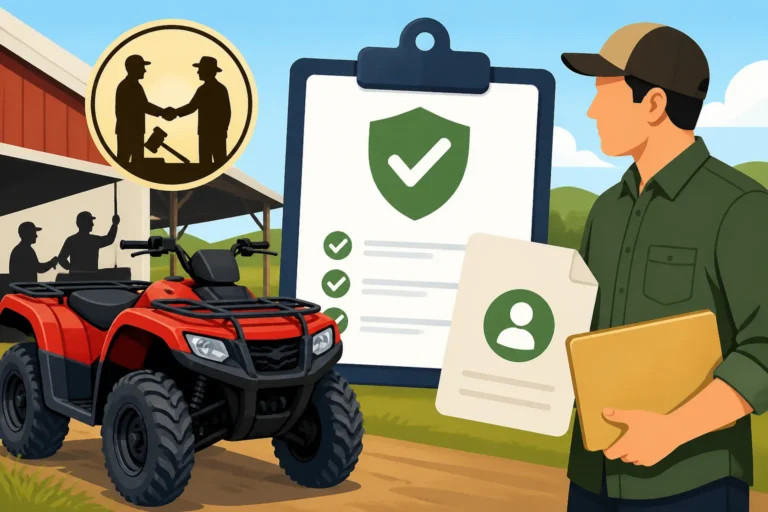
The foundation of any registration application is proving you actually own the machine you're trying to register. The most critical document you'll need is a clear and complete bill of sale. This isn't just a scribble on a napkin; it needs to include the buyer's and seller's full names and addresses, the date of sale, the purchase price, and most importantly, the machine's full Vehicle Identification Number (VIN) or serial number. Without that serial number, your application will likely hit a wall. If you bought your machine privately and don't have a robust bill of sale, or you're planning to sell one, remember that tools like LawDepot can help you generate professional and thorough [Alabama Bill of Sale Requirements] that meet all these criteria. It’s an easy way to ensure all the necessary details are captured, making future transactions or official processes much smoother.
In addition to the bill of sale, you'll need to provide your own identification and proof of residency in Alabama. This usually means a driver's license or state ID card. The application form itself will ask for specific information about your machine, such as its make, model, year, and that all-important serial number. Make sure the information on your bill of sale matches what you put on the application exactly. You can find a comprehensive breakdown of all the necessary documents in [Alabama Registration Paperwork Explained]. Don't underestimate the importance of that serial number; it's the unique identifier for your machine and is paramount for both registration and any future titling. For more on this, check out [Alabama Serial Numbers on the Application].
Where and How to Register Your Machine
Once you have all your paperwork in order, it's time to submit your application. In Alabama, ATV and UTV registrations are handled by the Alabama Law Enforcement Agency (ALEA), but you won't necessarily go directly to an ALEA office. Most owners will process their registration through their local county Probate Office or License Commissioner's Office. These offices act as agents for ALEA, taking your application and fees. It's usually a good idea to call ahead to your county office to confirm their specific hours and any unique local requirements they might have.
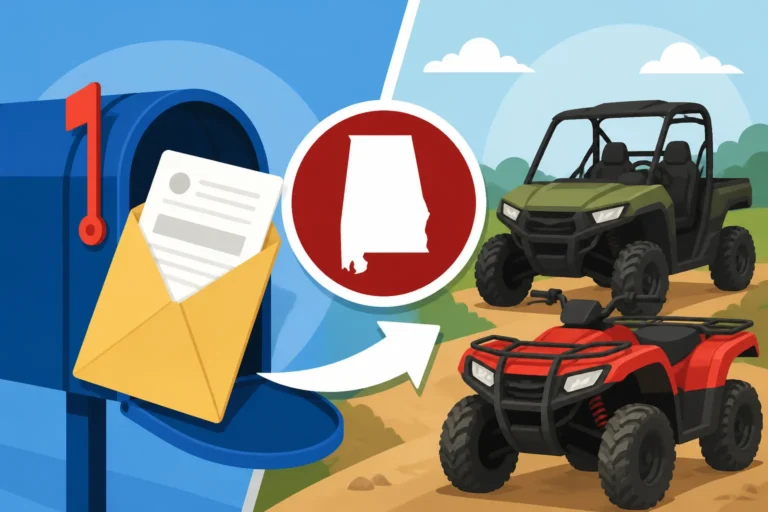
You also have the option to mail in your application. This can be convenient if you live far from your county seat or have a tight schedule. However, be sure to send copies of your documents, not originals, and consider using certified mail for tracking purposes. We cover the specifics of this process in [Alabama Registration Applications by Mail]. If you're buying a new machine from a dealership, many Alabama dealers offer the service of filing your registration paperwork for you, often for a small fee. This can be a huge time-saver and ensures everything is filled out correctly. For details on this option, see [Alabama Dealers Filing Registration for You].
When you successfully register your machine, you'll receive a registration certificate and a decal. This decal needs to be prominently displayed on your ATV or UTV. Alabama registrations for off-road vehicles run for three years, which is a nice change from annual renewals. This means less frequent trips to the county office! You can learn more about this in [Why Registration Runs Three Years, Not One].
Here’s a quick comparison to help solidify the differences between the two registration tiers:
| Feature | Private Use Registration | Public Use Registration |
|---|---|---|
| Primary Use | Exclusively on private land | On public lands, WMAs, or crossing public roads |
| Legally Required? | Voluntary for private land use | Mandatory for public land use |
| Cost (Shape) | Lower cost, often a nominal fee | Higher cost, contributing to public land maintenance |
| Proof of Ownership | Provides official record | Provides official record |
| Theft Recovery Aid | Significantly helps | Significantly helps |
| Typical Deer Camp Use | Yes, if staying on private property | Yes, if crossing roads or entering public areas like WMAs |
| Issued By | ALEA (via county Probate/License Office) | ALEA (via county Probate/License Office) |
| Duration | Three years | Three years |
Titling Considerations for Future Deer Camp Machines (Post-2026)
Now, let's talk about a significant upcoming change that will affect the future of off-road vehicle ownership in Alabama, including those beloved deer camp machines. While registration is one thing, titling is an entirely separate, but equally important, concept. Alabama is moving towards a titling system for ATVs and UTVs, bringing them more in line with how automobiles are handled.
The Upcoming 2026 Titling Law
Starting January 1, 2026, Alabama will begin titling ATVs and UTVs. This new law primarily affects machines with a model year of 2026 and newer. So, if you're planning to buy a brand-new quad or side-by-side for your deer camp that's a 2026 model year or newer, it will be subject to titling requirements. This means you'll receive a physical title document, much like a car title, proving legal ownership. This title will be issued by the Alabama Department of Revenue, not ALEA, which is a key distinction from registration. The introduction of titling adds a layer of security and clarifies ownership in ways that voluntary registration alone cannot, especially for financed machines or in cases of theft. You can learn more about this impending change in [Alabama ATV Titling Starts With Model Year 2026] and get a deeper understanding of the legislation in [Alabama's 2024 Titling Law]. It's a big shift, and it's essential for anyone considering a new machine in the coming years.
Why Older Machines Remain Untitled
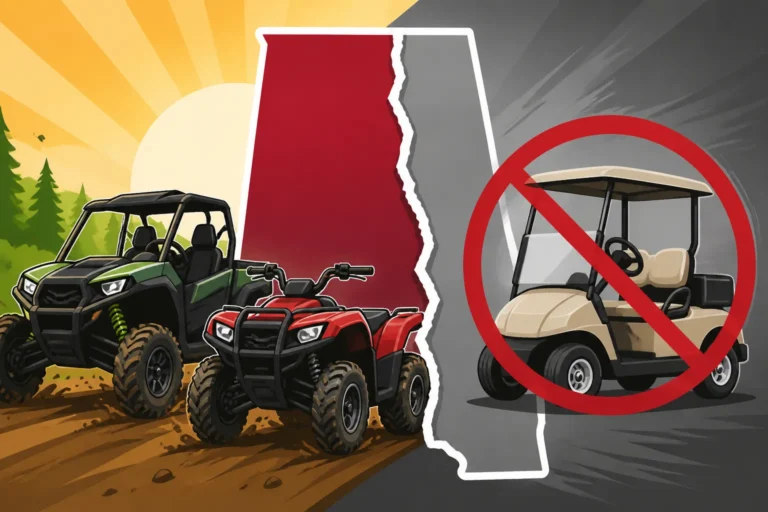
For many of us who already own an ATV or UTV that we use at deer camp, this new titling law sounds like yet another layer of bureaucracy to navigate. But here's the good news: if your machine has a model year older than 2026, you generally won't need to title it. The law specifically states that machines with a model year prior to 2026 are exempt from this new titling requirement. This means your trusty 2020 Polaris Ranger or your 2015 Honda Foreman, which have faithfully served you for years, will not suddenly need to go through the titling process. This decision was made to avoid the logistical nightmare of retroactively titling hundreds of thousands of older machines, many of which may no longer have clear ownership records.
While this exemption provides peace of mind for current owners of older machines, it's crucial to remember that this titling exemption doesn't negate the registration options we've discussed. You can still voluntarily register your pre-2026 deer camp machine for private use, or register it for public use if it ventures onto public lands. The absence of a title simply means that proof of ownership will continue to rely heavily on your bill of sale and any voluntary registration documents you possess. You can find more clarity on this aspect in [Why Older Alabama ATVs Cannot Be Titled]. So, for many of us, it's business as usual when it comes to paperwork for our existing off-road companions, though the conversation will certainly change when it's time to buy that next brand-new machine.
Disclaimer
This article is for general informational purposes only and does not constitute professional advice. Laws, prices and regulations vary by location and change over time. Consult a qualified professional for guidance on your specific situation.