Alabama ATV Title Cost
Navigating the ins and outs of owning an ATV or UTV in Alabama can feel like trying to ride a muddy trail blindfolded, especially when new regulations pop up. Many riders are suddenly faced with questions about titling their off-road machines, unsure of where to go, what paperwork they need, or, most importantly, how much it's actually going to cost them. This guide aims to clear up all that confusion, giving you a straightforward breakdown of the expenses and steps involved in titling your ATV or UTV in Alabama so you can ride with peace of mind.
Understanding Alabama's New Titling Law
For years, many folks in Alabama bought and sold ATVs and UTVs with just a bill of sale, never really thinking about a formal title like you would for a car or truck. It was just how things were done, a handshake agreement backed by a simple receipt. However, the landscape for off-road vehicle ownership has changed, and understanding this shift is the first step to figuring out your costs.
When Titling Becomes a Requirement
The biggest change to wrap your head around is that not all ATVs and UTVs will require a title. The new law specifically targets machines of a certain model year and newer. This means if you've got an older, trusty quad that's been with you for ages, you might be completely exempt from this new requirement. It's a common point of confusion, and frankly, a relief for many who don't want to dig through ancient paperwork for a machine they've owned for decades. The state has drawn a line in the sand, and the model year of your machine is the deciding factor. This often comes as a surprise to those accustomed to perpetual private sales without much official fuss, but it's a critical detail that determines whether you even need to worry about title costs. You can find more specific details on [Alabama Title Applications From January 2026].
Who Handles the Titling Process
When it comes to getting a title for your ATV or UTV in Alabama, you won't be mailing it off to some distant state office in the dark. Instead, the process is largely handled at the local level, much like how you would handle car tag renewals or other vehicle-related paperwork. This means you'll be dealing with your local county probate office or other designated county agent. These are the same friendly faces you often see when dealing with other motor vehicle services, which can make the process feel a bit more familiar. They're the ones who will accept your application, collect any necessary fees, and ultimately submit the information to the state's system. Knowing that it's a local interaction can certainly ease some of the apprehension people feel when faced with new governmental requirements.
Why the New Law Matters to Owners
The introduction of ATV and UTV titling in Alabama isn't just about adding another layer of bureaucracy; it brings significant benefits, even if it introduces some new steps. Primarily, it provides a clear and official record of ownership. In the past, if your machine was stolen, or if you had a dispute over who actually owned it after a private sale, proving ownership could be a real headache without a formal title. A title helps prevent these kinds of ownership disputes and can be a lifesaver in the unfortunate event of theft recovery. It adds a layer of security and legitimacy to your investment, making your machine more like other valuable assets you own. For more on the specifics, check out [Alabama's 2024 Titling Law]. It's about bringing off-road vehicles into a more standardized system, which ultimately protects both buyers and sellers in the long run.
Breaking Down the Costs of an Alabama ATV Title
Let's get down to brass tacks: what's this going to set you back? The good news is that the costs associated with titling an ATV or UTV in Alabama are generally quite modest, especially when compared to the value of the machine itself or the cost of titling a full-size vehicle. However, it’s not just one single fee; there are a few components that make up the total. Understanding each piece will help you budget accurately and avoid any unpleasant surprises when you get to the county office.
The Core Title Application Fee
At the heart of the titling process is the standard application fee for the title itself. This is the state's charge for creating and maintaining that official record of ownership for your ATV or UTV. Think of it as the foundational cost for getting your machine into the official system. While state fees are designed to be consistent across all counties, it’s always wise to confirm the exact amount before you head in. This fee covers the administrative work of processing your application and issuing the title document. It's a small but essential part of establishing your legal ownership and something you'll encounter whether you're titling a brand-new side-by-side or a qualifying quad from a private sale.
County Processing Charges and Agent Fees
Beyond the state's core application fee, you'll also encounter some additional charges at the local level. Your county probate office or the designated title agent is providing a service by processing your application, verifying your documents, and submitting everything to the state. For this service, they are authorized to collect a modest processing charge or agent commission. This isn't an extra fee imposed by the state but rather a small amount that stays at the county level to help cover their operational costs. These local fees can sometimes vary slightly from one county to the next, reflecting the specific county's administrative structure, but they are generally quite minimal. It's a necessary part of the decentralized process that allows you to handle your titling close to home. You can often anticipate these charges by reviewing [Alabama Title Fees at the County].
Potential Additional Fees
While the core application and county processing fees make up the bulk of the cost, there are a few other situations where you might encounter additional fees. For instance, if you ever need a duplicate title because yours was lost, damaged, or stolen, there will be a separate, but still modest, charge for that. Similarly, when you sell your titled machine and the new owner needs to transfer the title into their name, a title transfer fee will apply. This isn't part of your initial titling cost, but it's important to be aware of for future transactions. Also, in certain complex situations, like correcting an error on a previously issued title or dealing with a lien, small administrative fees might be assessed. Generally, these are not large amounts but are designed to cover the specific administrative effort involved in these less common circumstances.
Here’s a simplified breakdown of the common costs you might encounter:
| Fee Type | Description | Who Collects It |
|---|---|---|
| Title Application Fee | State fee for creating the official ownership record. | County Title Agent |
| County Processing/Agent Fee | Local charge for handling your application and paperwork. | County Title Agent |
| Duplicate Title Fee | Cost to replace a lost, damaged, or stolen title. | County Title Agent |
| Title Transfer Fee | Fee paid by a new owner when changing ownership records. | County Title Agent |
Navigating the Titling Process and Avoiding Surprises
The thought of government paperwork can often bring on a cold sweat for even the most seasoned outdoors enthusiasts. But honestly, titling your ATV or UTV in Alabama doesn't have to be a daunting task. With a little preparation and understanding of the steps involved, you can walk into your county office confidently and get it done without a hitch.
Essential Documents and Proof of Ownership
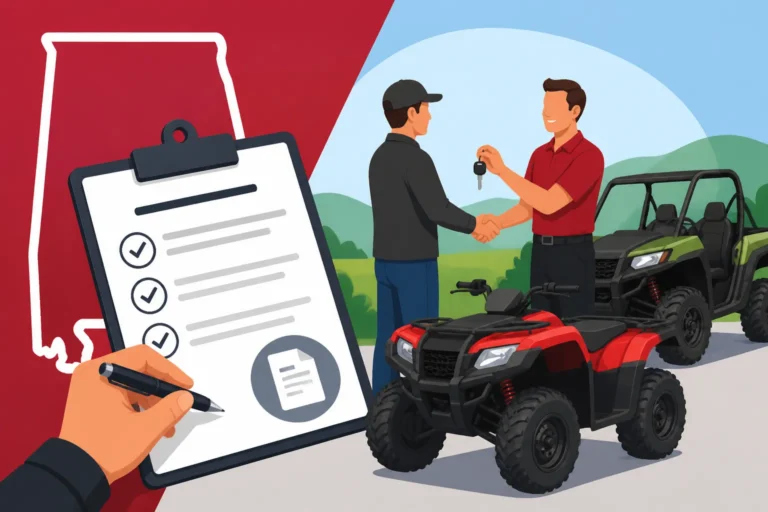
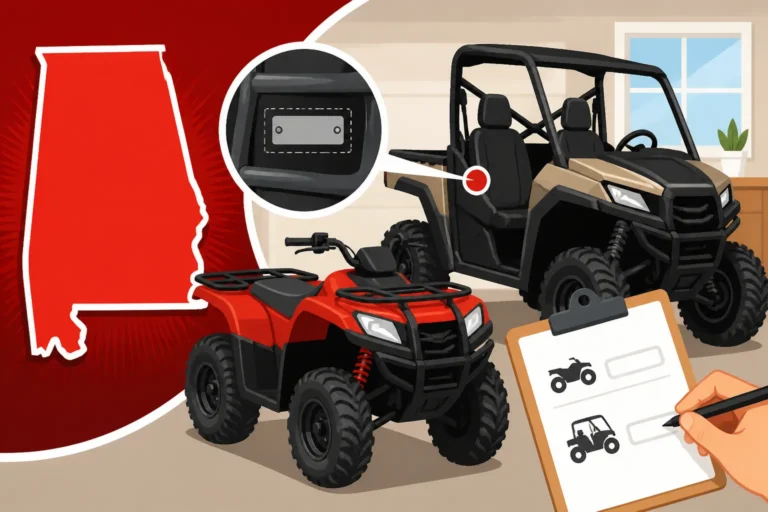
The key to a smooth titling experience is having all your ducks in a row before you even leave the driveway. The most critical document you'll need is proof of ownership. For a brand-new machine, this will typically be the Manufacturer's Statement of Origin (MSO) or Manufacturer's Certificate of Origin (MCO), provided by the dealer. If you bought your machine from a private seller, you'll need a properly executed bill of sale. This bill of sale isn't just a scribble on a napkin; it needs to include specific information about the ATV or UTV, like its make, model, year, and crucially, its Vehicle Identification Number (VIN) or serial number, along with the names and addresses of both the buyer and seller. Resources like LawDepot can be incredibly helpful for generating a comprehensive and legally sound bill of sale if you're dealing with a private transaction. Without clear proof of ownership, your application will likely hit a snag, leading to delays and frustration. Ensuring you have all your paperwork in order from the start is paramount. For more on this, consider [Alabama Bill of Sale Requirements].
What to Expect at the County Office
Once you've gathered all your required documents, your next step is a visit to your local county probate office or the designated tag and title agent. When you arrive, you'll present your application along with your proof of ownership. The agent will review your documents to ensure everything is correct and complete. They'll also collect the applicable title application fee and any local processing charges. Expect them to verify your identity, so be sure to bring a valid form of identification. The process is generally straightforward for most new machines or recent private sales where all paperwork is in order. It's a good idea to call ahead or check your county's website for specific hours and any unique requirements they might have. They might even have a checklist that can help you prepare thoroughly. The goal is to make sure your paperwork is error-free so it can be seamlessly entered into the state's ALVIN system.
Handling Special Situations
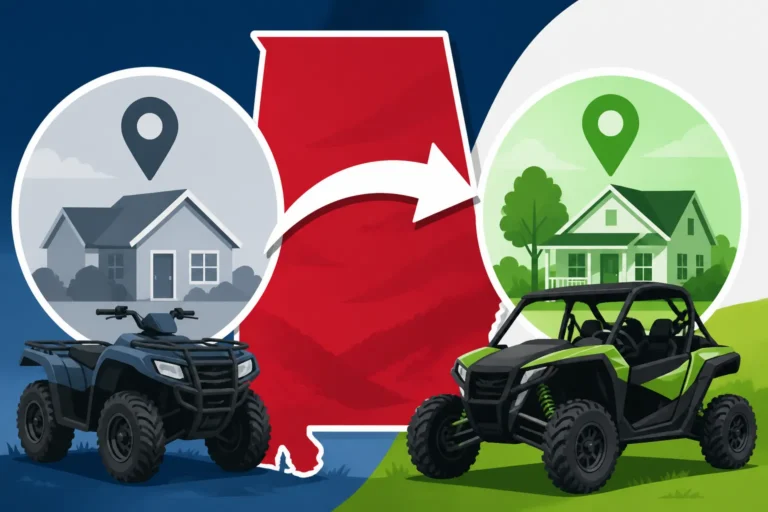
Not every titling situation is cut and dry, and Alabama's new law accounts for a few common scenarios that might require extra attention. For example, if you've purchased a machine out of state that meets Alabama's titling requirements, you'll still need to title it here. The process will be similar, but you might need to present your out-of-state ownership documents in addition to a bill of sale. Another common situation arises with machines bought in private sales where the original paperwork might be sparse or even non-existent for older, qualifying machines. In these cases, the county office might guide you through a process to establish proof of ownership, which could involve affidavits or other supporting documentation. If you're struggling to create the necessary declarations of ownership, a platform like LawDepot can offer templates and guidance for drafting legally compliant affidavits to support your claim. Dealing with a machine that has a lien attached, such as one that's still being financed, also involves specific steps to ensure the lienholder's interest is properly recorded on the title. Each of these special cases has a path, so don't be discouraged if your situation isn't perfectly standard. Details about [How to Title an ATV in Alabama] cover many of these scenarios.
The Long-Term Value of a Titled ATV in Alabama
While the new titling requirements and associated costs might seem like just another hoop to jump through, there's significant long-term value in having a properly titled ATV or UTV. It moves these machines from a somewhat informal status to a recognized, documented asset, offering protections and conveniences that simply weren't available before.
Protecting Your Investment
For many, an ATV or UTV represents a significant investment, often costing as much as a used car. Without a title, proving ownership and protecting that investment from fraud or theft has historically been challenging. A title establishes a clear, undeniable legal record of who owns the machine. This documentation is invaluable if your machine is ever stolen, as law enforcement has a much better chance of recovering it and returning it to its rightful owner when there's an official title on file. It helps prevent someone from simply claiming the machine is theirs with a fabricated bill of sale. Furthermore, having a title can often simplify the process of insuring your machine, as insurance companies prefer to see clear proof of ownership. This added layer of security provides considerable peace of mind, knowing your valuable asset is legally protected. For more on theft, read [Theft Recovery Without a Title].
Simplifying Future Sales and Transfers
Imagine trying to sell a car without a title – it's virtually impossible for most legitimate buyers. The same principle now applies to qualifying ATVs and UTVs in Alabama. When it comes time to sell your machine, having a clean, properly recorded title makes the process much smoother for both you and the buyer. It instills confidence in potential purchasers, as they know they're buying a machine with a verifiable ownership history, free from hidden liens or disputes. The title can be easily signed over and transferred, following a clear legal path. This transparency can also enhance the resale value of your machine, as it demonstrates clear provenance and reduces perceived risks for a buyer. This simplicity extends to other situations, such as passing the machine down to a family member; the title provides a clear mechanism for transferring ownership legally and without fuss. Whether you're selling outright or simply transferring ownership to another party, platforms like LawDepot can help ensure all the necessary documentation for transfer is correctly prepared.
Impact on Insurance and Theft Recovery
Beyond the general protection of your investment, a title directly impacts your ability to secure comprehensive insurance coverage and aids significantly in theft recovery efforts. Insurance companies often require proof of ownership, and a state-issued title is the gold standard for this. With a title, you're generally in a stronger position to obtain better coverage options, including comprehensive and collision, which are vital for protecting against damage, theft, and other unforeseen events. Without a title, proving insurable interest can sometimes be more difficult, potentially limiting your options or increasing your premiums. In the devastating event that your ATV or UTV is stolen, having a title on record with the state means your machine's VIN is officially associated with you, making it much easier for law enforcement to track, identify, and return your property. It integrates your machine into a larger statewide system that helps deter and combat theft, turning what used to be a difficult prospect into a much more manageable situation for owners.
Disclaimer
This article is for general informational purposes only and does not constitute professional advice. Laws, prices and regulations vary by location and change over time. Consult a qualified professional for guidance on your specific situation.