Filming With a Drone Over an Alabama Park
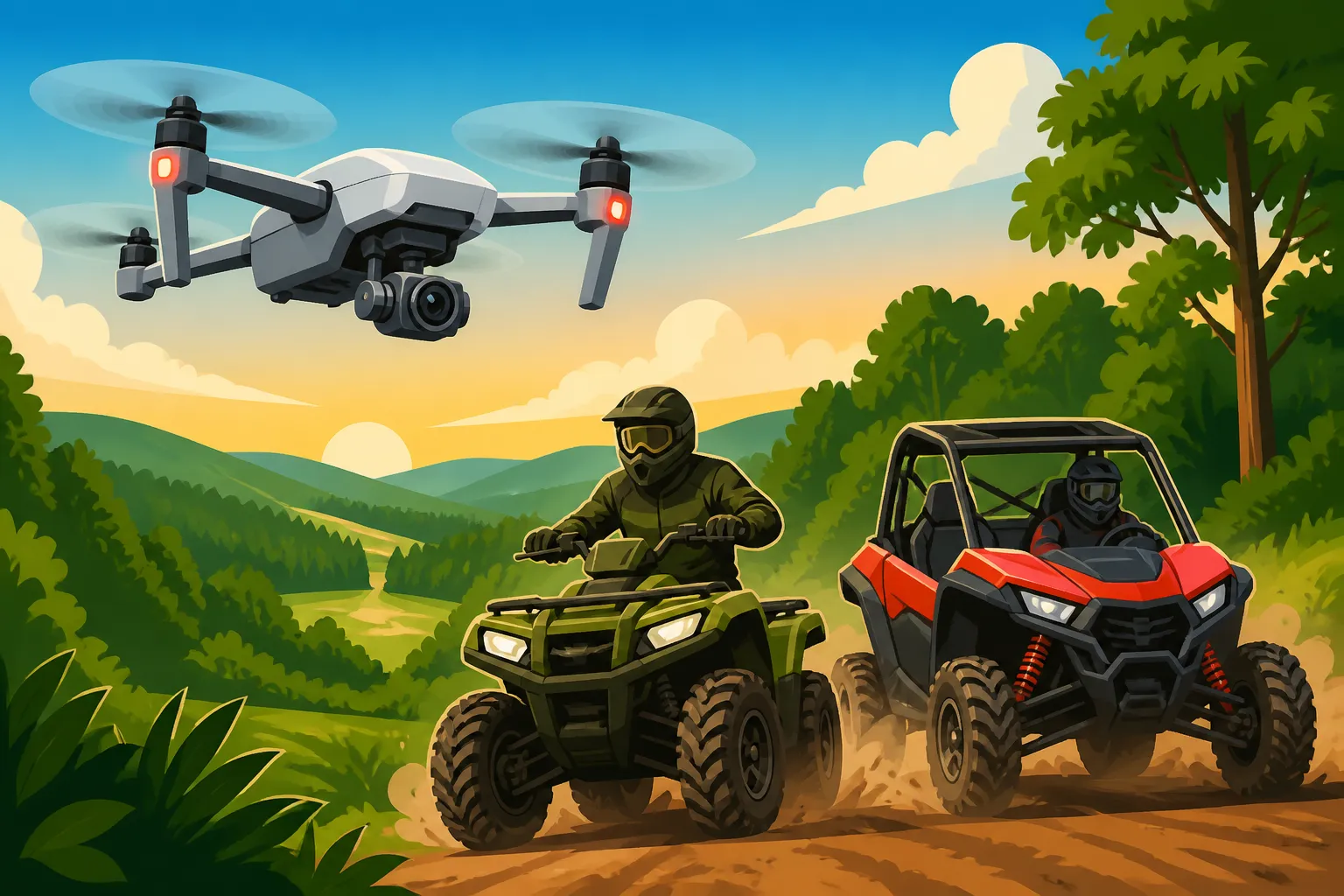
Filming with a drone over an Alabama park can involve more than meeting FAA flight rules. The park may have its own restrictions on launching, landing, filming, or recording visitors. Before packing the drone, identify who manages the property, get permission where required, and check airspace and operating conditions for the exact location.
Separate FAA Rules From Park Permission
There are two different questions to answer: whether the flight is allowed under aviation rules, and whether the land manager allows you to use a drone at that site. Permission from a park does not replace FAA requirements, and meeting FAA requirements does not automatically give you permission to take off or land there.
The FAA regulates aircraft operations in U.S. airspace. A park, county, private landowner, or other land manager may set rules for activities on the property, including drone launches, landings, and filming. The details depend on the location and who controls it. A rule at one riding park may not apply at another park nearby.
Start by identifying the specific property rather than relying on a broad search for “Alabama ATV trails.” The riding area, parking lot, campground, and surrounding land may have different owners or managers. Alabama ATV Trails: Where to Ride can help you think through the type of riding location you are visiting, but contact the actual site about drone use.
Work out why you are filming
The intended use of the flight affects which FAA rules apply. Recreational flying generally has to be solely for recreation and follow the FAA’s recreational requirements. Filming for a business, client, organization, promotional project, or other non-recreational purpose may require operating under the FAA’s Part 107 rules. Being unpaid does not by itself settle the question; consider the purpose of the flight, not only whether money changes hands.
If the project does not clearly fit the recreational category, check the FAA’s current guidance before flying. Part 107 operations have their own pilot, aircraft, and operating requirements. Requirements can also depend on where and how you intend to fly.
For a recreational flight, check the current FAA requirements for a recreational knowledge test, registration, and Remote ID. Which requirements apply can depend on the aircraft and operation, and exceptions may exist. Do not assume that a small drone is exempt from every rule simply because it is light or sold as a beginner model.
If your flight needs controlled-airspace authorization, obtain it through an approved process before flying. A park employee cannot grant airspace authorization unless the relevant FAA process allows it; likewise, an airspace authorization does not grant park access. Check the FAA’s current airspace tools and guidance for the specific location and date.
Ask the manager about the ground rules
Contact the park or land manager before arriving with a drone. Ask whether drones may be launched and landed from the property, whether aerial filming is allowed, and whether written approval or a filming permit is needed. Be specific about your project: where you plan to take off, the area you hope to film, the flight’s purpose, whether riders or staff may be visible, and whether you will publish or sell the footage.
Ask about the whole operation, not just the moment of takeoff. A park might allow a visitor to carry a drone but restrict flying over trails, event areas, campsites, or other visitors. It could also require you to keep the aircraft grounded during busy periods or close to a particular area. Get the answer from the manager responsible for that site, preferably in writing.
Here is a practical way to separate the approvals:
| Question | Who to check with | What to confirm |
|---|---|---|
| Is the flight permitted in the airspace? | FAA resources or the relevant airspace authorization process | Airspace restrictions and any required authorization |
| Do I meet the operating rules? | FAA guidance | Recreational or Part 107 requirements, aircraft registration, Remote ID, and operating limits |
| May I launch and land on the property? | Park or land manager | Drone policy, launch locations, and any permit or written approval |
| May I film for this purpose? | Park or land manager | Restrictions for commercial, promotional, organized, or private filming |
| May I record identifiable visitors? | Park manager and, when appropriate, a qualified legal adviser | Site rules, privacy concerns, and any consent or release needs |
A casual request for permission may not be enough for a planned production. If you are filming for a riding club, sponsor, event, or business, explain that directly. A manager may need to review the request or direct you to a separate permit process.
Policies Differ Across Alabama Riding Areas
“Park” can mean a privately operated OHV facility, a county recreation area, state-managed property, or a trail network on public land. The rules are not interchangeable. A permit to ride does not necessarily authorize drone use, and a park admission or reservation does not necessarily include filming privileges.
Private OHV parks
At a private riding park, start with the operator’s current rules and ask whether the policy applies to all drones or only to certain activities. The park may have safety, insurance, privacy, or event-management reasons for restricting flights. It may also need to know whether you are filming personal memories or making content for a business or organization.
A waiver for riding is not necessarily permission to film. Read the park’s terms and ask about drone use separately. Alabama Private Park Waivers and Rules explains why a visitor should not treat a general waiver as approval for every activity on site.
If you are filming an organized event, ask the organizer as well as the park. The organizer might control access to the event area or have agreements with participants, while the property owner or manager still controls drone activity on the land. Do not assume that a rider’s invitation lets you launch from a location the park has not approved.
County and other public parks
For a county or municipal park, contact the office that manages the property. A general parks department may oversee multiple sites, each with different facilities and rules. Describe the exact park and the kind of filming you want to do; a broad question such as “Are drones allowed in the county?” may not get a useful answer.
Ask whether the park requires a filming permit, whether there are designated launch areas, and whether the request must be made in advance. If the park cannot authorize the flight from its grounds, ask who manages the nearby land. A public trail or road near the park may have a different owner and separate restrictions.
National forests and wildlife management areas
Public-land access rules can be especially easy to misunderstand. Permission to ride on an open route, a required riding permit, or a hunting-related permit does not automatically answer whether you can launch a drone or film there. For national forest riding, review Alabama National Forest Riding Permits and Which Forest Roads in Alabama Are Open to ATVs for the land-access question, then contact the relevant land manager about drone operations.
If the location is a wildlife management area, check the area-specific rules and access conditions. WMA requirements vary by area and activity, so a permit that covers one kind of access should not be treated as blanket permission for filming. Alabama WMA Rules Vary by Area and Calling an Area Biologist With a Question can help you identify the right questions for a particular tract.
Before visiting any public land, confirm whether temporary closures, seasonal restrictions, fire conditions, events, or other local conditions affect the plan. A map showing a place as open for riding does not necessarily show drone restrictions or identify who can approve filming.
Plan a Safe Flight That Respects Visitors
A drone over an OHV area creates risks that are different from flying over an empty field. Riders may move quickly, trails may pass under tree cover, and visitors may not expect an aircraft overhead. Noise, dust, wind, and changing light can also make it harder to control the aircraft or communicate with people on the ground.
Choose a location and time that reduce conflict. Avoid flying over active trails, crowds, staging areas, parking lots, campsites, and event zones unless the operation is specifically permitted and can be conducted safely under applicable rules. Never pressure riders to repeat a maneuver or pass beneath the drone for a shot. A scenic view is not worth creating a collision hazard or interrupting park operations.
Protect people’s privacy
A park may approve aerial filming without resolving every privacy issue. Keep the camera aimed at the landscape or your own group where possible. Avoid filming into campsites, vehicles, cabins, or private areas, and do not publish close-up footage of identifiable visitors without considering consent and the site’s rules.
Be particularly careful with children and people who are not part of your project. Even when a camera is visible, visitors may not know who is operating it or how footage will be used. Ask the park whether it has notice or consent requirements for filming at events or in public areas, and follow any posted instructions.
Avoid recording conversations where people could reasonably expect privacy. A park’s permission to fly should not be treated as permission to collect or publish every image or sound your equipment captures. If the video is for advertising, a client, or a public campaign, ask the park what releases or production approvals it expects.
Check the aircraft and conditions
Before leaving home, inspect the drone, controller, batteries, propellers, and camera. Check that the aircraft is configured for the planned operation and that required safety features are working. Bring only equipment you can manage without blocking trails or creating a hazard. A compact landing pad can help keep a drone off loose dirt, but it does not make an unapproved launch lawful. If you are comparing basic accessories such as propeller guards or a landing pad, Amazon is one place to look; check that any accessory is compatible with the aircraft and does not interfere with safe operation.
Check weather and site conditions on the day of the flight. Wind, rain, low visibility, heat, and dust can affect control, battery use, and equipment. Tree cover and terrain can also interrupt the pilot’s view or communication with the aircraft. Do not take off if you cannot maintain the required level of control and observation for the operation.
Keep people who are not involved in the flight away from the launch area. Tell anyone helping you where the aircraft will operate and how to pause the filming. If the park becomes crowded, a trail event starts, or riders enter the planned area, land and reassess rather than trying to film around them.
A Practical Approval and Flight Checklist
Use this sequence before filming. It helps avoid the common mistake of treating a riding permit or a friendly conversation with a staff member as full authorization.
- Identify the exact property. Confirm the park name, its managing organization, and the specific location where you plan to launch and film. If the trail crosses more than one property, identify each land manager.
- Define the purpose. Decide whether the filming is solely recreational or is connected to a business, client, event, organization, or other non-recreational purpose. Check the FAA rules that fit the operation.
- Check FAA requirements. Review the current rules for the aircraft and flight, including airspace, registration, Remote ID, pilot qualification, and any required authorization. Use the FAA’s current resources rather than relying on an old post or an app alone.
- Request land-manager approval. Ask about takeoff, landing, aerial filming, commercial or organized production, restricted zones, visitor privacy, and advance permits. Describe the plan clearly and save written approval.
- Confirm the day’s conditions. Check for closures, events, busy trail periods, weather, and any temporary restrictions. For a multi-day or group trip, Alabama Permits for a Group Trip can help with broader access planning, but it does not replace drone-specific approval.
- Set boundaries for the shoot. Choose a launch point and filming area that do not interfere with riders or park operations. Agree on a simple stop signal with anyone assisting, and land if people enter the planned operating area.
- Follow the approval exactly. Stay within any location, time, altitude, or filming conditions the manager sets, along with FAA requirements. If the site’s instructions conflict with your plan, stop and ask before continuing.
If a park does not allow drone activity, do not launch from a nearby road, parking area, or adjoining parcel to get around the restriction. That location may have a different owner, and the flight still has to comply with FAA rules and any applicable land-use limits. Ask whether the park offers an approved alternative, such as filming from the ground or arranging a permitted production at another time.
Keep a copy of the park’s written response and any relevant permit with your trip records. If an employee on site gives instructions that differ from what you understood, land the drone and clarify with the manager rather than debating while the aircraft is in the air. A short call before the trip is often easier than resolving a safety or access dispute at the trailhead.
Disclaimer
This article is for general informational purposes only and does not constitute professional advice. Laws, prices and regulations vary by location and change over time. Consult a qualified professional for guidance on your specific situation.